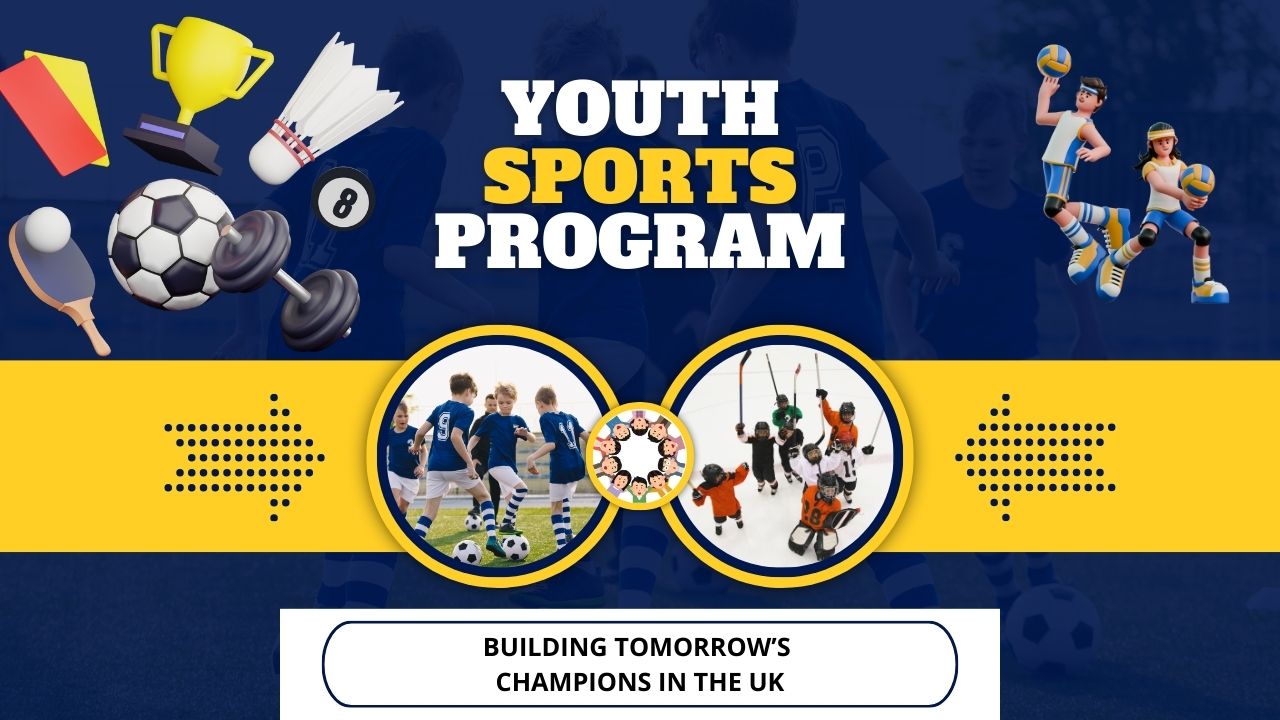
The ambition for youth sports in the UK is rooted in a powerful vision.
It is about instilling a love for sporting activities that stays with young people throughout their lives.
The youth sports program is designed to capture the excitement of the Olympics and Paralympics and convert it into sustainable youth engagement.
By focusing on participation and competitive spirit equally, the UK hopes to create a generation that is active, healthy, and resilient.
Supporting young athletes from the playground to the podium, this initiative is vital for national health, community spirit, and even future sporting excellence on the world stage.
Impact of the Youth Sports Program: Creating a Sporting Habit for Life
The youth sports program sets out a bold, long-term goal: embed a genuine sporting habit in young people’s lives.
Rather than seeing sports as a one-off event linked to the Olympics or Paralympics, the vision is for participation to become a normal, expected part of growing up.
It is about building tomorrow’s champions by supporting every child not just future elite athlete, but anyone who could benefit from an active, sporting lifestyle.
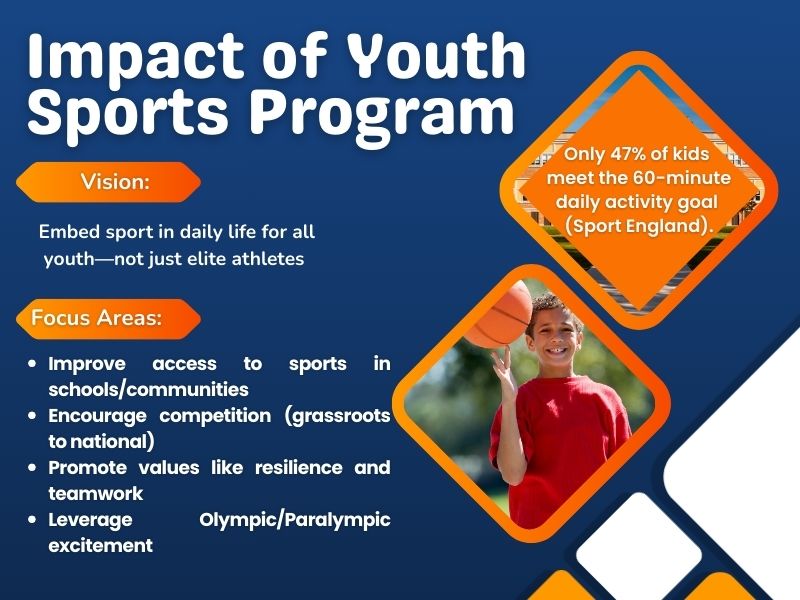
According to Sport England, only 47% of children in England currently meet the Chief Medical Officer’s guidelines of doing 60 minutes of physical activity a day.
This statistic highlights why a stronger youth engagement strategy is needed to close the activity gap early and encourage lifelong involvement.
The youth strategy is therefore focused on:
- Improving access to school and community-based sports programs
- Encouraging competition at all levels, from grassroots initiatives to national events
- Embedding the values of resilience, teamwork, and ambition through sport
- Using the excitement of the Olympics and Paralympics to inspire consistent participation
The ultimate aim is that sports become “second nature” not something children do once or twice, but a daily habit that continues into adulthood.
Role of the Youth Sports Program in Legacy of the Olympics and Paralympics
The youth sports program builds directly on the inspirational success of the London 2012 Olympics and Paralympics.
These events left a lasting impression, proving how sport can unite a nation and spark ambition among young people.
However, the government recognised that inspiration alone was not enough.
Without sustainable youth engagement and structured grassroots initiatives, the post-Games momentum would fade.
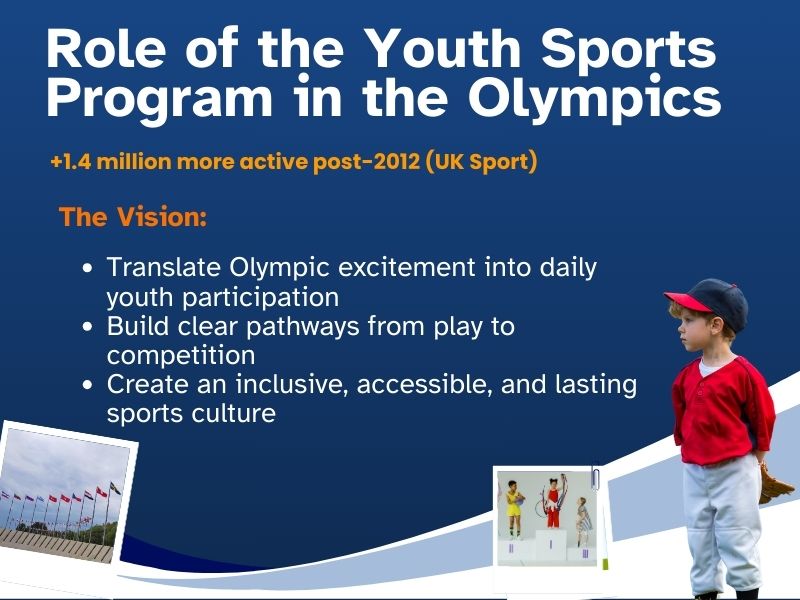
Research by UK Sport shows that following London 2012, 1.4 million more people became active in sports compared to pre-Games levels.
Yet, the surge was uneven across regions and age groups, especially among disadvantaged youth.
This highlighted the urgent need for a dedicated, inclusive youth strategy to make sure no child was left behind.
The legacy ambition was clear:
- Translate Olympic and Paralympic excitement into daily youth participation
- Build pathways from casual sports involvement to competitive opportunities
- Create a sports program that is accessible, inclusive, and sustainable over decades
Through better school programs, community club partnerships, and national governing bodies support, the UK aims to create a “golden generation” of sporting citizens.
Overall Strategy and Funding Commitment
The youth sports program is backed by a comprehensive strategy and significant government funding.
The vision is not just about providing opportunities but embedding sport into the fabric of youth culture across England.
To achieve this, the government committed over £1 billion between 2012 and 2017 specifically to increase youth sports participation.
This funding supported grassroots initiatives, school sports programs, facility improvements, and elite pathways for talented young athletes.
Key components of the strategy include:
- Direct investment in school and community sports clubs
- Expanding competitive school sport opportunities through the School Games
- Strengthening links between schools, clubs, and national governing bodies
- Targeted efforts to improve youth engagement among underrepresented groups
- Promoting inclusivity by focusing on Paralympic pathways
The youth strategy is carefully designed to ensure that the excitement from the Olympics and Paralympics is channelled into lasting sporting habits.
Crucially, it recognises that simply funding elite sports is not enough; true legacy depends on reaching every child, regardless of background or ability.
By focusing on both participation and progression, the UK’s youth sports program ensures a clear route from playground activities to podium finishes creating tomorrow’s champions at every level.
Key Pillars of the UK’s Approach to Youth Sports Program
The youth sports program is built around four key pillars, each designed to strengthen youth engagement and sporting habits for life.
These pillars ensure that efforts are strategic, inclusive, and sustainable, leveraging the legacy of the Olympics and Paralympics to inspire every young person.
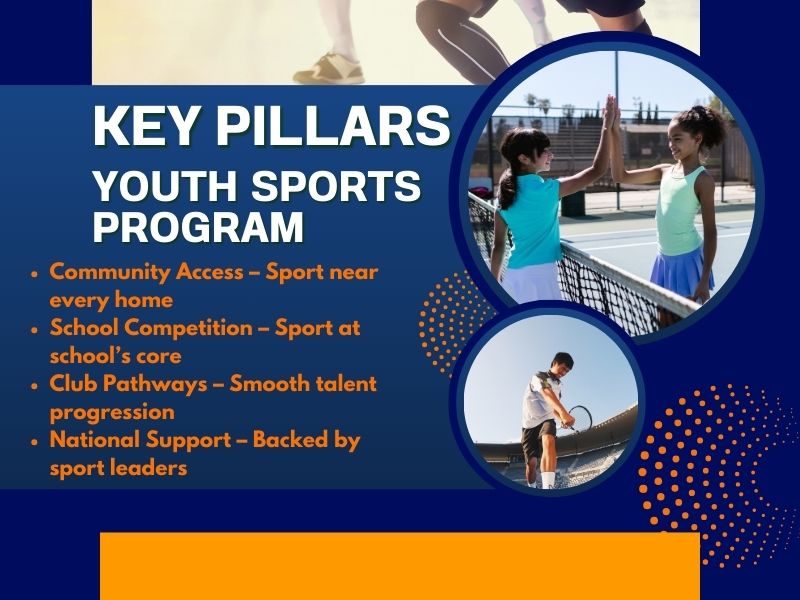
The four pillars are:
- Building a World-Class Community Sports System
Investment in local clubs and grassroots initiatives helps children access high-quality coaching and facilities close to home. - Making Competitive Sport the Heart of School Life
Competitive opportunities, such as the School Games, encourage skill development, resilience, and teamwork from an early age. - Improving Links Between Schools and Community Sports Clubs
Stronger school-to-club pathways ensure talented young athletes can progress smoothly from school teams to elite development programs. - Working with National Governing Bodies to Grow Youth Participation
National governing bodies (NGBs) are funded to deliver youth-focused initiatives, ensuring consistent sporting opportunities across the country.
According to Sport England, by strengthening these pillars, the goal is to boost regular participation among young people, aiming for 60% of youth to engage in organised sport weekly by 2025.
This multi-pronged approach acknowledges that building tomorrow’s champions is about more than just talent it’s about opportunity, support, and inspiration at every level.
Competitive Sport in Schools: The School Games
The youth sports program places competitive sport at the centre of school life through the flagship initiative known as the School Games.
This national program offers young people of all abilities the chance to experience the thrill of competition, teamwork, and sporting success.
The School Games framework operates across four levels:
- Level 1: Intra-school competitions within individual schools
- Level 2: Inter-school competitions between local schools
- Level 3: County or regional championships
- Level 4: National finals for the most talented teams and individuals
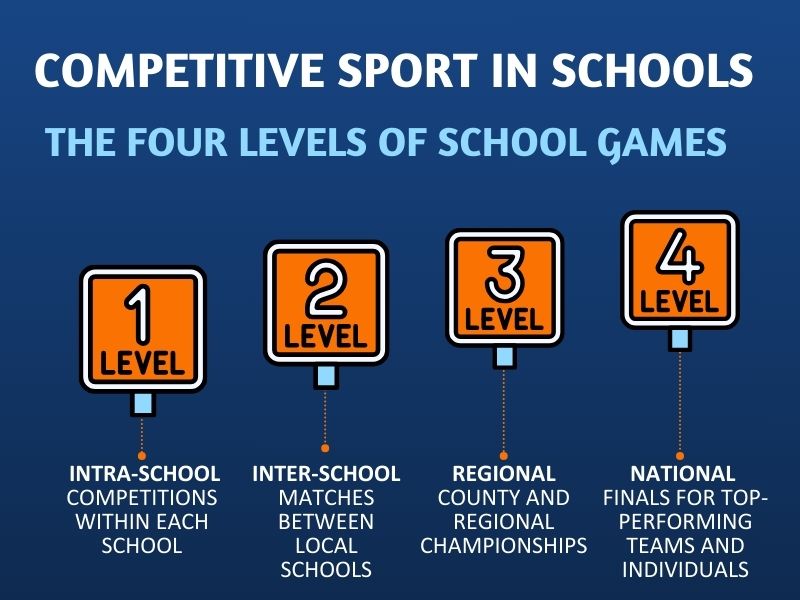
Since its launch, the School Games has involved over 21,000 schools and 3 million young people each year.
This structure ensures that competitive sport is available not just to elite athletes but to every child nurturing skill like leadership, resilience, and collaboration.
Key benefits of the School Games include:
- Raising the profile of competitive sport across all schools
- Creating structured pathways for talent identification and development
- Embedding the values of the Olympics and Paralympics within school communities
- Supporting youth engagement at all skill levels through inclusive competition formats
By focusing on both participation and excellence, the School Games plays a vital role in achieving the youth strategy’s ambition to create a true sporting habit for life.
Strengthening Links between Schools and Community Clubs
The youth sports program recognises that strong connections between schools and community clubs are essential for sustaining long-term youth engagement.
While schools introduce children to sports, local clubs provide the environment to refine skills, compete regularly, and develop a lasting sporting identity.
To bridge the gap, the strategy encourages:
- Formal partnerships between schools and local sports clubs
- Talent pathways for young athletes to transition from school competitions to club development programs
- Club taster sessions hosted within schools to raise awareness and interest among students
- Community coaches working directly with schools to deliver sessions and identify promising talent
A 2023 report by Sported UK found that young people who engage with both school and community sports are 70% more likely to continue participating into adulthood.
This underscores the importance of seamless pathways that make sporting opportunities accessible and continuous.
By building strong links between educational settings and grassroots initiatives, the youth strategy ensures that tomorrow’s champions have the support they need both during school hours and beyond.
The Role of National Governing Bodies (NGBs) in Youth Sports Program
The youth sports program relies heavily on the leadership of National Governing Bodies (NGBs) to drive participation and talent development.
NGBs are responsible for setting standards, organising competitions, and developing the future stars of British sport.
Key responsibilities of NGBs within the youth strategy include:
- Designing youth-friendly versions of their sports to encourage wider participation
- Creating clear talent pathways from grassroots to elite levels
- Supporting coaches and volunteers through accredited training and resources
- Embedding inclusivity, particularly by expanding opportunities for young people with disabilities
- Partnering with schools to deliver high-quality PE and after-school activities
The government invested approximately £450 million between 2013 and 2017 into NGBs to help them deliver youth-focused projects and support community club development.
This funding ensured that efforts to grow youth engagement were consistent, sustainable, and aligned with national sporting priorities.
By empowering NGBs, the UK’s youth sports program creates a joined-up system where every child whether inspired by the Olympics, Paralympics, or grassroots heroes has a clear and supported journey through their chosen sport.
Investment in Youth Sports Program Facilities
The youth sports program understands that quality facilities are essential to inspiring participation and developing sporting skills.
Without modern, accessible spaces, even the best grassroots initiatives and school programs can struggle to thrive.
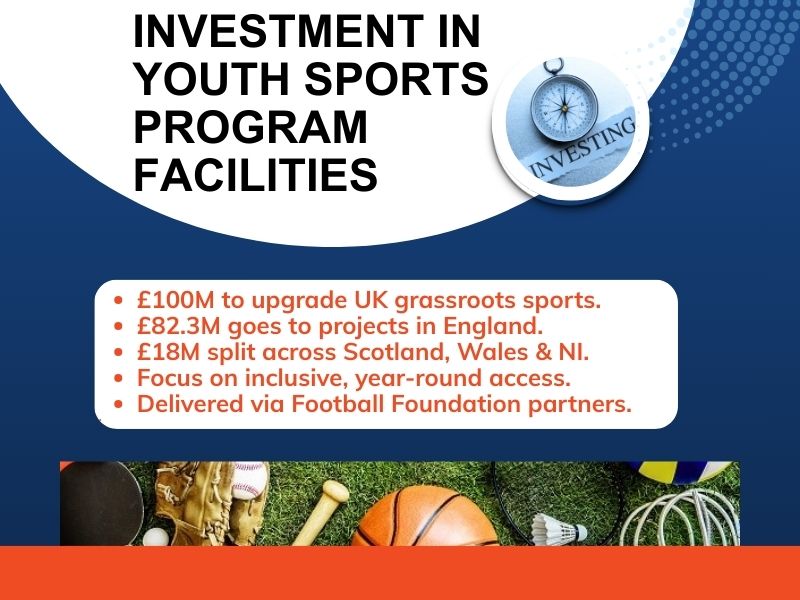
To address this, the UK government committed significant funding to upgrade and build sports facilities across the country, focusing on:
- Modernising existing community sports centres
- Building new multi-sport hubs in key areas
- Ensuring facilities are fully accessible for athletes with disabilities
- Supporting schools to open up their facilities for wider community use
One of the major funding initiatives was the £1 billion National Lottery investment into grassroots sports between 2012 and 2017.
This helped deliver hundreds of new 3G football pitches, swimming pools, athletics tracks, and indoor sports halls.
Additionally, over 5,000 sports venues across the UK received grants to improve their accessibility and energy efficiency, ensuring that future generations benefit from high-quality, sustainable places to play and compete.
Good facilities do more than just serve existing players they act as a magnet for new youth engagement, showcasing that sport is welcoming, fun, and achievable for everyone.
New National Youth Sports Program Strategy Objectives
The updated youth sports program aligns closely with the wider National Youth Strategy, which sets out bold objectives for the coming decade.
These objectives aim to ensure that every young person, regardless of background, can benefit from sport and active lifestyles.
The main National Youth Strategy objectives include:
- Widening Participation: Making youth sports accessible to all, especially in deprived and rural areas.
- Boosting Wellbeing: Using sport to improve mental and physical health among young people.
- Developing Life Skills: Embedding leadership, teamwork, and resilience through structured sporting activities.
- Celebrating Achievement: Recognising success at every level, from grassroots participation to elite performance.
- Sustainable Growth: Encouraging long-term partnerships between schools, clubs, communities, and national governing bodies.
According to a 2024 Youth Sport Trust survey, 73% of young people reported that regular participation in sport helped them feel more confident at school.
This statistic underlines the powerful role sport can play beyond the playing field.
The strategy reflects a clear vision: sport is not just a pastime but a vital part of preparing young people for life’s challenges and opportunities.
Conclusion
The youth sports program is a multifaceted, long-term strategy that is transforming the sporting landscape in the UK.
By focusing on inclusivity, community engagement, and grassroots development, it is creating a pathway for young people to become tomorrow’s champions not only in sport but in life.
The legacy of the Olympics and Paralympics continues to shape this vision, and with continued investment in facilities, coaching, and national governing bodies, the future of youth sports in the UK is bright and full of opportunity.
Wondering about your eligibility for UK sports? Visit our Eligibility for UK Sports post for more details.
FAQs
The program aims to create tomorrow’s champions by promoting inclusive sports and youth engagement.
The government invests in sports facilities, coaching, and grassroots initiatives to boost youth participation.
Through inclusive events, adaptive equipment, and coach training, ensuring equal opportunities for disabled youth.
The government provides millions in grants for sports facilities, youth clubs, and inclusive sports programs.
NGBs collaborate with schools and clubs to organize competitions and coaching programs for young athletes.
Strategies include inclusive school games, talent identification, and showcasing role models in Paralympic athletics.
Related Posts



Previous Post
Next Post







- Business
 5
5 - Cricket5
- Department for Education49
- Departments3
- Driving and Transport
 53
53 - Education45
- Finance6
- Football13
- Golf3
- Government
 108
108 - Guides1
- Health
 5
5 - Health4
- International Politics9
- Law and Justice31
- Money and Tax23
- National Politics4
- News68
- Politics6
- Sports38
- Technology5
- Tennis3
- Transportation4
- Uncategorized4
- Visa
 17
17 - Visas and Immigration
 24
24 - Weather1