A significant decision has been made regarding the safety and management of children within the UK’s youth custody system. The Ministry of Justice announced plans to issue PAVA spray – a type of synthetic pepper spray – to staff in Young Offender Institutions (YOIs) in the UK where children are held.
This move has immediately drawn strong opposition from a key organisation: the Youth Justice Board (YJB). The Youth Justice Board for England and Wales is the official body responsible for monitoring the youth justice system and advising the government. Their response signals a major disagreement over the best way to ensure safety and support rehabilitation for children in custody.
This development raises important questions about the welfare of children, the tools used in youth custody, and the overall direction of youth justice policy in the UK.
What is PAVA Spray?
Before exploring the debate, it’s helpful to understand what PAVA is.
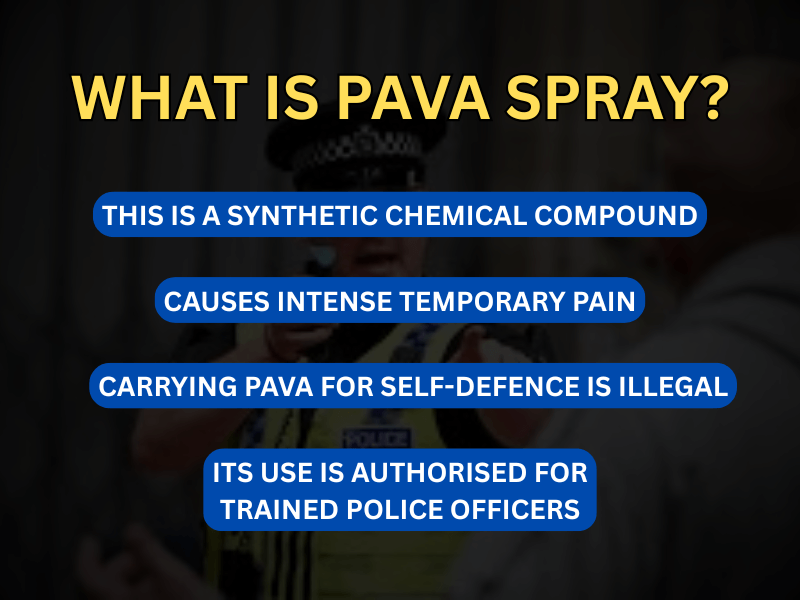
- PAVA (Pelargonic Acid Vanillylamide): This is a synthetic chemical compound. It mimics the effects of capsaicin, the active ingredient in natural pepper spray.
- Effects: When sprayed, PAVA causes intense temporary pain, burning sensations on the skin and eyes, difficulty breathing, and temporary blindness.
- PAVA Spray vs Pepper Spray: While often used interchangeably in the discussion, PAVA is synthetic, whereas traditional pepper spray is derived from chilli peppers (Oleoresin Capsicum or OC). Both are incapacitated and designed to subdue individuals quickly.
- Legality: You might wonder, is PAVA spray legal in the UK? For the general public, carrying PAVA or pepper spray for self-defence is illegal. However, its use is authorised for trained police officers and, under specific circumstances, prison and custody staff. The current controversy centres on extending its use specifically to settings holding children under 18. The introduction of PAVA spray UK-wide into YOIs marks a significant policy shift.
Understanding Young Offender Institutions
To grasp the full context, we need to consider the environment where the PAVA spray is set to be deployed.
- What are YOIs? Young Offender Institutions UK are facilities designed to hold young people aged 15 to 21 who have been sentenced or remanded in custody by the courts. This announcement specifically concerns institutions holding children (under 18s).
- Life Inside: Understanding what young offender institutions are like is complex. They are secure facilities managing young people often dealing with trauma, mental health issues, substance misuse, and disrupted education. While providing structure, education, and programmes aimed at rehabilitation, they can also be challenging and sometimes volatile environments. The focus is meant to be on welfare and turning young lives around.
- Vulnerability: The children held in these institutions are legally recognised as children, with specific rights and welfare needs. Many are vulnerable and require support, care, and guidance.
The Government’s Decision and Rationale
The government’s decision to introduce PAVA comes amidst concerns about rising levels of violence in some YOIs, affecting both staff and the children held there.
- Stated Aim: The primary justification given is to improve safety by providing staff with an additional tool to manage serious incidents of violence, theoretically reducing the need for physical restraint, which also carries risks.
- Proposed Safeguards: The Ministry of Justice has stated that the use of PAVA will be subject to strict conditions, including:
- High thresholds for deployment (only in specific, serious circumstances).
- Comprehensive staff training.
- Use of body-worn cameras during incidents.
- Strong governance and oversight procedures.
The Youth Justice Board’s Forceful Opposition
Despite the government’s stated intentions and proposed safeguards, the Youth Justice Board (YJB) has voiced profound disagreement. Understanding the role of the Youth Justice Board is key here – they are statutory advisors tasked with promoting the welfare of children within the justice system. Their opposition is not taken lightly.
Keith Fraser, Chair of the Youth Justice Board, made their position unequivocally clear:
“The Youth Justice Board (YJB) does not support the use of PAVA in youth custody due to the overall detrimental effect on children and the distinct lack of evidence that its use improves safety. Our advice to the government, based on robust evidence, is that PAVA spray is not effective in reducing violence or in preventing children from offending or reoffending. Its use could be harmful.”
This statement highlights several core objections:
- Lack of Evidence: The YJB asserts there is no convincing proof that PAVA reduces violence in youth settings.
- Potential Harm: They believe the use of PAVA could be actively detrimental to children.
- Contradiction with Principles: The decision clashes with the YJB’s fundamental approach.
Mr. Fraser further elaborated on the YJB’s disappointment and specific concerns:
“The YJB has not seen any evidence that would justify this decision, and this move is a further indication that the current model for youth custody is not working. We will be writing to the Minister to express our extreme disappointment at this decision, reaffirm our advice and voice our specific concerns. In particular, we are concerned that there is a significant risk that children from ethnic minority communities, particularly Black boys, children with speech, language, and communication needs, and those who are neurodivergent, will be unfairly targeted. We are concerned that the introduction will erode trust and relationships, undermining safety and rehabilitation efforts.”
These points raise serious red flags:
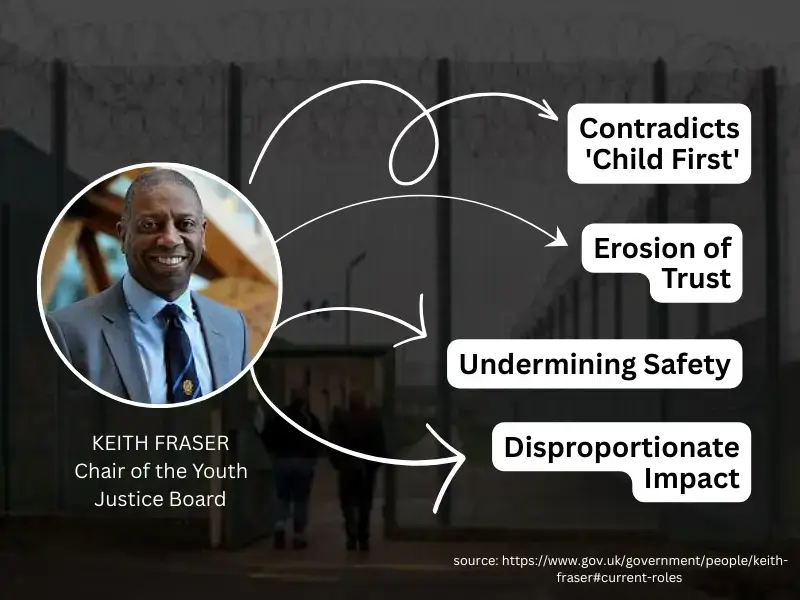
- Disproportionate Impact: A major worry is that PAVA could be used disproportionately against children from minority ethnic backgrounds or those with communication difficulties or neurodevelopmental conditions, who might struggle to understand or comply with instructions during high-stress incidents.
- Erosion of Trust: Building positive relationships between staff and children is crucial for safety and rehabilitation. The YJB fears that introducing a tool like PAVA will create fear and mistrust, damaging these vital connections.
- Undermining Safety: Paradoxically, rather than improving safety, the YJB suggests PAVA could make YOIs less safe by increasing tension and breaking down cooperative relationships.
- Contradicts ‘Child First’: The YJB champions a “Child First” approach, prioritising the individual welfare needs of children. They see the deployment of PAVA as fundamentally incompatible with this principle, viewing it as a punitive measure rather than a child-centred one.
The Debate: Safety Tool vs. Harmful Weapon
The core of the debate lies in fundamentally different views on how best to manage vulnerable children in challenging environments.
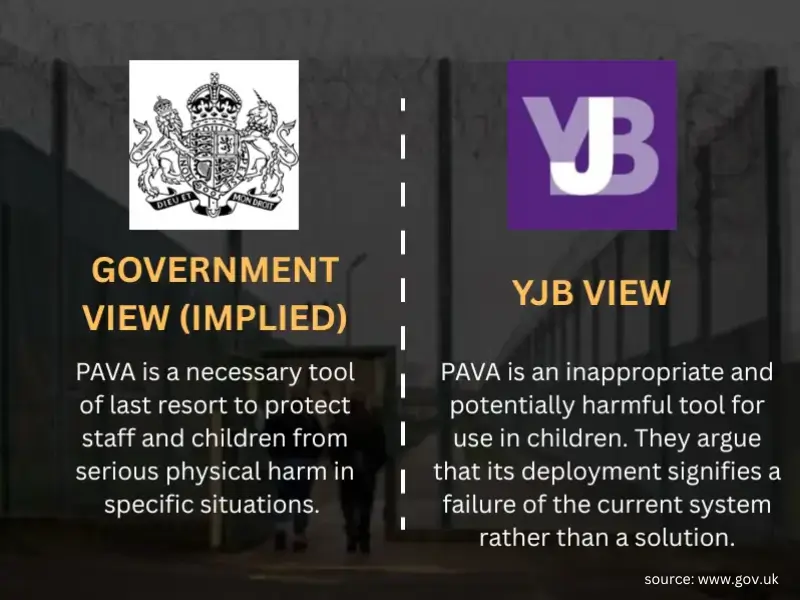
- Government View (Implied): PAVA is a necessary last resort tool to protect staff and children from serious physical harm in specific situations.
- YJB View: PAVA is an inappropriate and potentially harmful tool for use in children. They argue that its deployment signifies a failure of the current system rather than a solution. They believe the focus should be on preventing violence through positive, relationship-based approaches.
Alternatives Proposed by the Youth Justice Board
Instead of introducing PAVA, the YJB advocates for investment in proven, evidence-based strategies.
Keith Fraser outlined these alternatives:
“We urge the government to instead invest in sustained reform, to include increased staff levels, improved staff training and retention, effective behaviour management strategies and evidence-based programmes to improve safety. In the longer term, there should be a move towards smaller, locally-based units staffed by professionals who are specially trained to work with children with complex needs. These units should prioritise education and training to support children to be positive members of society and will contribute to making communities safer.”
Key recommendations include:
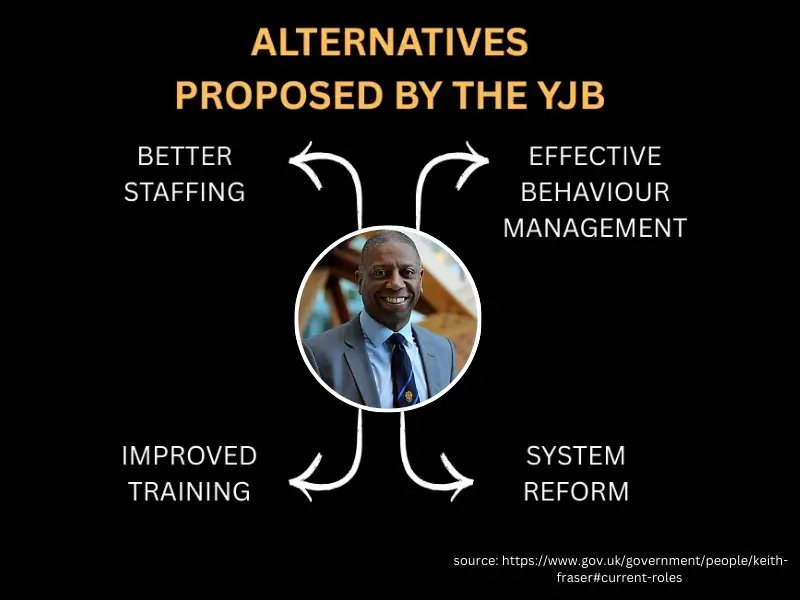
- Better Staffing: More staff, better trained and retained, to manage situations effectively.
- Improved Training: Focus on de-escalation techniques and understanding child development and trauma.
- Effective Behaviour Management: Implementing strategies that address the root causes of behaviour rather than just reacting to incidents.
- System Reform: Moving towards smaller, specialised units designed around children’s needs, focusing on education and rehabilitation.
Wider Concerns and Changing Rules
The YJB is not alone in its concerns. Children’s rights organisations and penal reform groups have previously expressed alarm about the potential use of PAVA on children, echoing fears about physical and psychological harm, and the message it sends about how we treat children in state care.
This decision represents a significant change to the young offender institution’s rules and operational practices. It shifts the dynamic within these institutions and raises questions about the balance between security measures and the welfare obligations owed to children.
What Happens Next?
The government has authorised the use of PAVA, and a phased rollout is expected. However, the Youth Justice Board has made its opposition crystal clear and has pledged to monitor the situation closely, scrutinising the safeguards, training, data, and governance surrounding PAVA’s deployment.
The debate is far from over. This decision highlights fundamental disagreements about the nature of youth custody and the best way to support vulnerable children while maintaining safety. Policymakers now focus on how to implement this policy and what impact it will have on children in the UK Young Offender Institutions.
The strong stance taken by the YJB ensures that the use of PAVA spray in youth custody will remain under intense scrutiny in the weeks and months ahead. It forces a necessary conversation about whether current approaches are genuinely serving the complex needs of children in the justice system or potentially causing further harm.
Read more about Mental Health Tribunals in the UK: Know Your Rights
Frequently Asked Questions
PAVA is a synthetic pepper spray that causes temporary intense pain, blindness, and breathing difficulty. It’s illegal for public use but planned for trained staff in Young Offender Institutions (YOIs).
The YJB believes PAVA lacks evidence of effectiveness, could harm children physically and mentally, contradicts their “Child First” welfare principle, and damages vital trust between staff and children.
Key concerns include potential physical and psychological harm, erosion of trust, the risk of disproportionate use against ethnic minority or neurodivergent children, and undermining rehabilitation efforts.
The government says PAVA will improve safety in serious violent incidents by protecting staff and children as a last resort, with strict rules for its use.
The YJB urges investment in more staff, better training in de-escalation, positive behaviour management strategies, and ultimately, smaller therapeutic units focused on children’s specific needs and rehabilitation.
Source / Ref.: Gov.uk Contains public sector information licensed under Open Government Licence v3.0.
Written by [Ketan Borada / British Portal Team] – Founder of British Portal, dedicated to providing accurate and up-to-date information on UK public services and benefits.Related Posts

Previous Post
Next Post







- Business
 5
5 - Cricket5
- Department for Education49
- Departments3
- Driving and Transport
 53
53 - Education45
- Finance6
- Football13
- Golf3
- Government
 108
108 - Guides1
- Health4
- Health
 5
5 - International Politics9
- Law and Justice31
- Money and Tax23
- National Politics4
- News68
- Politics6
- Sports38
- Technology5
- Tennis3
- Transportation4
- Uncategorized4
- Visa
 17
17 - Visas and Immigration
 24
24 - Weather1