Winter fuel payment changes have sparked debate across the UK this week. The Chancellor’s major U-turn has reinstated this vital support for pensioners. Millions of older Britons with annual incomes below £35,000 will now receive help towards their heating bills this winter.
This decision follows strong public and political pressure after the initial plan to scrap the payment for many. Now, the government aims to ease energy costs for those most in need.
In this guide, we break down who is eligible, what this shift means for pensioners, and how the payment works. We’ll also explore the financial and political impact of this reversal.
Government U-Turn
The government’s announcement on winter fuel payment marked a significant policy reversal. Initially, plans were in motion to limit payments strictly to the lowest-income pensioners. This change would have affected millions across the UK.
Public backlash quickly followed the proposal. Advocacy groups, opposition MPs, and even members within the ruling party voiced concerns. Many highlighted the growing financial strain on pensioners facing rising energy prices.
In response, the Chancellor confirmed on 9 June 2025 that the government will restore winter fuel payments for pensioners with incomes under £35,000 per year. This move brings relief to an estimated 8 million older citizens.
The restored payment aims to:
- Protect vulnerable pensioners from energy poverty
- Maintain trust in the government’s energy support pledges
- Address criticism around the initial proposal’s fairness
According to Reuters, this U-turn will cost the Treasury approximately £1.8 billion. However, the political gain in terms of public approval may outweigh the financial cost.
Who Is Eligible for the Winter Fuel Payment in 2025?
The updated winter fuel payment eligibility rules now focus on pensioners earning less than £35,000 annually. This follows the government’s U-turn, aiming to direct support to those most at risk of fuel poverty.
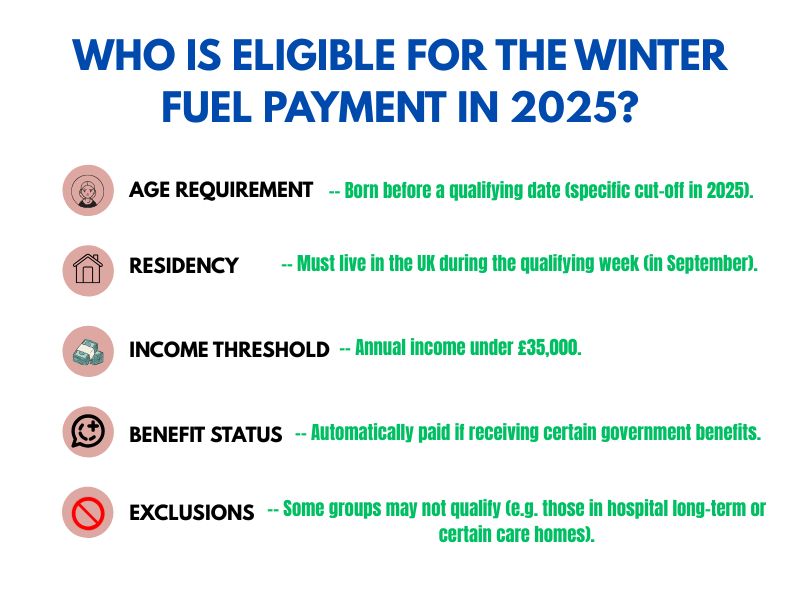
You will qualify for the winter fuel payment if:
- You were born on or before 23 September 1959
- Your total income is under £35,000 per year
- You live in the UK during the qualifying week (15–21 September 2025)
Additional eligibility details include:
- Pensioners receiving the State Pension automatically qualify
- Those claiming Pension Credit are eligible regardless of other income
- People living in care homes may receive a reduced payment
- Pensioners not receiving State Pension must actively apply
Not eligible:
- Pensioners with income above £35,000
- Those in hospital receiving free treatment for more than 12 weeks
- Pensioners who live outside the UK (with limited exceptions)
This revised approach aims to ensure that limited public funds target those most in need this winter.
How Much Is the Winter Fuel Payment Worth?
The amount of winter fuel payment pensioners receive depends on age and household circumstances. The recent policy change focused on eligibility and did not change payment amounts.
For winter 2025–2026, the standard winter fuel payment rates are:
| Your Circumstances | Amount You Will Receive |
|---|---|
| Born between 23 Sept 1944 and 23 Sept 1959 | £500 |
| Born before 23 Sept 1944 | £600 |
| Living with another eligible pensioner | £250–£300 per person |
| Living in a care home (eligible) | £250–£300 |
Key points to note:
- Payments are made automatically if you receive the State Pension or certain other qualifying benefits.
- If you do not receive qualifying benefits, you must apply to claim.
- Payments usually arrive between November and December each year.
While the payment amounts remain the same, many pensioners feel the support only partially covers their rising heating costs.
How to Claim the Winter Fuel Payment
Claiming the winter fuel payment is straightforward for most pensioners. If you already receive the State Pension or certain benefits, the payment will be made automatically. There’s no need to apply.
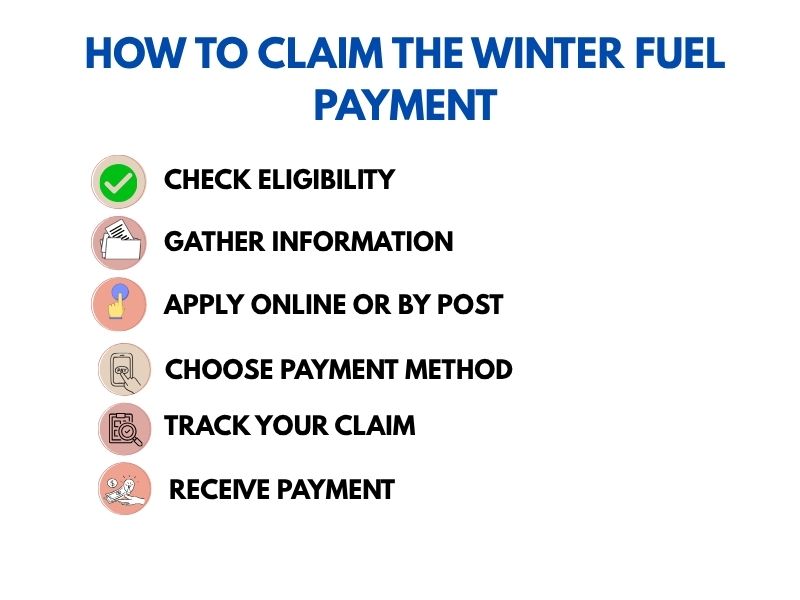
However, if you do not receive qualifying benefits, you must submit a claim to receive the payment. Here’s how:
- Check eligibility: Confirm that you meet the age and income criteria for the payment.
- Get the claim form: You can request a claim form online or by phone from the official government website.
- Complete the form: Provide details about your income, residency, and any other requested information.
- Submit the claim: Return the form by post or online, depending on the options available.
Claims should be submitted before the deadline, usually by mid-November, to ensure timely payment. Late claims may be paid later, but it’s best to apply as early as possible.
Keep in mind that if your circumstances change such as income or residency status you must inform the authorities, as this may affect your eligibility.
The Financial and Political Impact
The government’s decision to restore the winter fuel payment carries significant financial and political consequences. Financially, the U-turn is estimated to cost around £1.8 billion, adding pressure to public spending budgets amid other economic challenges.
Politically, the reversal aims to regain trust with pensioners and the wider public. The initial plan to cut payments for many faced widespread criticism, seen by many as unfair to vulnerable older adults struggling with soaring energy costs.
This policy change highlights:
- The government’s responsiveness to public and political pressure
- The importance of energy support for pensioners’ wellbeing
- The balancing act between fiscal responsibility and social support
Looking ahead, this move may set a precedent for future decisions on welfare support, especially as energy prices remain volatile and inflationary pressures persist.
What Pensioners Should Do Next to Prepare for Winter
With the winter fuel payment restored, pensioners should take proactive steps to make the most of this support and stay warm this winter.
Here are practical tips:
- Check your payment status: Verify if you’re eligible and confirm when your payment will arrive.
- Budget energy costs: Use the payment to help cover heating bills or invest in energy-saving measures.
- Seek additional help: Explore other benefits and grants for low-income pensioners, such as the Cold Weather Payment or local council schemes.
- Stay informed: Keep updated on government announcements about energy prices and support schemes.
- Stay safe: Ensure your home heating systems are serviced and working efficiently to prevent accidents or breakdowns.
Taking these steps can help pensioners manage rising energy costs more effectively and avoid hardship during colder months.
Winter Fuel Payment’s Role in Combating Fuel Poverty
The winter fuel payment plays a critical role in reducing fuel poverty among pensioners. Fuel poverty occurs when a household struggles to afford adequate heating, risking health and wellbeing.
This payment helps by:
- Providing direct financial support to cover heating bills
- Encouraging pensioners to keep their homes warm during colder months
- Reducing health risks linked to cold homes, such as respiratory and cardiovascular illnesses
Government research shows that targeted support like this lowers winter-related hospital admissions and improves quality of life for vulnerable groups.
Despite this, many experts argue that rising energy prices and living costs mean more comprehensive solutions are needed alongside the winter fuel payment to effectively tackle fuel poverty in the long term.
Conclusion
The winter fuel payment restoration offers crucial financial relief to millions of pensioners facing rising energy costs. Understanding eligibility, how to claim, and the broader impact helps pensioners stay informed and prepared for winter.
This payment, alongside other energy support schemes, plays a vital role in combating fuel poverty and protecting vulnerable households. Staying proactive by checking payment status and budgeting carefully ensures pensioners can keep warm and safe during colder months.
As energy prices and living costs evolve, ongoing support remains essential to safeguard pensioners’ wellbeing. The government’s U-turn highlights the importance of listening to public concerns and balancing fiscal responsibility with social care.
FAQs
Pensioners over the qualifying age with income under £35,000 a year.
Apply online or by post if you don’t receive qualifying benefits automatically.
Payments typically arrive between November and December each year.
Yes, eligible care home residents receive a reduced payment.
No, it helps offset but may not fully cover rising energy bills.
Amounts range from £250 to £600 depending on age and living situation.
Related Posts



Previous Post
Next Post






- Business
 5
5 - Cricket5
- Department for Education49
- Departments3
- Driving and Transport
 53
53 - Education45
- Finance6
- Football13
- Golf3
- Government
 108
108 - Guides1
- Health4
- Health
 5
5 - International Politics9
- Law and Justice31
- Money and Tax23
- National Politics4
- News68
- Politics6
- Sports38
- Technology5
- Tennis3
- Transportation4
- Uncategorized4
- Visa
 17
17 - Visas and Immigration
 24
24 - Weather1