Life can sometimes bring unexpected problems. You might face issues with housing, debt, your family, or discrimination. When these situations involve legal rights and disputes between people or organisations, it’s often called a ‘civil law’ matter. Getting help to understand your rights and options in these cases is known as civil legal advice.
Navigating legal issues can feel confusing. Knowing where to turn for help is the first crucial step.
What is a Civil Legal Matter?
First, let’s quickly clarify what is a civil legal matter. Unlike criminal law (which deals with crimes like theft or assault), civil law covers disagreements between individuals, families, or organisations. Common examples include:
- Disputes over contracts or money owed (debt).
- Housing problems like eviction or serious repairs needed.
- Family issues such as divorce or arrangements for children.
- Cases of discrimination.
- Problems with accessing education for children with support needs (SEN).
- Challenges related to welfare benefits.
- Employment law issues (though specific advice routes often apply here).
Essentially, if you have a legal problem that isn’t about you being accused of a crime, it’s likely a civil matter. Getting legal advice for civil matters and specific guidance is key.
Civil Legal Advice (CLA) and Legal Aid
For people in England and Wales who may not be able to afford a lawyer, the government provides a service called Civil Legal Advice (CLA). You can find the official information at the gov.uk civil legal advice website.
- What is CLA? It’s the main gateway for accessing civil legal aid for certain types of problems. Civil legal aid is government funding to help pay for legal advice.
- Who is it for? It’s specifically for people who pass eligibility tests – usually based on your financial situation (income and savings) and the specifics of your case (its merits and whether it falls into a category covered by legal aid).
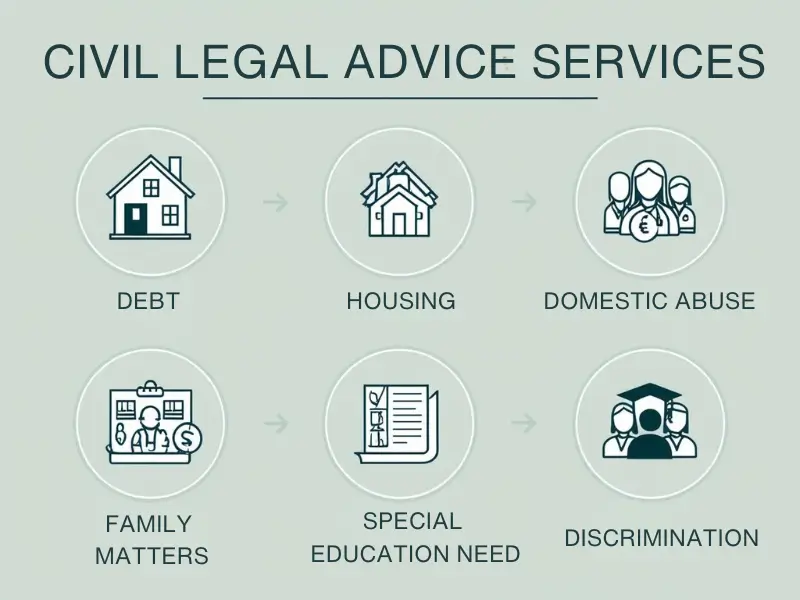
- What problems? Legal aid funding (and therefore the CLA service) is typically limited to specific, serious problems, including:
- Debt (if your home is at risk).
- Housing (facing eviction, homelessness, and serious disrepair).
- Domestic abuse (getting protection).
- Family matters (where there’s been domestic abuse or child protection issues). You might seek civil legal aid, divorce help, or advice on child arrangements in these specific contexts. Civil legal aid domestic violence support is a key area.
- Special Education Needs (challenging decisions about support).
- Discrimination (unfair treatment).
- Asylum and some immigration cases (though rules are complex).
How to Contact the Official CLA Service:
If you think you might be eligible based on the problem types above, the first step is usually to check online or call them.
- You can find the civil legal advice phone number or civil legal advice telephone number on the official gov.uk website.
- This civil legal advice helpline or civil legal advice line can assess your situation.
- You can search for the civil legal advice contact number directly via gov.uk. Use keywords like contact civil legal advice or contact civil legal advice cla on the site.
- They have specific civil legal advice opening times, which are listed on the gov.uk page.
Checking Eligibility is Key:
Before CLA can properly help, you need to check if you can get legal aid.
- The gov.uk website has a civil legal aid eligibility checker tool.
- You might find references to a civil legal aid eligibility calculator, which this tool essentially performs.
- Eligibility depends on:
- Scope: Is your problem type covered by legal aid? (As listed above).
- Means: Can you show you have a low income and limited savings?
- Merits: Is your case strong enough? Is it reasonable to use public funds?
If you pass the initial checks, CLA might give you advice directly or refer you to a specialist civil legal aid solicitor or legal aid civil solicitor.
Understanding Legal Aid Further
Getting legal aid involves some process.
- You’ll likely need to fill out a civil legal aid application or civil legal aid form. Sometimes, this is called a civil legal aid application form.
- You may need to make a civil legal aid declaration, potentially a civil legal aid online declaration, confirming your financial details.
- Providing civil legal aid evidence (like bank statements) is usually required to prove your means.
- If approved, you might receive a civil legal aid certificate allowing a solicitor to work on your case.
- Be aware that sometimes, even with legal aid, you might have to pay some costs back later (this relates to rules like the civil legal aid statutory charge regulations 2013).
- The system operates under specific rules, often detailed in government regulations (e.g., civil legal aid costs regulations 2013, civil legal aid merits criteria regulations 2013, civil legal aid financial resources regulations 2013). You don’t usually need to know the specific regulation names, but understand that strict rules govern civil legal aid funding.
What If You Don’t Qualify for Legal Aid? Your Options
Many people find they aren’t eligible for civil legal aid. This might be because their income is too high, their problem isn’t covered, or their case isn’t considered strong enough. If this happens, don’t despair – there are still places to seek help. Here are the main alternatives:
Citizens’ Advice:
- Citizens’ Advice offers free, confidential, and impartial advice on a huge range of issues, including benefits, debt, housing, employment, and consumer problems.
- They have local offices across the UK and a comprehensive website with lots of information.
- They can explain your options and might be able to help you negotiate or find further specialist help.
Law Centres:
- Law Centres are community-based legal practices offering free (or sometimes low-cost) advice, often specialising in areas like housing, immigration, employment, and welfare benefits.
- They primarily help people living in their local area who can’t afford a lawyer.
- The Law Centres Network website can help you find one near you.
Pro Bono: Free Help from Volunteer Lawyers
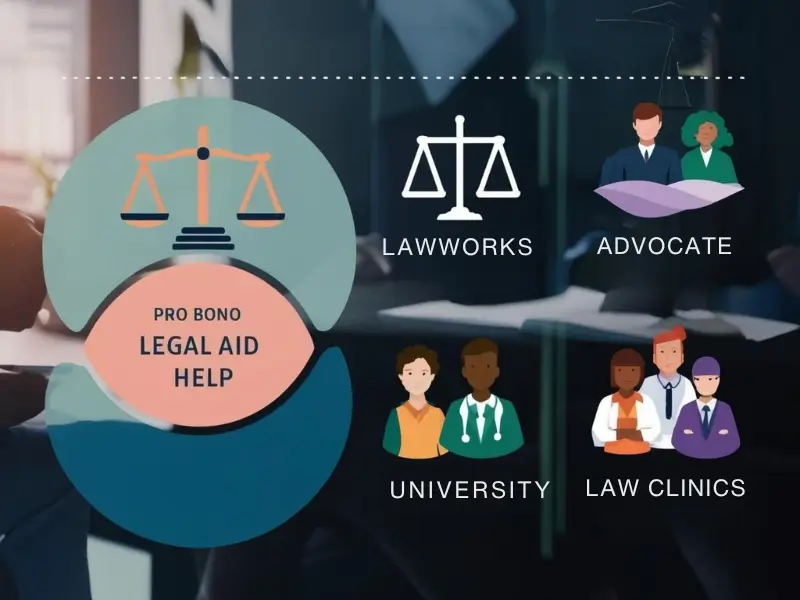
- “Pro Bono” means legal work done for free for the public good. Several charities coordinate schemes where volunteer lawyers offer free civil legal advice. This is generally for people who cannot afford to pay and are not eligible for legal aid.
- LawWorks: This charity connects volunteer solicitors with people in need in England and Wales. They support a network of free legal advice civil law clinics. Check their website for a “Find a Legal Advice Clinic” tool. They may offer help with various free legal advice civil disputes.
- Advocate: This charity connects people with volunteer barristers (specialist lawyers who often represent people in court). They can help with advice or representation if you can’t get legal aid and can’t afford a barrister.
- University Law Clinics: Many universities have clinics where law students, supervised by qualified lawyers, offer free advice on certain types of problems.
- Important Note: Pro bono help isn’t guaranteed. It depends on volunteer availability and whether your case matches their expertise. You often still need to meet specific eligibility criteria (like low income). You might find clinics offering free civil lawyer advice or even a free civil lawyer consultation. These services can help with understanding a free legal advice civil lawsuit or claim.
Specialist Charities and Helplines:
- Many charities focus on specific problems and offer free advice or support. Examples include:
- Shelter (for housing issues)
- Rights of Women (for women needing family law advice)
- ACAS (for employment disputes)
- StepChange or National Debtline (for debt advice)
- Some charities provide legal advice for civil servants or specific groups. You might search for “charity for civil servants legal advice” or “civil service free legal advice” if applicable.
Check Your Insurance:
- Look at your home or car insurance policies. Some include ‘Legal Expenses Insurance’, which might cover legal costs for certain types of disputes (e.g., employment, personal injury).
Paid Advice from Solicitors:
- If you can afford to pay something, you can hire a solicitor directly.
- Finding a Solicitor: The Law Society has an online “Find a Solicitor” tool for England and Wales. Similar bodies exist in Scotland and Northern Ireland. Look for solicitors specialising in the relevant area (e.g., family law, housing law). While keywords like civil legal aid solicitors or civil legal aid lawyers often imply firms doing legal aid work, many firms offer private services too.
- Initial Consultations: Many solicitors offer a civil solicitor free advice session (perhaps 20-30 minutes) or a fixed-fee initial consultation to discuss your case and likely costs.
- Costs: Ask upfront about how they charge (hourly rate, fixed fee for specific work).
Representing Yourself (Litigant in Person):
- You have the right to represent yourself in court or tribunals. This can be challenging, but there are resources available.
- Websites like AdviceNow provide guides and information for people representing themselves. Answering the question of whether you need a lawyer for civil court depends on the complexity, but resources exist if you go it alone.
Finding Help Near You and Online
- When searching for help, using terms like civil legal advice near me, civil matter lawyers near me, or divorce legal advice near me online can bring up local options (solicitors, Citizens’ Advice branches, etc.).
- Be aware that the legal system and advice providers can differ across the UK:
- Scotland: Has its legal system. You’d look for the Scottish Legal Aid Board (SLAB) for legal aid information (civil legal aid eligibility Scotland) and the Law Society of Scotland to find solicitors. Terms like civil legal advice Scotland or civil legal aid solicitors glasgow, civil legal aid glasgow, civil legal assistance office Aberdeen, civil legal assistance edinburgh, or civil legal advice inverness point to Scottish-specific searches.
- Northern Ireland: Also has a separate system. Look for the Legal Services Agency Northern Ireland and the Law Society of Northern Ireland. (Keywords mentioned NI regulations, like civil legal services financial regulations northern ireland 2015, hint at these differences).
- Online Advice: While many websites offer legal information, be cautious about sources offering specific advice online, especially free ones. Stick to reputable charity sites (Citizens Advice, LawWorks, Shelter, etc.), official government sites (gov.uk), or regulated solicitors’ websites. Remember that what constitutes legal advice is specific guidance on your situation from a qualified professional, which differs from general information.
Preparing Before You Seek Advice
To make the most of any advice appointment (whether free or paid):
- Gather Paperwork: Collect all relevant documents (letters, emails, contracts, court papers).
- Write a Summary: Briefly note down what happened, when, and what you want to achieve.
- Prepare Questions: List specific things you want to ask.
- Be Clear: Explain your situation honestly and clearly.
Always try to consult with a qualified advisor or solicitor for help with your specific legal problem. Use resources like the civil legal advice reviews (if available for specific services like CLA) cautiously, and focus on official channels and reputable charities first. If you have issues with a service, look for their civil legal advice complaints procedure.
Finding the right help takes time, but understanding the landscape of civil legal advice UK options is the best place to start. Whether through the official civil legal advice service (CLA), community resources, pro bono schemes, or paid solicitors, support is available.
Source / Ref.: Gov.uk Lawworks.org.uk Contains public sector information licensed under Open Government Licence v3.0.
Written by [Ketan Borada / British Portal Team] – Founder of British Portal, dedicated to providing accurate and up-to-date information on UK public services and benefits.Related Posts


Previous Post
Next Post







- Business
 5
5 - Cricket5
- Department for Education49
- Departments3
- Driving and Transport
 53
53 - Education45
- Finance6
- Football13
- Golf3
- Government
 108
108 - Guides1
- Health
 5
5 - Health4
- International Politics9
- Law and Justice31
- Money and Tax23
- National Politics4
- News68
- Politics6
- Sports38
- Technology5
- Tennis3
- Transportation4
- Uncategorized4
- Visa
 17
17 - Visas and Immigration
 24
24 - Weather1