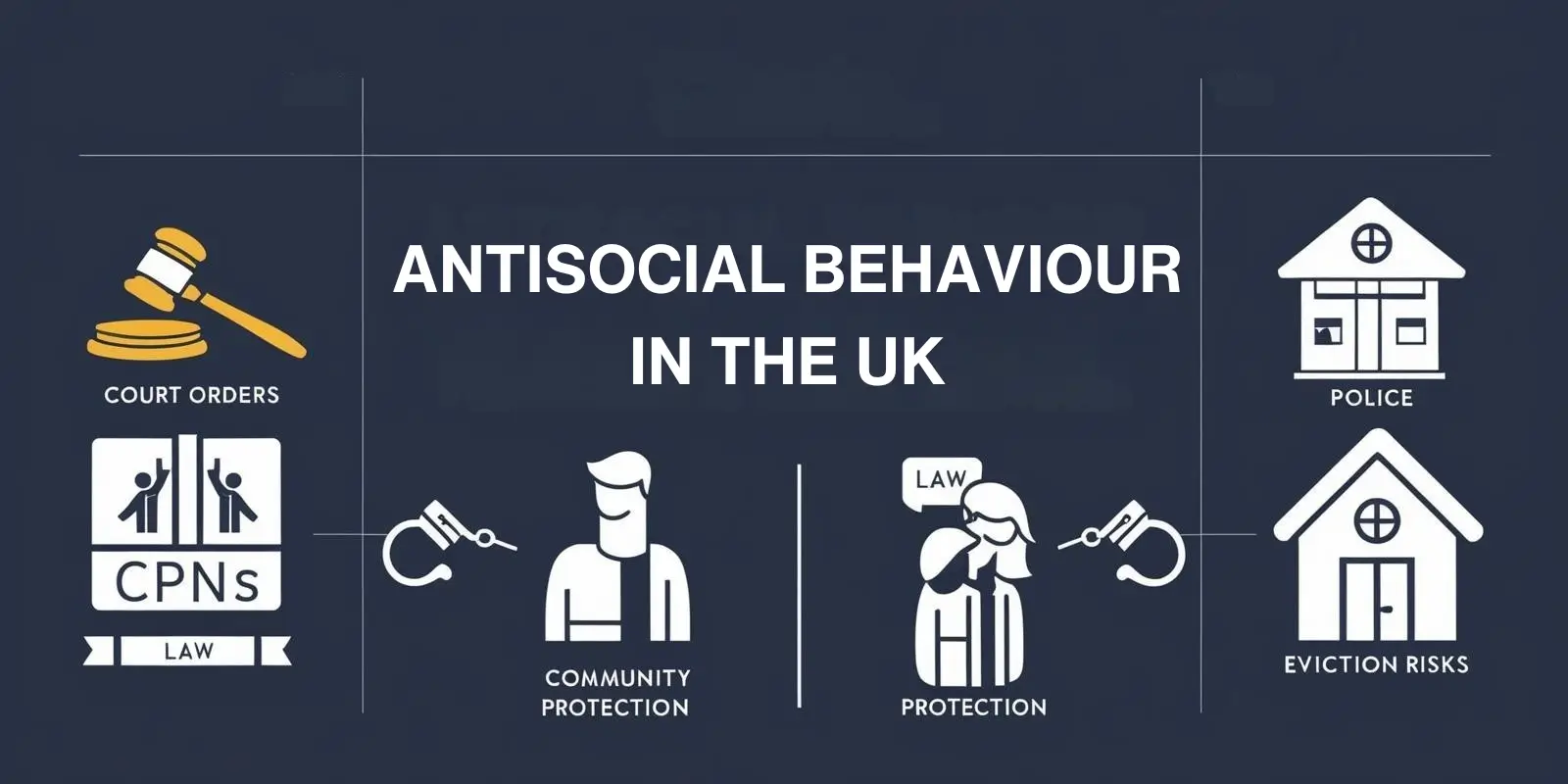
Antisocial behaviour (ASB) can make life difficult for individuals and communities across the UK. It covers a range of actions, from noisy neighbours and vandalism to more serious harassment and intimidation. When behaviour crosses a line and causes harm or distress, authorities like the police and local councils have specific tools they can use. Understanding these tools helps clarify the potential consequences of antisocial behaviour that UK residents might face or witness.
The main framework for tackling these issues in England and Wales is the Antisocial Behaviour, Crime and Policing Act 2014. This law introduced several key powers designed to stop harmful behaviour early and protect victims. Let’s look at the main responses and potential punishments.
Key Tools to Tackle Antisocial Behaviour
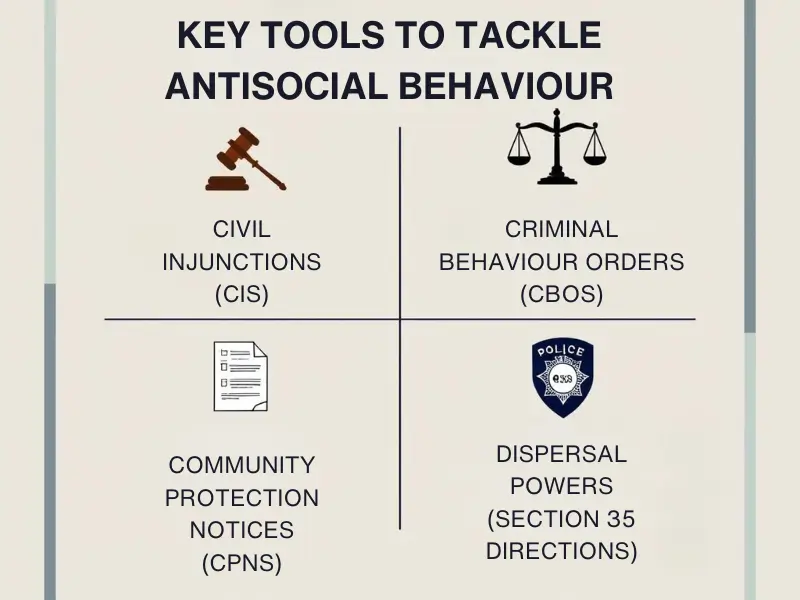
Authorities have several options, and choosing the right one depends on the situation’s seriousness, frequency, and impact.
Civil Injunctions (CIs)
This is one of the primary tools used.
- What it is: A Civil Injunction antisocial behaviour order is granted by a civil court (like the County Court). It aims to prevent someone from engaging in ASB before it leads to a criminal conviction or alongside one.
- Who seeks it: Police, councils, and some housing associations can apply for a CI.
- Who it applies to: Individuals aged 10 or over.
- What it does: A CI sets rules the person must follow. These can be:
- Prohibitions: Ordering someone not to do certain things (e.g., entering a specific area, contacting certain people, playing loud music at night).
- Positive Requirements: Ordering someone to do certain things to address the causes of their behaviour (e.g., attend drug or alcohol support sessions, participate in anger management programmes). This focus on addressing root causes is a key part of the modern approach.
- Threshold: To grant a CI, the court must believe—on the balance of probabilities—that the person has engaged in or threatens to engage in ASB that causes or is likely to cause harassment, alarm, or distress.
Criminal Behaviour Orders (CBOs)
These are used in more serious cases linked to criminal activity.
- What it is: A Criminal Behaviour Order (CBO) is issued by a criminal court (Magistrates’ or Crown Court) after someone has already been convicted of a criminal offence.
- Who seeks it: The prosecution applies for it during the sentencing process.
- Who it applies to: Individuals aged 10 or over convicted of an offence.
- What it does: Like a CI, a CBO sets rules which can include both prohibitions and positive requirements tailored to stop the individual committing further ASB and address the causes of their offending behaviour.
- Threshold: The court must find, beyond reasonable doubt, that the person caused or was likely to cause harassment, alarm, or distress and that the order will help stop them from doing it again.
Community Protection Notices (CPNs)
CPNs tackle persistent, unreasonable behaviour that affects a community’s quality of life.
- What it is: A tool used for ongoing nuisances like noise, messy gardens attracting pests, or uncontrolled dogs.
- Who issues it: Council officers, police officers, or designated housing association staff can issue CPNs.
- The Process: It usually involves a three-stage process:
- A written warning is given first, asking the person to stop the behaviour.
- If the behaviour continues, a formal CPN is issued, legally requiring them to stop certain actions or take specific steps.
- Failure to comply with the CPN leads to potential penalties.
- Threshold: The behaviour must be persistent, unreasonable, and have a detrimental effect on the community’s quality of life.
Dispersal Powers (Section 35 Directions)
These are short-term powers used by police to deal with immediate issues in public places.
- What it is: A police officer or PCSO in uniform can direct a person (aged 10+) to leave a specific area for up to 48 hours.
- When it’s used: If the officer believes their presence is causing, or likely to cause, ASB, crime, or disorder.
- Associated Powers: They can also confiscate items related to the behaviour (e.g., alcohol).
What Happens When Orders Are Broken? The Punishments
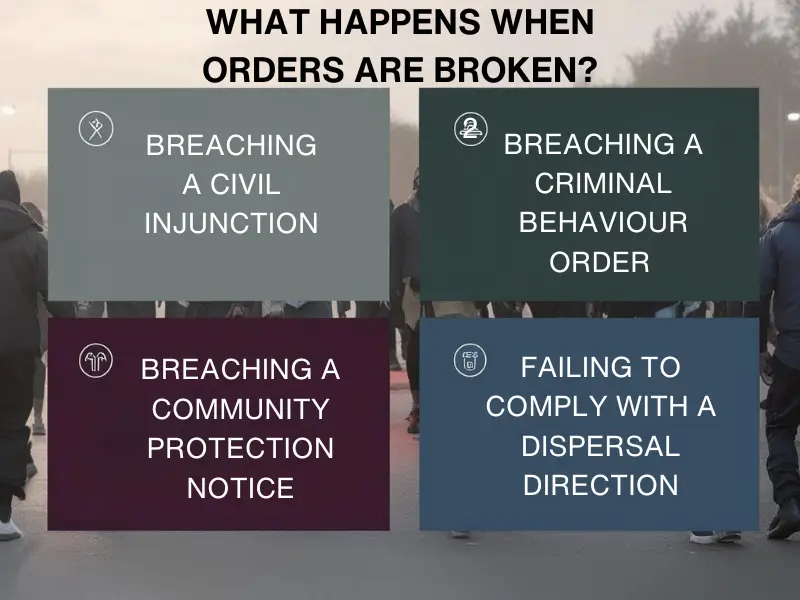
Having an order made against you is serious, but breaking the rules of that order leads to further consequences – the punishments for antisocial behaviour that UK authorities can enforce. The penalties differ depending on the type of order breached:
Breaching a Civil Injunction (CI):
- What it means: Breaking the rules of a CI is not a separate criminal offence, but it is “Contempt of Court” – meaning showing disrespect for the court’s authority.
- The Process: The person can be arrested, brought back to the civil court, and sentenced.
- Possible Penalties (Adults):
- Up to 2 years in prison.
- An unlimited fine (though it must be proportionate).
- Suspended sentence (where the penalty is only activated if they breach again).
- Possible Penalties (Under 18s): Can include supervision orders or detention orders.
- Factors Considered: The court looks at how serious the breach was, whether it was deliberate, the harm caused, and the person’s history and circumstances.
Breaching a Criminal Behaviour Order (CBO):
- What it means: Breaking a CBO is a separate criminal offence.
- The Process: The person can be arrested and prosecuted in a criminal court for the breach itself.
- Possible Penalties (Adults): Up to 5 years in prison and/or an unlimited fine.
- Possible Penalties (Under 18s): A detention and training order.
- Key Question: What happens if you breach a Criminal Behaviour Order is a serious concern, as the penalties reflect its status as a distinct criminal act.
Breach a Community Protection Notice (CPN):
- What it means: Failing to comply with the requirements of a CPN is a criminal offence.
- Possible Penalties:
- An on-the-spot Fixed Penalty Notice (FPN), usually around £100.
- If prosecuted in court, a fine of up to £2,500 for individuals (or £20,000 for businesses).
Failing to Comply with a Dispersal Direction:
- What it means: Refusing to leave an area when directed by police under Section 35, or returning within the prohibited time, is a criminal offence.
- Possible Penalties: A fine of up to £2,500 and/or up to 3 months in prison.
Wider Consequences of Antisocial Behaviour
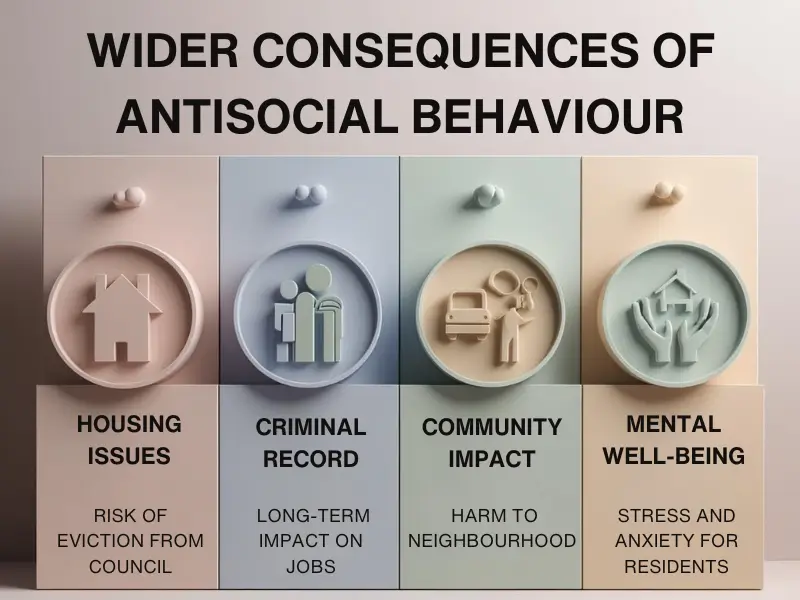
Beyond formal court orders and their breach penalties, persistent ASB can lead to other serious outcomes:
- Housing Issues: For social or private housing tenants, ongoing ASB can be grounds for eviction. An antisocial behaviour eviction in UK can lead to losing one’s home. Landlords have responsibilities, but also powers, to act.
- Criminal Record: Breaching a CBO, CPN, or Dispersal Direction results in a criminal record, which can impact future employment, travel, and other aspects of life. Breaching a CI counts as contempt of court, and the authorities still record any custodial sentence given for the breach.
- Community Impact: Continuous ASB damages community spirit, affects mental well-being, and can devalue property.
Understanding the Legal Framework
The Antisocial Behaviour, Crime and Policing Act 2014 primarily shapes the laws UK residents deal with. This Act aimed to streamline previous powers and focus on faster, more effective responses, including the positive requirements designed to tackle underlying issues.
It’s important to remember that dealing with antisocial behaviour neighbours UK-wide, or any other form of ASB, often starts with informal steps. Official guidance encourages authorities to consider warnings and mediation before resorting to formal legal action where appropriate. The goal is always proportionality – using the right tool for the job.
What About ASBOs?
You might still hear people talk about the Antisocial Behaviour Order (ASBO).
- Historical Context: ASBOs were the main tool used before 2014.
- Current Status: The 2014 Act replaced them with Civil Injunctions and Criminal Behaviour Orders. Authorities kept existing ASBOs until they expired but stopped issuing new ones. The principles are similar, but CIs and CBOs are the current legal instruments.
Taking Action and Finding Solutions
The system includes tools not just for punishment but also for resolution and accountability:
- Community Remedy: For lower-level ASB, authorities may let victims choose an out-of-court consequence for the offender from a set list.
- ASB Case Review (Community Trigger): If someone feels ignored after repeatedly reporting ASB, they can ask multiple agencies to formally review the case.
Antisocial behaviour can significantly impact lives. Understanding the range of tools available – from preventative injunctions and behaviour orders with positive requirements to notices tackling persistent nuisances and immediate dispersal powers – clarifies how authorities can intervene. The consequences for breaching these orders are serious, reflecting the importance placed on protecting communities and ensuring people feel safe where they live.
Read more about How to Deal with Workplace Bullying in UK
Source / Ref.: Assets.publishing.service.gov.uk Gov.uk Contains public sector information licensed under Open Government Licence v3.0.
Written by [Ketan Borada / British Portal Team] – Founder of British Portal, dedicated to providing accurate and up-to-date information on UK public services and benefits.Related Posts


Previous Post
Next Post






- Business
 5
5 - Cricket5
- Department for Education49
- Departments3
- Driving and Transport
 53
53 - Education45
- Finance6
- Football13
- Golf3
- Government
 108
108 - Guides1
- Health4
- Health
 5
5 - International Politics9
- Law and Justice31
- Money and Tax23
- National Politics4
- News68
- Politics6
- Sports38
- Technology5
- Tennis3
- Transportation4
- Uncategorized4
- Visa
 17
17 - Visas and Immigration
 24
24 - Weather1