)VAT is a type of tax placed on goods and services. It is considered an “indirect” tax because businesses collect it on behalf of the government. In essence, the tax is charged at each stage of a product’s journey, from production to the point of sale. However, the final cost is ultimately borne by the consumer, since the consumer is the one who pays for the product’s price plus the VAT amount.
This system has been in place in the UK since 1973 when the country joined the European Economic Community. It replaced an older system called Purchase Tax. Over the years, VAT has become one of the largest sources of government revenue in the UK. It is the third-largest source of tax income after income tax and National Insurance contributions.
If you run a business in the UK, it is important to know how VAT works. You need to be aware of when and why you should register, how to issue VAT invoices, and how to keep proper records.
Why VAT Exists and How It Works
When you buy a product in the UK, you often see the price advertised as including VAT. This means that part of the price you pay is tax. If a product costs £120 (including VAT), and the VAT rate is 20%, then the net price without tax is £100, while the remaining £20 is VAT.
The government requires businesses to add VAT to the prices of many goods and services. Businesses then collect these extra amounts of money and pass them on to the government. Some items have different VAT rates (or none at all). This helps the government balance the need for revenue to keep essential items affordable.
VAT is structured to ensure tax is collected at different points in the supply chain. When you, as a business, buy goods or services, you might pay VAT on these purchases (commonly called “input VAT”). Then, when you sell to your customers, you charge VAT on those sales (commonly called “output VAT”). You are allowed to subtract the VAT you paid on purchases from the VAT you charged on sales. The difference is what you send to the government. If you paid more VAT on your purchases than you charged on your sales, you may claim a refund.
Current UK VAT Rates
The standard VAT rate remains at 20%, and the reduced rate at 5%. These rates have not changed since January 4, 2011. Most goods and services in the UK fall under this standard rate.
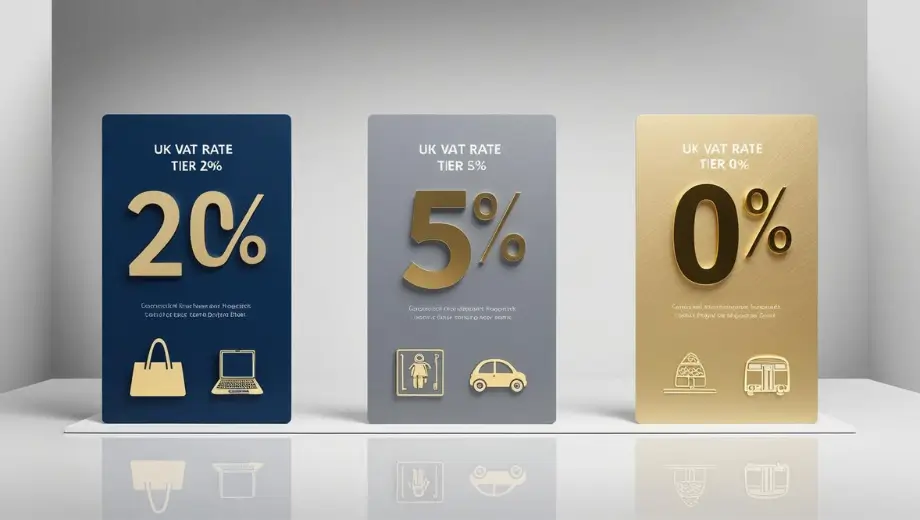
However, there are also other rates:
- Reduced Rate (5%): This lower rate applies to certain goods and services. For example, domestic fuel, children’s car seats, and some home insulation services often qualify for the 5% rate.
- Zero Rate (0%): A range of goods and services carry no VAT charge at all. Common examples include most food (such as staple groceries), children’s clothing, books, newspapers, and most public transport fares. Zero-rated items are still considered “taxable” for VAT purposes, even though the charge is 0%. This means if you sell zero-rated goods, you can still claim back any VAT you paid on your business expenses related to those goods.
VAT classifications can be confusing, especially if you sell different types of goods at different rates. Always check the official government guidance or seek professional advice if you are unsure.
VAT Registration: When You Must Register
In the UK, registration becomes compulsory when your taxable turnover goes above a certain threshold. As of 2024, this threshold is £90,000. Taxable turnover includes the money you make from selling goods or services that are not exempt from VAT. Once you cross this line, you must register for VAT.
This threshold in the UK is known to be one of the highest in the world. It gives small businesses some breathing room before the VAT system becomes mandatory. However, some businesses prefer to register even before reaching that threshold. We will discuss the reasons for voluntary registration in the next section.
Voluntary Registration and Benefits
Even if your sales are below the threshold, you might choose to register for VAT. This is often called “voluntary registration.” The main benefit of registering early is the ability to reclaim VAT on your business expenses. If you incur a lot of costs and your clients do not mind paying VAT on your sales, you could find it beneficial to register.
Registering can also make your business appear more established. Some businesses prefer to work only with partners who are VAT-registered, especially if they can reclaim the VAT themselves. Thus, having a valid VAT number may give your company an added sense of credibility.
On the other hand, registering voluntarily means more administrative work. You must submit regular VAT returns, keep thorough records, and follow the correct invoicing procedures. It also means increasing your prices to cover VAT, unless you decide to absorb the cost yourself, which would reduce your profit margin. Before you register voluntarily, weigh the benefits and drawbacks.
Non-UK Businesses and Their Obligations
For companies that are not established in the UK, the VAT rules are different. If you are a non-UK business and you start selling goods or services in the UK, you must usually register for VAT right away. The threshold of £90,000 does not apply to you.
If you are non-resident and sell items stored in the UK to UK customers, or if you provide certain services in the UK, you should research your VAT obligations carefully. You may need a UK VAT number and must account for VAT on your transactions.
The VAT Registration Process
Registering for VAT can be done online in many cases. This is often the quickest route for most standard businesses. However, some business types must complete a paper form called VAT1 and send it by post. After processing your application, the tax authority will send you a VAT registration certificate. This certificate shows your business name, your unique VAT number, and other details like when your registration took effect.
You should keep this certificate safe. Once you have it, you must start charging VAT on your taxable sales if the registration date has already begun. You also need to include your VAT number on the invoices you issue.
VAT Returns and Filing Requirements
After you register, you must begin submitting VAT returns. The majority of businesses file their returns every three months (quarterly). Some businesses, especially those who tend to receive VAT refunds (for instance, those who export goods), may prefer monthly returns. Having monthly returns allows them to get refunds more quickly.
Your VAT return must typically be filed online. There are very few exceptions to this rule, and they mostly apply if you have specific needs that make digital filing difficult. Each return will show:
- The total amount of VAT you charged on your sales (output VAT).
- The total amount of VAT you paid on your purchases (input VAT).
The difference, is that you either pay to the government or claim back if you paid more than you charged.
You also need to be aware of the deadlines. Each VAT return covers a specific period (for example, 1st January to 31st March), and there is a set date by which you must file and pay any VAT you owe. Missing these deadlines can result in penalties.
Want to be fully prepared for upcoming tax changes?
Check out UK Income Tax 2025-26: What to Know Before April 2025!
Making Tax Digital (MTD) for VAT
To modernize the tax system, the government introduced a scheme called Making Tax Digital (MTD). This program requires most VAT-registered businesses to keep some of their records electronically and to submit their VAT returns using compatible software. The main goal is to reduce errors caused by manual data entry and to speed up processes for both businesses and tax authorities.
If you are registered for VAT, you may need to comply with MTD rules unless you meet specific exemptions. This means you should:
- Keep digital records of your sales and purchases.
- Use software that can send VAT return data directly to your online VAT account with the government.
These changes can feel overwhelming if you are used to paper-based systems. But, in the long run, digital record-keeping can simplify your processes. Make sure you choose software that matches your business needs and meets MTD requirements.
Record-Keeping Essentials
Proper record-keeping is essential for VAT compliance. The tax authority may ask to inspect your records to ensure you have been paying and reclaiming the right amount of tax. If your records are incomplete or inaccurate, it may lead to penalties or extra payments.
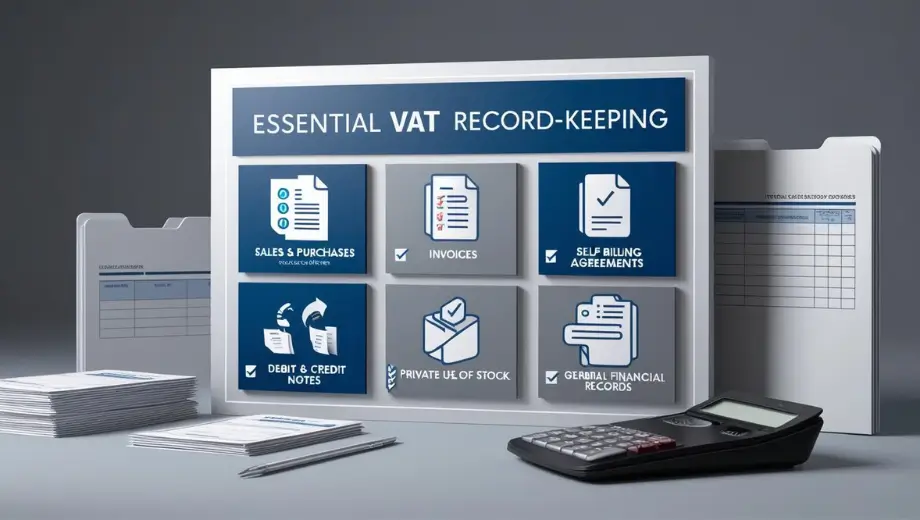
At a basic level, you must keep track of:
- All Sales and Purchases: This includes everything you buy and sell in your business, whether those items are standard-rated, reduced-rated, zero-rated, or even exempt from VAT.
- Invoices: Keep copies of all the invoices you issue, plus the original or digital versions of any invoices you receive. These invoices support the figures you enter on your returns.
- Self-Billing Agreements: If you have a special arrangement where a customer issues invoices on your behalf (known as self-billing), keep these records safe.
- Debit and Credit Notes: These are used to correct invoices if there has been an overcharge, undercharge, or a return of goods.
- Private Use of Stock: If you take items out of your business for personal use, this can affect your VAT calculations. You must record these movements.
- General Financial Records: This includes bank statements, till rolls, receipts, cash books, and anything else that shows your income and outgoings.
Most businesses must keep these records for at least six years. Some items, like real estate transactions, may need to be kept longer.
Digital Record-Keeping Requirements
Making Tax Digital has added extra layers to record-keeping. If you fall under MTD rules, you must keep certain details in a digital format. Some of the digital records required include:
- VAT on Goods and Services You Sell and Buy: Keep track of the VAT you charge customers and the VAT you pay to suppliers. This is the core of your VAT calculation.
- Time of Supply and Value of Supply: Record the date each sale or purchase took place (or when the invoice was issued) and the amount before VAT.
- Adjustments: If you make any changes to previous entries or need to correct an error, you must note these adjustments in your digital records.
- Reverse Charge Transactions: Certain services or goods might require you to account for VAT through a process called “reverse charge.” Keep a clear note of these transactions.
- VAT Accounting Schemes: If you use a special VAT accounting scheme (like cash accounting or the flat rate scheme), note it in your system.
- Daily Gross Takings (For Retail Schemes): If you run a retail business and you use a retail scheme, you may need to record your daily sales totals digitally.
- Reclaimable Items (For Flat Rate Scheme Users): While the flat rate scheme often simplifies your calculations, you still need digital evidence of any items where you can claim back VAT.
These digital records form what is known as your “VAT account.” This account pulls together all the figures you need to complete your VAT returns accurately. Look for an MTD-compatible product or system.
VAT Invoices and Best Practices
Only a business that is VAT-registered can issue a VAT invoice. If you are selling to another VAT-registered business, you must provide a detailed VAT invoice so the buyer can reclaim the VAT (if they are entitled to do so).
A proper VAT invoice should include:
- The date of the invoice.
- A unique invoice number.
- Your business name, address, and VAT number.
- The customer’s name and address.
- A description of the goods or services.
- The net amount (before VAT) and the VAT amount.
- The total amount, including VAT.
For smaller sales, there are “simplified invoices” that require less detail, but these can only be used for specific transaction amounts. Always ensure your invoices are accurate. Mistakes can cost you time and money if you need to correct them later.
Common VAT Schemes
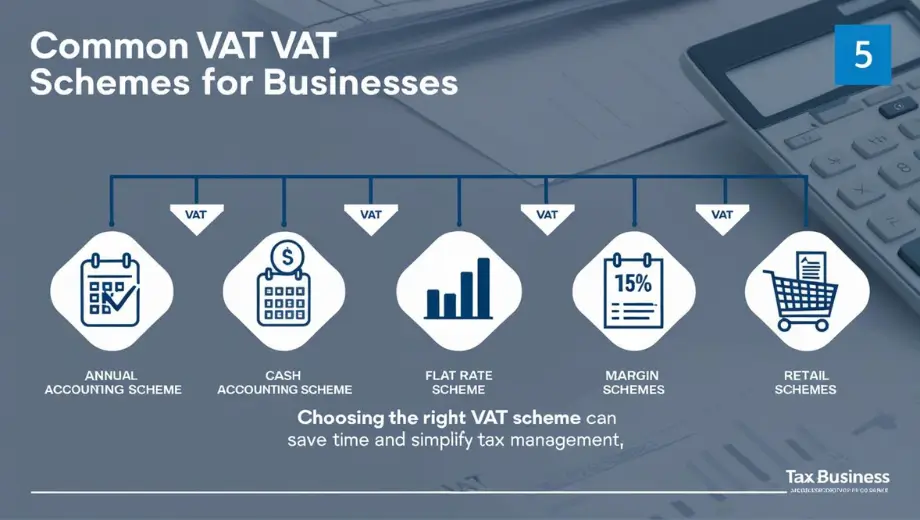
Several schemes allow businesses to handle VAT in ways that might reduce paperwork or smooth out cash flow. Here are some of the key schemes:
Annual Accounting Scheme
Under this scheme, you submit just one VAT return per year instead of four quarterly returns. You do, however, have to make interim payments throughout the year. This can simplify administration but might not suit every business.
Cash Accounting Scheme
Normally, you pay VAT based on the date you issue an invoice, not when you receive the money. With cash accounting, you only pay VAT to the government when your customers pay you. Likewise, you only reclaim VAT on your costs after you have paid your suppliers. This helps if you have customers who take a long time to settle their invoices.
Flat Rate Scheme
If your taxable turnover is below £150,000 (not including VAT), you can opt for the flat rate scheme. Instead of tracking the exact VAT on each transaction, you charge the standard rate of VAT to your customers but pay the government a fixed percentage of your total turnover. The exact percentage depends on your industry. This scheme can save time and sometimes money, but you cannot reclaim VAT on your purchases (except certain capital assets over a specific value).
Margin Schemes
If you sell second-hand goods, works of art, antiques, or collectibles, a margin scheme might let you pay VAT only on the difference between what you paid for an item and what you sold it for. This avoids paying VAT on the full sale price if you have already been charged VAT when acquiring the goods.
Retail Schemes
Businesses in retail often have many low-value, high-volume sales. Retail schemes let you calculate VAT more simply instead of having to account for VAT on each transaction.
Industry-Specific Rules
Some industries have special VAT rules. If you work in one of these sectors, you will need to pay extra attention to special requirements:
- Construction and Building: There are unique rules for building services and construction work, including a reverse charge for certain transactions. New builds, renovations, or even energy-saving materials may come with different rates or special reliefs.
- Vehicle Sales: If you sell vehicles, there might be extra steps to consider, like the margins for second-hand cars, or special rules if you export vehicles.
- Charities: Charitable organizations have special VAT rules, such as zero rating or reduced rating for certain activities, and potential reliefs on some purchases.
If you are uncertain about industry-specific rules, it is important to consult professional advice.
VAT on International Trade (Post-Brexit)
Brexit changed the way VAT applies to businesses that trade between the UK and other countries. You need to understand the current rules whether you import goods into the UK or export them from the UK. Here are a few key points:
- Exporting Goods and Services: You might need to treat exports as zero-rated for VAT if they leave the UK. But the rules for services can vary. You have to determine the “place of supply” and follow the relevant guidance.
- Importing Goods and Services: If you bring goods into Great Britain from outside the UK, you usually need to pay import VAT. There can also be customs duties or other taxes. If you bring goods into Northern Ireland from outside the EU, different rules apply. Keep in mind that you might need an Economic Operators Registration and Identification (EORI) number and may have to go through customs procedures.
Because Brexit rules are still evolving, you should monitor any changes that might affect your operations.
Getting Help and Staying Up-to-Date
VAT rules can change over time. It is essential to keep an eye on the latest announcements or any changes in legislation. The official government site publishes updates on VAT rates, thresholds, and guidance notices. You can also find help sheets, forms, and detailed articles on specific topics.
If you get stuck or have questions about complex VAT matters, it might be wise to contact a professional accountant or tax advisor. There is also a dedicated helpline if you want to speak directly with a government official about your queries. When you stay updated and ask for help when needed, you reduce the risk of errors and penalties.
Struggling with tax-related debts or late payments?
Read Debt Management in the UK for practical tips to effectively clear your debts.
Takeaways
VAT can be complicated, but it is a critical part of running a business in the UK. Once you understand the basics—like how registration works, how to file returns, and how to track your input and output VAT—it becomes easier to manage. Special schemes can reduce your workload or help with cash flow, but they also have eligibility requirements. If you deal in different countries, especially after Brexit, you will need to learn about new procedures for imports and exports.
Always keep solid records. This is the backbone of VAT compliance. Proper documentation will save you time in the long run, protect you from errors, and help you handle any checks or audits from the tax authority.
If you find VAT confusing, consider seeking professional guidance or consulting official sources. It is best to clarify uncertainties early on rather than risk penalties or incorrect returns later. By staying informed and organized, you can focus on growing your business while meeting all your VAT obligations.
FAQs
1. When do I have to register for VAT in the UK?
You must register for VAT if your taxable turnover exceeds the current threshold of £90,000 in any 12-month period. Even if your turnover is below this threshold, voluntary registration is possible and may be beneficial for reclaiming VAT on business expenses.
2. Can I reclaim VAT on my business expenses if I’m not VAT registered?
No, you must be VAT registered to reclaim VAT on your business expenses. Voluntary VAT registration allows you to reclaim VAT even if your turnover is below the mandatory threshold.
3. What is Making Tax Digital (MTD), and do I have to follow it?
Making Tax Digital is a government initiative requiring most VAT-registered businesses to maintain digital records and submit VAT returns using compatible software. Unless specifically exempted, VAT-registered businesses must comply with MTD rules.
4. What’s the difference between standard-rated, reduced-rated, and zero-rated VAT?
Standard rate (20%) applies to most goods and services.
Reduced rate (5%) covers certain products like domestic fuel and children’s car seats.
Zero rate (0%) applies to items like staple groceries, children’s clothing, and books. With zero-rated items, businesses can still reclaim VAT paid on related expenses.
5. How often do I have to submit VAT returns, and can I choose the frequency?
Typically, VAT returns are submitted quarterly. However, businesses that regularly claim VAT refunds, such as exporters, may choose monthly returns to improve cash flow. Additionally, certain schemes like the Annual Accounting Scheme allow businesses to submit only one return per year.
Source / Ref.: Gov.uk Contains public sector information licensed under Open Government Licence v3.0.
Written by [Ketan Borada / British Portal Team] – Founder of British Portal, dedicated to providing accurate and up-to-date information on UK public services and benefits.Related Posts
Previous Post
Next Post





- Business
 5
5 - Cricket5
- Department for Education49
- Departments3
- Driving and Transport
 53
53 - Education45
- Finance6
- Football13
- Golf3
- Government
 108
108 - Guides1
- Health4
- Health
 5
5 - International Politics9
- Law and Justice31
- Money and Tax23
- National Politics4
- News68
- Politics6
- Sports38
- Technology5
- Tennis3
- Transportation4
- Uncategorized4
- Visa
 17
17 - Visas and Immigration
 24
24 - Weather1