Winning or losing a case at an Employment Tribunal (ET) might feel like the end of the road. But what happens if you believe the Tribunal made a legal mistake in reaching its decision? For people in England, Wales, and Scotland, the next potential step is the Employment Appeal Tribunal, often known simply as the EAT.
What is an Employment Appeal Tribunal?
Think of the EAT as a higher court specifically for employment law matters. It sits above the regular Employment Tribunals. Its main job isn’t to rehear the entire case or look at the facts again from scratch. Instead, the EAT primarily focuses on one crucial thing: appeals based on a point of law.
This means the EAT examines how the original Employment Tribunal reached its decision. Did it misunderstand the relevant law? Did it apply the law incorrectly? Was the process unfair? These are the kinds of questions the EAT deals with.
The Crucial Difference: Appealing on a Point of Law
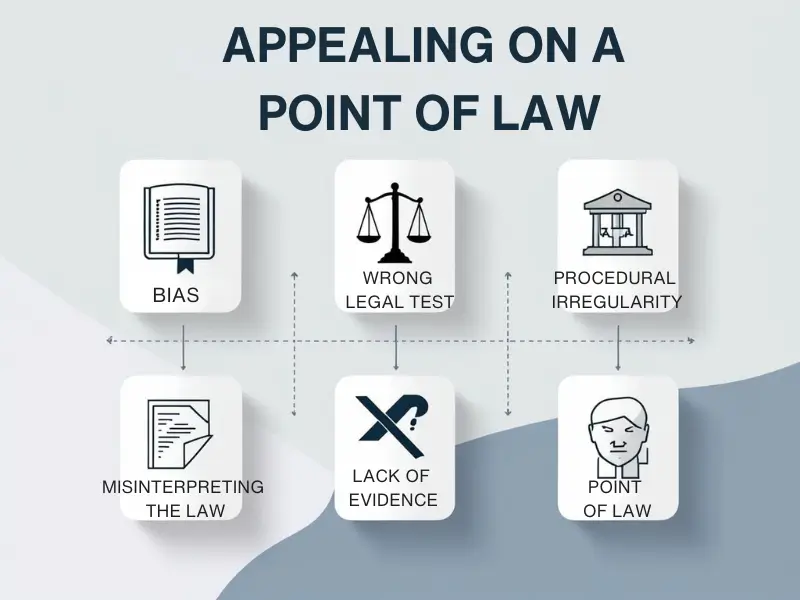
This is the most important concept to grasp about the EAT. You generally cannot appeal just because you disagree with the ET’s conclusion or think they believed the wrong witness. An appeal to the EAT must argue that the ET made a specific legal error.
So, what counts as a “point of law”? Here are some examples:
- Misinterpreting the Law: The ET misunderstood what a particular piece of legislation (like the Equality Act 2010 or the Employment Rights Act 1996) means.
- Applying the Wrong Legal Test: The ET used an incorrect legal standard or test when assessing the evidence.
- Procedural Irregularity: The ET failed to follow the correct procedures during the hearing, leading to significant unfairness. For example, not allowing a party to present relevant evidence.
- Lack of Evidence: The ET reached a factual conclusion that no reasonable tribunal, properly directing itself on the relevant law, could have reached based on the evidence presented. This is often called a ‘perverse’ decision and is a high bar to meet.
- Bias: Showing that the Tribunal was biased against one party.
Understanding the correct grounds for appeal employment tribunal decisions is vital before even considering starting the process.
Can You Appeal an Employment Tribunal Decision?
Yes, can you appeal an employment tribunal decision? Absolutely, but only if you have valid grounds based on an error of law. If your only complaint is that you wish the ET had reached a different factual conclusion, an appeal to the EAT is unlikely to succeed.
The Employment Appeal Tribunal Process Step-by-Step
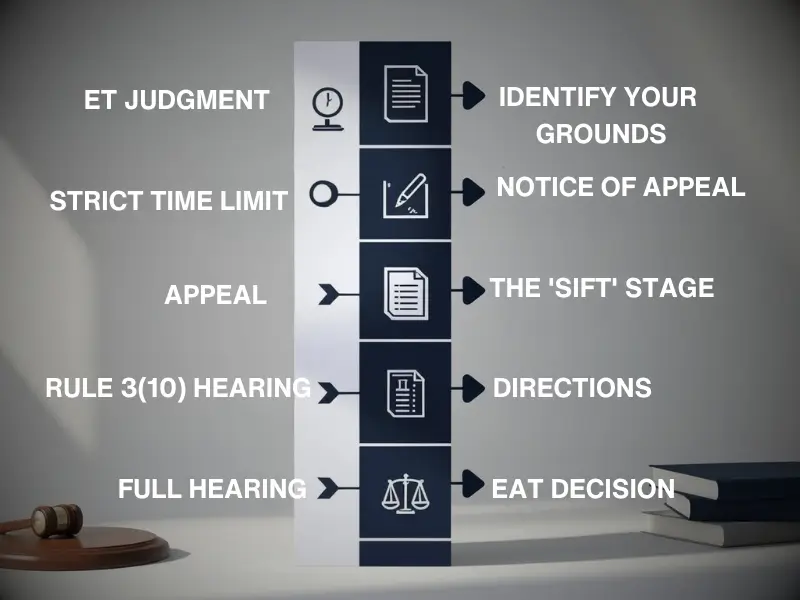
Navigating the EAT involves a formal procedure. While every case is unique, here’s a general overview of the employment appeal tribunal process:
- Receive the ET Judgment and Reasons: First, get the ET’s final written decision and full reasons. If not given automatically, you’ll need to request them.
- Identify Your Grounds: Read the reasons carefully. You can only appeal if there’s a legal mistake—not just because you disagree. Legal advice can help here.
- Meet the Strict Time Limit: You have 42 days from the date the written reasons were sent to you to send your Notice of Appeal to the Employment Appeal Tribunal (EAT). This deadline is strict.
- Complete the Notice of Appeal: Use the official EAT form. Include full case details and explain the legal error you believe the ET made.
- Submit the Appeal: Send the form and required documents (like the ET judgment and reasons) to the EAT within the 42-day limit.
- The ‘Sift’ Stage: A judge will review your appeal on paper to decide if you have a valid legal argument.
- Potential Rule 3(10) Hearing: If the judge thinks your appeal doesn’t have strong grounds, you may get a short hearing to explain why it should go forward.
- If Appeal Proceeds – Directions: If your appeal passes, the EAT sets deadlines for preparing document bundles and written legal summaries.
- The Full Hearing: An EAT judge (sometimes with experienced lay members) will hear legal arguments from both sides. No new evidence or witnesses are allowed—only legal points based on the ET’s facts.
- The EAT Decision: After the hearing, the EAT will issue its judgment. It can:
- Dismiss the appeal (the original ET decision stands).
- Allow the appeal and substitute its own decision.
- Allow the appeal and send the case back to the same or a different Employment Tribunal to reconsider, often with specific guidance on the law.
Knowing how to appeal employment tribunal decision involves understanding each of these stages.
Understanding EAT Rules and Procedures
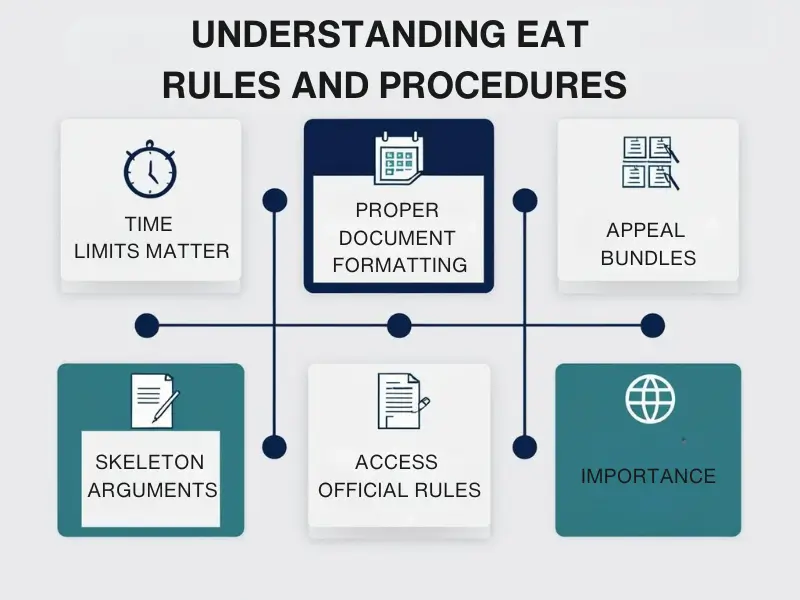
The EAT operates under its own specific set of employment appeal tribunal rules and Practice Directions. These govern everything from deadlines and document formatting to how hearings are conducted.
- Importance: Failure to follow these rules can seriously damage your appeal, potentially leading to it being struck out.
- Key Aspects: Pay close attention to rules concerning time limits, the content and format of the Notice of Appeal, preparing appeal bundles correctly, and submitting skeleton arguments on time.
- Accessing Rules: These rules are available on the official EAT website – it’s essential reading for anyone involved in an appeal. While complex, understanding their basic requirements is crucial.
What About Costs?
A common worry is the potential employment appeal tribunal costs. The general rule in the EAT (similar to the ET) is that each party pays their legal costs, regardless of who wins or loses.
However, there are exceptions. The EAT can order one party to pay the other’s costs if, for example:
- A party acted vexatiously, abusively, disruptively, or unreasonably during the appeal process.
- The appeal had no reasonable prospect of success and should not have been brought or contested.
While cost orders are not automatic, the potential for them exists. You also need to factor in your costs, especially if you instruct solicitors or barristers.
Learning from Past Employment Appeal Tribunal Decisions
The employment appeal tribunal decisions are usually published online. Reviewing past cases can be helpful to understand:
- How the EAT interprets specific points of law.
- What types of arguments have succeeded or failed previously?
- Trends in employment law jurisprudence.
While every case turns on its own facts and legal points, these published judgments provide valuable insights into the EAT’s reasoning. You can often find these decisions via the official EAT website or legal databases.
What Makes for Successful Employment Tribunal Appeals?
Achieving successful employment tribunal appeals typically requires a clear, well-argued point of law where the original ET demonstrably erred. Factors contributing to success often include:
- Identifying a genuine and significant error of law in the ET’s reasoning.
- Presenting the legal arguments clearly and persuasively, supported by relevant case law or legislation.
- Strictly adhering to the EAT’s procedural rules and deadlines.
It’s important to be realistic. Appeals are challenging, and success is far from guaranteed. The focus must remain on legal error, not just dissatisfaction with the outcome.
Key Tips for Navigating the EAT
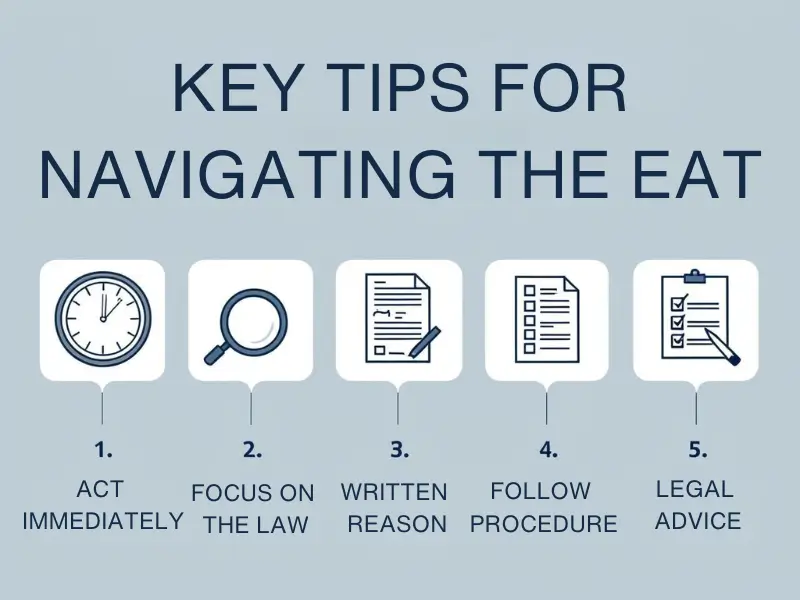
If you are considering an appeal to the EAT:
- Act immediately: The 42-day time limit is short. Don’t delay in getting the ET’s written reasons and considering your options.
- Focus on the Law: Constantly ask, “What legal error did the ET make?”
- Get the Written Reasons: You cannot properly assess grounds for appeal without the ET’s full written reasoning.
- Follow Procedures: Download the correct forms and read the EAT rules/practice directions carefully. Meet all deadlines.
- Consider Legal Advice: The EAT process is complex and legalistic. A solicitor or barrister who specializes in employment law can help you assess your chances and guide you through the process.
The Employment Appeal Tribunal plays a vital role in ensuring legal consistency and correctness in UK employment law. While the process can seem daunting, understanding its purpose, the necessity of appealing on a point of law, and the key procedural steps can help you navigate it more effectively.
Remember, due to the complexity and strict rules, seeking professional legal advice is often essential when dealing with the EAT.
Read more about How Do UK Community Sentences Work?
Source / Ref.: Judiciary.uk Gov.uk Contains public sector information licensed under Open Government Licence v3.0.
Written by [Ketan Borada / British Portal Team] – Founder of British Portal, dedicated to providing accurate and up-to-date information on UK public services and benefits.Related Posts



Previous Post
Next Post
Previous Post
Next Post






- Business
 5
5 - Cricket5
- Department for Education49
- Departments3
- Driving and Transport
 53
53 - Education45
- Finance6
- Football13
- Golf3
- Government
 108
108 - Guides1
- Health
 5
5 - Health4
- International Politics9
- Law and Justice31
- Money and Tax23
- National Politics4
- News68
- Politics6
- Sports38
- Technology5
- Tennis3
- Transportation4
- Uncategorized4
- Visa
 17
17 - Visas and Immigration
 24
24 - Weather1