Protecting personal information isn’t just good practice; it’s the law. In the UK, data protection rules are in place to control how organizations handle information about people. Getting this right builds trust with your customers and helps you avoid serious problems.
But what is personal data? It’s any information that can identify a living person. This could be a name, an email address, a photo, bank details, or even a computer’s IP address. Understanding how to look after this data is crucial for everyone.
Why Data Protection Matters
- Trust: People are likelier to interact with businesses they trust to handle their information carefully.
- Legal Duty: UK laws require organizations to protect personal data. Not following the rules can lead to large fines and damage your reputation.
- Good Business: Managing data well often means your information is better organized and more useful.
The Main UK Data Protection Laws
The key rules for data protection in the UK come from two main pieces of legislation:
- The UK GDPR (General Data Protection Regulation) sits alongside the DPA 2018 and covers many of the same areas. It sets out the main principles, rights, and obligations. You’ll often hear GDPR mentioned – this is what it refers to in the UK context. The General Data Protection Regulation was originally an EU law, but a UK version was created after Brexit.
- The Data Protection Act 2018 (DPA 2018): This is the UK’s specific law. The Data Protection Act 2018 works together with the UK GDPR. It covers areas not specifically dealt with in the UK GDPR and applies its standards. Understanding the Data Protection Act 2018 and the UK GDPR relationship is key.
These laws replaced the older Data Protection Act 1998. Historical knowledge about the Data Protection Act 1998 helps us understand how things have evolved. You might still see references to the Data Protection Law 1998 or DPA data protection from that era, but the current data protection legislation is the DPA 2018 and UK GDPR. The current data protection legislation is what organizations must follow now.
Who Oversees Data Protection?
The Information Commissioner’s Office (ICO) is the UK’s independent body set up to uphold information rights. You’ll often see ICO data protection mentioned. The Data Protection Commission (or Data Protection Commissioner) enforces the rules, provides guidance, and handles data protection complaints.
Core Ideas: The Data Protection Principles
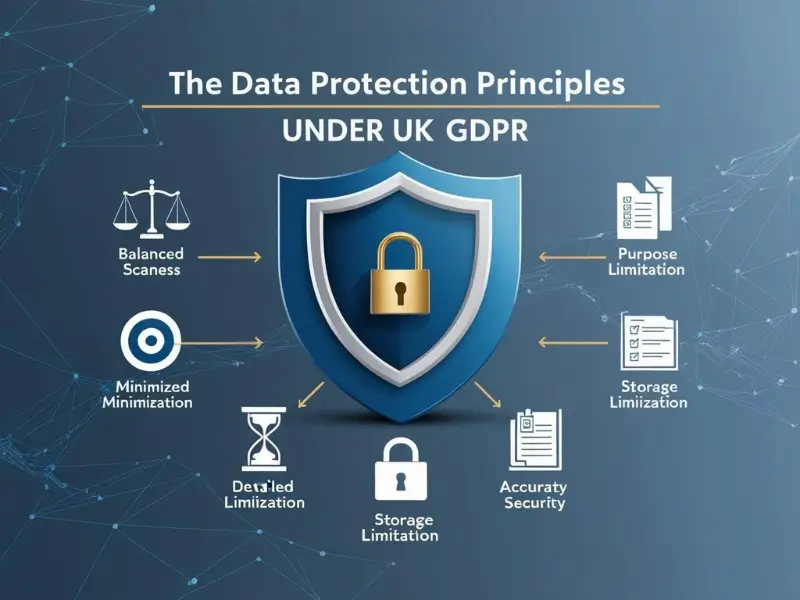
The UK GDPR sets out key principles that underpin everything. These aren’t just suggestions; they are rules that must be followed. Think of the data protection principles as the foundations:
- Lawfulness, Fairness, and Transparency: You must handle data legally, fairly, and openly. People should know what you’re doing with their information.
- Purpose Limitation: Only collect data for specific, clear reasons that you’ve explained. Don’t use it for other unrelated things later.
- Data Minimisation: Only collect the data you need for your stated purpose. Don’t collect extra information “just in case.”
- Accuracy: Keep personal data accurate and up-to-date. Take steps to correct or delete incorrect information.
- Storage Limitation: Don’t keep data for longer than necessary for the purpose you collected it.
- Integrity and Confidentiality (Security): You must keep personal data safe and secure using appropriate measures. This involves protecting it against unauthorized access, loss, or damage. This is a critical principle.
- Accountability: You are responsible for following these principles and must be able to show that you are complying.
Understanding the general data protection regulation principles or data protection act principles (specifically those within the DPA 2018 that align with UK GDPR) is vital. Sometimes, people still refer to the 8 principles of data protection from the old DPA 1998 – while the core ideas are similar, the current framework uses seven principles.
People’s Rights Over Their Data
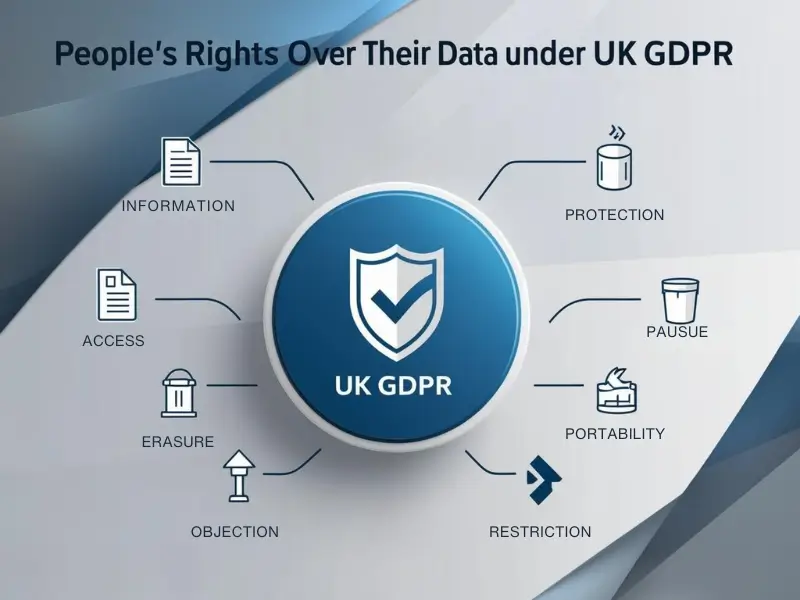
Data protection laws give individuals significant control over their personal information. These rights include:
- The Right to be Informed: People have the right to know how you are using their data.
- The Right of Access: Individuals can ask for a copy of the data you hold about them. This is commonly known as a subject access request or SAR. Handling a data subject access request correctly is a key obligation.
- The Right to Rectification: People can ask you to correct inaccurate data.
- The Right to Erasure (Right to be Forgotten): Individuals can ask you to delete their data in certain circumstances.
- The Right to Restrict Processing: People can ask you to limit how you use their data in some situations.
- The Right to Data Portability: Individuals can ask for their data in a format they can easily reuse elsewhere.
- The Right to Object: People can object to their data being used for certain things, like direct marketing.
- Rights related to Automated Decision-Making and Profiling: People have rights if you use automated systems to make decisions about them.
Understanding what the Data Protection Act covers in terms of these rights is essential for respecting individuals’ control.
What Businesses and Organisations MUST Do (Obligations)
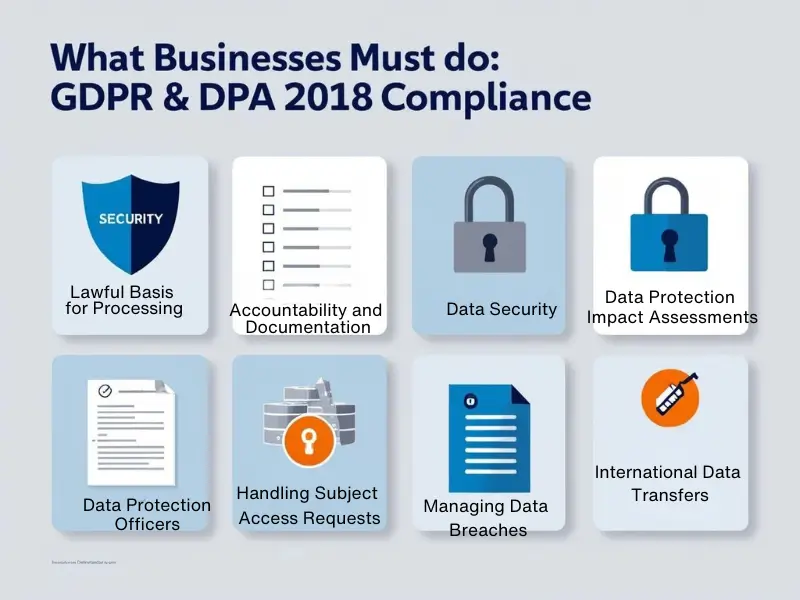
Complying with GDPR (General Data Protection Regulation) and the DPA 2018 involves several key responsibilities:
Lawful Basis for Processing:
You must have a valid reason (a “lawful basis”) for collecting and using personal data. Common reasons include consent (the person agreed), contract (you need it to fulfill a contract), legal obligation, vital interests, public task, or legitimate interests. You must decide your lawful basis before you start processing and documenting it.
Accountability and Documentation:
You need to demonstrate that you comply. This means:
- Having a data protection policy outlining your approach.
- Keeping records of your processing activities (what data you have, why, how long you keep it, how you secure it).
- Implementing data protection by design and default. This means thinking about data protection from the start of any project and building safeguards. The concept of data protection by design is crucial. Data protection by design and default means privacy is built-in, not an afterthought.
- Understanding the need for data protection compliance.
Data Security:
This is non-negotiable. You must implement appropriate technical and organizational measures to protect personal data. This means considering:
- Methods of data protection like encryption and access controls.
- Data security in cloud computing: If you use cloud services, ensure they offer adequate cloud data security. Choosing a provider requires care.
- Data loss prevention (DLP): Having measures to prevent data from being lost or stolen. This includes data loss protection and data leakage protection strategies.
- Regular testing and reviews of your security.
- Staff training on confidentiality and data protection.
The National Cyber Security Centre (NCSC) provides excellent guidance on security measures relevant to GDPR data protection. Achieving certifications like Cyber Essentials can help demonstrate good security practices.
Data Protection Impact Assessments (DPIAs):
For processing likely to result in a high risk to individuals (e.g., using new technology, large-scale monitoring), you must conduct a data protection impact assessment (DPIA). This helps you identify and minimize risks before you start. Knowing when data protection is needed is important.
Data Protection Officers (DPOs):
Some organizations (especially public authorities or those conducting large-scale monitoring or processing of sensitive data) must appoint a Data Protection Officer (DPO). A data protection officer advises on compliance and acts as a point of contact. Even if not legally required, someone should be responsible for data protection. There are data protection jobs available, including roles like junior data protection officer or data protection executive. Thinking about a certified data protection officer ensures knowledgeable oversight.
Handling Subject Access Requests (SARs):
You must have a clear process for responding to SARs, usually within one month. This involves verifying identity, locating the data, and providing it securely. The data protection subject access request process needs careful management.
Managing Data Breaches:
A data protection breach occurs when personal data is lost, stolen, destroyed, altered, or accessed without authorization. Examples include sending an email to the wrong person or a cyber-attack.
- You need a plan to handle breaches.
- Serious breaches likely to risk individuals’ rights must be reported to the ICO within 72 hours (data protection breach reporting).
- In some cases, you must also inform the affected individuals.
- Failing to handle breaches properly can lead to significant data protection breach fines and potential data protection breach compensation claims. Studying data protection breach examples can help understand risks.
International Data Transfers:
If you send personal data outside the UK, you need specific safeguards in place (unless the receiving country is deemed ‘adequate’ by the UK government). This often involves using Standard Contractual Clauses (SCCs) or the UK’s International Data Transfer Agreement (IDTA).
ICO Registration Fee:
Most organizations processing personal data need to pay an annual data protection fee to the ICO. Check if you need to pay the ICO data protection fee. This used to be called data protection registration or obtaining a data protection license. There are some data protection fee exemptions, so verify if they apply to you.
Specific Scenarios and Considerations
Data protection rules apply broadly, but some areas have specific nuances:
- Marketing: You generally need specific consent (opt-in) for electronic marketing (emails, texts). Rules under PECR (Privacy and Electronic Communications Regulations) apply here alongside UK GDPR. GDPR consent requirements are strict.
- Employee Data: Employers need to be transparent and fair when handling staff information.
- Cloud Services: Using services like Veritas data protection, Cove data protection, or Dell data protection requires checking their compliance and security standards (like advanced data protection features). Be aware of commercial data protection for Microsoft copilot or Crowdstrike data protection if using those tools.
- Technology: Considerations apply to CCTV and data protection.
- Specific Sectors: There might be particular guidance for areas like the NHS data protection or confidentiality and data protection in schools.
- Deceased Persons: UK GDPR only applies to living individuals. Different rules cover data protection for deceased persons’ information.
- Data Protection Bill: Keep an eye on potential changes, like the proposed data protection and digital information bill. The landscape evolves like the Digital Data Protection Act 2023 in other regions, influencing global standards.
Getting it Right: Training and Resources
Staying compliant requires ongoing effort.
- Training: Ensure staff understand their responsibilities. Look into data protection courses UK or data protection essentials online. Getting a data protection certification uk or a data protection qualification can be valuable for those with specific roles (BCS practitioner certificate in data protection is one example).
- Resources: Use the ICO website – it’s the definitive source for UK Data Protection Act guidance. The NCSC website is best for security advice.
- Policies & Support: Develop clear internal policies. Consider seeking expert help through data protection services or consultants. You might need assured data protection support.
Taking Data Protection Seriously
Understanding and implementing UK data protection rules is fundamental for any modern organization. It’s not just about ticking boxes; it’s about respecting people’s privacy, building trust, and safeguarding sensitive information.
From understanding the General Data Protection Regulation (GDPR) basics and the Data Protection Act 2018 summary to managing complex issues like data security and protection toolkit implementation or European data protection board guidelines, it’s a continuous journey.
By embedding data protection by design, ensuring robust security, respecting individual rights like the subject access request, and fostering a culture of awareness, you can navigate the requirements of the Data Protection Act UK effectively and build a stronger, more trustworthy organization. Start by reviewing your current practices today.
Read More about Smart Shopping in the UK: Understanding Your Consumer Rights
Source / Ref.: Ncsc.gov.uk Ico.org.uk Gov.uk Contains public sector information licensed under Open Government Licence v3.0.
Written by [Ketan Borada / British Portal Team] – Founder of British Portal, dedicated to providing accurate and up-to-date information on UK public services and benefits.Related Posts

Previous Post
Next Post






- Business
 5
5 - Cricket5
- Department for Education49
- Departments3
- Driving and Transport
 53
53 - Education45
- Finance6
- Football13
- Golf3
- Government
 108
108 - Guides1
- Health4
- Health
 5
5 - International Politics9
- Law and Justice31
- Money and Tax23
- National Politics4
- News68
- Politics6
- Sports38
- Technology5
- Tennis3
- Transportation4
- Uncategorized4
- Visa
 17
17 - Visas and Immigration
 24
24 - Weather1