UK immigration reforms are now at the centre of a national reset aiming to cut record migration levels. With public concern growing, the UK government is taking bold steps to reduce dependence on foreign labour, restrict dependent visas, and tighten eligibility rules. These changes, described as a complete overhaul, signal a clear shift toward a more controlled and selective immigration system.
The announcement comes amid pressure on public services, rising housing demand, and calls from both voters and politicians to act. The reforms target key visa categories such as students, skilled workers, and care workers while increasing thresholds and limiting family entry routes. But what exactly has changed, and who will it impact the most?
Why Are These Changes Happening?
The UK has seen a significant rise in net migration, with figures reaching over 700,000 in recent years. This sharp increase has led to public concern over pressure on housing, education, healthcare, and infrastructure. As a result, the government is facing growing demands to take decisive action.
At the heart of the issue is the balance between economic needs and public confidence. The UK continues to rely on overseas talent in sectors like healthcare, but unrestricted growth has raised questions about long-term sustainability. In response, the Home Office has called for tighter border control and better management of the visa system.
The UK immigration reforms are positioned as a direct answer to these pressures. Ministers argue that the current system has been exploited and stretched beyond its original design. By introducing new rules, the government hopes to cut dependency on foreign labour, curb abuse of visa pathways, and bring migration numbers down to “sustainable levels.”
Additionally, the reforms align with promises made by the ruling party during previous election campaigns. Reducing immigration was a key pledge, and these changes are now being implemented to honour that commitment ahead of future elections.
What Are the Main Changes?
The UK immigration reforms bring several major changes across work, student, and family visa routes. These updates are designed to lower overall migration and tighten eligibility rules for entering and remaining in the UK.
Key changes include:
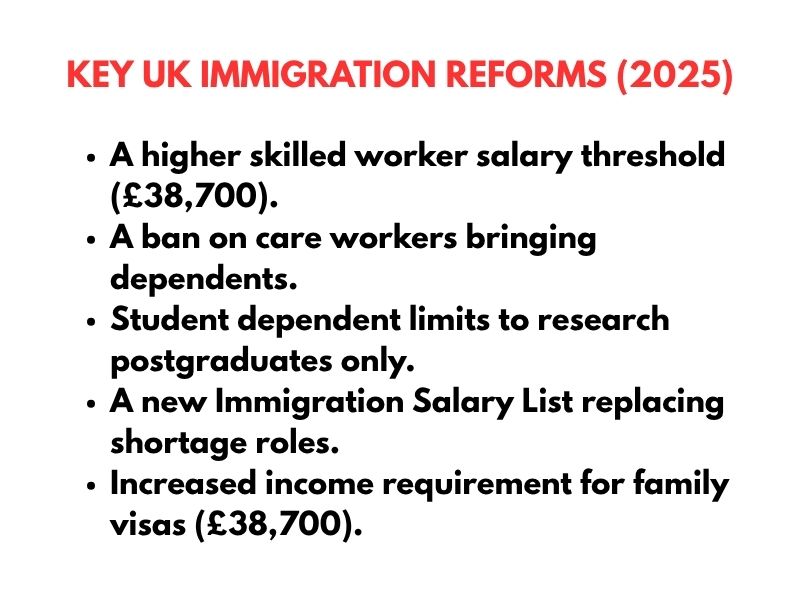
- Higher salary thresholds: Skilled worker visa applicants must now meet a minimum salary of £38,700 up from the previous £26,200. This makes it harder for employers to hire lower-paid overseas staff.
- Tougher rules for care workers: Overseas care workers can no longer bring dependents unless under exceptional circumstances. The government wants to reduce what it calls “uncontrolled” migration in this sector.
- Student visa restrictions: Most international students are now barred from bringing family members unless they are studying PhDs or research-based postgraduate courses. This move addresses the sharp rise in dependent applications.
- Revised shortage occupation list: The current list is under review. Employers will face stricter guidelines before hiring foreign staff under this route.
- Increased visa fees and health surcharge: Migrants must now pay more for visa applications and healthcare access, adding financial pressure to applicants and sponsors.
These updates signal a shift away from the previous system, which was more generous in its approach to dependents and salary thresholds. With these new UK immigration reforms, the focus is now on attracting only highly skilled workers who meet strict salary and sponsorship criteria.
Who Will Be Affected?
The UK immigration reforms are expected to impact thousands of migrants, students, families, and employers across the country. These changes are not just numbers on a policy paper they reshape who can come to the UK, under what conditions, and who they can bring with them.
Affected groups include:
- Care workers from overseas: The new rule banning dependents means many may choose not to apply, which could worsen staffing gaps in care homes and hospitals.
- International students: Those pursuing non-research-based degrees will no longer be allowed to bring partners or children, leading to a likely decline in foreign student applications.
- Skilled workers: Stricter salary thresholds will make it harder for migrants in lower-paid roles to qualify for work visas. Small businesses and public sector employers may struggle to meet the new pay requirements.
- Employers: Sectors that rely heavily on overseas labour like healthcare, hospitality, and construction may face recruitment challenges. Sponsorship processes are also likely to become more expensive and complex.
- Families of migrants: Tougher dependent visa rules will separate families, especially among student and care worker communities.
With these UK immigration reforms, the government aims to prioritise economic contribution over volume. While the policies may lower migration figures, they also bring uncertainty for individuals hoping to build a future in the UK and for employers counting on international talent.
What Happens Next?
After the announcement, the UK immigration reforms will move to Parliament, where they will be debated, scrutinised, and formally introduced as part of new legislation. Ministers have promised swift action, aiming to implement the reforms in stages over the coming months.
Some changes such as restrictions on student dependents are already scheduled to begin soon. Others, like the revised salary thresholds and updated shortage occupation list, will roll out later this year, following final approval.
Key steps ahead:
- Parliamentary debate and voting
- Publication of updated visa rules by the Home Office
- Official start dates for individual reform measures
- Guidance updates for visa sponsors and applicants
The government also plans to monitor how the changes affect migration numbers, the economy, and essential services. If results are not as expected, more reforms may follow. These UK immigration reforms are part of what ministers call a “complete reset,” so more adjustments are likely in future.
For now, migrants, employers, and students must stay updated and prepare for tighter requirements across all major visa categories.
Conclusion
The UK immigration reforms represent one of the most significant overhauls in recent years. With a clear focus on reducing numbers, increasing salary thresholds, and restricting dependents, the government is signalling a major shift in how migration will be managed going forward.
While the reforms aim to restore public confidence and reduce pressure on public services, they also raise concerns. Students, care workers, and businesses that rely on international talent may face immediate challenges. The changes could also impact the UK’s global reputation as a destination for education and skilled work.
Still, the government insists these steps are necessary for long-term balance. By tightening routes and increasing requirements, ministers hope to create a system that values skill, not volume.
As the reforms begin to take effect, it’s crucial for migrants, sponsors, and employers to stay informed, adapt early, and seek professional advice when needed. These UK immigration reforms may be just the start of a new era in British immigration policy.
FAQs
The UK immigration reforms are new rules to reduce migration and tighten visa requirements.
Care workers, international students, and skilled workers face the biggest changes.
Only PhD and research-based postgraduates can now bring dependents.
The new minimum salary is £38,700 for most skilled worker visas.
Yes, both visa fees and the immigration health surcharge are rising.
Visit the UK Home Office website for the latest immigration guidance.
Related Posts



Previous Post
Next Post






- Business
 5
5 - Cricket5
- Department for Education49
- Departments3
- Driving and Transport
 53
53 - Education45
- Finance6
- Football13
- Golf3
- Government
 108
108 - Guides1
- Health
 5
5 - Health4
- International Politics9
- Law and Justice31
- Money and Tax23
- National Politics4
- News68
- Politics6
- Sports38
- Technology5
- Tennis3
- Transportation4
- Uncategorized4
- Visa
 17
17 - Visas and Immigration
 24
24 - Weather1