Meeting the UK driving licence requirements is essential when applying for a licence, as you need to submit valid identity documents. Whether you’re a UK citizen, an immigrant, or a pensioner, providing the correct paperwork is crucial for verification.
In this guide, we’ll cover the necessary documents required for driving license, how to submit them, and tips to ensure a smooth application process.
Proof of Identity for UK Driving Licence Requirements
To meet the UK driving licence requirements, you must provide valid proof of identity when you apply for first time driver’s license. The accepted documents vary based on your citizenship status. Submitting the correct ID ensures a smooth application process and helps prevent delays or rejections.
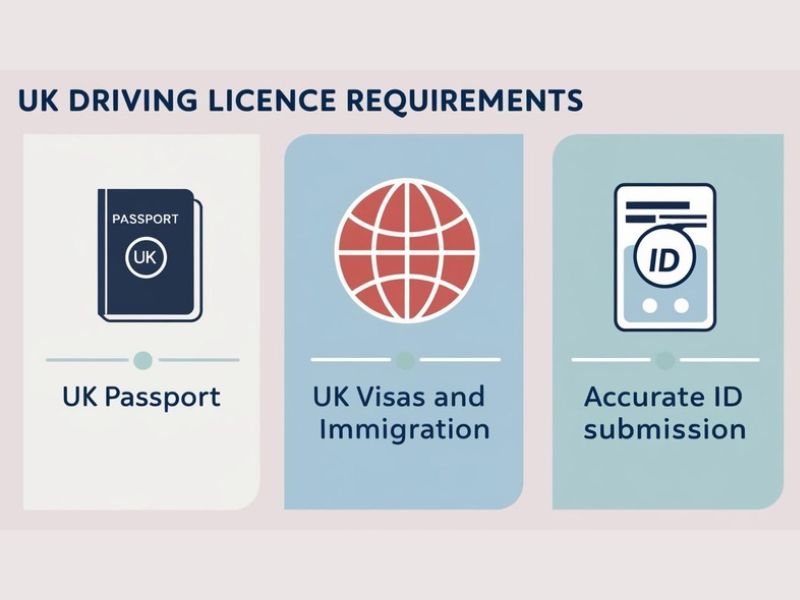
1. UK Passport
- If you have a valid UK passport, simply write the 9-digit passport number on the application form.
- You do not need to send the physical passport, making this the easiest and fastest way to prove your identity.
- Expired passports are not accepted, so ensure your passport is valid before applying.
- This method allows the DVLA to verify your identity digitally, speeding up the processing time.
2. Share Code (Drivers Licence for Immigrants)
If you’ve applied through UK Visas and Immigration (UKVI), you can use a share code instead of physical documents.
- Generate the share code for UK Immigration Status service.
- Write the code on your driving licence form.
- No need to send physical identity documents, making this option more convenient for immigrants.
- This method is ideal for those with digital immigration status or an eVisa.
3. Importance of Accurate ID Submission
- Using accurate and up-to-date identity documents reduces the risk of delays.
- If your ID has incorrect or outdated information, it could result in application rejection.
- Double-check that the names and details on your ID match the information on your application form.
Other Identity Documents for UK Driving Licence Requirements
If you cannot provide a UK passport or share code, you’ll need to submit other identity documents to meet the UK driving licence requirements. The accepted documents vary based on your citizenship status.
Documents Needed to Get Drivers License For Foreign Nationals:
- A current, valid non-EU/EEA passport with a visa sticker or stamp (vignette) confirming your permission to live in the UK.
- A valid Irish passport (no visa required).
- A travel document issued by a recognized authority.
For UK Citizens:
You can submit a UK birth, adoption, or naturalisation certificate, but you must include one of the following as additional proof while you apply for driving license uk:
- National Insurance card or a letter from HM Revenue and Customs.
- P45, P60, or pay slip.
- Marriage or civil partnership certificate.
- Divorce or civil partnership dissolution document.
- Gender recognition certificate.
UK Driving Licence Requirements for Pensioners
Pensioners who apply for driver’s permits must also meet the UK driving licence requirements by providing valid identity documents. If you’ve reached State Pension age, you can submit one of the following:
- A recent (within 3 months) bank or building society statement showing your pension payment and National Insurance number.
- A BR2102, BR2103, or BR5899 letter confirming your eligibility for the State Pension.
Tip: Ensure the document shows your full name and matches the details on your driving licence application form.
How to Submit Identity Documents
When applying for a driving licence, you must follow the UK driving licence requirements by submitting original identity documents. Providing accurate and valid paperwork ensures your application is processed without delays.
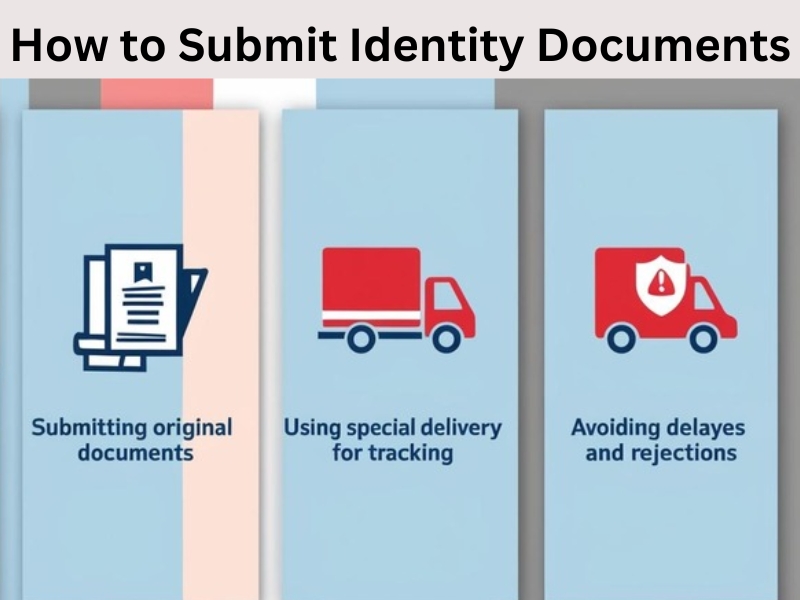
1. Submitting Original Documents:
- Send the original identity documents with your application.
- Photocopies or laminated certificates are strictly not accepted.
- Certified copies, even if approved by the Post Office, will be rejected.
- If you’re submitting a foreign passport, ensure it includes the visa vignette or stamp confirming your residency status.
2. Using Special Delivery for Tracking:
To prevent the risk of losing your important documents, it’s recommended to use a trackable delivery service.
- Include a stamped, self-addressed Special Delivery or Signed For envelope with your application.
- This allows you to monitor when your documents are posted and returned.
- It also provides added security, especially when sending sensitive documents like passports or certificates.
3. Avoiding Delays and Rejections:
- Double-check that all the information on your identity documents matches the details on your application form.
- Any mismatched information, such as name spelling errors or outdated addresses, can lead to rejection.
- If you need your passport for travel within the next four weeks, consider delaying your driving licence application to avoid potential disruptions.
Note: If you need your passport in the next four weeks, consider delaying your driving licence application.
Photo and Form Signing Requirements
To meet the UK driving licence requirements, you may need someone to sign your form and driving license photo to verify your identity. However, this step is only necessary in certain cases.
When You Need a Signature:
You must get your application form for provisional licence and photo signed by someone else if you:
- Are applying without using a UK passport or share code.
- Are not renewing your licence with a new photo.
Who Can Sign?
The person signing must:
- Hold a valid GB photocard driving licence.
- Be a UK resident.
- Know you personally but not be a relative or someone living at the same address.
Suitable signatories include:
- Local businessperson or shopkeeper.
- Librarian, teacher, or civil servant.
- Police officer, lawyer, or bank staff member.
When You Don’t Need Your Photo Signed
In some cases, you can skip the photo signing step while meeting the UK driving licence requirements. You do not need someone to sign your photo if:
- You’ve agreed to let DVLA contact HM Passport Office to verify your ID.
- You provide a current passport, travel document, or share code for immigration status.
- You’re renewing your licence with a new photo.
Also, sometimes skipping the photo signing process speeds up your application, as DVLA can verify your identity digitally.
UK Driving Licence Requirements for Name and Gender
If your name or gender has changed, you must meet the UK driving licence requirements by providing additional evidence.
Here’s what you need for drivers licence application form:
For Name Changes in Driving Licence Card:
Submit at least one of the following:
- Marriage or civil partnership certificate (if you’ve changed your surname).
- Divorce or civil partnership dissolution document with your birth, adoption, or naturalisation certificate.
- Deed poll or statutory declaration confirming your name change.
For Gender Changes in Driving Licence Card:
You need to provide at least one of the following for the provisional driving licence uk application:
- Deed poll or statutory declaration.
- Gender recognition certificate.
You must also include the identity document or driving licence showing your previous name, gender or address.
For Driving Licence Address Change:
If you’ve moved, you must update your driving licence address with the DVLA.
- Provide a recent utility bill, bank statement, or council tax statement (dated within the last 3 months) as proof of your new address.
- You can update your address online or by post.
- There’s no fee for updating your address unless you’re applying for a new licence type.
Getting Your Documents Back
After meeting the UK driving licence requirements and submitting your identity documents, the DVLA will return them separately by second-class post.
How to Track Your Documents:
- Include a stamped, self-addressed Special Delivery or Signed For envelope with your application.
- This allows you to track when your documents are posted.
If You Haven’t Received Your Documents:
- Contact DVLA if your documents or driving licence haven’t arrived within the expected timeframe.
- Ensure you have the reference number from your application for faster assistance.
Key Takeaways
To successfully meet the UK driving licence requirements, keep these key points in mind:
- Valid ID Proof: Use a UK passport or share code for easy verification.
- Original Documents Only: Submit original identity documents by post—no photocopies or laminated certificates.
- Pensioners: Can use recent bank statements or pension letters as ID proof.
- Photo Signing: Only required if you’re not using a passport, share code, or renewing your licence.
- Track Your Documents: Include a stamped, self-addressed envelope for safe and trackable returns.
Always double-check your documents before sending to avoid delays or rejections.
Source / Ref.: Gov.uk Contains public sector information licensed under Open Government Licence v3.0.
Written by [Ketan Borada / British Portal Team] – Founder of British Portal, dedicated to providing accurate and up-to-date information on UK public services and benefits.Related Posts
Previous Post
Next Post




- Business
 5
5 - Cricket5
- Department for Education49
- Departments3
- Driving and Transport
 53
53 - Education45
- Finance6
- Football13
- Golf3
- Government
 108
108 - Guides1
- Health
 5
5 - Health4
- International Politics9
- Law and Justice31
- Money and Tax23
- National Politics4
- News68
- Politics6
- Sports38
- Technology5
- Tennis3
- Transportation4
- Uncategorized4
- Visa
 17
17 - Visas and Immigration
 24
24 - Weather1