UK car ownership is undergoing a dramatic shift. Thousands of drivers across the country are giving up their vehicles due to rising costs, environmental regulations, and changing lifestyles.
According to recent reports, more than 40,000 motorists have surrendered their cars in the last year alone. With the expansion of Ultra Low Emission Zones (ULEZ), record-high insurance premiums, and a growing reliance on public transport, owning a car is no longer a priority for many.
This blog explores the reasons behind this decline and what the future holds for UK car ownership.
The Shocking Drop in Car Ownership
The number of people surrendering their vehicles has soared in the past year. DVLA data, along with independent surveys, show a steep decline in private car registrations, especially in major cities like Birmingham, Manchester, and London.
Over 40,000 drivers reportedly handed over their keys in 2023 a clear sign that UK car ownership is no longer as essential as it once was. The drop is especially evident among urban dwellers, where access to reliable public transport and rising car-related expenses are changing behaviours.
Experts say this decline may be the beginning of a long-term cultural shift in how Brits view vehicle ownership.
Reasons Why Drivers Are Giving Up Cars
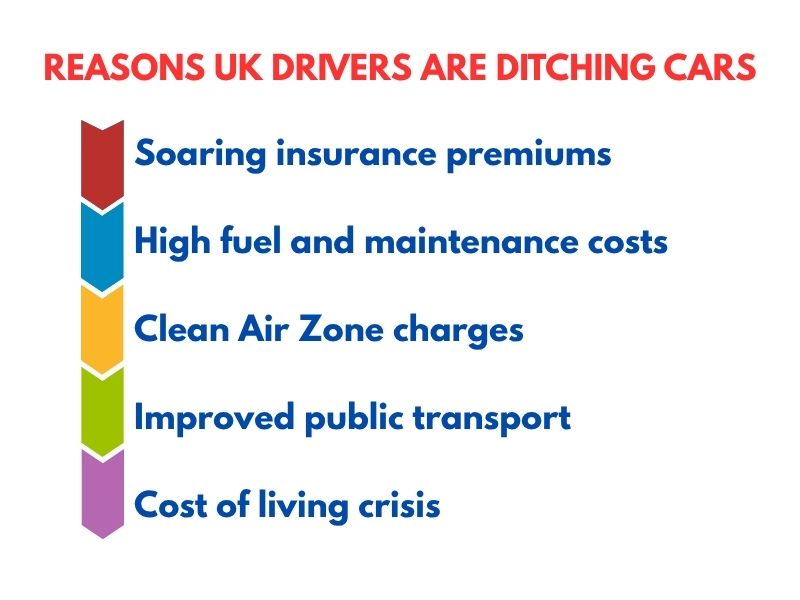
A range of factors is contributing to the steady decline in UK car ownership. From soaring costs to environmental concerns, here’s why more drivers are choosing to live without a car:
- Insurance Premiums Are Skyrocketing
Drivers face average premiums of over £950 per year, making coverage unaffordable for many. - Fuel Prices Remain Volatile
Unpredictable petrol and diesel prices continue to strain household budgets. - ULEZ & Clean Air Zones Expanding
Many cities are cracking down on older vehicles with daily charges and emission penalties. - Environmental Awareness Is Growing
A shift toward greener living has prompted many to avoid fossil fuel vehicles altogether. - Cost of Living Pressures
With inflation affecting essentials, car expenses are increasingly seen as optional. - Improved Public Transport Options
Investments in rail, metro, and bus networks offer viable alternatives in urban areas.
All of these elements make UK car ownership less practical and less desirable, especially for younger and city-based drivers.
Who’s Most Affected?
The decline in UK car ownership is not evenly spread. Certain groups are feeling the impact more than others:
- Young Adults (18–30s):
This age group is increasingly opting for ride-sharing, cycling, or public transport instead of buying a vehicle. - Urban Residents:
People living in cities like London, Birmingham, and Manchester are ditching cars due to congestion, clean air zones, and high parking fees. - Low-Income Households:
The rising cost of fuel, insurance, and maintenance makes car ownership unsustainable for many families. - Older Drivers:
Some older drivers are voluntarily giving up their licences due to health, cost, or limited need for travel.
These shifts show how UK car ownership is becoming more dependent on location, lifestyle, and income than ever before.
The Rise of Alternative Transport Modes
As UK car ownership declines, more people are turning to flexible and eco-friendly travel options:
- Public Transport Usage Is Climbing
With expanded train and bus networks, many commuters find public options faster and cheaper than driving. - Car-Sharing Schemes Are Growing
Services like Zipcar and Co-Wheels allow people to use cars only when needed, cutting ownership costs. - Cycling and E-Scooters Gain Popularity
Cities are investing in safer cycle lanes and allowing rental scooters, especially for short trips. - Remote Working Reduces Commute Needs
Fewer office trips mean less need for a personal vehicle.
These shifts are redefining mobility in the UK, making daily travel possible without owning a car. As this trend grows, UK car ownership may continue to fall in favour of shared and sustainable alternatives.
The Future of Car Ownership in the UK
The future of UK car ownership is set to be shaped by technology, sustainability, and changing consumer habits. Experts believe the traditional model of owning a personal vehicle may soon become outdated, especially in urban environments.
Several factors will likely influence this shift:
- Electric Vehicles (EVs) as a New Standard
While EVs are growing in popularity, the upfront costs and limited charging infrastructure still make many hesitant. - Subscription and Leasing Models
Flexible monthly car subscriptions are replacing long-term ownership for convenience and affordability. - Urban Car Bans and Smart Cities
More cities may restrict car access, encouraging alternative modes of transport and greener living.
As the government pushes for net-zero goals and digital innovation continues, UK car ownership is likely to evolve into something more fluid and less permanent.
Government and Industry Response
In response to the sharp decline in UK car ownership, both the government and automotive industry are adapting quickly.
- Incentives for Electric Vehicles (EVs)
Grants, tax breaks, and scrappage schemes aim to make EVs more accessible and attractive. - Clean Air Zone Expansion
Authorities are pushing cleaner transport by penalising polluting vehicles in more cities across the UK. - Investment in Public Transport
Billions are being spent to upgrade trains, buses, and cycling infrastructure, reducing the need for private cars. - Industry Pivot to Mobility Services
Car makers are shifting focus to shared mobility, electric fleets, and flexible ownership models.
These responses reflect a growing recognition that UK car ownership may never return to previous levels, prompting new approaches to mobility and sustainability.
Public Sentiment and Driver Concerns
The fall in UK car ownership has sparked mixed reactions from the public. While some welcome the shift toward greener, shared travel, others feel they are being priced off the road.
- Cost vs Freedom
Many drivers express frustration that rising insurance and ULEZ charges are forcing them to give up the freedom a car provides. - Distrust in Public Transport
Concerns over reliability, overcrowding, and limited rural coverage make some hesitant to rely fully on buses or trains. - Older Drivers and Isolation
For older individuals, losing a car can mean reduced independence and social isolation.
Despite these concerns, younger generations appear more open to alternative transport methods and less emotionally attached to car ownership.
It’s clear that UK car ownership is no longer just about practicality it’s tied to personal identity, freedom, and lifestyle.
Conclusion
While it’s too early to declare the end of UK car ownership, the signs of lasting change are clear. Economic pressures, environmental priorities, and lifestyle shifts are pushing drivers to reconsider whether owning a vehicle is worth it.
Personal cars may not disappear, but their role is evolving from essential assets to optional tools used only when needed. Shared mobility, electric fleets, and public transport will likely play a far greater role in the years ahead.
In short, UK car ownership isn’t dying it’s transforming to meet the demands of a modern, sustainable, and cost-conscious society.
FAQs
Due to rising costs, clean air zones, and better public transport options.
Yes, premiums have hit record highs, making ownership unaffordable for many.
Not banned, but many face daily charges under ULEZ and clean air zones.
In urban areas, improved public transport is reducing the need for private cars.
Trends suggest a long-term shift toward shared and sustainable transport methods.
Related Posts
Previous Post
Next Post







- Business
 5
5 - Cricket5
- Department for Education49
- Departments3
- Driving and Transport
 53
53 - Education45
- Finance6
- Football13
- Golf3
- Government
 108
108 - Guides1
- Health4
- Health
 5
5 - International Politics9
- Law and Justice31
- Money and Tax23
- National Politics4
- News68
- Politics6
- Sports38
- Technology5
- Tennis3
- Transportation4
- Uncategorized4
- Visa
 17
17 - Visas and Immigration
 24
24 - Weather1