Trade licence plates allow UK motor traders to drive unregistered or untaxed vehicles on public roads Trade licence plates are special, temporary DVLA licence plates issued for businesses in the motor trade or vehicle testing industry. They allow the legal movement of untaxed and unregistered vehicles on public roads. These plates are essential for car dealerships, repair shops, and vehicle testers who frequently move vehicles.
Issued by the Driver and Vehicle Licensing Agency (DVLA), trade plates save time and money by preventing the need for individual registration and taxation of every vehicle. In this guide, you’ll learn how to apply for trade plates, their permitted uses, associated costs, and compliance rules to avoid fines.
What Are Trade Licence Plates?
Trade licence plates are special, temporary registration plates issued by the DVLA for businesses in the motor trade or vehicle testing industry. They allow the legal movement of untaxed and unregistered vehicles on public roads. Car dealerships, repair shops, vehicle importers, and manufacturers typically use these plates to transport, test, or demonstrate vehicles without individual registration or taxation.
Trade plates are easily identifiable by their red and white design with the word ‘Trade’ clearly printed on them. You must display them on both the front and rear of the vehicle when in use.
For example:
- A dealership can use trade plates to move newly acquired cars from one showroom to another without registering them.
- A mechanic can test drive a repaired vehicle on public roads using trade plates, even if it lacks road tax.
By using trade plates, businesses save both time and money by avoiding the need for individual vehicle registration and taxation.
Who Can Use Trade Licence Plates?
Trade licence plates are exclusively available to businesses involved in the motor trade or vehicle testing.
This includes:
- Motor dealers: Car dealerships, garages, and repair shops moving vehicles for sales, repairs, or deliveries.
- Vehicle testers: Individuals or companies testing vehicles for roadworthiness or safety inspections.
- Manufacturers or distributors: Moving unregistered vehicles between locations or to customers.
- Valeters or transporters: Shifting vehicles between sites without the need for individual registration.
Private individuals cannot use trade plates. Misuse can lead to fines, penalties, or licence revocation.
When You Need Trade Licence Plates
You need trade licence plates when driving untaxed or unregistered vehicles on public roads for Instead of having to register a new number plate for every vehicle, trade plates allow businesses to legally drive untaxed cars on public roads.
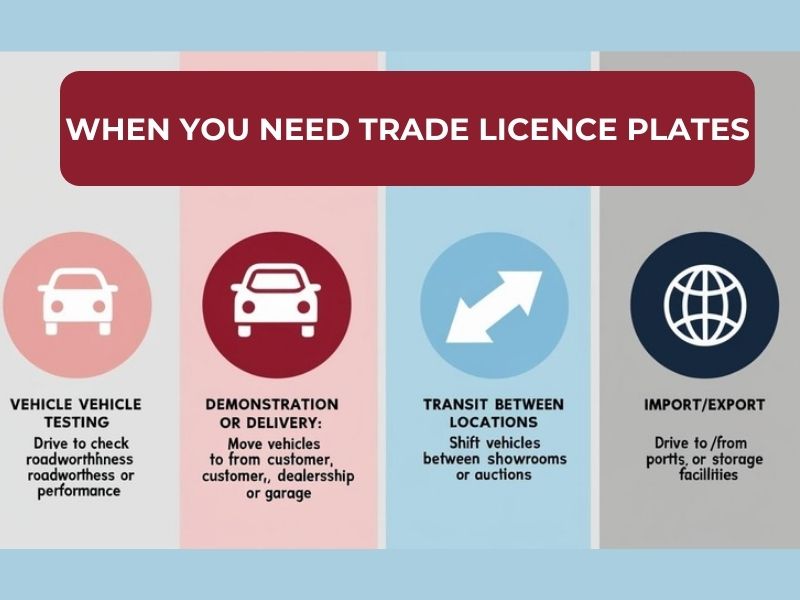
This is particularly useful for:
- Vehicle testing: Driving vehicles to check roadworthiness or performance.
- Demonstration or delivery: Moving vehicles to or from a customer, dealership, or garage.
- Transit between locations: Shifting vehicles between showrooms, workshops, or auction sites.
- Import or export purposes: Driving vehicles to and from ports or storage facilities.
Trade plates are not required for vehicles that are already taxed and registered.
How to Apply for Trade Plates DVLA
Applying for DVLA number plates in the UK is done through the DVLA.
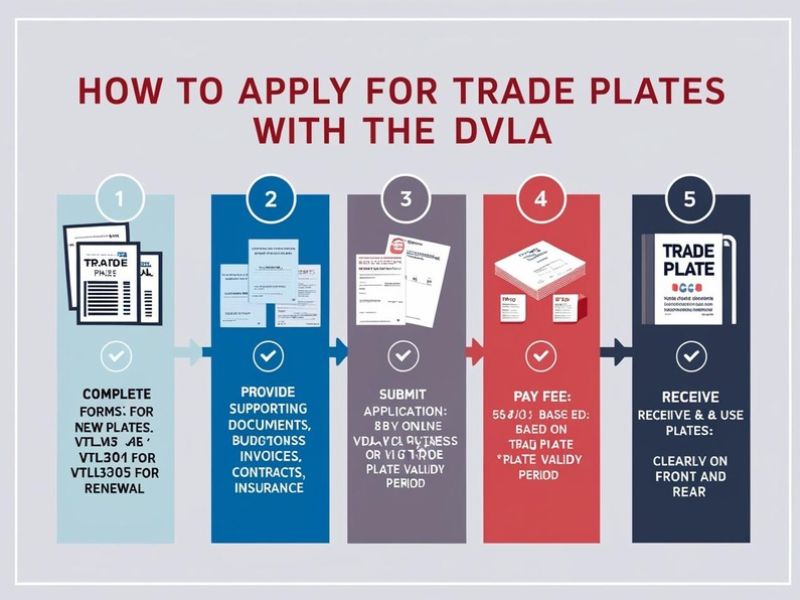
Here’s how to apply:
Complete the Application Forms:
- VTL301 form: For new number plate applications.
- VTL305 form: For gov number plates renewal.
- For a DVLA trade plate application, fill out the form accurately with business details and intended usage.
Provide Supporting Documents:
- Proof of business operations (e.g., invoices, contracts, or insurance documents).
- Company details, such as the business name, address, and VAT number (if applicable).
Submit the Application:
- Apply online through the DVLA website or send the completed forms by post.
- Pay the required fee based on the trade plate validity period.
Receive and Use the Plates:
- Once approved, you will receive a pair of trade plates with the validity period specified on the licence.
- Always display them clearly on both the front and rear of the vehicle.
Applying online is often faster and more convenient than by post. For more detailed guidance on obtaining various driving licences in the UK refer to our article.
Rules and Restrictions for Using
When using trade number plates, you must comply with strict DVLA regulations to avoid penalties:
- Valid Business Use Only: Trade plates can only be used for business-related activities, such as vehicle demonstrations, transportation, or testing. Using them for personal errands (e.g., shopping) is illegal.
- Correct Display: Plates must be clearly visible on both the front and rear of the vehicle. Failing to display them properly can lead to fines or warnings.
- Limited Time Usage: Trade plates are only valid for the duration specified on the licence. Using expired plates is a legal offence.
- Insurance Compliance: Vehicles driven with trade plates must be covered by motor trade insurance, ensuring protection against accidents or damages.
- No Lending or Sharing: You cannot loan or rent your trade plates to other individuals or businesses, even if they are in the same industry.
Failure to comply with these rules can result in fines, penalties, or suspension of the trade licence.
Trade Number Plate Price and Validity
The number plate price for trade licence plates depends on the validity period. As of now, the DVLA offers two options:
- 6-month licence: £90
- 12-month licence: £165
If you need multiple sets of trade plates, each pair requires a separate fee. The plates are valid only for the duration specified on the licence. To continue using them, you must renew the licence before it expires.
Late renewals may lead to fines or the need to reapply. Always ensure timely renewal to avoid disruptions in your business operations.
Renewing or Replacing Registration Plates
To renew your plates, complete the VTL305 form, which is part of the DVLA trade plate application process.
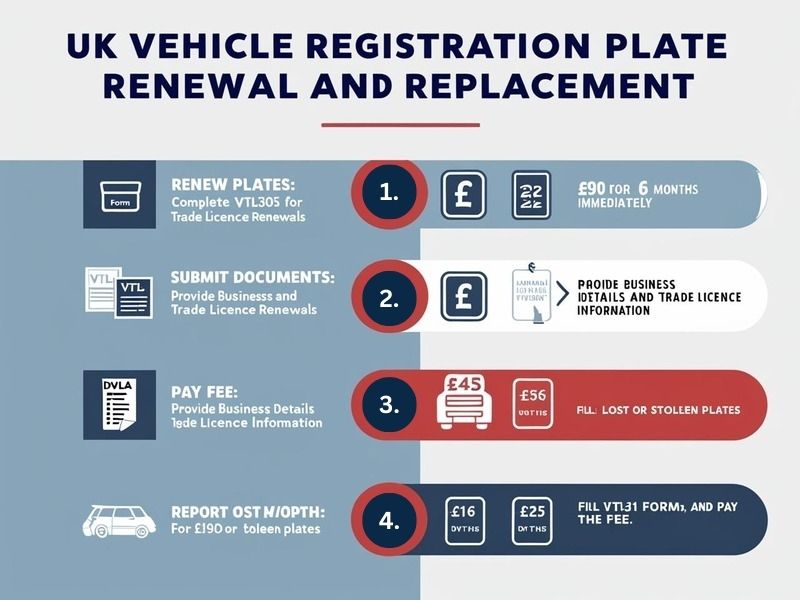
For this you need to:
- Complete the VTL305 form: Use this for trade licence renewals.
- Submit supporting documents: Provide proof of business activity and trade licence details.
- Pay the renewal fee:
- £90 for 6 months.
- £165 for 12 months.
If your trade plates are lost or stolen, you must report the stolen licence plate to the DVLA immediately. You can request a replacement by filling out the VTL310 form and paying a small fee. For damaged plates, the same process applies—submit the form with the necessary details to receive a new set.
For information on renewing other types of stolen licences, see our guide on Renew Driving Licence in UK and Lost Driving Licence in UK.
Benefits of Using DVLA Trade Plates
Using trade licence plates offers several advantages for motor traders and vehicle testers:
- Cost Efficiency: You avoid the individual registration and taxation of every vehicle, saving money.
- Convenience: Easily move unregistered or untaxed vehicles without legal issues.
- Time-Saving: Simplifies vehicle demonstrations, testing, and deliveries, reducing paperwork.
- Legally Compliant: Ensures you meet DVLA regulations when driving unregistered vehicles on public roads.
- Professional Appearance: Demonstrates your business’s legitimacy and compliance with UK transport laws.
These benefits make trade plates a valuable asset for businesses in the motor industry.
Penalties for Misusing DVLA Licence Plates
Improper use of trade licence plates can lead to fines, penalties, or legal action. Common violations include:
- Personal Use: Using trade plates for private errands, such as commuting, is prohibited and punishable by fines.
- Incorrect Display: Failing to clearly display plates on both the front and rear of the vehicle may result in warnings or penalties.
- Lending Plates: Allowing third parties to use your trade plates is illegal and may lead to licence revocation.
- Expired Licence Use: Driving with expired trade plates is a violation and may result in hefty fines.
- No Insurance: Vehicles with trade plates must have valid motor trade insurance. Failure to insure may lead to prosecution.
To avoid penalties, always use trade plates strictly for business-related activities and follow DVLA regulations.
Trade licence plates are essential for motor traders and vehicle testers in the UK, allowing them to legally drive unregistered or untaxed vehicles for business purposes. By simplifying registration and taxation requirements, trade plates save both time and money. However, strict DVLA regulations apply—misuse can lead to fines, penalties, or licence suspension. To stay compliant, ensure you use trade plates only for authorised activities, display them correctly, and renew the licence on time. Proper usage helps streamline operations and keeps your business on the right side of the law.
Source / Ref.: Gov.uk Contains public sector information licensed under Open Government Licence v3.0.
Written by [Ketan Borada / British Portal Team] – Founder of British Portal, dedicated to providing accurate and up-to-date information on UK public services and benefits.Related Posts

Previous Post
Next Post






- Business
 5
5 - Cricket5
- Department for Education49
- Departments3
- Driving and Transport
 53
53 - Education45
- Finance6
- Football13
- Golf3
- Government
 108
108 - Guides1
- Health
 5
5 - Health4
- International Politics9
- Law and Justice31
- Money and Tax23
- National Politics4
- News68
- Politics6
- Sports38
- Technology5
- Tennis3
- Transportation4
- Uncategorized4
- Visa
 17
17 - Visas and Immigration
 24
24 - Weather1