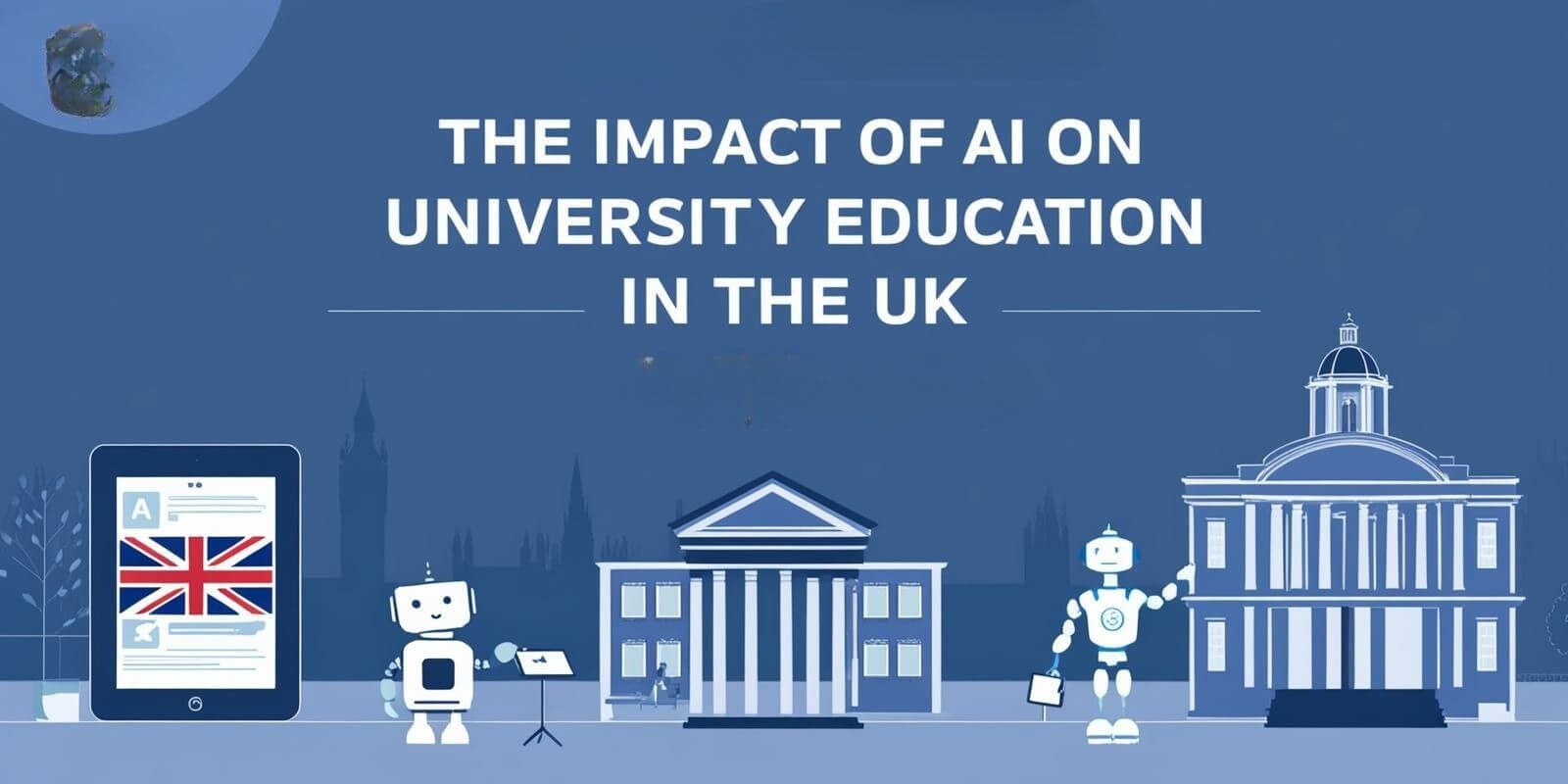
AI is still being applied in modifying many practice areas, not leaving behind university education in the United Kingdom. As for the educational benefits of AI, there are several of them, such as individual approach to students and optimization of administrative tasks. All in all, AI has come a long way in connecting education; however, there are still some hurdles. AI integration in higher education has resulted in debates over ethical concerns that are social, and privacy questions that have arisen to question traditional classroom activities. Thus, the impact of artificial intelligence on education is not only unique for the students, but for the educators or institutions, or administrative bodies as well. This article, The Impact of AI on University Education in the UK provides insights into how AI is transforming education, highlighting its benefits and challenges in higher learning institutions.
Positive Impacts of Artificial Intelligence in University Education
Artificial Intelligence is revolutionizing university education by enhancing learning experiences and improving efficiency. AI enables personalized learning, tailoring study materials to individual student needs. It streamlines administrative tasks, reducing the workload for educators and staff. AI also promotes accessibility and inclusivity, helping students with disabilities through voice assistants and adaptive learning tools. Additionally, smart content and virtual tutors provide instant guidance, making education more interactive and effective.
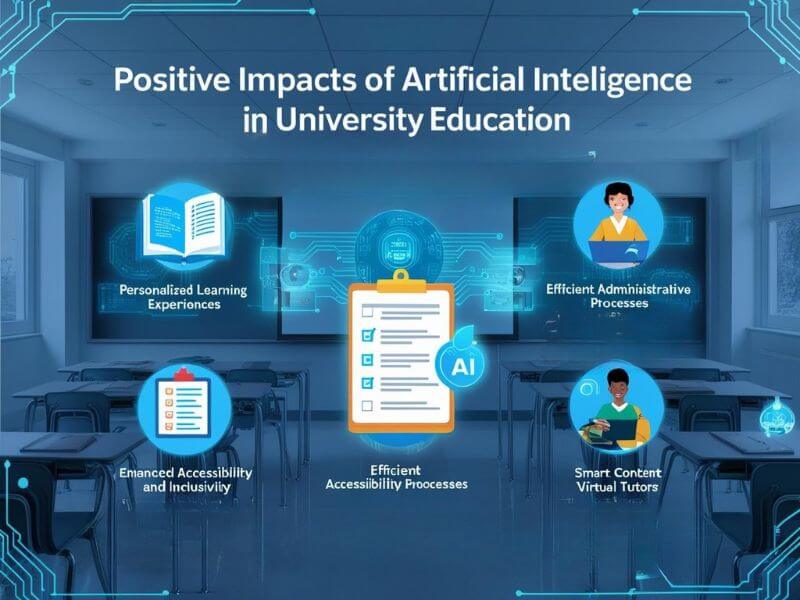
1. Personalized Learning Experiences
AI-driven educational technology tools are revolutionizing the manner through which students receive information.AI-driven educational platforms use algorithms to create individualized learning material that matches specific students’ learning path data. Artificial intelligence uses algorithms to monitor student advancement which then generates individualized learning materials that guide students through personalized paths and reveals the subjects they need additional help with. Such individualized learning delivery produces better educational outcomes with greater student engagement. The adaptive learning platforms enable students to master complex material at their individual speed which leads to increased understanding and improved memory retention.
2. Efficient Administrative Processes
University administrative operations feel the direct effects of Artificial Intelligence systems.AI automation provides streamlined bureaucratic processes which enhance operational efficiency and decreases workload among staff members. Many educational tasks including assignment grading along with class scheduling and admissions and student inquiry management now operate with artificial intelligence-based software. Students can use AI-powered chatbots to receive immediate answers about frequent questions in addition to getting help with administrative procedures.
3. Enhanced Accessibility and Inclusivity
AI has undeniably helped in providing education to the marginalized groups of people. Some of the AI systems are designed to assist students with disability in order to facilitate their education. Synthetic speech applications aid the visually impaired students whereas AI transcription solutions help students with hearing impairment. IN addition, other useful technologies include real time translation for courses that require students to comprehend materials translated from English into other languages in real time. Due to the usage of AI, universities in the United Kingdom have been able to implement a system that allow all the students including those who have impairment both physical and those have barrier in language to get education without experiencing some hassles. This demonstrates how the artificial intelligence development aids in education, capacity fostering equal learning among all.
4. Smart Content and Virtual Tutors
The third benefit of the application of AI is on developing smart content in university education. This kind of solution can be used to create engaging and interactive study material, digital textbooks, auto-generated quizzes make learning more interesting. These are up-to-date since the teacher has the recent development on various fields so that the student is equipped with the latest information. It is also important to note that with the help of technologies, intelligent virtual tutors have entered the lives of people to become a significant factor in receiving education. These tutors are available all through the day and night and enable students to seek help regarding any course as well as giving instant replies to queries.
Negative Impact of AI on Education
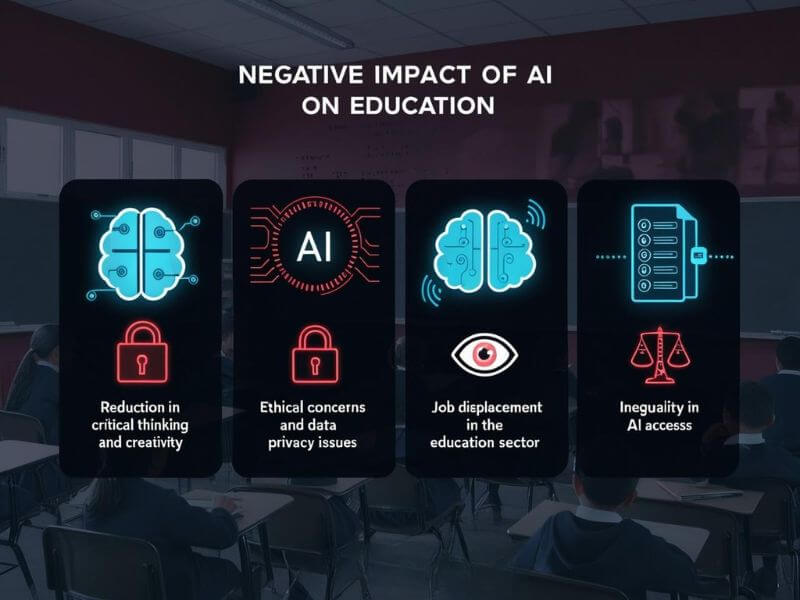
AI is continuing to transform university education on how teaching and learning happens and the effectiveness of the whole system. AI is used to deliver content and learning in a more person specific way as in online content that is takes into consideration each student. It also helps in minimizing congestion in certain sets of activities that could have a bearing on the teachers and the rest of the workforce in school. For example, students with disabilities are assisted by voice assistants and other teaching learning resources such as adaptive learning techniques. The negative effects of AI on education include reduced critical thinking, privacy concerns, job displacement, and unequal access to technology.
1. Reduction in Critical Thinking and Creativity
Thus, it is necessary to discuss the opportunities and threats of both the approaches while evaluating their possible impacts on the spheres of education. Another important issue that ought to be considered is that of over reliance on the use of AI solutions where the major idea is to hamper students’ critical thinking capacities. AI generating the content and automated way of tutoring it means less need for independent thinking, so creativity and innovative solutions may be less sought after. The negative impact of AI in education brings up the question on how to incorporate it into student learning and yet still enhance university human intellectual development.
2. Ethical Concerns and Data Privacy Issues
Applying the concept of AI is not limited to the learning processes but also involves ethical issues. After analyzing the methods of gathering data most AI educational platforms collect student data for the purpose of creating more personalized learning environments. But, there has been an issue cropping up on the security and the privacy of such information. This means that if students store their information on various databases, there are concerns of cyber threats, data leakages and misuse of the student information.
3. Job Displacement in the Education Sector
AI has therefore been associated with job replacement in the education sector as well. With the use of AI in grading, administration and some teaching tasks, the educators and staff will have limited places in the organization. Although AI may be of great help to the institution by improving efficiency, its use raises concerns on employment of teaching and other administrative staff. This is the case if it is implemented to take up and perhaps even cancel out traditional education roles such as that of a teacher.
4. Inequality in AI Access
Another challenge is that there is lack of equity in using of artificial intelligence in the delivery of education. Some universities in UK are already using modern AI technologies in universities while others are unable to apply the technologies since they lack funding. This papers unfairness brings about an education inequality where students from the fortunate schools will be in a position to access better learning materials while others from the needy schools will not.
Balancing AI’s Role in Education
As acknowledged by various authors, the effect of applying the AI has brought significant benefits and challenges to education, and universities have to learn how to balance the positive and negative aspects. It is important to use AI as a supporting, not the main approach to teaching and learning process. Thus, when it comes to the principles of using AI in universities, the emphasis should be on their ethical implementation, specific protection of student data, and the human factor in learning. Professors and educators need to collaborate with AI instead of directly engaging in a competition with it and should leverage the tech in supporting teaching processes.
Conclusion
According to the viable factors demonstrated in the use of AI in the UK university system, there are several advantages including; However, some of the concerns that have been identified include; ethics in innovation, dependency rate on technology and education that ushers in learning deficits. However, in order to achieve the subsequent steps of AI in the education, the systematic plans of AI integration should be implemented by the universities. The future of education will therefore solely depend with these institutions of learning on how they adopt the technology practices together with the traditional practices. The Impact of AI on University Education in the UK is profound, bringing both advancements and challenges to the academic sector.
Written by [Ketan Borada / British Portal Team] – Founder of British Portal, dedicated to providing accurate and up-to-date information on UK public services and benefits.
Previous Post
Next Post







- Business
 5
5 - Cricket5
- Department for Education49
- Departments3
- Driving and Transport
 53
53 - Education45
- Finance6
- Football13
- Golf3
- Government
 108
108 - Guides1
- Health
 5
5 - Health4
- International Politics9
- Law and Justice31
- Money and Tax23
- National Politics4
- News68
- Politics6
- Sports38
- Technology5
- Tennis3
- Transportation4
- Uncategorized4
- Visa
 17
17 - Visas and Immigration
 24
24 - Weather1