Student Visa UK – What You Need to Know
A Student visa UK allows international students aged 16 and over to study at a licensed institution in the United Kingdom. To qualify, you need an offer from a UK university, proof of financial support, and English language proficiency. This visa has replaced the Tier 4 (General) study visa, now known simply as the UK study visa.
If you’re 16 or 17 and wish to study at an independent school, you may need a Child Student visa instead.
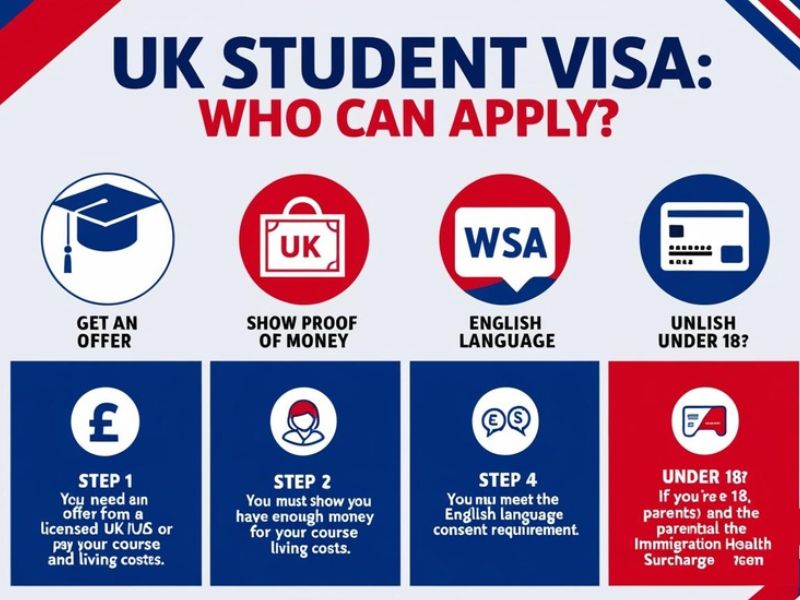
Eligibility Criteria for a UK Student Visa
To meet the UK study visa requirements, you must:
- Have an unconditional offer from a UK institution (licensed student sponsor), which you’ll need to submit with your UK student visa application.
- Show evidence of funds to support yourself and pay for your course. This is part of the UK student visa financial requirements.
- Meet the required English language level as per gov UK study visa guidelines.
- Provide parental consent if you’re under 18.
If you plan to apply for UK student visa status, make sure you meet all these conditions before submitting your documents. The study visa UK cost varies depending on where you apply from, and you’ll also need to consider UK study visa fees, which include the Immigration Health Surcharge (IHS).
To learn more or to start your UK apply for student visa process, visit the official gov.uk website.
When to Apply for a UK Student Visa?
If you’re planning to apply for UK study visa status, timing is crucial.
- From outside the UK: You can apply for a UK student visa up to 6 months before your course starts. The decision usually takes about 3 weeks after your application is submitted.
- From inside the UK: You can apply for UK study visa renewal or switching up to 3 months before your new course begins. The typical decision time is 8 weeks.
Make sure your new course starts within 28 days of your current visa expiring, as required by gov UK study visa rules. Applying early helps avoid delays and ensures you meet all UK study visa requirements on time.
How Long Can You Stay in the UK?
The length of your stay on a student visa UK depends on your course level and previous study history in the UK:
- Degree-level courses: You can stay for up to 5 years under the UK study visa.
- Below degree-level courses: The maximum stay is 2 years.
If you want to remain in the UK after your studies, you can apply for UK student visa extension or switch to the Graduate visa, which allows you to stay for at least 2 more years. This transition is common among international students planning long-term careers or work under the study visa UK working hours restrictions initially.
UK Student Visa Fees & Healthcare Surcharge
When applying for a study visa UK, it’s important to understand the total costs involved.
UK Student Visa Fees:
- £490 – if you’re applying from outside the UK
- £490 – if you’re extending or switching inside the UK
These UK study visa fees apply to both new applicants and those continuing their studies.
Healthcare Surcharge:
In addition to the student visa UK cost, you’ll need to pay the Immigration Health Surcharge (IHS). The amount varies based on the length of your visa.
Make sure to check the latest rates on the gov UK study visa website before you apply for UK study visa approval.
Work Rights on a Student Visa
Student visa UK holders are allowed to work during their studies, but within set limits. Working part-time can help you gain experience and support your living costs, especially while managing the overall study visa UK cost.
Can International Students Work?
Yes, most students on a student visa UK can work part-time during term time and full-time during official holidays. Your visa or BRP will clearly state your work rights according to gov UK student visa rules.
Hour Limits During Term and Holidays
- Up to 20 hours per week during term time if studying at degree level or higher
- Up to 10 hours per week if studying below degree level
- Full-time work allowed during official university vacations
The weekly limit applies across all jobs combined, and exceeding these visa UK working hours can breach your visa conditions.
Types of Permitted Work
Students under a study visa can work in:
- Retail, hospitality, or administrative roles
- Internships or placements that are part of your course
- On-campus positions, such as a student ambassador
Restrictions and Illegal Work
You cannot:
- Be self-employed or operate your own business
- Work as a professional sportsperson, coach, or entertainer
- Take a full-time permanent job
- Access public funds
Breaking these rules can lead to serious consequences, including visa cancellation and issues with future UK student visa application attempts. Always ensure your employment follows the study visa UK requirements.
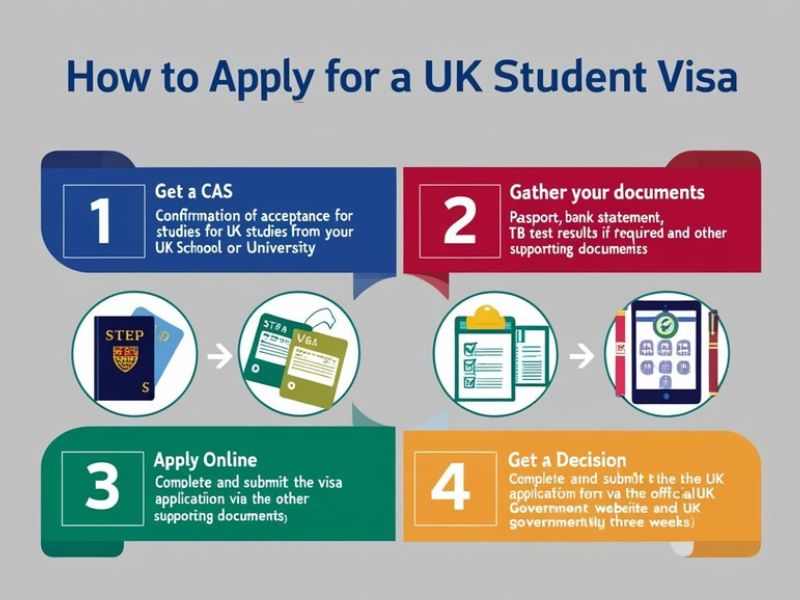
How to Apply for a UK Student Visa?
If you’re planning to apply for UK study visa approval, following the correct steps ensures a smooth process. Here’s how to complete your application:
Step 1: Obtain a Confirmation of Acceptance for Studies (CAS)
Your UK university will issue a CAS number after you accept their offer. This is essential for your application and proves that you have a place at a licensed sponsor institution.
Step 2: Prepare the Required Documents
Before starting your UK apply for study visa process, gather the following:
- Valid passport
- CAS from your university
- Financial proof to cover tuition and living expenses
- English language test results (if required)
- ATAS certificate (for certain courses)
- Parental consent (if under 18)
- Tuberculosis test results (if applicable)
Step 3: Apply Online
Submit your visa application through the official gov portal.
If applying from outside the UK:
- Use the ‘UK Immigration: ID Check’ app OR
- Visit a visa application centre for biometrics (photo & fingerprints)
If applying from inside the UK:
- Apply to extend or switch your visa, depending on your circumstances
Step 4: Wait for a Decision
- Standard processing time: 3 weeks (outside the UK), 8 weeks (inside the UK)
- Priority and super-priority services are available at an additional cost
Make sure you consider the visa cost, including UK student visa fees and the healthcare surcharge, before submitting your application.
UK Student Visa Financial Requirements
As part of your visa application, you must show that you can afford both your course fees and living costs. Meeting the student visa financial requirements is essential for a successful application.
Tuition Fees – You need to show you can pay your tuition fees as listed on your CAS. This usually covers one academic year. Make sure this amount is available in your bank account before you apply for visa approval.
Living Expenses:
You also need to show enough funds for daily living:
- Studying in London: £1,483 per month (for up to 9 months)
- Studying outside London: £1,136 per month (for up to 9 months)
Funds must be held for at least 28 consecutive days before applying.
Who Does NOT Need to Show Proof of Funds?
You don’t need to show financial evidence if:
- You’ve held a UK visa for at least 12 months before applying for your student visa
- You’re from a low-risk country, such as the USA, Australia, or EU nations
Always check the latest list of low-risk nationalities and visa guidelines on the official UK apply for visa portal to ensure compliance.
English Language Requirements
To meet the UK student visa requirements, you must prove your ability to speak, read, write, and understand English. This is a key part of the visa application process.
Required English Levels
- Degree level or above: CEFR Level B2
- Below degree level: CEFR Level B1
These standards apply to all applicants, whether you’re applying from inside or outside the UK.
Accepted Proof of English Proficiency
To apply for visa, you can demonstrate English skills through:
- A Secure English Language Test (SELT) from an approved provider
- A GCSE or A-level in English earned at a UK school
- A degree taught in English (if studied abroad, UK NARIC/ECCTIS verification is required)
These documents are essential for showing that you meet the requirements related to language ability.
Who Is Exempt from English Tests?
You may be exempt if:
- You’re from an English-speaking country such as the USA, Canada, or Australia
- You’ve previously met the English requirement in a successful UK visa application
Bringing Your Family on a UK Student Visa
You may be able to bring your family to the UK while studying on a student visa UK, but there are strict conditions.
- Studying a postgraduate course lasting 9 months or more.
- Sponsored by the UK government.
If your postgraduate level course starts on or after 1 January 2024, it must be either:
- A PhD or other doctorate (RQF level 8)
- A research-based higher degree
This policy aligns with the latest gov UK student visa updates and affects those applying under the new visa application rules.
Read This: Student Dependent Visa UK – Check Your Eligibility
After You Apply – What Happens Next?
Once you’ve submitted your UK student visa application, you’ll typically receive a decision within the standard processing time. If successful, you’ll be issued an eVisa, which serves as your official online immigration record under the study visa UK system.
If Further Checks Are Needed
In some cases, UKVI may:
- Request additional documents to support your UK apply for visa
- Invite you for an interview
- Delay your decision due to personal circumstances, such as a criminal record
These steps are part of the regular gov visa verification process and help ensure all visa requirements are met.
Need to Change or Cancel Your Application?
If you made a mistake or need to cancel your student visa application:
- Contact UKVI immediately to correct any errors
- You can withdraw your application at any time, though fees may not be refunded.
Always keep a copy of your submitted documents and check your email for updates from the Home Office after applying.
Read this: How to Extend Your Student Visa in the UK
Source / Ref.: Gov.uk Contains public sector information licensed under Open Government Licence v3.0.
Written by [Ketan Borada / British Portal Team] – Founder of British Portal, dedicated to providing accurate and up-to-date information on UK public services and benefits.Related Posts
Previous Post
Next Post





- Business
 5
5 - Cricket5
- Department for Education49
- Departments3
- Driving and Transport
 53
53 - Education45
- Finance6
- Football13
- Golf3
- Government
 108
108 - Guides1
- Health4
- Health
 5
5 - International Politics9
- Law and Justice31
- Money and Tax23
- National Politics4
- News68
- Politics6
- Sports38
- Technology5
- Tennis3
- Transportation4
- Uncategorized4
- Visa
 17
17 - Visas and Immigration
 24
24 - Weather1