
Things have changed for UK businesses that might face problems with serious money crimes. This week, the Serious Fraud Office (SFO) brought out important new guidance for companies. These new rules make it much clearer how companies should act if they suspect crimes like fraud or bribery happening inside their business.
This is big news. For the very first time, the SFO is saying this clearly: If a company finds a problem, tells the SFO about it quickly (UK corporate self-reporting SFO), and helps the SFO completely, it can expect an offer to sort things out without going to court. This offer is called a Deferred Prosecution Agreement (DPA). This means the company likely won’t face a criminal court case, as long as it meets certain conditions and there are no unusual reasons to prosecute anyway. This offers businesses a much clearer possible route to avoid SFO prosecution.
The head of the SFO, Director Nick Ephgrave QPM, announced this plan. It’s part of a bigger effort to make the SFO better at fighting major financial crime. But what does this Serious Fraud Office guidance mean for companies in the UK? Let’s break it down simply.
Why This New Guidance Matters

Before, when companies dealt with the SFO, it was often confusing. They weren’t always sure if telling the SFO about problems or helping them would lead to a better outcome. These new rules aim to fix that confusion.
The main message is encouragement. The SFO wants companies to step forward and tell them when they find problems.
Director Nick Ephgrave said the goal is clarity:
“Our new guidance sets out how corporates can report suspected criminality to us and what we expect from cooperating corporates. If you know of wrongdoing, the gamble of keeping this to yourself has never been riskier.”
This shows the SFO wants to use DPAs more often. A DPA is like a deal to resolve the problem when companies show they are truly sorry and actively help fix things.
The First Step: Corporate Self-Reporting
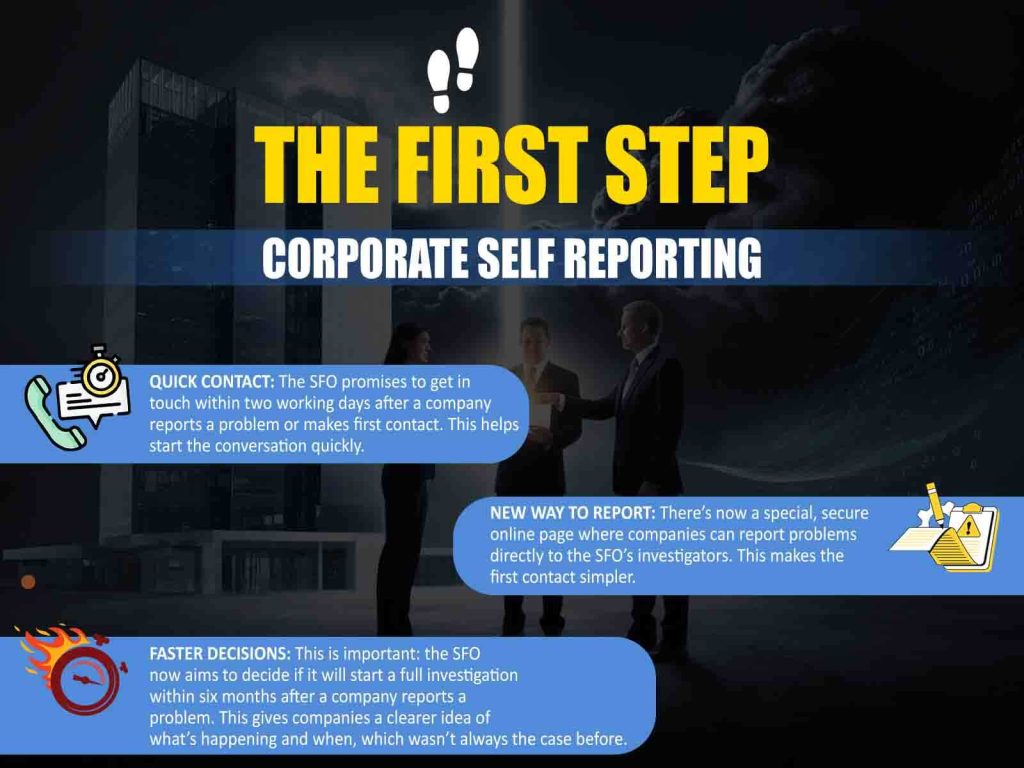
The SFO self-reporting guidance makes it easier for companies to report problems.
- New Way to Report: There’s now a special, secure online page where companies can report problems directly to the SFO’s investigators. This makes the first contact simpler.
- Quick Contact: The SFO promises to get in touch within two working days after a company reports a problem or makes first contact. This helps start the conversation quickly.
- Faster Decisions: This is important: the SFO now aims to decide if it will start a full investigation within six months after a company reports a problem. This gives companies a clearer idea of what’s happening and when, which wasn’t always the case before.
Telling the SFO about problems takes courage. It means your company voluntarily admits it suspects a crime happened inside the business before the SFO or anyone else finds out. Taking this first step is key if a company wants the chance to get the benefits promised in the new guidance.
The Crucial Element: Genuine Cooperation

Just telling the SFO about a problem isn’t enough. The SFO puts a lot of importance on companies providing genuine and full help during the investigation that follows. This is how a company earns SFO cooperation credit – the reward for helping. The new guidance explains more clearly what real help looks like:
What the SFO Expects (Examples of Genuine Cooperation):

- Save Everything: Quickly protect all computer files and paper documents that might be important. Don’t let anything be deleted or changed.
- Tell the Truth: Explain clearly what happened regarding the suspected crime, based on what the company knows.
- Talk About Internal Checks: Tell the SFO early on if the company is doing its internal investigation. Share what it finds.
- Help Find People: Help the SFO find people who know things (witnesses) and let the SFO talk to them if needed.
- Share Information Quickly: Give the SFO important documents, data, and other information when they need it, without delay.
What the SFO Views as Uncooperative (Examples):

- Playing Games with Countries: Reporting the problem to police in another country just to try and stop the SFO investigation.
- Hiding Who Did It: Trying to make it look like certain people weren’t involved or their role wasn’t serious.
- Making Things Difficult: Using delaying tactics, giving information that isn’t clear or true, or generally making it harder for the SFO to find out what happened.
Helping fully can be a lot of work. But the SFO’s rules make it clear: this level of help is essential if a company hopes to get invited to discuss a DPA.
Understanding Deferred Prosecution Agreements (DPAs) in the UK

So, what is the potential reward for timely self-reporting and genuine cooperation? The prospect of a Deferred Prosecution Agreement (DPA). But what is an SFO DPA?
- Definition: A Deferred Prosecution Agreement UK is a special agreement reached between a prosecutor (like the SFO) and a company. It must be approved and supervised by a judge.
- How it Works: Under a DPA, the SFO charges the company with a criminal offence but immediately suspends the prosecution for a defined period.
- Conditions: The company must agree to comply with specific, strict conditions during this period. These often include:
- Paying a significant financial penalty.
- Paying compensation to victims where applicable.
- Disgorging (paying back) any profits made from the wrongdoing.
- Implementing substantial improvements to its compliance program to prevent recurrence.
- Continuing to cooperate fully with the SFO (including in any related prosecutions of individuals).
- Sometimes, agreeing to an independent monitor overseeing compliance improvements.
- Outcome: If the company fully complies with all the terms of the DPA for the entire period, the prosecution is discontinued. The company avoids a criminal conviction for the specified offences. However, if the company breaches the DPA terms, the SFO can resume the prosecution.
The SFO DPA guidance also brings welcome news regarding timing: the SFO aims to conclude DPA negotiations within six months of formally inviting a company to enter them. This adds another layer of predictability to the process.
How Businesses Avoid SFO Prosecution
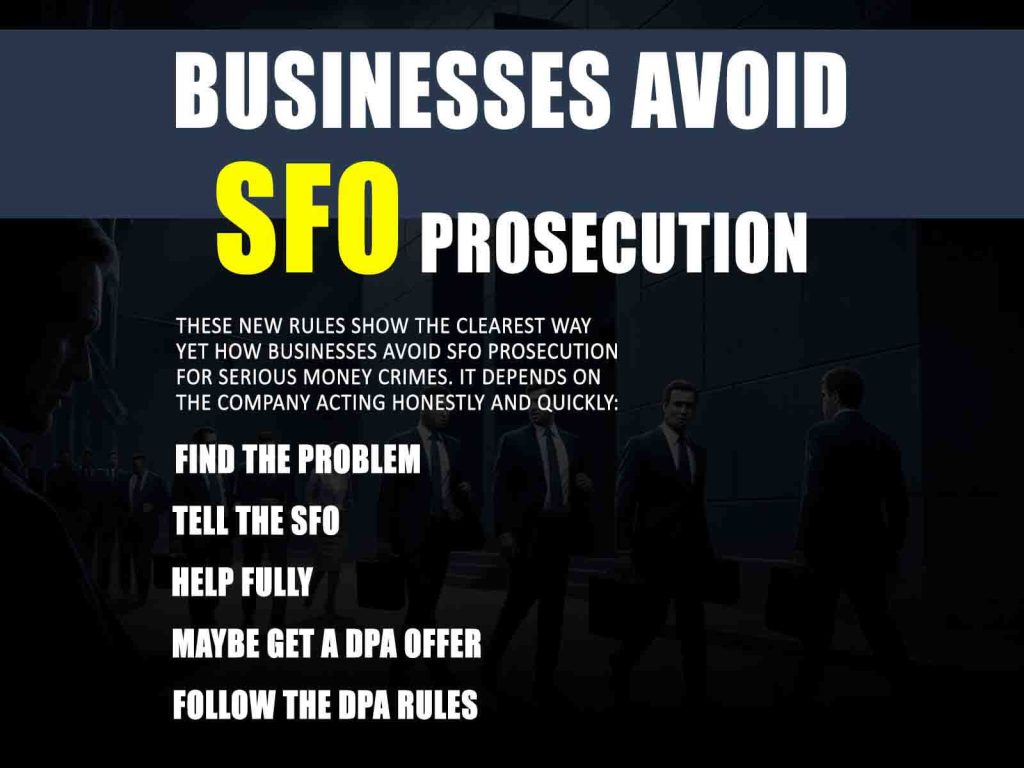
These new rules show the clearest way yet how businesses avoid SFO prosecution for serious money crimes. It depends on the company acting honestly and quickly:
- Find the Problem: Discover possible serious crimes inside the company.
- Tell the SFO: Report it quickly and voluntarily using the SFO’s special reporting channel.
- Help Fully: Give complete, honest, and ongoing help to the SFO as they investigate.
- Maybe Get a DPA Offer: If the SFO is happy with the reporting and help (and there are no unusual reasons not to), the company can expect an offer to discuss a DPA.
- Follow the DPA Rules: Agree on the DPA terms and follow them perfectly.
It’s not a magic trick to escape trouble automatically. The SFO still makes the final decision, and DPAs have serious requirements. But these new rules give the strongest reason yet for companies to be open and honest when they find problems.
What This Means for UK Businesses: Strengthening Compliance

This news highlights how important good SFO compliance for UK businesses is. Companies can’t just wait for problems to happen anymore. They need to focus on preventing problems and being ready to act correctly if they do occur.
Practical Implications:
- Check Your Rules: Look at your company’s rules for reporting problems (like whistleblowing hotlines), how it investigates issues, and how it saves information. Make sure these match what the SFO expects.
- Build an Honest Culture: Encourage a workplace where employees feel safe to speak up about concerns. This helps find problems early, which might make it possible to self-report.
- Train Your People: Make sure important staff (like bosses, lawyers, and compliance teams) know about this new SFO guidance. They need to understand the benefits of helping and the risks of not helping.
- Tell the Board: Company directors need to know about these rules and the importance of compliance. They need to understand the risks and the potential positive path the SFO has outlined.
- Have a Plan: Your company should know exactly what it would do if it discovered a serious problem. Who makes the decisions? How would an internal investigation start? When would you talk to the SFO?
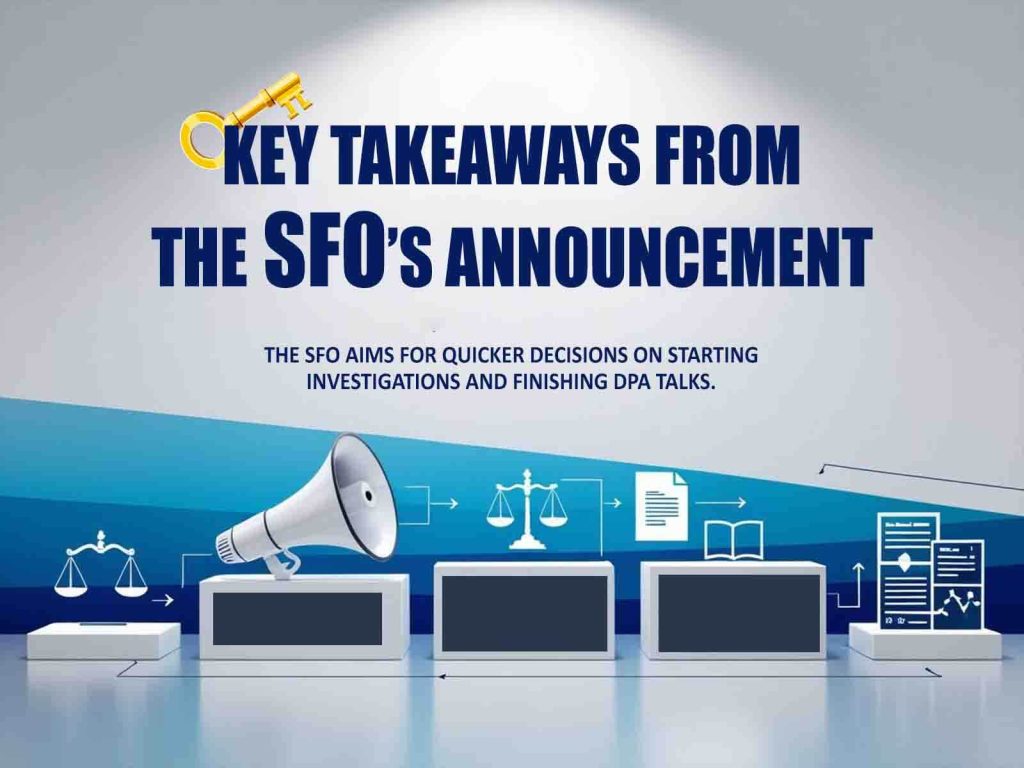
Key Takeaways from the SFO’s Announcement
- SFO is Clearer: They want to make it less confusing for companies trying to do the right thing.
- Tell Them Yourself: Reporting problems early is encouraged with a new, easier process and faster responses.
- Helping is Key: Real, full help is stressed as very important. Not helping properly has big risks.
- DPA is Likely (if conditions are met): Companies that report and help fully can now expect a DPA offer unless there are special reasons against it.
- Things Will Move Faster: The SFO aims for quicker decisions on starting investigations and finishing DPA talks.
- Don’t Hide Problems: The SFO warns that trying to keep wrongdoing secret is riskier than ever.
Moving Forward
This SFO’s new guidance is a significant change for how companies are held responsible in the UK. It offers a clear, although tough, path for businesses that act honestly and quickly when they find serious problems.
The final decisions are still up to the SFO (and judges for DPAs). But these rules give companies more power to manage difficult situations by being open and truly helpful. For all UK businesses, the message is simple: having strong internal rules to prevent and detect problems, and being ready to deal openly with the SFO, isn’t just about following rules – it’s now a clearer path to protecting the company’s future.
Read more about Data Protection in the UK – Key Rules for Businesses
Frequently Asked Questions
The SFO now clearly states that cooperating companies which self-report wrongdoing can generally expect a Deferred Prosecution Agreement (DPA) instead of prosecution, offering more predictability.
No, it’s the expected outcome, not a guarantee. The SFO retains discretion based on case specifics and public interest, and exceptional circumstances can still lead to prosecution.
No, genuine cooperation requires proactive help: preserving evidence, outlining facts clearly, identifying witnesses, and engaging openly, not just passively providing documents.
Seek expert legal advice immediately, preserve all relevant evidence, and carefully consider the options for internal investigation and potential self-reporting to the SFO based on that advice.
No. A DPA avoids a criminal conviction if terms are met (fines, compliance changes, etc.), but it requires admitting facts and doesn’t equate to being found ‘not guilty’.
Source / Ref.: Gov.uk Contains public sector information licensed under Open Government Licence v3.0.
Written by [Ketan Borada / British Portal Team] – Founder of British Portal, dedicated to providing accurate and up-to-date information on UK public services and benefits.Related Posts



Previous Post
Next Post







- Business
 5
5 - Cricket5
- Department for Education49
- Departments3
- Driving and Transport
 53
53 - Education45
- Finance6
- Football13
- Golf3
- Government
 108
108 - Guides1
- Health4
- Health
 5
5 - International Politics9
- Law and Justice31
- Money and Tax23
- National Politics4
- News68
- Politics6
- Sports38
- Technology5
- Tennis3
- Transportation4
- Uncategorized4
- Visa
 17
17 - Visas and Immigration
 24
24 - Weather1