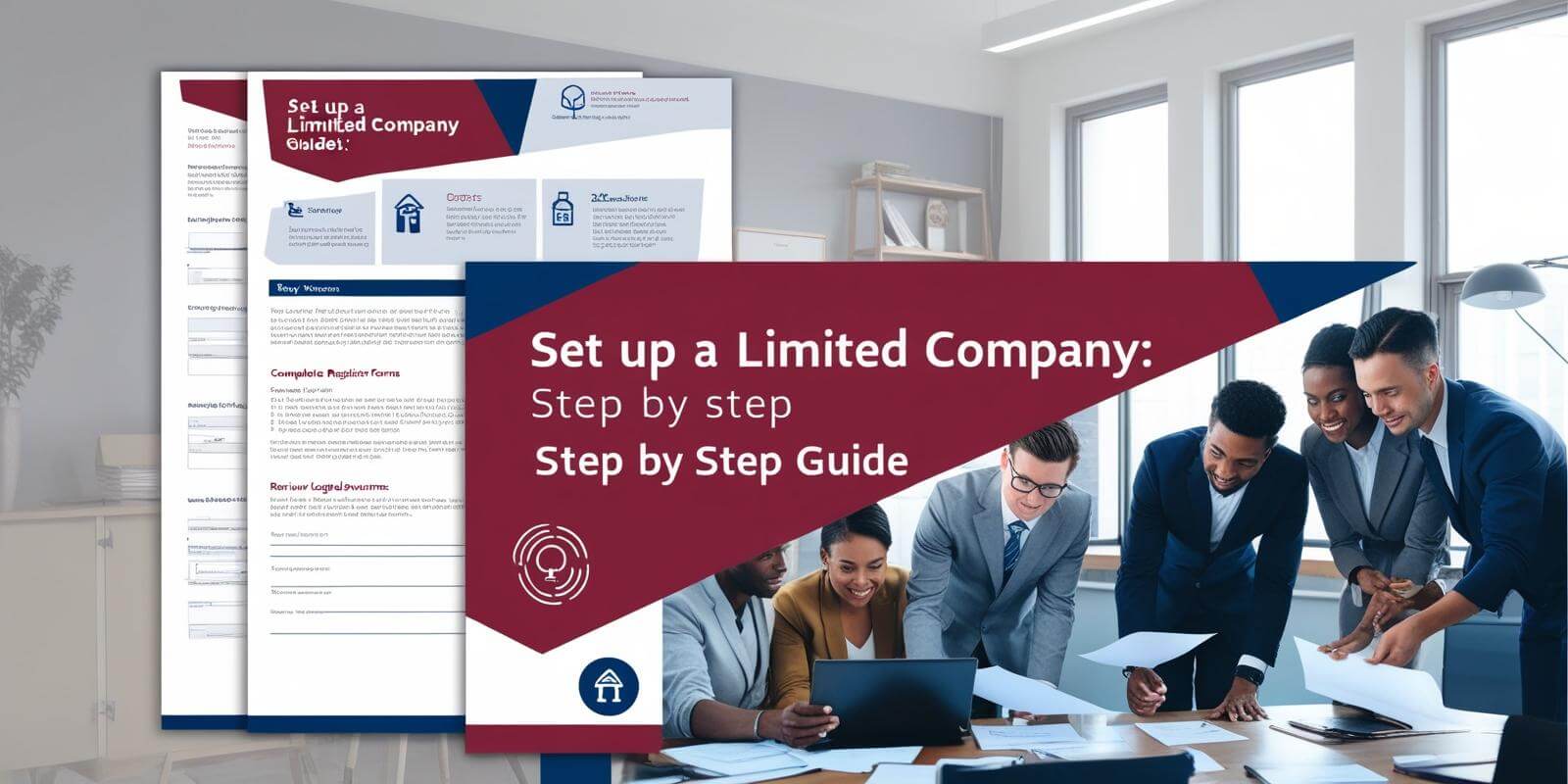
Starting a limited company in the UK is a great way to separate personal and business finances, gain credibility, and potentially pay less tax. However, the process requires legal compliance, careful planning, and an understanding of financial responsibilities. This guide will walk you through each step, using only official UK government sources, ensuring accuracy and reliability.
Step-by-Step Guide to Setting Up a Limited Company
Decide if a Limited Company is Right for You
A limited company is a separate legal entity from its owners. This provides limited liability protection, meaning personal assets are not at risk if the business runs into financial trouble. However, it comes with responsibilities such as filing annual accounts and adhering to tax regulations.
Choose a Company Name
- The name must be unique and not already registered at Companies House.
- It must not contain offensive words or suggest government affiliation.
- You can check name availability on the Companies House Name Checker.
Appoint Directors and a Company Secretary
- A company must have at least one director who is legally responsible for running the company.
- A company secretary is optional but can be appointed to handle administrative duties.
- Directors must be at least 16 years old and not disqualified from serving as directors.
Decide on Shareholders and Share Structure
- Every limited company needs at least one shareholder.
- You will decide how many shares each shareholder holds, which determines their ownership percentage.
- Companies with multiple shareholders may want to draft a Shareholders’ Agreement to avoid disputes.
Prepare a Memorandum and Articles of Association
- Memorandum of Association: A legal document stating the company’s intent to form.
- Articles of Association: Rules outlining how the company is run, which must comply with the Companies Act 2006.
- Standard templates can be used from GOV.UK.
Register Your Company with Companies House
You can register a company online or by post.
- Online registration: Costs £12 and is usually processed within 24 hours.
- Postal registration: Costs £40 and can take up to 8-10 days.
- Register via GOV.UK.
Get a Unique Taxpayer Reference (UTR) from HMRC
- HMRC will automatically send a UTR number within 14 days of registration.
- You will need this for corporation tax returns and VAT registration (if applicable).
Register for Corporation Tax and PAYE
- You must register for Corporation Tax within 3 months of starting business.
- If hiring employees, register for PAYE via HMRC.
Set Up a Business Bank Account
- A business account is necessary for separating personal and company finances.
- Required documents usually include:
- Certificate of incorporation
- Articles of Association
- Proof of identity for directors
Understand VAT Registration (Optional)
- Businesses earning over £90,000 per year must register for VAT.
- Voluntary VAT registration may be beneficial for reclaiming input VAT.
Comply with Accounting and Reporting Requirements
- File annual accounts and a confirmation statement with Companies House.
- Keep financial records for at least 6 years.
- Consider hiring an accountant or using accounting software.
Meet Employer Responsibilities (If Hiring Staff)
- Provide employment contracts in compliance with UK employment law.
- Register for PAYE to handle salaries and deductions.
- Offer workplace pensions if applicable under auto-enrolment rules.
Table: Key Steps and Responsibilities
| Step | Action | Official Resource |
|---|---|---|
| 1 | Choose a company name | Name Checker |
| 2 | Appoint directors and shareholders | Directors’ Responsibilities |
| 3 | Register with Companies House | Company Registration |
| 4 | Get a UTR from HMRC | Corporation Tax |
| 5 | Register for VAT (if applicable) | VAT Registration |
| 6 | Open a business bank account | Contact your chosen bank |
| 7 | Submit annual accounts | Companies House Filing |
| 8 | Handle PAYE if hiring | PAYE Registration |
FAQs
What is the difference between a sole trader and a limited company?
A sole trader is personally responsible for business debts, while a limited company is a separate legal entity, offering financial protection to its owners.
How much does it cost to register a limited company?
Online registration costs £12, while postal registration costs £40.
Do I need an accountant for my limited company?
It is not legally required, but an accountant can help manage taxes, payroll, and annual reporting.
How do I pay myself as a director?
You can take a salary through PAYE and receive dividends from company profits.
Do I need a business bank account?
Yes, a separate bank account is needed for a limited company to keep personal and business finances separate.
What happens if I don’t file my accounts on time?
Late filings can lead to penalties ranging from £150 to £1,500, depending on the delay.
Also Read: How to Register as a Sole Trader: Complete Guide
Source / Ref.: Gov.uk Contains public sector information licensed under Open Government Licence v3.0.
Written by [Ketan Borada / British Portal Team] – Founder of British Portal, dedicated to providing accurate and up-to-date information on UK public services and benefits.Related Posts
Previous Post
Next Post






- Business
 5
5 - Cricket5
- Department for Education49
- Departments3
- Driving and Transport
 53
53 - Education45
- Finance6
- Football13
- Golf3
- Government
 108
108 - Guides1
- Health
 5
5 - Health4
- International Politics9
- Law and Justice31
- Money and Tax23
- National Politics4
- News68
- Politics6
- Sports38
- Technology5
- Tennis3
- Transportation4
- Uncategorized4
- Visa
 17
17 - Visas and Immigration
 24
24 - Weather1