Rights when stopped by police UK are essential to know. Being pulled over or stopped on the street can feel stressful. But staying calm and informed can protect you from unnecessary trouble.
In the UK, police officers have certain powers to stop drivers and pedestrians. However, those powers come with rules. This guide explains what happens during a police stop and how you can respond lawfully.
Whether you are driving, walking, or cycling, knowing your rights helps ensure fair treatment. Let’s break down what to expect and how to handle a stop with confidence.
Stopping & Initial Compliance
When stopped by police, you must follow certain legal duties straight away.
If you’re driving
- You must stop when signalled by police. This could be a hand signal, flashing lights, or a siren.
- Stop as soon as it’s safe and switch off your engine.
- Stay in your vehicle unless asked to get out.
If you’re walking or cycling
- The police can stop you in public places.
- You should stop if asked, but you don’t have to answer general questions unless legally required.
Remember, it’s an offence not to stop your vehicle when signalled. Failing to stop could result in a fine, penalty points, or even arrest.
Staying calm, polite, and cooperative helps the situation stay under control.
Identification & Documents Asked When Stopped by Police UK
During a stop, police may ask you to provide certain information and documents.
If driving a vehicle
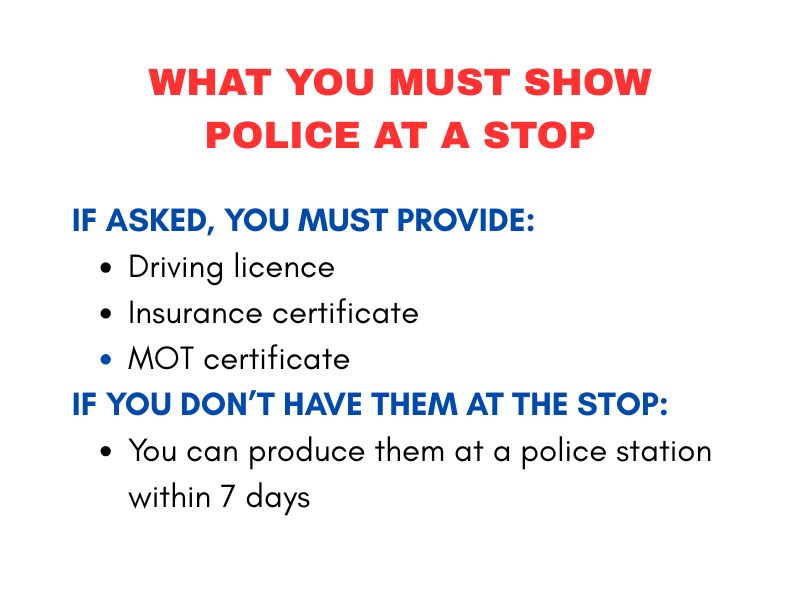
- Police can request your driving licence, insurance certificate, and MOT certificate.
- If you don’t have these documents with you, you must produce them at a police station within 7 days.
- You may also be asked to confirm your name, address, and date of birth.
If stopped as a pedestrian
- You generally don’t have to give personal details unless:
- The officer suspects you of an offence.
- They believe you’ve engaged in anti-social behaviour (under the Police Reform Act 2002).
Search Powers Explained – Rights When Stopped by Police UK
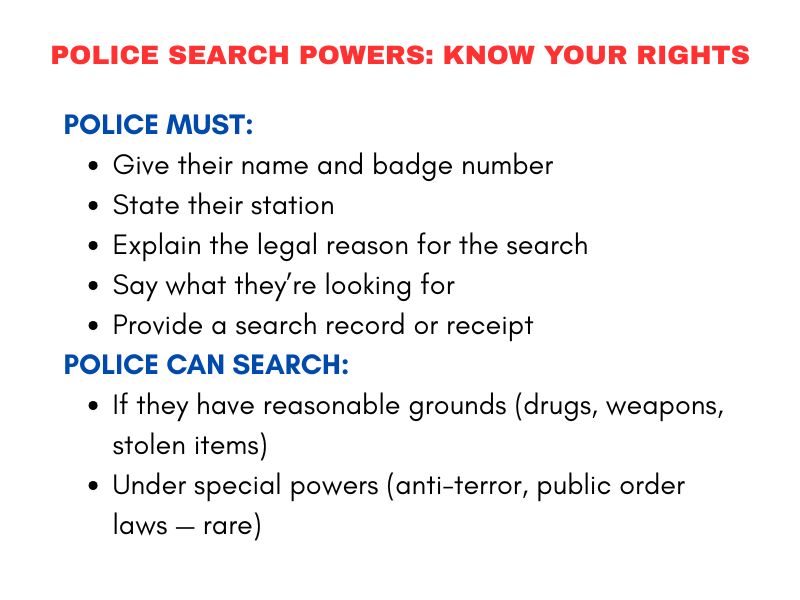
Police can search you or your vehicle in certain situations, but strict rules apply.
When can police search you or your car?
- They need reasonable grounds to suspect you’re carrying:
- Drugs
- Weapons
- Stolen property
- Items that could be used to commit a crime
- In some cases (like under anti-terror or public order laws), they can search without reasonable suspicion, but this is rare.
What must officers do during a search?
- Identify themselves (name and badge number)
- State their station
- Explain what they’re looking for
- Say the legal reason for the search
- Provide a written record or tell you how to obtain one
Your rights when stopped by police
- You can ask: “Am I being detained?”
- You can film the search as long as you don’t interfere.
- If you feel the search is unlawful, stay calm and note the details to make a complaint later.
Rights to Silence & Questioning
When stopped by police, it’s important to know what you must and don’t have to say.
Your basic rights
- You have the right to remain silent during a stop.
- You generally do not have to explain where you are going or what you are doing.
- However, if police suspect you of an offence, you may be required to provide:
- Your name
- Your address
- Your date of birth
When can silence cause problems?
- If you refuse to give details when lawfully required (for example, under suspicion of a crime or anti-social behaviour), police may arrest you.
- If you’re the driver, failing to give identity information linked to traffic offences can lead to further action.
Arrest, Detention & Legal Advice
If police arrest or detain you, key rights protect you under UK law.
When can police arrest you?
- If they have reasonable grounds to suspect you committed, are committing, or are about to commit a crime.
- If you refuse to give details when legally required (e.g. suspected anti-social behaviour or traffic offences).
Your rights on arrest
- The officer must tell you:
- You’re under arrest.
- The reason for your arrest.
- The legal power they are using.
Your right to legal advice
- You have the right to free legal advice at the police station.
- You can ask to speak to a solicitor before answering questions.
- You should wait for your solicitor before giving a statement or signing anything.
Recording & Evidence (Film & Receipts)
You have the right to record your interaction with the police, provided you don’t interfere.
Filming the stop
- You may film or record audio of a stop or search.
- Make sure you do not obstruct the officer’s duties while recording.
- Police body cameras will often record the encounter too.
Search record
- Officers must offer you a written record of any search at the time or tell you how to get one later.
- This record includes:
- Officer’s name and badge number
- Reason for the search
- Outcome of the search
Challenging Misconduct & Complaints
If you believe the police acted unfairly or unlawfully during a stop, you can take action.
What to do at the time
- Stay calm and polite avoid confrontation.
- Note down:
- Time, date, and location of the stop.
- Names and badge numbers of officers (or as much description as possible).
- Details of any witnesses.
How to make a complaint
- Contact the police force involved most have an online complaints form.
- If unsatisfied, escalate to the Independent Office for Police Conduct (IOPC).
- Provide any evidence you have (recordings, search records, witness statements).
Conclusion
Being stopped by police can feel intimidating. But knowing your rights when stopped by police UK gives you control and confidence in these encounters.
Always:
- Stay calm and respectful.
- Ask polite questions if unsure (e.g., “Am I being detained?”).
- Record details of the stop for your records.
Remember:
- You can film, ask for a search record, and request legal advice if arrested.
- You have the right to complain about misconduct.
Staying informed helps ensure fairness and protect your freedoms.
FAQs
Yes, police can stop vehicles at any time without needing a reason.
No, unless they lawfully require your details (e.g. name, address).
Yes, if they have reasonable grounds or legal authority (e.g. under specific laws).
Your driving licence, insurance, and MOT certificate if requested.
Yes, as long as you don’t obstruct their duties.
Stay calm, gather details, and file a complaint with the force or IOPC.
Related Posts


Previous Post
Next Post







- Business
 5
5 - Cricket5
- Department for Education49
- Departments3
- Driving and Transport
 53
53 - Education45
- Finance6
- Football13
- Golf3
- Government
 108
108 - Guides1
- Health4
- Health
 5
5 - International Politics9
- Law and Justice31
- Money and Tax23
- National Politics4
- News68
- Politics6
- Sports38
- Technology5
- Tennis3
- Transportation4
- Uncategorized4
- Visa
 17
17 - Visas and Immigration
 24
24 - Weather1