Register car in UK to legally drive on public roads. This step-by-step guide covers the process for new, used, and rebuilt vehicles, including required identity documents, fees, and application methods. Whether you’re a new owner or registering a classic car, this guide will help you complete the process smoothly.
Overview: Why You Need to Register Car in UK
Registering a vehicle in the UK is a legal requirement before driving it on public roads. The process involves providing ownership proof, verifying your identity, and paying the necessary fees. The Driver and Vehicle Licensing Agency (DVLA) oversees vehicle registration online and offline throughout the country.
To register car in UK, you need the following:
- Vehicle Identification Number (VIN) – a unique code identifying the vehicle.
- Proof of identity – such as a driving licence, passport, or utility bill.
- Vehicle details – make, model, and engine size.
- Application form – V55/4 for new vehicles or V55/5 for used ones.
Once registered, you will receive a V5C logbook, confirming your legal ownership. This document is essential for tax, insurance, and future vehicle sales.
Steps to Register Car in UK for New and Used Vehicles
The process for registering new and used vehicles in the UK differs slightly, but both involve submitting documentation and paying applicable fees.
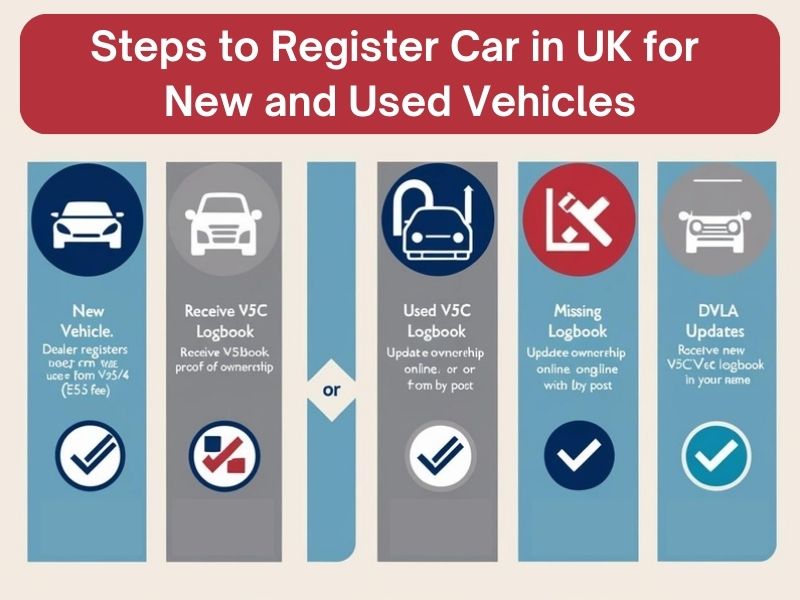
- New Vehicle Registration UK:
- When purchasing a new car, dealerships usually handle the registration.
- You will receive a V5C logbook as proof of ownership.
- If the dealer doesn’t register it, you must apply using form V55/4.
- Required documents include:
- Proof of identity (driving licence or passport)
- Vehicle details (make, model, and VIN)
- Payment for the £55 registration fee
- Register a Used Vehicle:
- When buying a used car, the seller must provide the V5C logbook.
- You must update the ownership details online or by post.
- The DVLA will send you a new logbook with your name.
- If the logbook is missing, apply using form V62.
Once completed, the DVLA will update or issue a V5C logbook in your name.
New Vehicle: How to Register Car in UK
If you’ve purchased a brand-new vehicle, you’ll need to register car in UK to legally drive it on public roads. The process verifies that your car is road-legal.
Steps to Register a New Vehicle:
- Obtain a Certificate of Conformity (CoC): This document confirms the vehicle complies with UK regulations. Most new cars include a CoC from the manufacturer.
- Complete Form V55/4: Use this form to apply for first-time car registration or any new vehicle.
- Submit Identity and Vehicle Proof: Include documents like your driving licence or passport, along with the VIN and vehicle specifications.
- Pay the Registration Fee: The standard fee is £55, which you can pay online or by post.
- Receive the V5C Logbook: Once processed, the DVLA will send you a V5C logbook, confirming your ownership.
After successful registration, you’ll receive a V5C logbook as proof of ownership.
If you plan to register a car that’s imported, additional customs and tax documents are required.
Vehicle Registration Fees
When you register car in UK, you are required to pay a one-time registration fee. The amount varies based on the vehicle type and application method.
Standard Registration Fees:
- New vehicles: £55 (applies to cars and motorbikes)
- Rebuilt or kit vehicles: £55
- Imported vehicles: £55
- Used vehicles: No registration fee if already registered in the UK
Payment Methods:
- Online: Pay via debit or credit card when applying through the DVLA website.
- By Post: Include a cheque or postal order payable to DVLA with your application.
Once the fee is processed, you will receive the V5C logbook confirming your ownership.
How to Register Car in UK After Rebuilding It
If you’ve restored or rebuilt a vehicle, you must register car in UK to verify its roadworthiness. Rebuilt vehicles include cars that have undergone significant repairs or modifications.
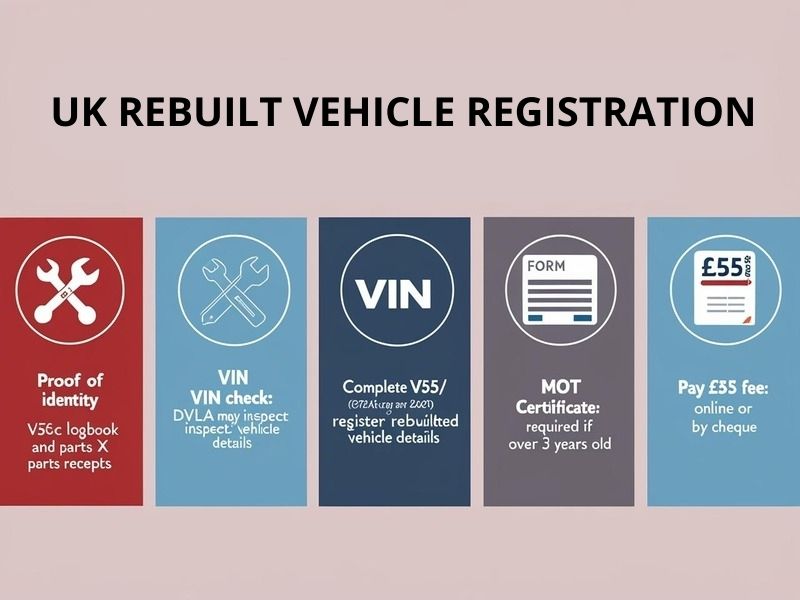
Requirements for Rebuilt Vehicle Registration:
- Proof of Original Identity: Submit documents such as the V5C logbook (if available) and receipts for major parts used.
- Vehicle Identification Number: The DVLA may inspect the car to confirm the VIN matches the logbook details.
- Complete Form V55/5: This form is used for registering rebuilt or previously registered vehicles.
- MOT Certificate: If the vehicle is over three years old, you’ll need a valid MOT certificate to prove roadworthiness.
- Fee Payment: Pay the £55 registration fee by cheque or online.
Once approved, you’ll receive a new V5C logbook, reflecting the updated vehicle details.
Registering Kit-Built Vehicles
Building a car from scratch? You’ll need to register car in UK as a kit-built vehicle before hitting the road.
Steps for Kit-Built Vehicle Registration:
- Build the Vehicle: Assemble the car using a kit purchased from a manufacturer or supplier.
- Get an Individual Vehicle Approval (IVA) Test: This inspection ensures the vehicle meets safety and environmental standards.
- Complete Form V55/4: Use this form to apply for registration.
- Provide Identity and Vehicle Proof: Include:
- Receipts for major parts (e.g., chassis, engine)
- VIN or chassis number
- Proof of identity (passport, driving licence)
- Pay the £55 Registration Fee: Payment can be made online when you register a vehicle online or by post.
Once approved, the DVLA will issue a V5C logbook and assign a car registration number if its a car you applied for.
Registering Kit-Converted Vehicles
To register car in UK that is kit-converted, you must provide proof of its original identity and modifications. Kit-converted vehicles are existing cars modified using a kit.
Steps for Kit-Converted Vehicle Registration:
- Retain the Original Vehicle Identity:
- Use at least two major parts from the original car, such as the chassis, steering assembly, or suspension.
- Complete Form V55/5: Apply for registration using this form for vehicles that have undergone significant modifications.
- Submit Proof of Identity and Parts:
- V5C logbook (if available)
- Receipts for new parts used in the conversion
- Vehicle VIN for verification
- MOT Inspection: If the car is over three years old, it must pass an MOT test to confirm roadworthiness.
- Pay the £55 Registration Fee: Submit payment online or by post.
Once approved, the DVLA will issue a V5C logbook reflecting the updated details.
Registering Radically Altered Vehicles
To register car in UK that has been radically altered, you must follow specific guidelines to verify its identity and roadworthiness. Radically altered vehicles have substantial modifications affecting their structure or performance.
Steps for Radically Altered Vehicle Registration:
- Prove Vehicle Identity:
- The car must retain at least 8 points from the original build.
- Points are awarded for major components, such as:
- Chassis or monocoque bodyshell (5 points)
- Suspension (2 points)
- Axles and transmission (1 point each)
- Complete Form V55/5: Apply for registration using this form for significantly altered vehicles.
- Submit Supporting Documents:
- V5C logbook (if available)
- Receipts for new parts
- VIN for identity verification
- MOT or IVA Test:
- If the car is over three years old, it needs a valid MOT certificate.
- For major alterations, an Individual Vehicle Approval (IVA) test may be required.
- Pay the £55 Registration Fee: Payment can be made online or by post.
Once approved, the DVLA will issue a V5C logbook with the updated vehicle details.
How to Register Car in UK for Old Vehicles
If you own a vintage car, you’ll need to register car in UK as an old vehicle to make it road-legal. Old vehicles typically refer to classic or vintage cars that are over 40 years old.
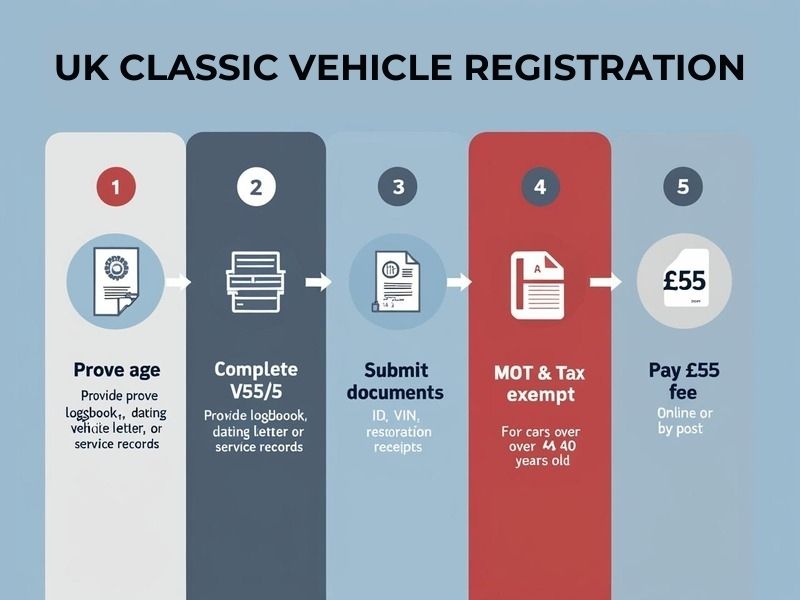
Steps for Old Vehicle Registration:
- Prove the Vehicle’s Age:
- Provide documents showing the car’s manufacturing date, such as:
- Original logbook or registration certificate
- Manufacturer’s dating letter
- MOT certificates or service records
- Provide documents showing the car’s manufacturing date, such as:
- Complete Form V55/5: Use this form to apply for registration.
- Submit Supporting Documents:
- Proof of identity (driving licence or passport)
- Vehicle Identification Number (VIN)
- Receipts for any restoration work done
- MOT and Tax Exemptions:
- If the car is over 40 years old, it may be exempt from MOT tests and vehicle tax.
- Pay the £55 Registration Fee: Payment can be made online or by post.
Once verified, the DVLA will issue a V5C logbook, confirming the vehicle’s registration.
Registering Reconstructed Classic Vehicles
Restoring a classic car? You’ll need to register car in UK as a reconstructed classic to confirm its authenticity. Reconstructed classics are vintage vehicles rebuilt using parts from different cars or replicas of original components.
Steps for Reconstructed Classic Vehicle Registration:
- Verify the Vehicle’s Authenticity:
- The car must be built from genuine period components or approved replicas.
- Provide evidence such as:
- Dating certificates from recognized vintage vehicle clubs
- Receipts for restored or replacement parts
- Complete Form V55/5: Apply for registration using this form.
- Submit Supporting Documents:
- Proof of identity (driving licence or passport)
- Vehicle Identification Number (VIN) or chassis number
- Photographs showing the car’s condition and features
- MOT and Tax Exemptions:
- Classics over 40 years old are typically exempt from MOT tests and vehicle tax.
- Pay the £55 Registration Fee: Payment can be made online or by post.
Once approved, the DVLA will issue a V5C logbook and assign an age-related registration number.
Vehicle Identification Number (VIN)
When you register car in UK, the VIN plays a crucial role in verifying the car’s identity. The VIN is a unique 17-character code assigned to every vehicle, containing details about the manufacturer, model, and production year.
How to Find the VIN:
- Dashboard or Windscreen: Usually visible near the base of the windscreen.
- Driver’s Side Door Frame: Often printed on a label or metal plate.
- V5C Logbook: The VIN is listed under the vehicle details section.
Why the VIN Matters:
- Identity Verification: The DVLA uses the VIN to confirm the car’s authenticity.
- Preventing Fraud: Matching the VIN with official records prevents stolen or cloned vehicles from being registered.
- Inspection Requirements: For rebuilt or radically altered cars, the DVLA may inspect the vehicle to verify the VIN matches the logbook.
Ensuring the VIN is accurate is essential for a smooth registration process.
‘Q’ Registration Numbers
If your vehicle’s origin is unclear, you may need to register car in UK with a ‘Q’ registration number. This indicates that the vehicle’s age or identity cannot be verified.
When Are ‘Q’ Registration Numbers Issued?
- Rebuilt Vehicles: If the car consists of parts from multiple vehicles, making its age difficult to confirm.
- Kit-Built or Kit-Converted Cars: When the DVLA cannot verify the original vehicle’s identity.
- Radically Altered Vehicles: If major modifications obscure the car’s original details.
- Imported Vehicles: When the car lacks proper documentation confirming its manufacturing date.
What Does a ‘Q’ Plate Mean?
- Vehicle Tax and Insurance: Cars with ‘Q’ plates require specialist insurance policies.
- MOT Testing: ‘Q’ plate vehicles must pass a basic MOT inspection, regardless of their age.
- No Age-Related Benefits: They are not eligible for classic vehicle exemptions, even if they contain vintage parts.
This labelling system helps the DVLA maintain accurate vehicle records and prevent identity fraud.
Registering your car in the UK might seem like a complex process, but with the right steps, it’s straightforward and hassle-free. Whether you’re dealing with a new, used, or rebuilt vehicle, ensuring you have the proper documents, meeting DVLA requirements, and paying the necessary fees will get you on the road legally.
By staying informed and prepared, you can avoid delays and enjoy a smooth registration experience. Need more tips on vehicle ownership or official gov UK car registration process? Stay tuned for more details right here!
Source / Ref.: Gov.uk Contains public sector information licensed under Open Government Licence v3.0.
Written by [Ketan Borada / British Portal Team] – Founder of British Portal, dedicated to providing accurate and up-to-date information on UK public services and benefits.Related Posts

Previous Post
Next Post





- Business
 5
5 - Cricket5
- Department for Education49
- Departments3
- Driving and Transport
 53
53 - Education45
- Finance6
- Football13
- Golf3
- Government
 108
108 - Guides1
- Health
 5
5 - Health4
- International Politics9
- Law and Justice31
- Money and Tax23
- National Politics4
- News68
- Politics6
- Sports38
- Technology5
- Tennis3
- Transportation4
- Uncategorized4
- Visa
 17
17 - Visas and Immigration
 24
24 - Weather1