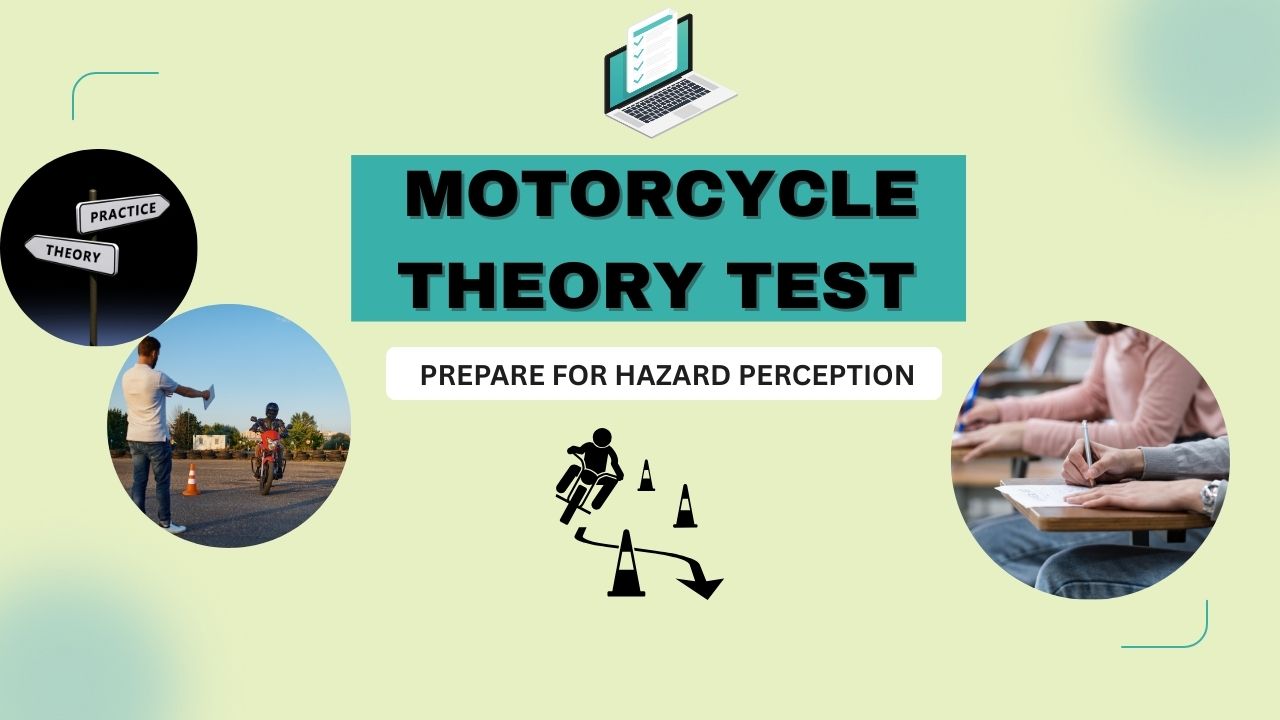
Before you hop on your motorbike, there’s one checkpoint you can’t skip. It starts with understanding what the motorcycle theory test is all about.
What Is the Motorcycle Theory Test?
Let’s face it – no one loves taking tests. But the motorcycle theory test? It’s not as scary as it sounds.
Think of it like learning the rules to your favourite game—except this one keeps you safe on the road. It’s a required step before you can move on to riding a motorbike legally in the UK.
The test checks if you know basic traffic rules, road signs, and how to spot danger. That’s where hazard perception comes in – it’s like a video game, but with real-life consequences.
This test is made up of two parts:
- A multiple-choice section (50 questions, 43 to pass)
- A hazard perception test (you’ll watch video clips and click when you spot potential danger)
Both parts must be passed in the same go. So yes – fail one, and you’ll need to retake both. Annoying, but fair!
So, you know what the motorcycle theory test is. But who actually needs to take it? Let’s break that down in simple terms.
Who Needs to Take the Motorbike Theory Test?
If you’re dreaming of riding a motorbike or scooter on UK roads, this test is for you.
Anyone applying for a provisional motorcycle licence must pass the motorcycle theory test first. It’s your gateway to booking the practical riding tests that follow.
Already have a full driving licence for cars?
Sorry, you’ll still need to take the bike theory test unless your licence includes motorcycle entitlement. That surprises a lot of people!
And yes, even if you’re just going for a moped licence, the DVSA theory test is part of the journey. The driving theory test makes sure every rider starts with the same safety knowledge.
So, no matter your age or experience if you’re new to two wheels, this test is your starting line.
You’ve probably heard about the test, but what exactly does it include? Let’s walk through what you’re up against—no surprises.
What’s in the Motorbike Theory Test?
The motorcycle theory test has two main parts and you’ll need to pass both in the same sitting.
First is the multiple-choice section. The motorcycle theory test has two parts:
Practice makes perfect timing is key!
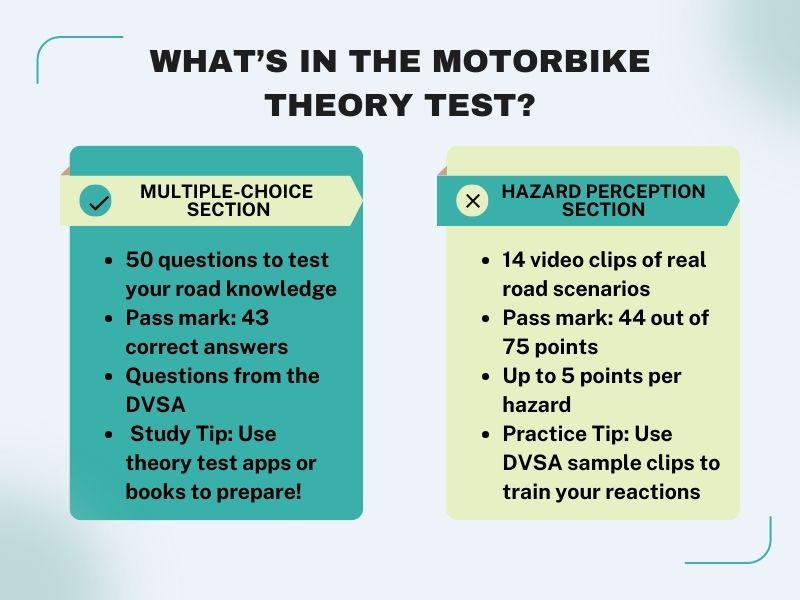
Multiple-choice section
- 50 questions to test your knowledge of road signs, safety rules, and hazard awareness.
- You need 43 correct answers to pass.
- Questions cover a range of topics, from stopping distances to weather-related riding.
The questions are pulled from the DVSA theory test question bank, so study materials really help. Many learners use apps or books designed for the driving theory test to prep. These cover everything from safe overtaking to weather conditions.
Next is the hazard perception part. You’ll watch 14 video clips, each with developing hazards. Click your mouse when you spot a hazard forming. You can score up to 5 points per hazard.
Hazard perception section
- 14 video clips showing real-world road scenes.
- Your job? Spot hazards developing in the footage and click when you notice them.
- You need 44 out of 75 points to pass.
This section feels a bit like gaming—but there’s no rewind. Practice helps, especially with reaction timing. The DVLA driving theory test portal even has examples to try.
Acing the test is one thing—but how do you actually get booked in? Don’t worry, it’s simpler than most people think.
How to Book the Bike Theory Test
Booking your motorcycle theory test is easy, and you can do it online through the DVSA. Just visit the official GOV.UK theory test booking page to get started.
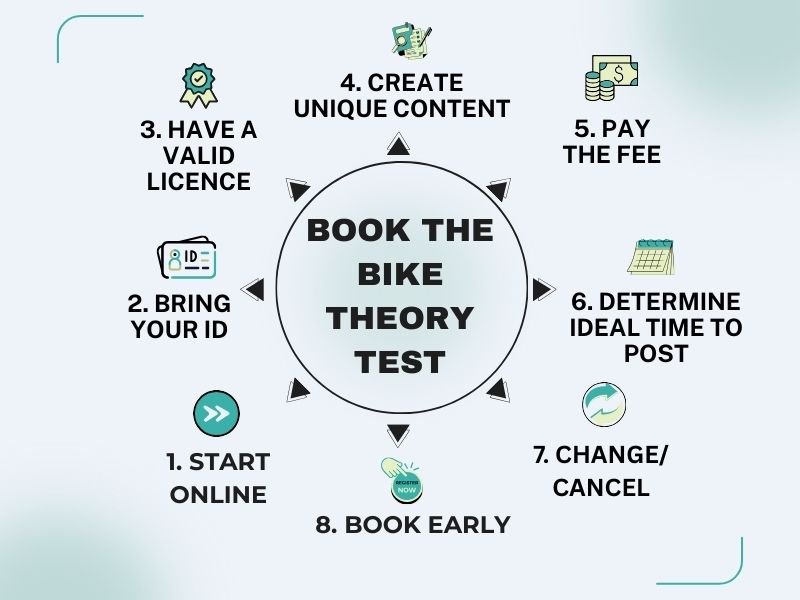
- Bring your ID:
Don’t forget your photocard driving licence. Without it, you can’t take the test. No ID means no test—and no refund.
- Ensure you have a valid provisional motorcycle licence:
You’ll need this before you can book the test. If you don’t have one, you can’t proceed.
- Pick a date, time, and test centre:
After logging in, you’ll select your preferred test date and time. Be sure to choose a centre that’s convenient for you.
- Pay the test fee:
The test costs £23, which is a small price to pay for the freedom to ride your motorbike legally.
- Confirmation email:
Once your booking is complete, you’ll receive an email with all the details, including a reference number.
Keep this safe—it’s your proof of booking.
- Change or cancel your test:
If something comes up, you can reschedule or cancel up to 3 days before the test. Just make sure you do it early to avoid losing your fee.
- Book in advance:
Many learners choose to book their bike theory test well ahead of time, especially if you’re looking for a spot during peak times like summer. It helps ensure you get a time that works for you.
Passing the test feels amazing—but it takes more than just luck. Here’s how to walk in with confidence and walk out with a pass.
Top Tips to Pass the Motorbike Theory Test
Ready to take the motorcycle theory test? Here’s how to boost your chances and walk in feeling prepared:
This helps calm your nerves and familiarizes you with the setting.
Start with the basics:
- Download the official DVSA theory test app or grab the handbook.
- These resources mirror the actual test, so you’ll get familiar with the format and question style.
Practice your hazard perception:
- The hazard perception clips require you to react quickly and accurately.
- Practice spotting potential dangers early—your timing matters.
Set a study schedule:
- Consistency beats last-minute cramming. Break study sessions into short bursts each week.
- This helps the information stick, and you’ll feel more prepared.
Don’t skip the basics:
- Many learners find the motorbike theory part harder than expected.
- Focus on details like stopping distances, road signs, and handling tricky weather conditions.
Be mindful of hazard perception timing:
- Don’t rush to click, but don’t delay either.
- Clicking too early won’t hurt, but rapid clicking may cause issues.
Mock test strategy:
- Before your test, take a mock exam in the same environment.
- This helps calm your nerves and familiarizes you with the setting.
You’ve revised, booked your slot, and slept (hopefully). So, what exactly happens when you walk into that test centre?
What Happens on the Day of the Test?
So, the big day has arrived! You’ve studied, practiced, and are ready to tackle the motorcycle theory test. But what happens when you walk into that test centre?
- Results:
The best part? You’ll get your results almost immediately after completing both sections. Whether you pass or need a retake, it’s all over in just a few minutes.
- Arrive early:
Plan to get there at least 15 minutes before the test. It gives you time to calm your nerves and get settled.
- Bring your ID:
You’ll need your photocard driving licence to prove your identity. No ID means no test, so double-check before you leave home.
- Check in and store your items:
When you arrive, you’ll check in and be asked to store your personal belongings in a locker—phones, smartwatches, bags, etc.
- Get comfy on the computer:
You’ll be seated at a computer where you’ll take the multiple-choice test first. It’s a quick practice session to get you familiar with the system before the real test begins.
- Start the hazard perception part:
After the multiple-choice, it’s time for the hazard perception test. You’ll watch 14 video clips and click when you spot a developing hazard.
Not everyone passes the first time—and that’s okay. Here’s what happens if you don’t quite make the cut.
What If You Fail the Bike Theory Test?
Failing the motorcycle theory test can feel disappointing, but it’s important not to let it knock your confidence. Many learners don’t pass on their first try, and that’s completely normal.
If you don’t pass the hazard perception part, you’ll need to retake the whole test.
The same goes if you don’t score high enough on the multiple-choice section. It can feel frustrating, but now you know what to expect.
The good news?
You can book a retest right away, but you’ll have to wait at least 3 working days before you can try again. Use that time to brush up on weak areas, like specific road rules or hazard responses.
Consider taking a few more practice tests before your retake. There are plenty of online tools available to help. Some even mimic the DVSA driving theory test format.
Don’t forget to pay attention to your hazard perception timing next time. Sometimes it’s not just spotting the danger but clicking at the right moment that makes all the difference.
The motorcycle theory test is an essential step towards riding legally and safely on UK roads. Whether you’re preparing for the multiple-choice section or honing your skills for hazard perception, knowing what to expect makes all the difference.
With the right preparation and a calm, focused mindset, you’ll be well on your way to passing this test and enjoying the freedom of the open road. Don’t forget: the key to success is practice—whether you’re studying road signs, reaction times, or just getting familiar with the DVLA driving theory test format.
Remember, the test isn’t just about passing. It’s about ensuring that you’re ready for any challenge the road might throw at you. So, take your time, stay confident, and ride safe. Good luck on your journey to becoming a qualified motorcyclist!
Source / Ref.: Gov.uk Contains public sector information licensed under Open Government Licence v3.0.
Written by [Ketan Borada / British Portal Team] – Founder of British Portal, dedicated to providing accurate and up-to-date information on UK public services and benefits.Related Posts
Previous Post
Next Post




- Business
 5
5 - Cricket5
- Department for Education49
- Departments3
- Driving and Transport
 53
53 - Education45
- Finance6
- Football13
- Golf3
- Government
 108
108 - Guides1
- Health
 5
5 - Health4
- International Politics9
- Law and Justice31
- Money and Tax23
- National Politics4
- News68
- Politics6
- Sports38
- Technology5
- Tennis3
- Transportation4
- Uncategorized4
- Visa
 17
17 - Visas and Immigration
 24
24 - Weather1