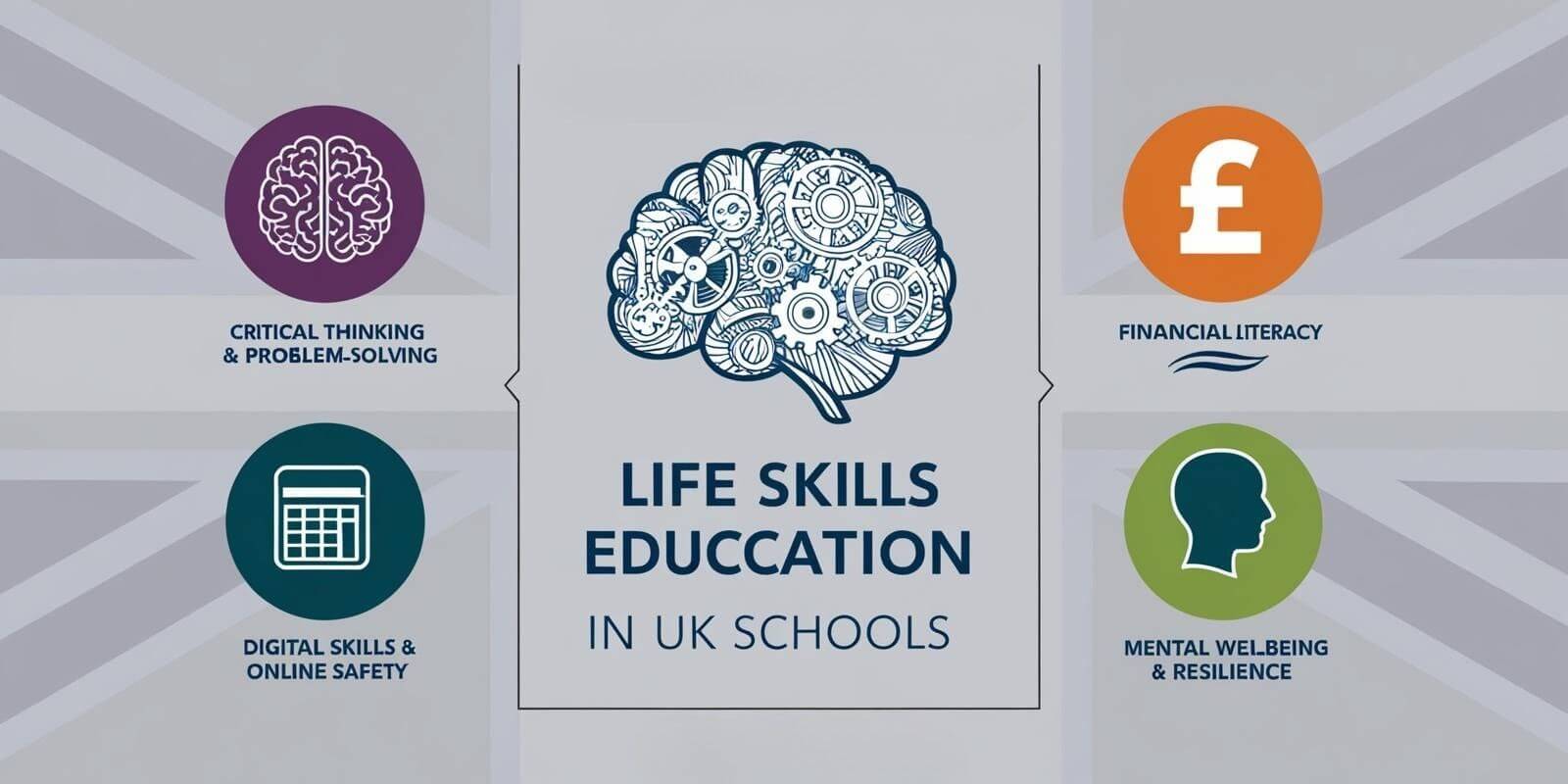
The fast-changing conditions of today make basic academic learning insufficient in preparing students for their future difficulties. Life Skills Education programs in UK schools teach students the skills that students require to use logic effectively while they grow as communicators and decision-makers. This study explains school-based life skills education in four parts which include defining life skills education, understanding its value, methods students learn these skills and educational plans for students with special needs plus the UK school system’s future direction. Reading this article will show you how schools use education methods to produce young students who feel more confident with solving real-life challenges. This knowledge will benefit all members of the school community who want to know how life skills teaching prepares students for their lives after school.
What is Life Skills Education?
Life skills teaching is becoming part of UK school subjects to equip students with essential abilities for real-life situations. By learning basic life skills students grow more able to handle real-world problems independently. Instead of emphasizing academic topics schools now teach necessary life skills that students need for adult life.
Importance of Life Skills Education in Schools
Schools are placing higher value on life skills education so students can achieve future preparedness. Students who learn useful skills become better at handling real-life events.
1.Educational institutions teach and test essential life abilities including these features Students need to learn about managing their money as they master budgeting and saving skills.
2.The student needs both to arrange important business before setting time limits. Students learn to evaluate problems thoroughly and choose good decisions.
3.Emotional intelligence (handling stress, empathy, and self-awareness) are included in lessons.
Students learn collaboration and leadership techniques along with flexibility during their life skill activities which help them succeed in both their personal and career paths.
Life Skills Activities for Students
The school promotes hands-on learning by conducting life skill activities with students in their classrooms. Students work on actual problems through real-scenario exercises and team discussions along with specific roleplaying activities. Students learn better decision-making skills through these activities.
Furthermore, practical experiences such as
1.Students prepare meals as a way to improve their self-reliance through daily activities.
2.Students learn both kitchen skills and food preparation methods to build their self-dependence.
3.Students learn necessary medical responses for sudden problems.
4. The class includes public speaking practice to teach students better self-assurance
School conducts community service tasks as a way to teach student responsibility Educational methods are now used to teach students key life abilities.
Life Skills for Special Needs Students
Educational systems need to deliver life skills lessons to special needs students based on their specific learning needs. Educational institutions design special programs that let disabled students reach their independence goals. Personalized training methods at special education life skills programs use visual materials as well as direct teaching and practical exercises to teach students every-day skills.
These programs focus on:
1.Students can learn proper self-care habits that build their ability to function by themselves
2.Basic communication skills for better interaction with others Students learn behavioral skills for interactions with their social environment
3.The workplace training system helps students develop career skills for their future
4.Structured learning activities give students special needs additional opportunities to live independently.
Learning Life Skills in Schools
Students begin practicing life skills at school starting with their first school experience. Pupils learn life skills through specific subject matter while adding them into programs of science, math, and social studies. Students now get practical experience with their learning so they can use these skills in actual life events. Schools take partnership steps with parents and community members to help students put their life classes into practice beyond their education time. The use of digital resources and technology supports better life skills training in schools. Our schools now use online simulations and interactive quizzes alongside real-life lesson scenarios to improve how students connect with their class content.
Concept of Life Skills Education
The training in life skills takes a complete approach to education. Students need training in practical skills that will benefit them during every phase of their existence instead of concentrating solely on academic learning. Many schools within the UK today blend theoretical teaching methods with practical training to develop their students.
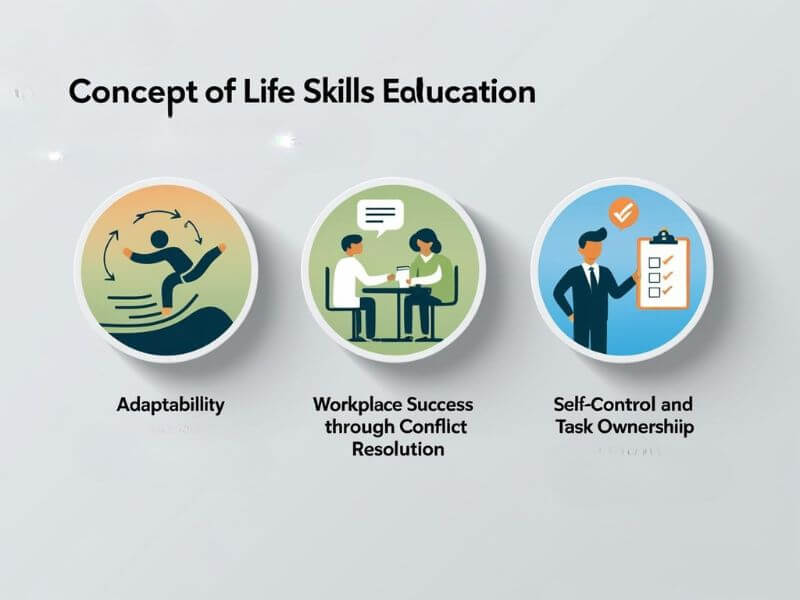
The method lets students understand life skills and practical abilities.
1.Adaptability to Handle Unexpected Situations
Helps in adjusting to changes quickly.
Encourages problem-solving and resilience.
Supports learning from challenges and failures.
Makes handling uncertainty easier.
2. Workplace Success Through Conflict Resolution
Improves communication and understanding.
Encourages active listening and teamwork.
Helps in resolving conflicts peacefully.
Reduces workplace stress and misunderstandings.
3. Self-Control and Task Ownership
Builds responsibility and reliability.
Enhances focus and productivity.
Encourages timely task completion.
Leads to long-term success and discipline.
The school system promotes learning through sports music and drama activities that help students develop teamwork problem-solving and creativity abilities.
Future of Life Skills Education in Schools
The evolution of the job market combined with mounting life obstacles makes it fundamental for schools to teach life skills. Company recruiters currently look for job seekers who demonstrate both problem-solving capabilities and emotional intelligence as well as resilience. Special education institutions alongside general education structures make sure all learners develop readiness for success through life skills programming.
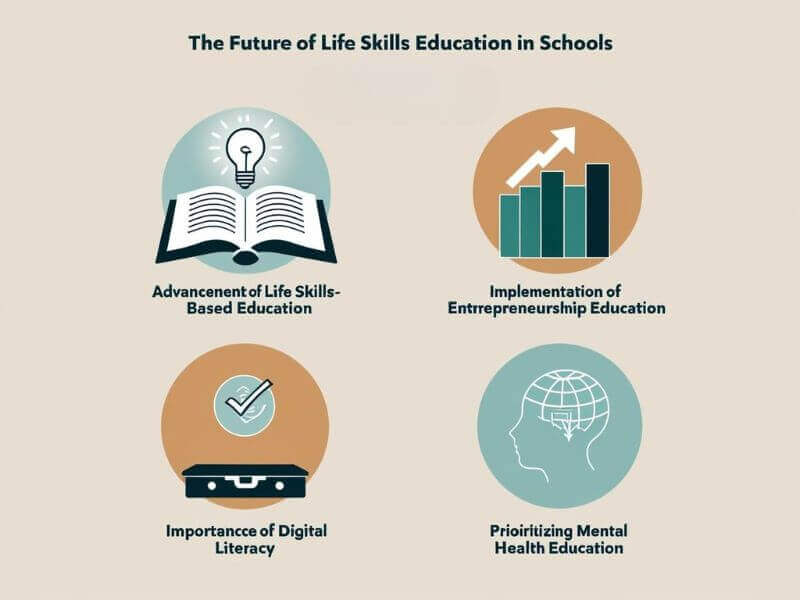
In the future, schools are expected to further expand life skills-based education by:
1. Advancement of Life Skills-Based Education:
Schools will advance their delivery of life skills-based education according to the following expectations during upcoming years.
2.Implementation of Entrepreneurship Education:
Schools should implement entrepreneurship education to stimulate innovation through their curriculum design.
3.Importance of Digital Literacy:
The goal is to instruct students about digital literacy which will enable them to correctly operate technology while ensuring safety.
4.Prioritizing Mental Health Education:
Supporting education about mental health should become a priority to promote emotional health.
Conclusion
To ensure that students are well-prepared for life, Life Skills Education in UK Schools is being actively promoted. Life skills based education is being promoted actively in UK schools to ensure that students are well prepared for life. Life skills education introduced in schools are equipping the young ones with the right tools needed in dealing with the future confidently. As more schools progress in integrating learning life skills to their curriculum, students would be able to deal with personal and professional challenges. Ultimately, this will be responsible, capable and more resilient individuals who will one day grow up so as the next generation.
FAQ
The aim of Life Skills Education in UK Schools is to make students conversant with important skills such as problem solving, communication, decision making, and emotional intelligence. Using these skills prepares students to take real life challenges, grows more confident, and empowers them for personal and professional success.
Life skills education in UK schools comprises interactive activities like role playing, group discussion, practical lessons on financial literacy, time management, and emotional wellbeing, which help the children learn by solving real life problem. This pattern is also integrated into academic subjects to enhance learning experience.
Related Posts
Previous Post
Next Post






- Business
 5
5 - Cricket5
- Department for Education49
- Departments3
- Driving and Transport
 53
53 - Education45
- Finance6
- Football13
- Golf3
- Government
 108
108 - Guides1
- Health4
- Health
 5
5 - International Politics9
- Law and Justice31
- Money and Tax23
- National Politics4
- News68
- Politics6
- Sports38
- Technology5
- Tennis3
- Transportation4
- Uncategorized4
- Visa
 17
17 - Visas and Immigration
 24
24 - Weather1