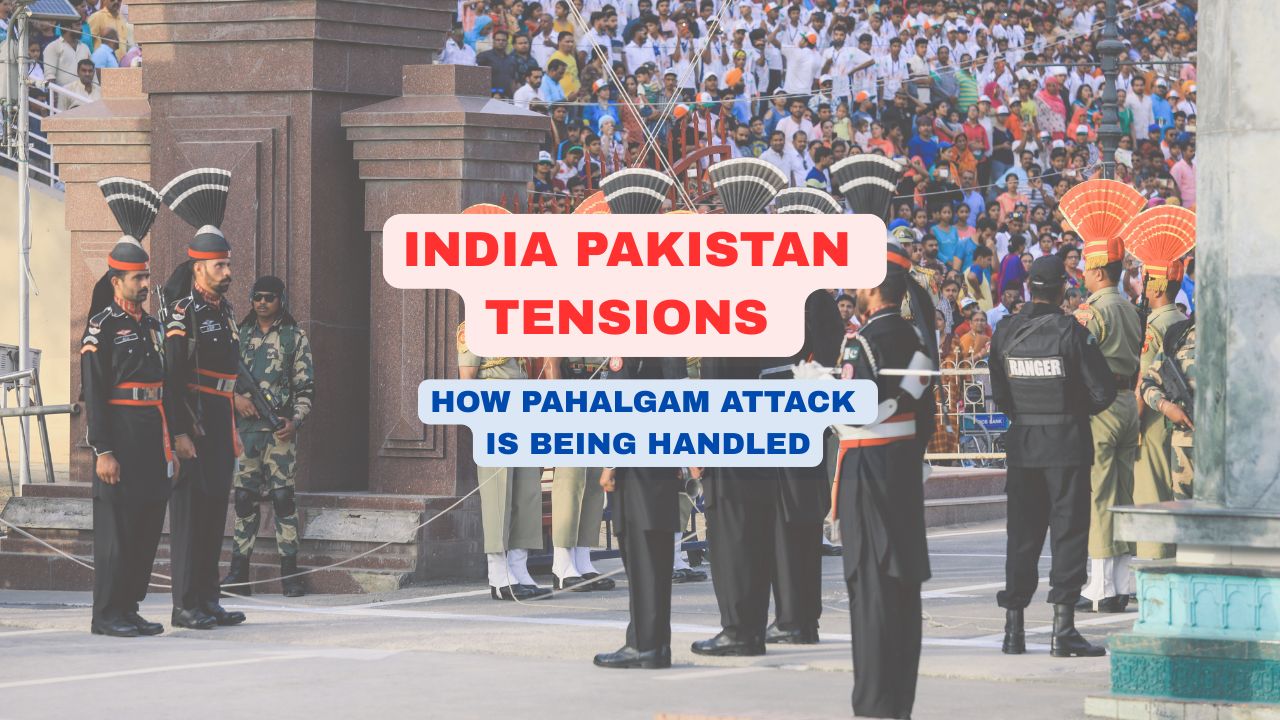
In recent months, India-Pakistan tensions have escalated, particularly following a terror attack in Pahalgam, located in South Kashmir’s Anantnag district. This attack, which took place in early 2025, has contributed to growing concerns about regional stability.
Pahalgam, a popular tourist destination, is often regarded as a symbol of peace in the troubled region, making the attack even more disturbing. The incident has not only sparked national outrage but also raised the stakes in an already delicate relationship between India and Pakistan.
The terrorist strike and subsequent rising border tensions have added another layer of complexity to the longstanding conflict between the two nations, leading to fears of further military confrontation and destabilization of the region.
In response, both countries have taken a series of steps, ranging from military action to diplomatic responses, as they grapple with how to navigate the escalating situation.
Border Shootouts and Ceasefire Violations
Recent reports have highlighted multiple ceasefire violations by the Pakistan Army along the Line of Control (LoC), which have only added to the growing tensions between India and Pakistan. These violations have been particularly noticeable in areas such as Nowgam, Kupwara, Rajouri, and Poonch.
The violations have primarily involved the use of small arms fire, which has triggered limited exchanges of gunfire between the two forces. These sporadic clashes are often seen as attempts to disrupt peace along the border, especially in light of the Pahalgam attack. Despite the situation, sources have confirmed that these exchanges have remained relatively contained and have not escalated into full-scale confrontations.
India’s Army has responded swiftly to these violations, ensuring a measured and effective response to prevent further escalation. The Indian military actively works to contain these incursions, taking a defensive stance to preserve peace along the border.
Casualties from Border Gunfire as India Pakistan Tensions Escalate
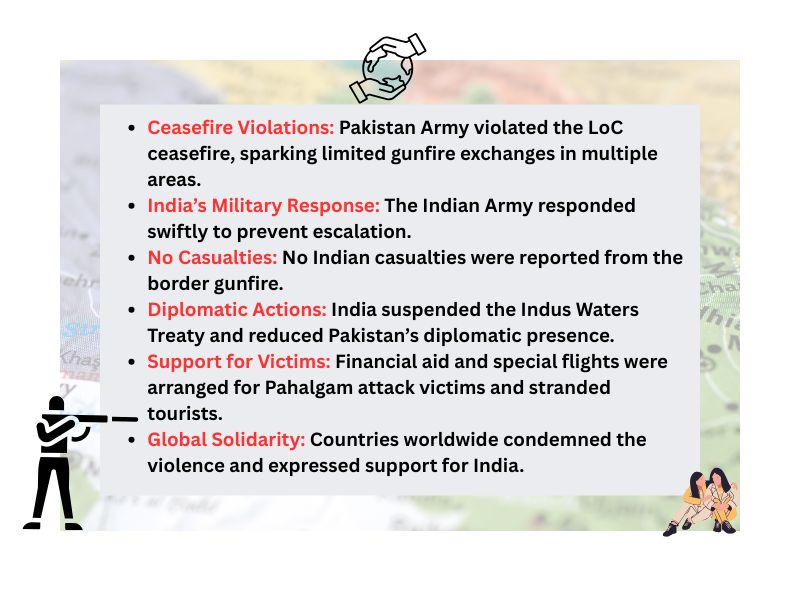
As tensions escalate along the border, it’s important to clarify the situation regarding casualties from the ongoing gunfire. According to multiple sources, there have been no Indian casualties reported due to the gunfire exchanges along the LoC.
- No casualties reported from Indian side due to the LoC gunfire.
- Limited exchanges between Indian and Pakistani forces, leading to no significant loss of life.
- Continued vigilance from Indian forces to prevent escalation.
This has provided some relief despite the ongoing tensions and the potential for violence to escalate.
How India is Handling Rising India Pakistan Tensions
India’s response to the rising tensions and ceasefire violations has been multifaceted, involving both military and diplomatic actions. Here’s an overview of how India is dealing with the situation:
Military and Security Responses
- Effective response to violations: The Indian Army has been actively responding to ceasefire violations and ensuring the safety of its forces along the LoC.
- Army Chief’s review: The Chief of Army Staff (COAS) conducted a review to assess the security situation and ensure that all necessary measures are in place.
- National Investigation Agency (NIA): The NIA is investigating the Pahalgam terror attack and related incidents to uncover any links to terrorist organizations.
- Search operations: Indian forces have ramped up search operations to locate any infiltrators or potential threats in Kashmir.
Diplomatic and Political Responses
- PM and HM statements: Indian Prime Minister Narendra Modi and Home Minister Amit Shah have made strong statements, reaffirming India’s commitment to national security and condemning cross-border terrorism.
- All-party meeting: The Indian government convened an all-party meeting to discuss the situation and present a united front.
- International briefings: India has briefed international bodies and global partners about Pakistan’s role in the escalating violence and the need for international support.
- World solidarity: Countries around the world have expressed solidarity with India, condemning the attacks and offering support.
Measures Taken Against Pakistan
- Indus Waters Treaty: India has taken steps to suspend the Indus Waters Treaty with Pakistan in response to the increased tensions and violations.
- ICP closure: India closed several Integrated Check Posts (ICPs) along the border to prevent further cross-border movement.
- Visa cancellations and deadlines: India has cancelled visas for Pakistani nationals and set a deadline for Pakistani diplomats to leave India.
- Persona Non Grata: Indian authorities declared some Pakistani diplomats Persona Non Grata, limiting their presence and activities in India.
- High Commission strength reduction: India has reduced the number of Pakistani diplomats in the High Commission as part of its diplomatic response.
- BSF ceremony scaling down: India has scaled down ceremonial events at the Border Security Force (BSF) posts to reduce tensions.
Support and Assistance for Victims and Stranded Tourists
- Ex-gratia payments: The Indian government has announced financial aid to the victims of the Pahalgam terror attack and their families.
- NSE donations: The National Stock Exchange (NSE) and other organizations have contributed to support the victims and affected families.
- Maharashtra aid: The state of Maharashtra has also extended financial aid to the families of the victims.
- Special flights: The government arranged special flights to evacuate stranded tourists from Pahalgam and other affected areas.
- Helplines and railway services: Authorities have set up helplines for the public and organized additional train services to assist those stranded.
Pakistan’s Response to the Ongoing India Pakistan Tensions
Pakistan has responded to the escalating tensions and the situation along the Line of Control (LoC) with both military actions and political statements. Pakistan’s military has continued with ceasefire violations along the border, further intensifying the standoff with India.
Security forces have reported these violations in various regions, including Kupwara, Rajouri, and Poonch, where tensions are already high. The Pakistani Army’s use of small arms in these exchanges has led to a limited but dangerous escalation of gunfire.
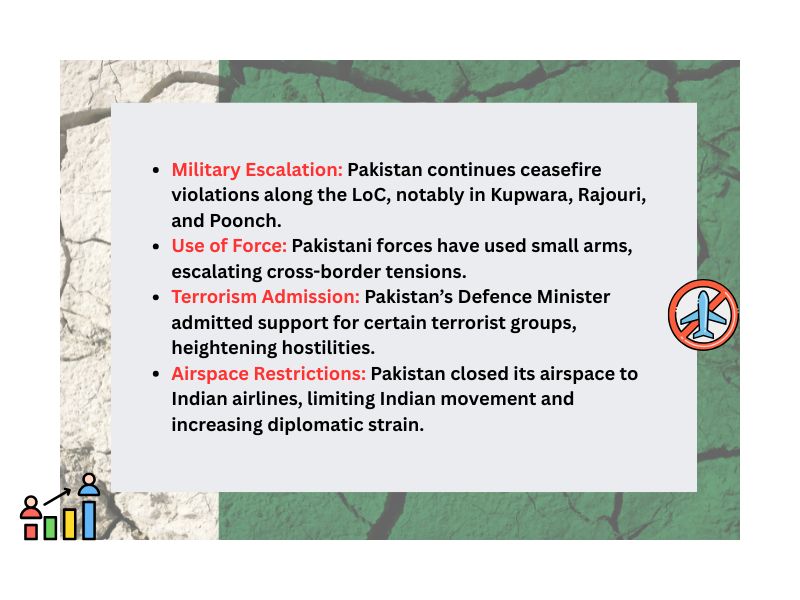
Pakistan’s Defence Minister recently made a statement admitting that the country has been supporting certain terrorist groups, a direct reference to the growing evidence of cross-border terrorism targeting Indian security forces and civilians. This admission has only added to the tensions between the two nations, further complicating diplomatic efforts for peace.
Additionally, Pakistan has taken measures to close its airspace for Indian airlines, further restricting the movement of Indian aircraft and exacerbating tensions. This move reflects Pakistan’s ongoing strategy to limit India’s freedom of action, both militarily and diplomatically, in the region.
Conclusion
The ongoing situation between India and Pakistan is complex and increasingly tense, with both military and diplomatic actions escalating the crisis. The Pahalgam Terror Attack has served as a grim reminder of the volatile security situation in South Kashmir, adding further strain to the already fragile relations between the two nations.
While ceasefire violations and border shootings continue, India’s responses are a mix of military preparedness, diplomatic efforts, and a focus on addressing the humanitarian aspect of the crisis, particularly in terms of aiding victims and stranded tourists.
On the other hand, Pakistan’s actions, including military escalations and political statements, show a continuing commitment to supporting terror groups and maintaining aggressive postures along the border. The closure of airspace and the admission of backing terrorist activity only deepen the divide.
Moving forward, both countries remain caught in a cycle of retaliation and diplomatic maneuvering, with the international community closely watching for signs of de-escalation or further India Pakistan border conflict. The need for dialogue and long-term peace solutions has never been more critical, as both nations grapple with the consequences of this ongoing tension.
Written by [Ketan Borada / British Portal Team] – Founder of British Portal, dedicated to providing accurate and up-to-date information on UK public services and benefits.Related Posts

Previous Post
Next Post






- Business
 5
5 - Cricket5
- Department for Education49
- Departments3
- Driving and Transport
 53
53 - Education45
- Finance6
- Football13
- Golf3
- Government
 108
108 - Guides1
- Health
 5
5 - Health4
- International Politics9
- Law and Justice31
- Money and Tax23
- National Politics4
- News68
- Politics6
- Sports38
- Technology5
- Tennis3
- Transportation4
- Uncategorized4
- Visa
 17
17 - Visas and Immigration
 24
24 - Weather1