The UK’s benefits system provides vital support to millions of people. However, sometimes this system is misused through benefit fraud. Understanding what this means and how it’s handled is important for everyone.
Benefit fraud occurs when someone deliberately claims benefits they are not entitled. This isn’t about genuine mistakes; it’s about intentionally providing false information or failing to report changes in circumstances to get money they shouldn’t receive. This affects public funds, meaning there’s less available for essential services and genuine claimants.
Common UK Benefit Fraud Examples
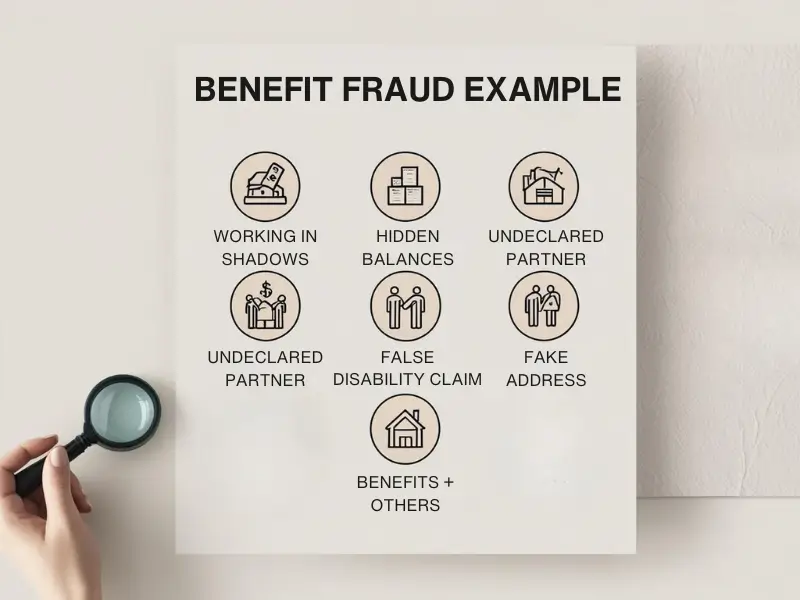
It helps to know what actions count as benefit fraud. Here are some common benefit fraud examples in the UK:
- Working but not declaring it: Claiming unemployment benefits (like Universal Credit) while working and receiving wages (especially cash-in-hand).
- Not declaring income or savings: Failing to tell the relevant authority (DWP or local council) about all income, savings, investments, or properties owned. Thresholds can be quite low, so even small amounts might need declaring.
- Living with an undeclared partner: Claiming benefits as a single person when you live with a partner who supports you or has their income/savings.
- False disability claims: Exaggerating an illness or disability, or failing to report an improvement in a condition, to claim or keep receiving benefits like Personal Independence Payment (PIP). This specific issue is often referred to as PIP fraud.
- Address deception: Using a false address or pretending to pay rent for a property you don’t live in or own yourself.
- Claiming for others: Falsely claiming for children who don’t live with you or continuing claims for someone who has moved away or passed away.
- Going abroad: Staying outside the UK for longer than benefit rules allow without informing the authorities.
It’s important to remember that specific rules apply to different benefits, such as Universal Credit fraud having particular implications related to work and income reporting. Likewise, claiming a single-person discount on your council tax when you don’t live alone is a form of council tax fraud.
How Are Benefit Frauds Caught?
Many people wonder how benefit frauds are caught. Authorities use several methods to detect potential fraud:
- Data Matching: Information is automatically cross-referenced between government departments (like DWP and HMRC – the tax office), banks, and other organisations to spot inconsistencies (e.g., declared income vs tax records).
- Claim Reviews: Regular checks and reviews are carried out on benefit claims to ensure circumstances haven’t changed.
- Public Reports: Tip-offs from members of the public are a significant source of information.
- Investigator Activity: Dedicated fraud investigation teams look into suspicious cases, sometimes gathering evidence or interviewing people.
How to Report Suspected Benefit Fraud
If you suspect someone might be committing benefit fraud, you can report benefit fraud to the authorities. It’s crucial to report to the correct place, as the process differs slightly across the UK.
The Most Important Step: Know Who to Report To
- In England, Scotland, and Wales (Great Britain): Responsibility is split.
- For DWP Benefits: Report fraud related to benefits managed by the Department for Work and Pensions (DWP). This includes Universal Credit, PIP, Employment and Support Allowance (ESA), Jobseeker’s Allowance (JSA), State Pension, etc.
- Online: Use the official GOV.UK online reporting form.
- Phone: Call the National Benefit Fraud Hotline (details on GOV.UK).
- For Council Benefits: Report fraud related to Housing Benefit or Council Tax Reduction/Support directly to the person’s local council.
- You will usually need to search online for “[Council Name] report benefit fraud” to find their specific procedure (often an online form or dedicated phone number). This includes reporting suspected council tax fraud, like false single-person discount claims.
- For DWP Benefits: Report fraud related to benefits managed by the Department for Work and Pensions (DWP). This includes Universal Credit, PIP, Employment and Support Allowance (ESA), Jobseeker’s Allowance (JSA), State Pension, etc.
- In Northern Ireland: Benefit fraud is handled by the Department for Communities (DfC).
- Online: Use the official NIDirect online reporting form.
- Phone: Call the specific DfC fraud hotline number (details on NIDirect or the DfC website).
- Post: You can also report by post to the DfC address listed on their websites.
What Information is Needed When Reporting?
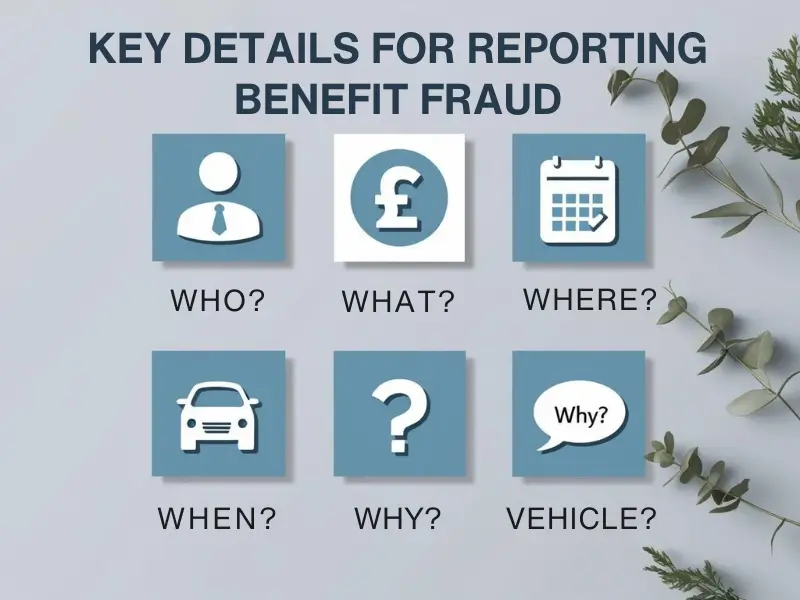
To help investigators, try to provide as much detail as possible. Key information includes:
- Who: The person’s name, address, and description.
- What: Which benefit(s) you think are being claimed fraudulently, and what they are doing wrong (e.g., working, undeclared partner).
- Where: If relevant, the place of work or the address where an undeclared partner lives.
- When: Times and dates when the suspected fraudulent activity occurs (e.g., working hours).
- Why: How do you know this information (though you don’t have to say)?
- Vehicle Details: If relevant (e.g., used for undeclared work).
Even if you only have some of this information, it can still be helpful.
Is Reporting Benefit Fraud Anonymous?
Yes, a common concern is reporting benefit fraud anonymously. Both the GOV.UK (for GB) and NIDirect/DfC (for NI) systems allow you to report fraud completely anonymously. You do not have to provide your name or contact details if you don’t want to. Your report will still be looked into based on the information you provide about the suspect.
What Happens If I Report Someone for Benefit Fraud?
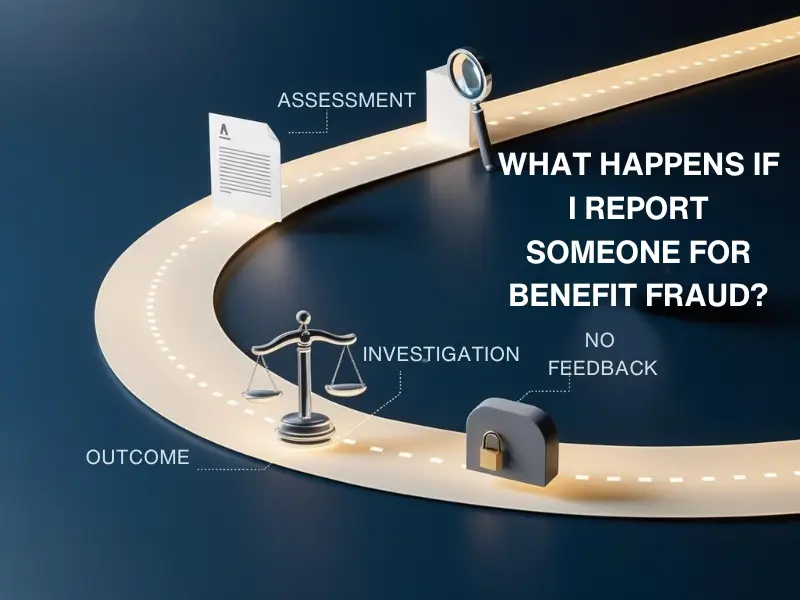
This is a frequently asked question: What happens if I report someone for benefit fraud?
- Assessment: The relevant authority (DWP, Council, or DfC) will assess the information you provide.
- Investigation: If there’s enough credible information, they will start an investigation. The benefit fraud investigation process can involve various checks like examining records, data matching, and potentially surveillance (within strict legal limits) or interviews.
- Outcome: The investigation determines if fraud occurred. Possible outcomes range from no action needed, requiring repayment of overpaid benefits, issuing fines (Administrative Penalties), stopping or reducing benefits, through to prosecution in court for serious cases.
- No Feedback: Importantly, you will not be told the outcome of the investigation. This is because of data protection laws that protect the privacy of the person reported. Authorities cannot share details about someone else’s benefit claim or investigation with you, even if you made the initial report.
What are the Consequences of Committing Benefit Fraud?
Being caught committing benefit fraud can have serious and long-lasting consequences:
- Benefit Reduction or Stoppage: Current benefit payments may be reduced or stopped altogether.
- Repayment: All the money fraudulently claimed usually has to be paid back.
- Fines/Penalties: Significant fines (Administrative Penalties) can be issued on top of the repayment.
- Prosecution and Criminal Record: Serious cases can lead to prosecution in court. If found guilty, this results in a criminal record, which can affect future job prospects, travel (especially to countries like the USA), and getting credit or insurance.
- Prison Sentence: For the most serious or large-scale fraud, a prison sentence is possible. The benefit fraud sentencing guidelines UK provide a framework for courts to decide penalties based on the amount involved and the nature of the dishonesty.
- Future Benefit Sanctions: A past fraud conviction can make it harder to claim benefits in the future or lead to sanctions.
- Confiscation of Assets: Under the Proceeds of Crime Act (POCA), assets bought with fraudulently obtained money could potentially be confiscated.
Accidental Mistakes vs Deliberate Fraud
It’s worth noting that genuine mistakes can happen. Benefit rules can be complex, and people might accidentally provide incorrect information or forget to report a change immediately.
- If you think you’ve made a mistake: Contact the relevant office (DWP, your local council, or DfC) immediately to explain and correct it. Acting quickly often prevents the situation from escalating.
- If you’re unsure about rules: Seek advice. Organisations like Citizens’ Advice offer free, confidential help to understand benefit rules and ensure you’re claiming correctly.
Authorities primarily focus on tackling deliberate dishonesty, not penalising genuine errors that are quickly corrected.
Reporting Fraud: Protecting the System
Reporting suspected benefit fraud helps ensure the system is fair and that support goes to those genuinely in need. By using the correct official channels and providing clear information, you can help protect public funds. Remember, you can do this anonymously if you prefer.
Read more about Jury Service Pay & Time Off Work in the UK
Source / Ref.: Gov.uk Nidirect.gov.uk Communities-ni.gov.uk Contains public sector information licensed under Open Government Licence v3.0.
Written by [Ketan Borada / British Portal Team] – Founder of British Portal, dedicated to providing accurate and up-to-date information on UK public services and benefits.Related Posts
Previous Post
Next Post



- Business
 5
5 - Cricket5
- Department for Education49
- Departments3
- Driving and Transport
 53
53 - Education45
- Finance6
- Football13
- Golf3
- Government
 108
108 - Guides1
- Health4
- Health
 5
5 - International Politics9
- Law and Justice31
- Money and Tax23
- National Politics4
- News68
- Politics6
- Sports38
- Technology5
- Tennis3
- Transportation4
- Uncategorized4
- Visa
 17
17 - Visas and Immigration
 24
24 - Weather1