Have you ever wondered how government decisions are made, how public money is spent, or what information your local council holds about services in your area? In the UK, you have a powerful tool to find out: the Freedom of Information Act.
First Things First: What is the Freedom of Information Act?
At its heart, the Freedom of Information Act 2000 gives you the legal right to access information held by public authorities in the UK. Its main purpose is to promote transparency and accountability. It means public bodies can’t keep information secret just because they want to – they need a valid reason, defined by the law, if they refuse a request. Think of it as a window into how public services operate.
Who Can Make an FOI Request?
Anyone can make an FOI request.
- You don’t have to be a UK citizen.
- You don’t have to live in the UK.
- You can be an individual, a journalist, a company, or a campaign group.
The right to access information is open to everybody.
What Kind of Information Can You Ask For?
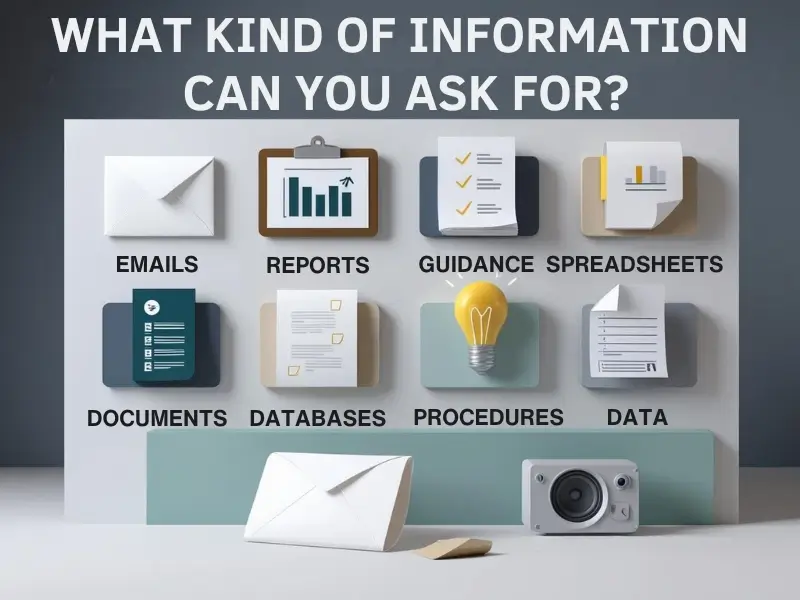
You can request any recorded information held by a public authority. This includes:
- Emails
- Reports and studies
- Meeting minutes
- Internal guidance
- Policies and procedures
- Spreadsheets and databases
- Letters
- Audio and video recordings
- Printed documents
It must be information that already exists in a recorded format. The authority isn’t required to create new information or answer general questions that aren’t about specific recorded data.
Which Organisations Must Respond? (Public Authorities)
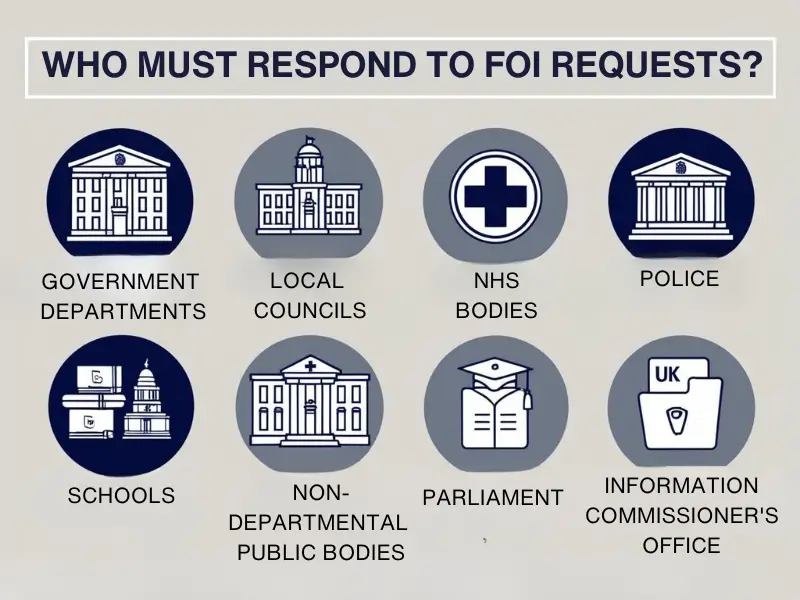
The FOI Act applies to a wide range of organisations providing public services in the UK. These are known as ‘public authorities’. Common examples include:
- Central government departments (like the Home Office or Department for Education)
- Local councils
- NHS bodies (Hospitals, Trusts, GP surgeries)
- Police forces
- Schools, colleges, and universities
- Non-departmental public bodies (like the Environment Agency or Ofsted)
- Parliament (House of Commons and House of Lords)
The Information Commissioner’s Office (ICO) website has resources if you need to check if a specific organisation is covered.
It’s important to note: does freedom of information apply to private companies? Generally, no. Private businesses are not typically covered by the FOI Act unless they are wholly owned by a public authority or are specifically designated. Information held by a public authority about a private company, however, could potentially be requested.
Planning Your Request: Clarity is Key
Before you send your request, think carefully about what you want to know.
- Be Specific: Vague requests are harder for the authority to understand and answer. They might come back asking for clarification, which delays things. If a request is too broad, it could also be refused if finding the information would cost too much or take too much staff time (exceeding the ‘cost limit’). Instead of asking, “Tell me everything about recycling,” try something like, “Please provide the total tonnage of household recycling collected in the borough each month for the last two years.”
- Identify the Right Authority: Make sure you’re sending your request to the organisation most likely to hold the information. Asking the Department for Transport about local council road maintenance might not get you the right answer. A quick search on the organisation’s website often reveals their areas of responsibility.
How to Make Your Freedom of Information Request
Submitting your request is simple. Here’s what you need to do:
- Put it in Writing: Your request must be written down. This can be:
- An email (most common and easiest).
- A letter sent by post.
- Through an online FOI portal if the authority has one (like a dedicated form on their website).
- Include Essential Details:
- Your Name: The authority needs this to correspond with you.
- A Contact Address: This can be an email address or a postal address for them to send the response.
- Clearly Describe the Information: Be as specific as possible about the recorded information you want.
- Helpful Additions (Not Required, but Recommended):
- State it’s an FOI Request: While not legally required, mentioning “Freedom of Information request” helps the authority handle it correctly under the Act.
- Preferred Format: You can state how you’d like to receive the information (e.g., electronically, as specific file types), though the authority doesn’t always have to provide it in that format.
You do not need to explain why you want the information. Your motive is irrelevant under the Act.
Using a basic freedom of information request template can sometimes be helpful to ensure you include all the necessary parts. You can often find simple examples online, or just structure your email/letter clearly with your details and the specific information you seek.
What Happens After You Submit Your Request?
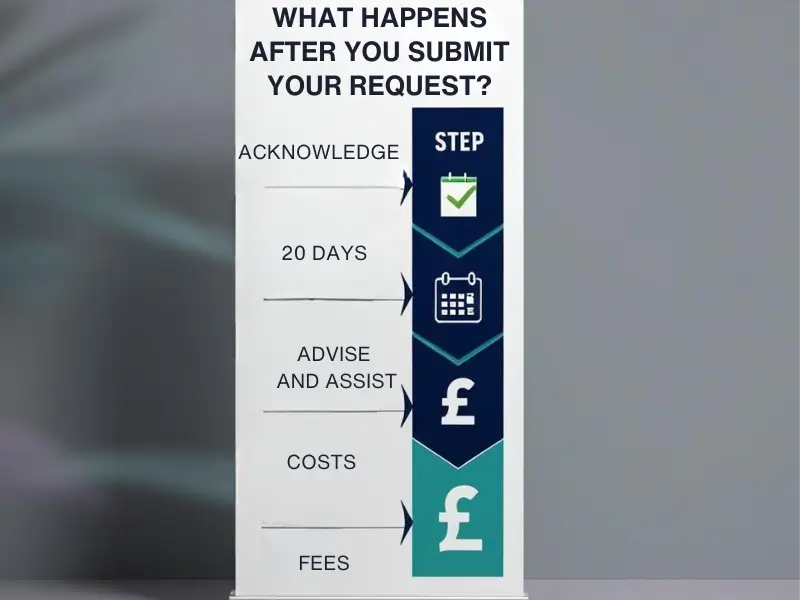
Once the public authority receives your written request, the process begins:
- Acknowledgment: They should acknowledge your request promptly.
- The Clock Starts: The authority generally has 20 working days to respond to your request. This is the standard Freedom of Information Act response time. This clock can sometimes be paused if they need to ask you for clarification or extended in specific complex cases (they must inform you if so).
- Duty to Advise and Assist: If your request isn’t clear, the authority must contact you and provide reasonable help so you can refine it.
- Costs and Fees: For most requests, accessing information is free. However, authorities can refuse a request if the cost of finding and retrieving the information exceeds a set limit (£600 for the central government, Parliament, and armed forces; £450 for other public authorities). They might charge for postage or printing (photocopying), but they must inform you first via a ‘fees notice’. It’s rare for individuals to be charged significant fees.
Understanding the Response: What to Expect
After the 20 working days (or any notified extension), you should receive a formal response. This could be:
- Information Provided: The authority provides the information you requested.
- Information Not Held: They confirm they do not hold the information you asked for.
- Clarification Needed: They explain why your request is unclear and ask for more detail.
- Request Refused: They explain that they are withholding some or all of the information based on one or more exemptions allowed under the Act.
Why Might a Request Be Refused? Understanding Exemptions
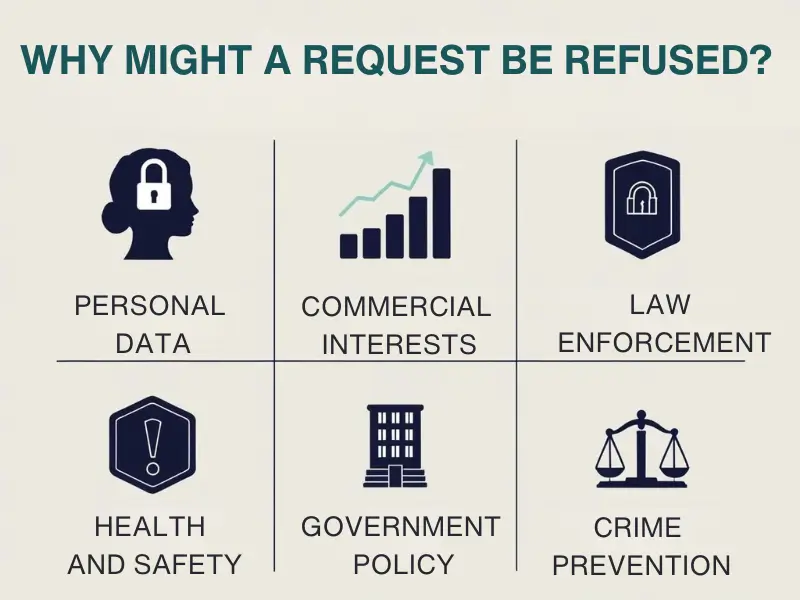
The FOI Act aims for openness, but it recognises that some information needs protection. These protections are called freedom of information act exemptions. If an authority refuses your request, they must tell you which exemption(s) they are applying and why.
Common exemptions include:
- Personal Data: Information about living individuals (often covered by Data Protection law).
- Commercial Interests: Information that could harm a company’s commercial sensitivities.
- Law Enforcement: Information that could prejudice crime prevention or detection.
- Health and Safety: Information that could endanger physical or mental health.
- Formulation of Government Policy: Protecting internal discussions during policy development.
Some exemptions are ‘absolute’ (if the information fits the category, it’s exempt). Others are ‘qualified’, meaning the authority must perform a ‘public interest test’. They have to weigh the public interest in disclosing the information against the public interest in withholding it. They must explain the outcome of this test if they refuse based on a qualified exemption.
What if You’re Unhappy with the Response?
If your request is refused, you believe information is missing, or you’re unhappy with how your request was handled (e.g., delays), you have the right to challenge the decision.
- Internal Review: Your first step is usually to ask the public authority for an internal review. You typically have 40 working days from their response to request this. A different person within the authority (often more senior) will reassess your original request and the initial decision. They should respond within a reasonable timeframe (often aiming for 20 working days, but it can take longer).
- Make a Freedom of Information Complaint to the ICO: If you’re still unhappy after the internal review, or if the authority fails to conduct one properly, you can complain to the Information Commissioner’s Office (ICO). The ICO is the UK’s independent regulator for information rights. They can investigate your complaint and decide whether the public authority handled your request correctly according to the FOI Act. Making a complaint to the ICO is free.
A Quick Recap: Your FOI Journey
To provide a basic freedom of information act 2000 summary in terms of making a request:
- Identify the specific recorded information you need.
- Find the correct public authority holding it.
- Write your request clearly (email is usually best), including your name and contact address.
- Expect a response within 20 working days.
- If refused, check the reasons (exemptions).
- If unhappy, ask for an Internal Review.
- If still unhappy, complain to the ICO.
Use Your Right to Know
The Freedom of Information Act is a vital tool for transparency in the UK. Understanding how to make an FOI request empowers you to access information, understand decisions, and hold public bodies accountable. While the process might seem formal, it’s designed to be accessible. Don’t hesitate to use your right to know.
Read more about How to Appeal to the Employment Appeal Tribunal
Source / Ref.: Legislation.gov.uk Commonslibrary.parliament.uk Contains public sector information licensed under Open Government Licence v3.0.
Written by [Ketan Borada / British Portal Team] – Founder of British Portal, dedicated to providing accurate and up-to-date information on UK public services and benefits.Related Posts



Previous Post
Next Post
Previous Post

Next Post






- Business
 5
5 - Cricket5
- Department for Education49
- Departments3
- Driving and Transport
 53
53 - Education45
- Finance6
- Football13
- Golf3
- Government
 108
108 - Guides1
- Health4
- Health
 5
5 - International Politics9
- Law and Justice31
- Money and Tax23
- National Politics4
- News68
- Politics6
- Sports38
- Technology5
- Tennis3
- Transportation4
- Uncategorized4
- Visa
 17
17 - Visas and Immigration
 24
24 - Weather1