Prison isn’t the only possible outcome when someone is found guilty of a crime in the UK. Courts often decide that a different approach is more suitable. One of the most common alternatives is a community sentence. But what exactly does this involve?
A community sentence lets the person stay in the community instead of going to jail. It’s a way for the justice system to issue a punishment, protect the public, and often help the individual address the reasons behind their offending behaviour. Courts use these sentences for serious crimes that don’t need jail but deserve more than a fine.
What is a Community Sentence?
The main type of community sentence given to adults (18 and over) in England and Wales is called a community order. Think of it as a tailored package of requirements that the person must stick to for a set period, which can be up to three years.
The court, usually guided by information from the Probation Service, decides which requirements are most appropriate. The aim is to create a sentence that fits the crime and the individual, balancing punishment with opportunities for rehabilitation.
Community Order Requirements: What Could Be Included?
A community order isn’t just one thing; it comprises one or more specific community order requirements. The court chooses from a list set out in law. These requirements can broadly be grouped by their main purpose:
Requirements Designed as Punishment:
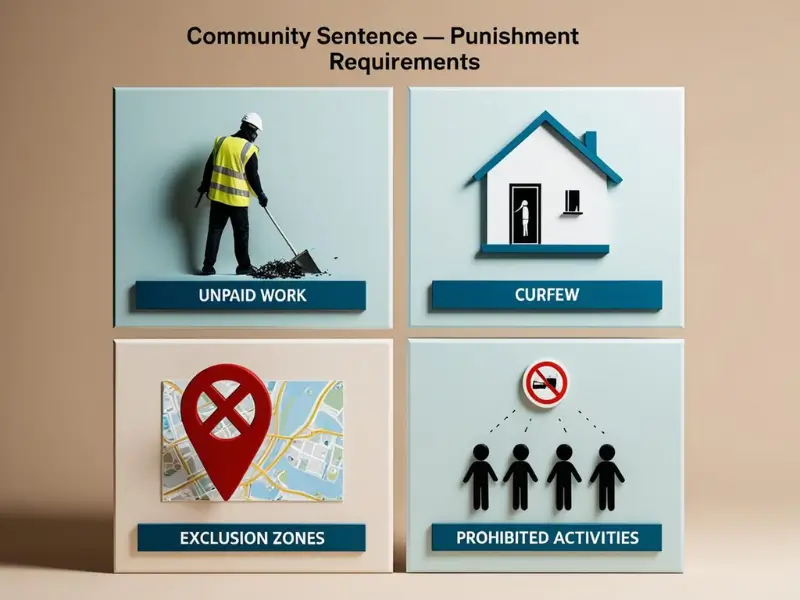
- Unpaid Work (Community Payback): This is a very common requirement. Individuals have to carry out demanding work that benefits the local community, such as cleaning up graffiti, clearing wasteland, or decorating community centres. This is often referred to as unpaid work probation. The number of hours can range from 40 to 300.
- Curfew Requirement: This means the person must stay indoors, usually at their home address, during specific hours (e.g., overnight). Compliance is often monitored using an electronic tag worn on the ankle.
- Exclusion Requirement: This stops someone from going to certain places or areas where they might re-offend or cause trouble.
- Prohibited Activity Requirement: This bans the person from taking part in specific activities if they relate to their offending.
Requirements to Help Change Behaviour and Rehabilitate:
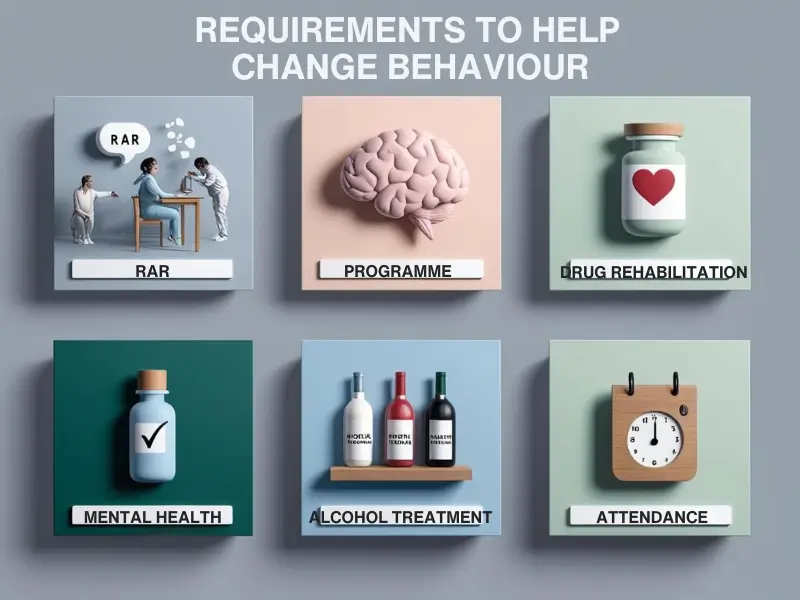
- Rehabilitation Activity Requirement (RAR): This is a flexible requirement where the person works with the Probation Service on activities designed to address their behaviour. This might involve regular appointments, group work programmes, or sessions focusing on issues like problem-solving, managing emotions, or understanding the impact of their crime.
- Programme Requirement: This involves attending specific accredited courses aimed at tackling patterns of behaviour linked to offending (e.g., programmes addressing domestic abuse or general offending behaviour).
- Mental Health Treatment Requirement: If someone has mental health issues linked to their offending, the court can order them to receive treatment from a doctor or psychologist. This requires the person’s consent.
- Drug Rehabilitation Requirement: If someone commits a crime because of drug use, they can get help and regular tests—but only if they say yes.
- Alcohol Treatment Requirement: Similar to drug rehab, this focuses on tackling alcohol misuse linked to offending, again requiring consent.
- Attendance Centre Requirement (for under 25s): Young adults may have to go to a centre on certain days, like Saturdays, to build skills and improve their behaviour.
Other Potential Requirements:
- Residence Requirement: The court may ask the person to stay at a set place, like a probation hostel.
- Foreign Travel Prohibition Requirement: This can prevent the person from travelling outside the UK for a certain period.
- Restorative Justice Requirement: This aims to help offenders understand the impact of their crime by facilitating communication (directly or indirectly) with the victim, but only if both parties agree.
The Probation Service is responsible for supervising the person throughout their community order and ensuring they stick to all the requirements.
How Courts Decide on a Community Sentence
Judges or magistrates don’t make these decisions lightly. Before sentencing, they often ask the Probation Service to prepare a Pre-Sentence Report (PSR).
- What is a Pre-Sentence Report? This report provides the court with detailed information about the offender, their background, the circumstances of the crime, the risk they pose, and what might help them stop offending.
- Why is it important? A good PSR helps the court understand the individual and choose the most suitable sentence – whether that’s a community order, custody, or something else – and decide which requirements would be most effective. The people imposing sentences, like magistrates, rely heavily on these reports to make informed decisions.
What About Young People Under 18?
For young offenders (aged under 18), the main community sentence is called a Youth Rehabilitation Order (YRO). It works on similar principles to the adult community order but uses a different range of requirements specifically designed for young people. These can include supervision, unpaid work (for 16-17 year olds), curfews, education requirements, and various activities aimed at preventing reoffending.
Examples of Community Sentences UK Courts Might Give
To make this clearer, here are a couple of simplified, fictional examples of community sentences UK courts might issue:
- Scenario 1: Shoplifting
A person repeatedly caught shoplifting might receive a 12-month community order. This could include a Rehabilitation Activity Requirement (to address thinking patterns related to theft) and maybe 80 hours of Unpaid Work as punishment. - Scenario 2: Drunk Driving
Someone convicted of drunk driving might get a community order that includes a requirement to attend an accredited Drink Driving Programme and possibly a curfew requirement for a few months to restrict their movements during evenings.
These are just basic illustrations; real sentences are tailored to the specific details of the case.
Advantages of Community Sentences
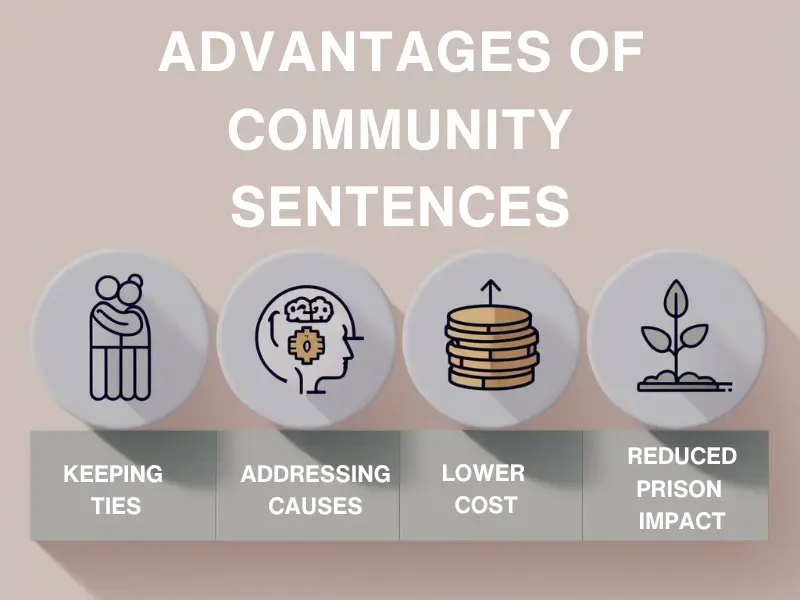
Why use community sentences instead of sending everyone to prison? There are several potential advantages of community sentences:
- Keeping Ties: Allows the person to maintain family connections, keep housing, and potentially stay in work or education, which can help reduce the chances of them reoffending.
- Addressing Causes: Requirements like RARs and treatment programmes directly target the underlying reasons for offending (e.g., addiction, lack of skills, poor decision-making).
- Lower Cost: Community sentences are generally significantly cheaper to run than keeping someone in prison.
- Reduced Prison Impact: Avoids exposing individuals (especially those convicted of less serious crimes) to the potentially negative influences and disruptions of prison life.
- Benefit to Community: Unpaid work provides a direct, visible payback to the local community.
Are Community Sentences Effective? Challenges and Statistics
This is a key question. Measuring the effectiveness of community sentences UK-wide is complex. Success depends on many factors:
- The Individual: Their motivation to change and engage with the requirements.
- The Delivery: How well the Probation Service supervises the order and delivers the requirements. People in the justice system, like magistrates, sometimes worry if services are always available and good enough across the country. Confidence in the system relies on this effective delivery.
- The Requirements: Whether the chosen requirements are truly addressing the person’s needs and risks.
Looking at community sentences statistics UK, studies often compare reoffending rates for those given community sentences versus those given short prison sentences. Some studies show that community sentences with a focus on change work better than short jail times for some offenders.
However, success isn’t guaranteed, and ensuring these sentences work well requires proper funding, skilled staff, and robust monitoring.
What Happens if Someone Breaks the Rules?
A community order is a court order, and failing to comply is taken seriously. This is known as a ‘breach’.
- Warning: Usually, a first minor breach might result in a formal warning from the Probation Officer.
- Return to Court: If the person continues to breach the order, or if the breach is serious, they will be taken back to court.
- Court Action: The court can then decide to:
- Add more hours to unpaid work or make existing requirements stricter.
- Impose a fine.
- In serious cases, the community order entirely and resentence the person for the original offence, which could mean sending them to prison.
Community sentences, primarily through the community order (or YRO for youths), are a vital part of the UK justice system. They offer a flexible way to punish offenders, protect the public, and provide opportunities for rehabilitation within the community. By combining different requirements tailored to the individual, they aim to address the causes of offending behaviour.
While challenges exist in ensuring their consistent delivery and measuring success, they remain a crucial alternative to imprisonment for many offences dealt with by the courts in England and Wales.
Read more about How to Report Benefit Fraud in the UK
Source / Ref.: Gov.uk Sentencingcouncil.org.uk Committees.parliament.uk Contains public sector information licensed under Open Government Licence v3.0.
Written by [Ketan Borada / British Portal Team] – Founder of British Portal, dedicated to providing accurate and up-to-date information on UK public services and benefits.Related Posts


Previous Post
Next Post







- Business
 5
5 - Cricket5
- Department for Education49
- Departments3
- Driving and Transport
 53
53 - Education45
- Finance6
- Football13
- Golf3
- Government
 108
108 - Guides1
- Health4
- Health
 5
5 - International Politics9
- Law and Justice31
- Money and Tax23
- National Politics4
- News68
- Politics6
- Sports38
- Technology5
- Tennis3
- Transportation4
- Uncategorized4
- Visa
 17
17 - Visas and Immigration
 24
24 - Weather1