A goods vehicle operator licence is essential for businesses transporting goods in the UK using heavy vehicles. Whether you’re running a small delivery service or managing a large fleet, operating without the proper licence can result in fines, vehicle seizures, and legal action. This guide explains the different licence types, application steps, costs, and compliance rules—ensuring you meet all legal requirements.
What Is a Goods Vehicle Operator Licence?
A goods vehicle operator licence or an HGV operators licence is a legal permit required to transport goods for business purposes in the UK using vehicles over a certain weight limit. It allows you to carry goods for hire or reward or for your own business purposes. The licence is issued by the Traffic Commissioner and ensures that operators meet safety, maintenance, and environmental standards.
There are three main types of operator licences in the UK:
- Standard National Licence: For transporting your own or other people’s goods within Great Britain.
- Standard International Licence: Required for transporting goods internationally.
- Restricted Licence: For carrying your own goods only.
Operating without the correct licence can lead to fines, vehicle seizure, and legal consequences.
Who Needs a Goods Vehicle Operator Licence?
If you operate goods vehicles over 3.5 tonnes for business purposes, you must hold a goods vehicle operator licence. This applies whether you’re carrying your own products or providing haulage services for clients.
Whether you’re delivering your own products or offering haulage services, having the right licence is essential to operate legally.
You’ll need a licence if you:
- Use vehicles with a gross plated weight over 3.5 tonnes, including those requiring an operator’s licence for 3.5 tonne vehicles, or unladen weight above 1,525 kg.
- Transport goods for hire or reward (paid services).
- Carry your goods using a restricted drivers licence.
- Operate internationally, requiring a standard international licence.
However, you don’t need a licence if you:
- Use light vans or vehicles under 3.5 tonnes.
- Carry goods for non-business purposes.
- Transport goods solely within agricultural or forestry operations.
Ensuring you have the correct operators licence is vital to avoid penalties and remain compliant with vehicle operator licensing regulations.
Types of Vehicle Operator Licences Required
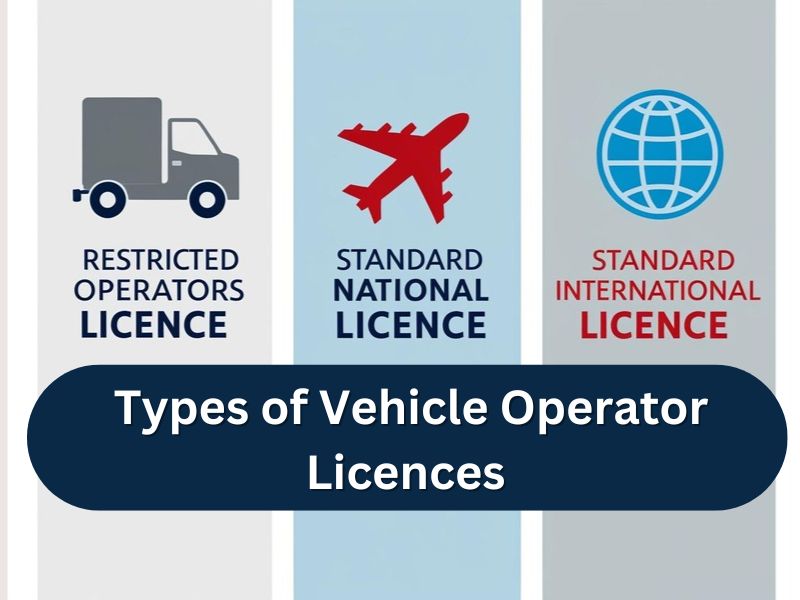
When applying for a goods vehicle operator licence, you’ll need to choose from three main types based on your business operations:
- Restricted Operators Licence:
- For businesses carrying their own goods.
- Does not permit haulage services for third parties.
- Common for retailers, manufacturers, or construction companies.
- Standard National Licence:
- Allows you to transport both your own goods and other people’s goods.
- Valid only for operations within the UK.
- Ideal for haulage companies serving local businesses.
- Standard International Licence:
- Required for transporting goods across the UK and internationally.
- Needed for international road haulage operators licence compliance.
- Essential for businesses dealing with cross-border logistics.
If you need to operate immediately while waiting for your full licence, you can apply for an interim driving license. This temporary permit allows you to start working but may have limited validity.
Moving forward let’s see how to apply for an operator licence in the UK.
How to Apply for a Goods Vehicle Operator Licence
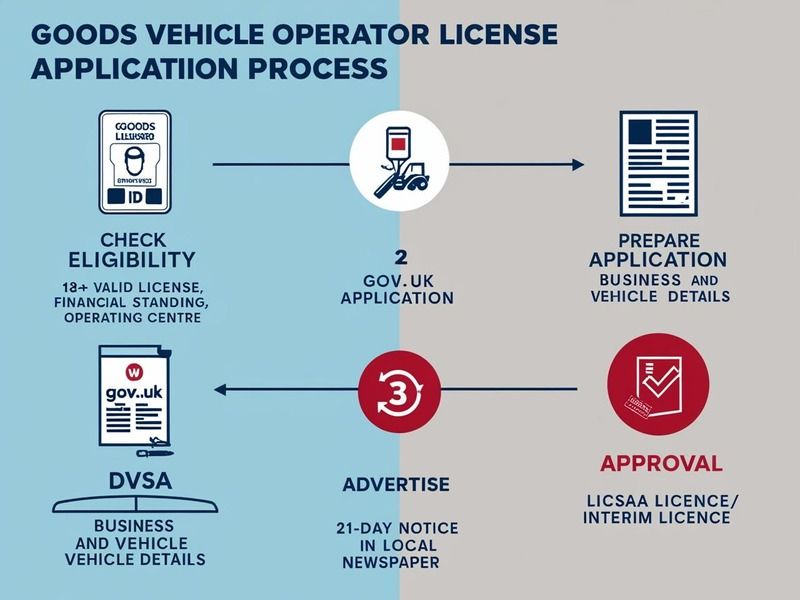
Applying for a goods vehicle operator licence involves several steps to ensure compliance with vehicle operator licensing regulations:
- Check Eligibility:
- You must be 18 or older and hold a valid driving licence.
- Your business must meet financial standing requirements to prove you can maintain your vehicles.
- You’ll need an operating centre where your vehicles will be kept.
- Prepare Your Application:
- Apply online through the Vehicle Operator Licensing (VOL) service on GOV.UK.
- Provide details about your business, vehicles, and transport managers.
- Include the unladen weight and capacity of your vehicles.
- Advertise Your Application:
- You must publish a notice in a local newspaper to inform the public of your licence application.
- The advert must run for 21 days.
- Await Approval:
- The DVSA will review your application.
- If accepted, you’ll receive your operator’s licence.
- You may be issued an interim licence while awaiting the full approval.
Applying correctly ensures you avoid fines and operate legally under goods vehicle operator licensing rules.
Costs Involved in Getting an Operators Licence
Obtaining a goods vehicle operator licence comes with several fees that vary based on the type of licence and the number of vehicles you operate:
- Application Fee:
- The initial application costs £257.
- This fee applies whether you’re applying for a restricted, standard national, or standard international licence.
- Licence Issue Fee:
- Once approved, you’ll need to pay an additional £401 to obtain the licence.
- This fee covers the five-year validity period.
- Interim Licence Fee:
- If you need to start operating before full approval, you can request an interim operators licence cost of £68.
- This is a temporary solution with limited validity.
- Ongoing Costs:
- You must renew your licence every five years.
- Additional expenses include vehicle maintenance, compliance checks, and employee training.
Understanding these costs is essential for accurate budgeting and compliance with haulage licence regulations.
Operating Conditions and Compliance Rules
Once you obtain a goods vehicle operator licence, you must adhere to strict compliance rules to avoid penalties or licence revocation:
- Vehicle Maintenance and Safety:
- You are responsible for keeping your vehicles roadworthy and safe.
- Regular inspections and servicing are required.
- Maintain accurate maintenance records for at least 15 months.
- Operating Centre Requirements:
- Your vehicles must be stored at an approved operating centre.
- The site should have adequate parking and maintenance facilities.
- You must notify the DVSA of any changes to your centre.
- Driver Hours and Records:
- You must follow driver hours regulations to prevent fatigue.
- Use tachographs to log driving hours and rest periods.
- Retain these records for at least 12 months.
- Financial Standing:
- You must maintain sufficient financial reserves to support your operations.
- The minimum amount is £8,000 for the first vehicle and £4,450 for each additional vehicle.
- Display of Licence Disc:
- You must display your operator’s licence disc on every vehicle.
- The disc must be clearly visible at all times.
Adhering to these vehicle operator licensing rules ensures you remain compliant and avoid fines or potential licence suspension.
Consequences of Operating Without a Goods Vehicle Operator Licence
Failing to obtain a goods vehicle operator licence when required can lead to severe penalties and legal consequences. Such as:
- Fines and Prosecution:
- Operating without a valid operators licence is a criminal offence.
- You may face fines of up to £5,000.
- In serious cases, you could face imprisonment.
- Vehicle Seizure:
- The DVSA has the authority to impound vehicles being operated unlawfully.
- Seized vehicles may be sold or destroyed if you fail to claim them.
- Loss of Business Contracts:
- Clients and customers often require proof of haulage licence compliance.
- Running without a licence could result in contract termination and loss of income.
- Legal Liability in Accidents:
- Without proper licensing, you may be held personally liable for accidents.
- This could lead to insurance claims being denied, increasing your financial risk.
- Difficulty in Future Licensing:
- Breaching vehicle operator licensing laws can impact your ability to apply for a licence later.
- You may face longer approval times or restrictions.
Complying with gov uk operators licence regulations is essential to avoid these legal and financial repercussions.
Renewing and Updating a Goods Vehicle Operator Licence
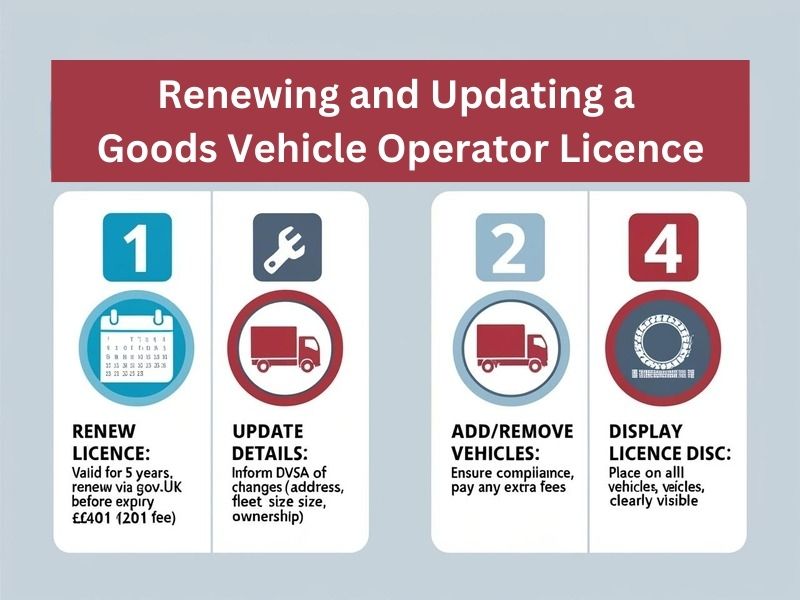
To continue operating legally, you must renew and update your goods vehicle operator licence as required:
- Renewing Your Licence:
- Licences are valid for five years.
- You must apply for renewal before the expiry date through the Vehicle Operator Licensing (VOL) service.
- The renewal fee is £401.
- If you miss the renewal deadline, you may need to reapply from scratch, delaying operations.
- Updating Licence Details:
- You are required to inform the DVSA of any changes to your licence details, including:
- Operating centre address.
- Fleet size or number of vehicles.
- Changes in business ownership or structure.
- Failing to update your details could result in non-compliance penalties.
- You are required to inform the DVSA of any changes to your licence details, including:
- Adding or Removing Vehicles:
- You can add or remove vehicles from your haulage licence online.
- New vehicles must meet compliance standards before being added.
- There may be additional costs for expanding your fleet.
- Displaying Renewed Licence Disc:
- After renewal, you must display the new licence disc on all vehicles.
- Ensure the disc is clearly visible.
Staying on top of licence renewals and updates ensures continuous compliance with vehicle operator licensing regulations.
Tips for Maintaining Compliance with a Goods Vehicle Operator Licence
To avoid fines and ensure smooth operations, it’s essential to maintain ongoing compliance with your goods vehicle operator licence:
- Regular Vehicle Inspections:
- Schedule frequent safety checks to keep vehicles roadworthy.
- Address any mechanical issues immediately.
- Maintain detailed inspection records for at least 15 months.
- Adhere to Driver Hour Limits:
- Follow driver hours regulations to prevent fatigue.
- Use tachographs to track driving hours and rest breaks.
- Store these records for 12 months.
- Stay Updated on Legal Changes:
- Gov.uk regularly updates vehicle operator licensing rules.
- Stay informed to ensure ongoing compliance.
- Adjust your operations accordingly.
- Invest in Driver Training:
- Provide regular training sessions on safety and compliance.
- Educate drivers on licence requirements and vehicle maintenance.
- Accurate Record-Keeping:
- Keep up-to-date records of maintenance, finances, and licences.
- Store documents securely and ensure they are easily accessible for DVSA inspections.
Following these best practices helps you remain compliant with haulage licence regulations, ensuring your business runs smoothly and legally.
Holding a goods vehicle operator licence is essential for legally transporting goods in the UK. Whether you’re running a small fleet or managing a large-scale haulage business, staying compliant with vehicle operator licensing rules is crucial. From choosing the right licence type and understanding the costs to maintaining vehicle safety and renewing on time, each step ensures your operations remain lawful and efficient.
By following gov uk operators licence guidelines, keeping up with regular inspections, and ensuring accurate record-keeping, you can avoid fines, vehicle seizures, and legal complications. Staying informed and compliant allows your business to grow smoothly and securely.
Source / Ref.: Gov.uk Contains public sector information licensed under Open Government Licence v3.0.
Written by [Ketan Borada / British Portal Team] – Founder of British Portal, dedicated to providing accurate and up-to-date information on UK public services and benefits.Related Posts
Previous Post
Next Post




- Business
 5
5 - Cricket5
- Department for Education49
- Departments3
- Driving and Transport
 53
53 - Education45
- Finance6
- Football13
- Golf3
- Government
 108
108 - Guides1
- Health
 5
5 - Health4
- International Politics9
- Law and Justice31
- Money and Tax23
- National Politics4
- News68
- Politics6
- Sports38
- Technology5
- Tennis3
- Transportation4
- Uncategorized4
- Visa
 17
17 - Visas and Immigration
 24
24 - Weather1