Driving rules in the UK are designed to ensure road safety and legal compliance. Whether you’re a local driver, a learner, or a foreign visitor, following the legal obligations is essential. The Driver and Vehicle Licensing Agency (DVLA) sets strict regulations covering licensing, vehicle safety, and road conduct.
This guide breaks down the new driving rules in UK, covering driver requirements, rider rules, and updated UK driving rules and regulations to help you stay on the right side of the law.
Licensing Requirements for UK Drivers
To legally drive in the UK, you must hold a valid driving license issued by the DVLA new driver rules. The type of license required depends on your age, residency status, and vehicle category.
License Types and Eligibility:
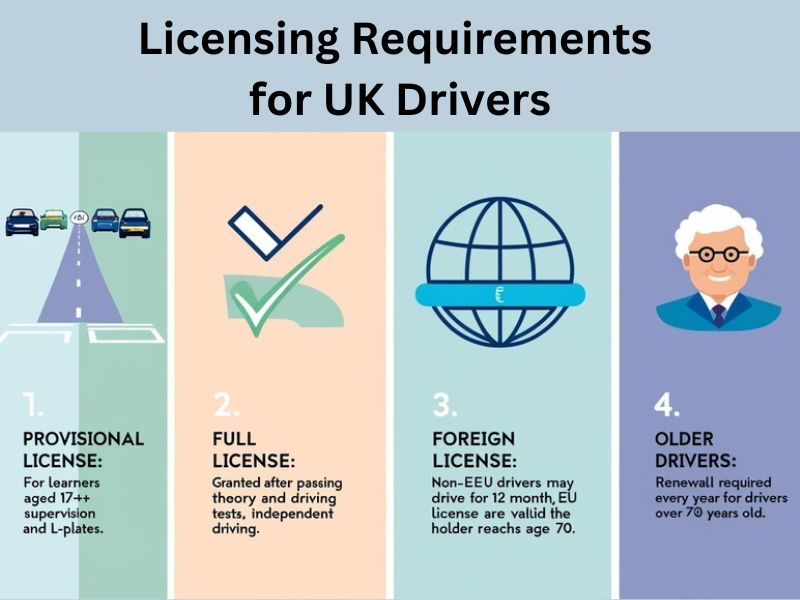
- Provisional License: Learner drivers aged 17 or older can apply for a provisional license. It allows them to practice under supervision and with L-plates displayed.
- Full License: After passing both the theory and practical driving tests, you can obtain a full license, granting you the right to drive independently.
- UK Driving Rules for Foreigners:
- EU/EEA Residents: Can use their home-country license until it expires or until they turn 70.
- Non-EU Visitors: May drive with their foreign license for up to 12 months, after which they need a UK license or an International Driving Permit (IDP).
- Older Drivers: Those over 70 years must renew their driver permit every three years.
Essential Driving Rules in UK for All Motorists
In the UK, motorcycle and moped riders must follow specific driving rules and regulations to ensure road safety and legal compliance. These rules cover licensing, protective gear, and speed limits.
License Requirements and Safety Regulations for Riders:
- Mopeds: Riders must be at least 16 and hold a provisional or full AM license.
- Motorcycles: Minimum age is 17 with a Category A license.
- Learner Riders: Must display L-plates and cannot carry passengers until they pass the test.
- Helmet Laws: Wearing a safety-approved helmet is mandatory.
- Protective Gear: Gloves, boots, and padded jackets are recommended for safety.
- Speed Limits: Mopeds are limited to 30 mph, while motorcycles must follow standard UK speed rules.
- Traffic Conduct: Riders must follow signals, road signs, and lane rules to avoid fines.
Following the driving rules in UK for motorcycle and moped riders is essential for legal and safe commuting.
Vehicle Registration and Road Tax Rules
In the UK, all vehicles driven on public roads must be registered with the DVLA and have valid road tax (Vehicle Excise Duty). These regulations ensure that vehicles meet legal and environmental standards.
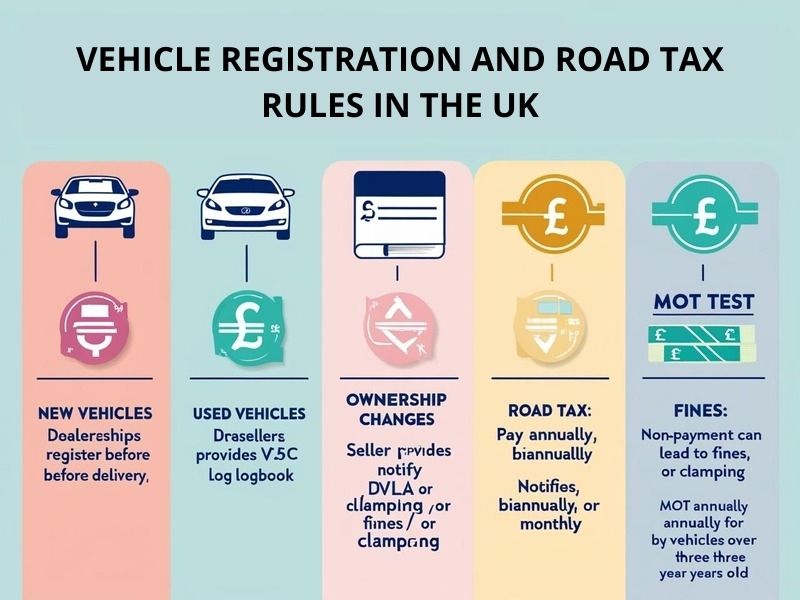
Vehicle Registration, Road Tax, and MOT Requirements:
- New Vehicles: Dealerships handle registration before delivery.
- Used Vehicles: The seller provides the V5C logbook for registration details.
- Ownership Changes: Both parties must notify the DVLA of ownership changes.
- Road Tax: All vehicles, except exempt ones, must have road tax.
- Payment: Tax can be paid annually, biannually, or monthly.
- Fines: Non-payment of road tax can result in fines or vehicle clamping.
- MOT Testing: Vehicles over three years old need an annual MOT test.
- Fines for No MOT: Driving without an MOT certificate can lead to fines up to £1,000.
Complying with driving rules in UK for vehicle registration and taxation ensures your vehicle is road-legal and safe.
Speed Limits and Road Safety Regulations
Following speed limits and road safety rules is crucial for legal and responsible driving in the UK. These regulations vary by road type and vehicle category.
Standard Speed Limits:
- Built-Up Areas: The limit is 30 mph, unless signs indicate otherwise.
- Single Carriageways: Maximum speed is 60 mph for cars and motorcycles.
- Dual Carriageways and Motorways: The limit is 70 mph for standard vehicles.
- Commercial Vehicles: Heavier vehicles, like lorries and buses, have lower speed limits.
Road Safety Regulations:
- Seat Belt Laws: It is mandatory for drivers and passengers to wear seat belts. Failing to do so can result in a £500 fine.
- Child Safety: Children under 135 cm or 12 years old must use an approved child seat.
- Mobile Phone Use: Using a handheld device while driving is illegal and can lead to a £1,000 fine and 6 penalty points.
Insurance Requirements for UK Drivers
Having valid motor insurance is a legal rules to drive in UK. It protects both drivers and third parties in case of accidents, damage, or injury.
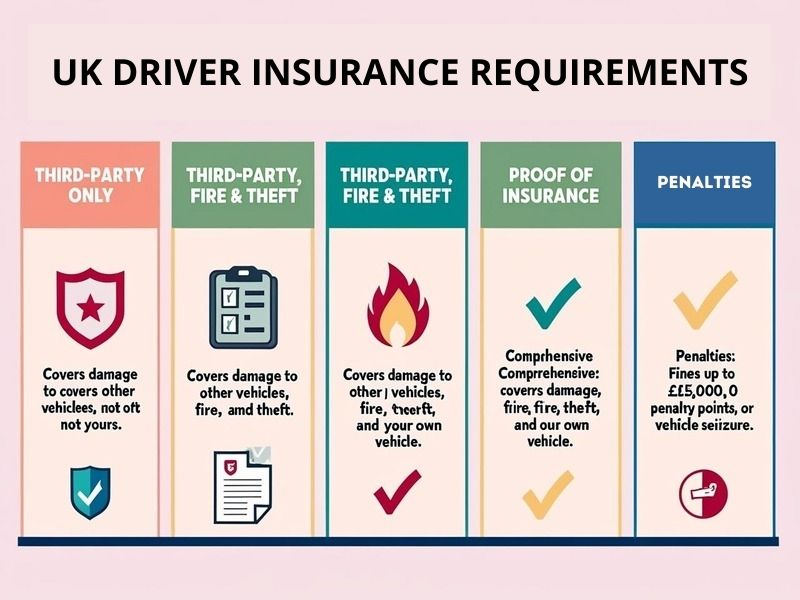
Types of Motor Insurance:
- Third-Party Only: The minimum legal coverage in the UK. It covers damage or injury caused to others but not your own vehicle.
- Third-Party, Fire, and Theft: Includes third-party coverage plus protection against theft or fire damage to your vehicle.
- Comprehensive Insurance: Offers the most extensive coverage, protecting against third-party claims, fire, theft, and accidental damage to your own vehicle.
Legal Requirements and Documentation:
- All drivers must have at least third-party insurance.
- You must carry proof of insurance when driving.
- Failing to insure your vehicle can lead to:
- Fines of up to £5,000.
- 6 to 8 penalty points on your license.
- Vehicle seizure or disqualification from driving.
Drink and Drug Driving Rules in UK
Driving under the influence of alcohol or drugs is a serious offense in the UK, with strict legal limits and penalties in place to ensure road safety.
Alcohol Limits for Drivers:
The legal blood alcohol concentration (BAC) limits vary:
- England, Wales, and Northern Ireland: 80 mg per 100 ml of blood.
- Scotland: 50 mg per 100 ml of blood.
Drug Driving Rules in UK:
- It is illegal to drive with illegal drugs or excessive levels of certain prescription medications in your system.
- Police conduct roadside tests for substances like cannabis and cocaine.
- Some prescription drugs, including diazepam and morphine, can impair driving if taken above recommended doses.
Driving Rules in UK to Use Mobile
Using a handheld device while driving is strictly prohibited under UK driving rules, as it significantly increases the risk of accidents.
Legal Restrictions on Mobile Use:
- It is illegal to hold or use a mobile phone, tablet, or any handheld device while driving, even when stopped at traffic lights or in a queue.
- The law applies to making calls, texting, or using apps.
- Hands-free devices (e.g., Bluetooth) are allowed, but drivers must remain in full control of their vehicle.
Exceptions to the Rule:
- You can use a mobile phone when safely parked with the engine off.
- Calling 999 or 112 during an emergency is permitted if stopping is unsafe.
- Using a built-in infotainment system is allowed, but you must avoid distractions.
Abiding by UK phone usage regulations while driving helps prevent collisions and legal issues.
Advice for Drivers – Understanding Driving Rules in the UK
In the UK, learner and newly qualified drivers must adhere to specific rules and restrictions to promote safe driving habits.
Learner Driver Rules UK:
- License Requirements: You must hold a provisional driving license and be supervised by someone over 21 with a full license for at least three years.
- L-Plates: Learners must display L-plates (or D-plates in Wales) clearly on the front and rear of the vehicle.
- Motorway Restrictions: Learners can only drive on motorways when accompanied by an approved driving instructor in a dual-controlled car.
Driving Rules in UK for New Drivers:
- Probation Period: New drivers face a two-year probation period.
- Penalties: Accumulating 6 or more penalty points during this period results in license revocation, requiring them to retake the tests.
- Speed and Conduct: New drivers must adhere to standard speed limits and driving regulations, with no additional restrictions.
New Rules for Older Drivers
- Elder drivers should be aware of the driving rules for new drivers over 70, which focus on ensuring health and fitness for safe driving.
- These updated driving rules also involve more frequent health assessments to ensure that older drivers are fit to be on the road.
Parking Rules and Restrictions in the UK
Parking in the UK is regulated by strict rules and restrictions to ensure road safety and traffic flow. Drivers must follow designated parking regulations and avoid restricted areas.
Legal Parking Rules:
- On-Street Parking: Check signs or road markings for restrictions. Pay-and-display zones require ticket display.
- Permit-Only Parking: Some areas need a parking permit; fines apply for parking without one.
- Disabled Parking: Only Blue Badge holders can park in designated bays. Misuse can result in fines up to £1,000.
Restricted Areas:
- Double Yellow Lines: No parking at any time.
- Single Yellow Lines: Parking restricted during certain hours.
- Loading Bays: Reserved for loading/unloading only.
Observing UK parking regulations helps you stay compliant and prevents unnecessary fines.
Driving Rules in UK for Adverse Weather Conditions
Driving in poor weather conditions in the UK requires caution and adherence to specific safety regulations. These rules help drivers minimize risks and prevent accidents.
Driving in Rain and Fog:
- Speed Adjustment:
- Reduce your speed to improve control and braking.
- Leave extra space between vehicles to prevent collisions.
- Fog Lights and Headlights:
- Use fog lights when visibility drops below 100 meters.
- Turn on low-beam headlights in heavy rain or fog.
Driving in Snow and Ice:
- Tyre and Brake Safety:
- Fit your vehicle with winter tyres or use snow chains if required.
- Brake gently to avoid skidding on icy roads.
- Visibility and Control:
- Clear snow and ice from windows, mirrors, and lights before driving.
- Use lower gears when driving downhill to maintain control.
Wind and Storm Safety:
- Vehicle Stability:
- Strong winds can affect steering and stability, especially for high-sided vehicles.
- Keep a firm grip on the wheel and reduce speed.
- Caution with Debris:
- Be alert for fallen branches or road obstructions during storms.
- Adjust speed accordingly to avoid hazards.
Driving Rules in the UK for Emergency Vehicles
When driving in the UK, you must follow specific rules when encountering emergency vehicles to ensure safe and unobstructed passage.
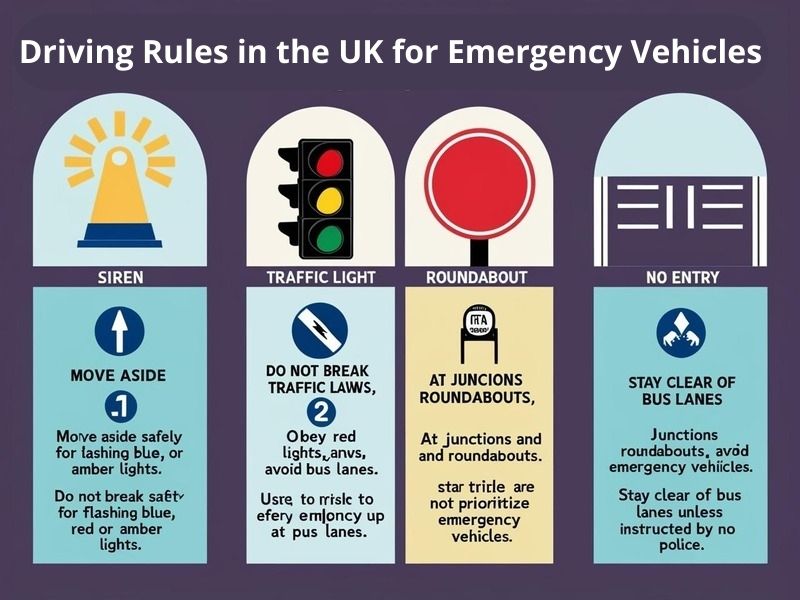
How to Respond to Emergency Vehicles:
- Give Way Immediately:
- When you see flashing blue, red, or amber lights, move aside safely.
- Do not block junctions or roundabouts when yielding.
- Do Not Break Traffic Laws:
- Avoid driving through red lights or into bus lanes to make way—it is still illegal.
- Pull over only when it is safe and legal to do so.
Rules at Junctions and Roundabouts:
- Clear the Path:
- At roundabouts or junctions, give emergency vehicles priority by allowing them through.
- Stay Clear of Bus Lanes:
- Do not enter a bus lane to make way unless directed by the police.
Eco-Driving Rules in UK for Fuel Efficiency
In the UK, eco-driving practices are encouraged to reduce fuel consumption, lower emissions, and promote sustainable driving. Following these guidelines helps drivers cut costs and minimize their carbon footprint.
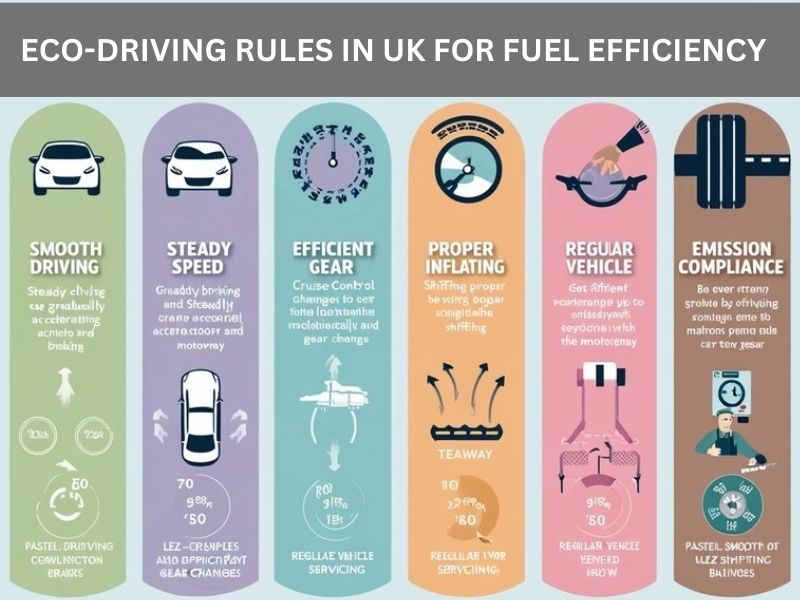
- Smooth Acceleration and Braking: Gradually accelerate and avoid sudden braking to save fuel.
- Maintain a Steady Speed: Use cruise control on motorways to reduce fuel wastage.
- Shift Gears Efficiently: Change gears at the right time to improve fuel efficiency, especially at lower speeds.
Vehicle Maintenance:
- Tyre Pressure: Keep tyres inflated to reduce rolling resistance and fuel consumption.
- Regular Servicing: A well-maintained engine runs efficiently and reduces emissions.
Eco-Driving and Legal Compliance:
- Emission Standards: Vehicles must comply with UK emission regulations, including LEZ and ULEZ zones.
- Penalties: Non-compliance in ULEZ areas leads to fines or daily charges.
Adopting eco-driving practices in line with UK regulations promotes fuel efficiency and environmentally responsible driving.
Driving in the UK comes with a set of rules designed to keep you safe, legal, and responsible on the road. From understanding speed limits and regulatory requirements to embracing eco-driving tips and respecting emission zones, following these guidelines makes your driving experience smoother and more enjoyable.
By sticking to the rules, you avoid unnecessary fines, reduce your carbon footprint, and help keep the roads safe for everyone. Whether you’re just starting out behind the wheel or you’ve been driving for years, staying on top of UK driving laws ensures you’re always ready for whatever the road throws your way!
Source / Ref.: Gov.uk Contains public sector information licensed under Open Government Licence v3.0.
Written by [Ketan Borada / British Portal Team] – Founder of British Portal, dedicated to providing accurate and up-to-date information on UK public services and benefits.Related Posts
Previous Post
Next Post







- Business
 5
5 - Cricket5
- Department for Education49
- Departments3
- Driving and Transport
 53
53 - Education45
- Finance6
- Football13
- Golf3
- Government
 108
108 - Guides1
- Health4
- Health
 5
5 - International Politics9
- Law and Justice31
- Money and Tax23
- National Politics4
- News68
- Politics6
- Sports38
- Technology5
- Tennis3
- Transportation4
- Uncategorized4
- Visa
 17
17 - Visas and Immigration
 24
24 - Weather1