
Driving hours regulations are vital for road safety and driver well-being. Whether you’re managing HGV driving hours, bus schedules, or simply trying to understand drivers hours rules, staying compliant with legal limits is non-negotiable.
These rules help prevent fatigue, reduce accidents, and ensure consistent working patterns for commercial drivers.
In this guide, we break down the core regulations covering daily driving hours, mandatory breaks, rest periods, and how tacho breaks help monitor it all. Stay ahead, stay informed.
Driving Hours Regulations
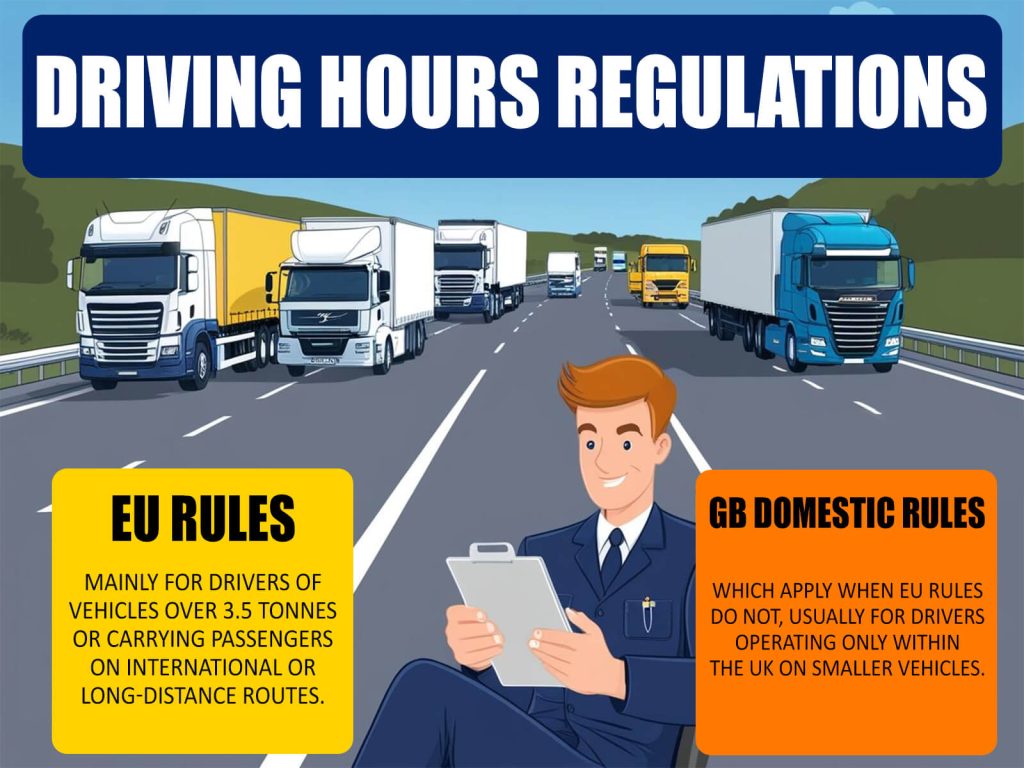
Commercial transport plays a key role in keeping the UK moving. With long hours on the road, the government enforces driving hours regulations to protect drivers and others on the road.
These laws apply to most drivers of lorries, buses, and coaches. The rules are based on either:
- EU rules, mainly for drivers of vehicles over 3.5 tones or carrying passengers on international or long-distance routes.
- GB domestic rules, which apply when EU rules do not, usually for drivers operating only within the UK on smaller vehicles.
The aim is simple ensure safe driving, prevent exhaustion, and maintain public safety. These limits also help employers plan realistic schedules and reduce stress on transport professionals.
Key Driving Limits
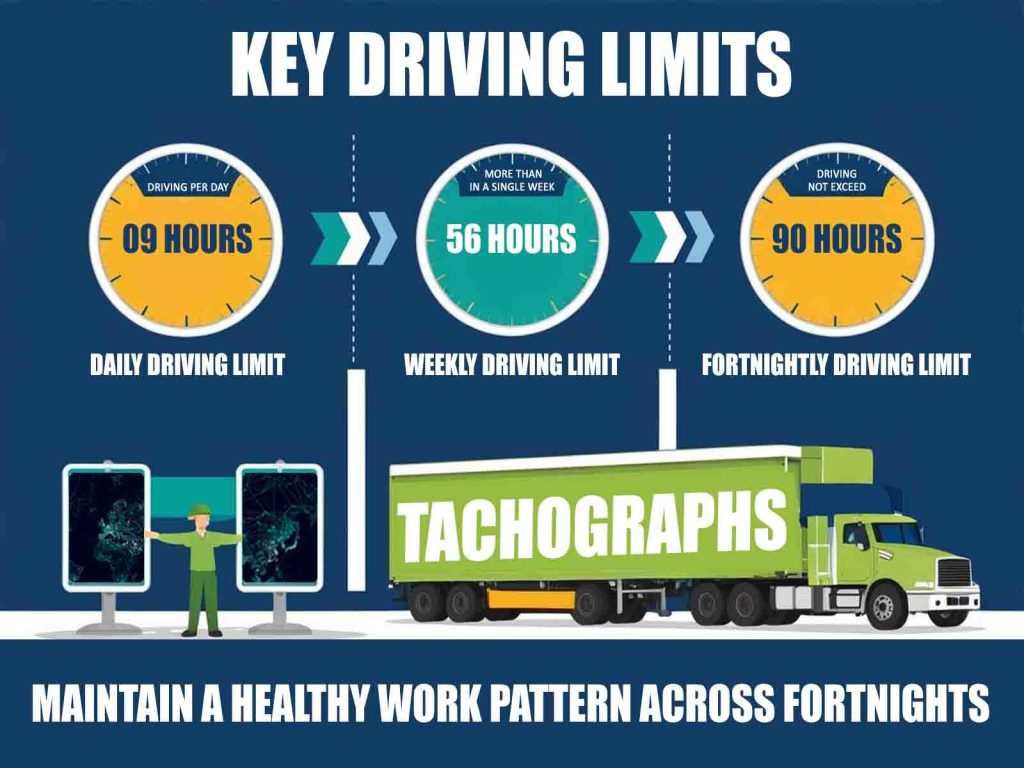
To avoid overwork and fatigue, specific driving hours limits are enforced across different timeframes. These caps protect both drivers and other road users by ensuring fair and consistent working practices.
Daily Driving Limit:
Drivers must not exceed 9 hours of driving per day. However, this can be extended to 10 hours twice a week.
This rule helps manage daily driving hours to ensure drivers get sufficient rest between shifts.
Weekly Driving Limit:
Drivers can drive for no more than 56 hours in a single week. This applies regardless of whether the driving was split over multiple days or concentrated into fewer.
Fortnightly Driving Limit
Over any two consecutive weeks, driving must not exceed 90 hours. This rolling limit ensures that weekly overwork is offset and that drivers maintain a healthy work pattern across fortnights.
These limits are tracked using tachographs (commonly referred to as tacho breaks) and must be strictly adhered to. Even a small violation can result in enforcement action, making awareness crucial for operators and drivers alike.
Mandatory Breaks During Driving
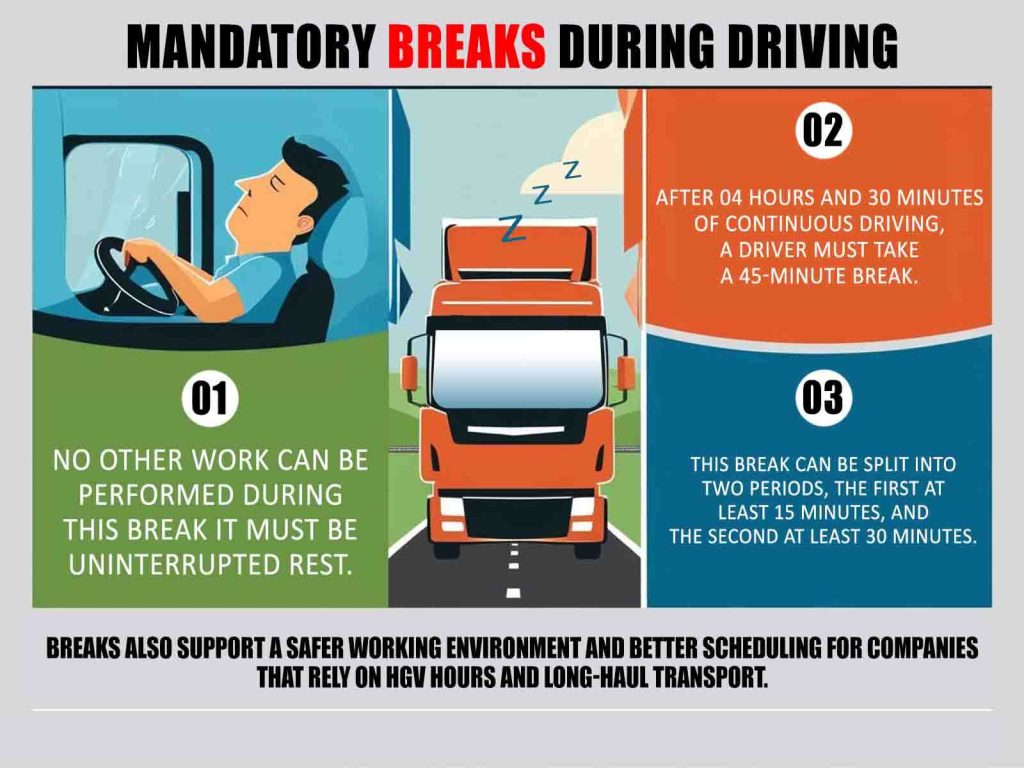
Breaks are just as important as limits. Under driving hours rules, drivers must take breaks to stay alert and avoid drowsiness on the road. These mandatory breaks are designed to split driving time and protect against fatigue-related errors.
- After 4 hours and 30 minutes of continuous driving, a driver must take a 45-minute break.
- This break can be split into two periods, the first at least 15 minutes, and the second at least 30 minutes.
- No other work can be performed during this break it must be uninterrupted rest.
These tacho breaks must be recorded and respected. Skipping or delaying them can lead to fines and penalties from enforcement officers.
Breaks also support a safer working environment and better scheduling for companies that rely on HGV hours and long-haul transport.
Daily Rest Periods
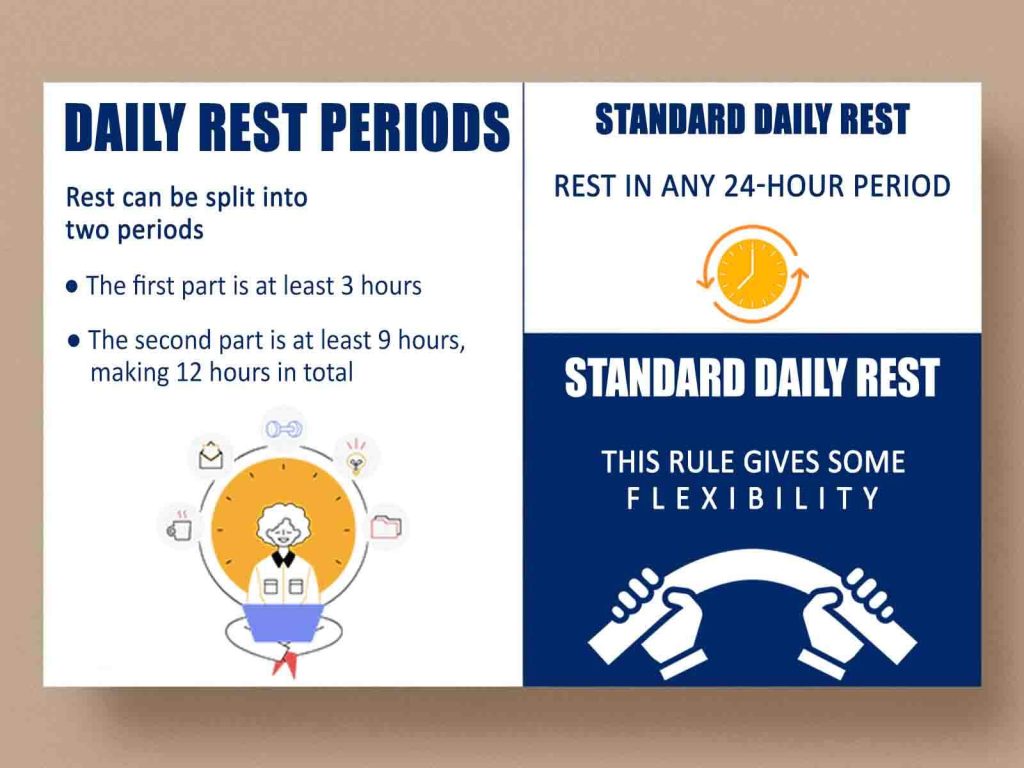
Daily rest is critical in managing safe driving hours. It ensures drivers have enough time to unwind, sleep, and recharge before getting back on the road. The rules set clear boundaries on what qualifies as acceptable rest.
Standard Daily Rest:
Drivers must take at least 11 consecutive hours of rest in any 24-hour period. This rest can be reduced to 9 hours, but only three times a week, and only under certain conditions.
These rest periods must be uninterrupted. During this time, drivers cannot perform any driving or work-related tasks.
Reduced Daily Rest:
As mentioned, reduced rest is allowed three times between weekly rest periods. However, it must still be at least 9 consecutive hours. This rule gives some flexibility without compromising safety.
Splitting Daily Rest:
Rest can be split into two periods, as long as:
- The first part is at least 3 hours (uninterrupted), and
- The second part is at least 9 hours, making 12 hours in total.
This offers practical solutions for drivers managing varied schedules, especially in long-distance or HGV hours operations.
Daily rest periods also play a major role in how tacho breaks are structured and logged, ensuring there’s traceable compliance.
Double Manning:
The driver not currently driving must be off duty or resting, although being in a moving vehicle can still count towards their daily rest, if properly logged.
Each driver must still receive at least 9 consecutive hours of daily rest within a 30-hour window from the start of their shift.
This system helps extend operational range while staying compliant with rules on mandatory breaks and tacho breaks, offering efficiency without risking safety.
Weekly Rest Periods

While daily limits and breaks are vital, weekly rest ensures drivers get proper downtime after several consecutive working days. These rest rules are core to driving hours compliance and are strictly enforced across all commercial vehicle operations.
Standard Weekly Rest:
Drivers must take an uninterrupted rest of at least 45 hours once per week. This rest period can be spent at home, at a hotel, or any place where the driver can fully relax not inside the vehicle, unless it has proper sleeping facilities and is stationary.
Reduced Weekly Rest:
A weekly rest period can be reduced to 24 hours, but:
- It must be compensated by adding the reduced hours to another rest period, and
- This compensation must be made before the end of the third week following the reduction.
Only one reduced rest is allowed every two consecutive weeks. So, drivers cannot take back-to-back reduced rests.
Special Rules and Exemptions
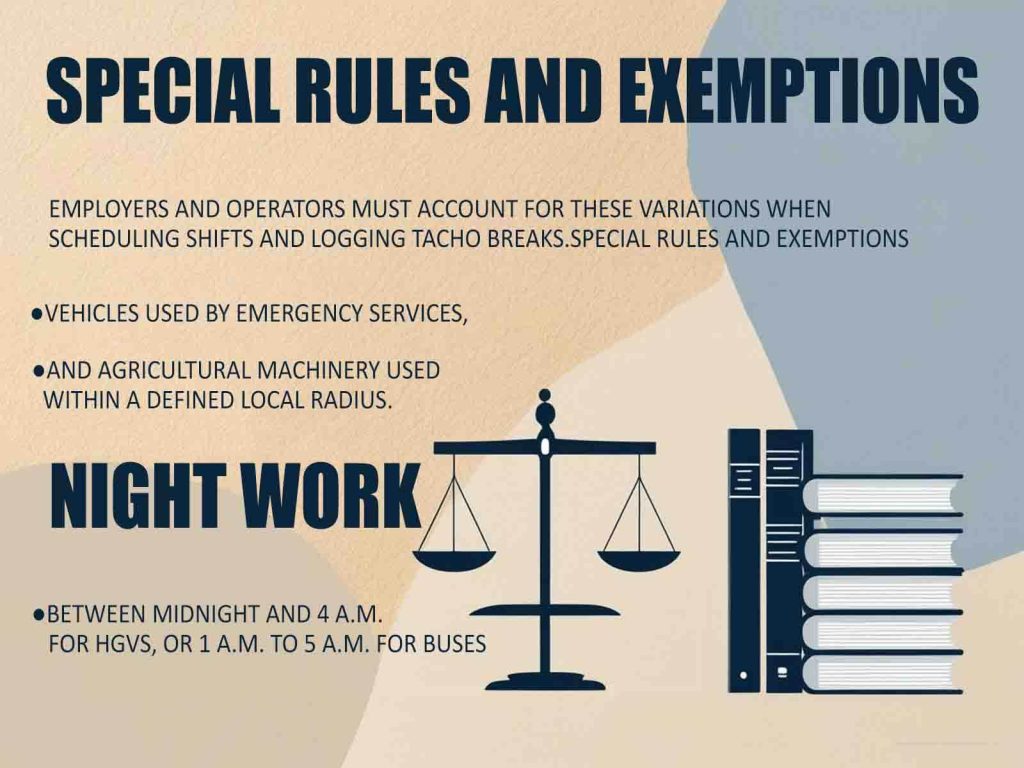
Not all driving activities fall under the standard driving hours regulations. Certain conditions and vehicle types allow for modified rules or exemptions, ensuring that the law remains fair and adaptable to different circumstances.
Ferry Journeys:
Drivers taking a ferry or train can interrupt their daily rest up to twice for embarking and disembarking as long as:
- The total rest time still equals at least 11 hours,
- The interruptions do not exceed one hour in total,
- And the driver has access to a bunk or sleeping cabin.
This rule helps accommodate international or coastal routes, especially where ferries are used as part of the journey.
Out of Scope Driving:
Certain driving activities are completely out of scope and not bound by EU drivers’ hours rules. Examples include:
- Vehicles used by emergency services,
- Vehicles under 3.5 tonnes used for non-commercial purposes,
- And agricultural machinery used within a defined local radius.
These are still subject to GB domestic rules, which differ in structure and requirements.
Night Work:
If night work is involved (typically between midnight and 4 a.m. for HGVs, or 1 a.m. to 5 a.m. for buses), the driving time in that shift must not exceed 10 hours unless there’s a collective agreement stating otherwise.
Employers and operators must account for these variations when scheduling shifts and logging tacho breaks.
Tachographs and Record Keeping
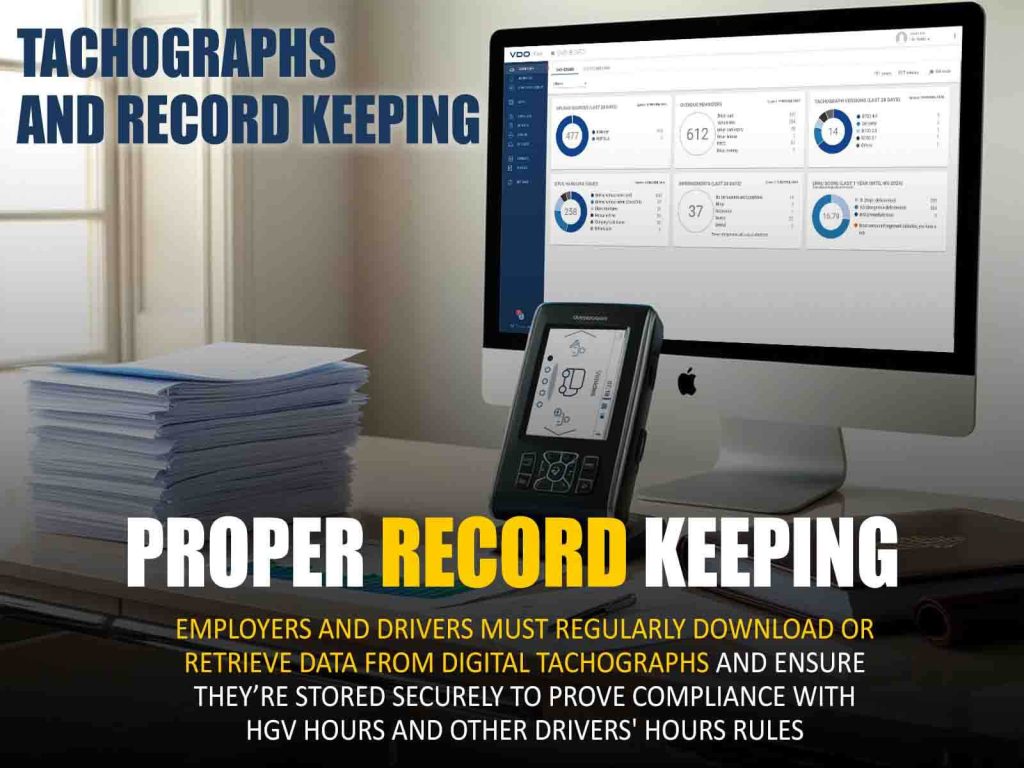
Tachographs are vital for ensuring compliance with driving hours regulations. Accurate recording through tachographs helps operators track the driver’s working time, ensuring that they adhere to daily driving hours, weekly limits, and mandatory breaks.
Tachograph Monitoring:
- The tachograph automatically records driving time and rest periods, ensuring that drivers don’t exceed the 9-hour daily limit or the 56-hour weekly limit.
- Both digital and analog tachographs are used to monitor drivers’ hours and provide evidence during inspections.
Proper Record Keeping:
- It’s mandatory to keep records of tachograph data for a minimum of 12 months, especially if a driver is subject to audits or checks from regulatory authorities.
- Employers and drivers must regularly download or retrieve data from digital tachographs and ensure they’re stored securely to prove compliance with HGV hours and other drivers’ hours rules.
By maintaining precise records of daily driving hours and mandatory rest periods, operators safeguard their business against potential penalties from enforcement.
Enforcement and Penalties
Strict enforcement is in place to maintain road safety and driver well-being by ensuring compliance with driving hours regulations. Violations of these regulations can result in significant penalties, ranging from fines to loss of operating licenses.
Common Penalties for Non-Compliance:
- Fines: For drivers who exceed the daily or weekly driving hours limits, fines are typically issued on the spot during roadside checks.
- Vehicle Impoundment: In severe cases, vehicles can be impounded if tachograph data shows clear evidence of serious violations like excessive driving hours or failure to record breaks.
- License Suspensions: Operators who repeatedly violate driving hours or fail to monitor their fleet’s compliance may face temporary or permanent suspensions of their operating licenses.
Driver Violations:
- Failure to take mandatory breaks can lead to fines and enforcement action.
- Driving beyond the fortnightly driving limit of 90 hours can result in heavy penalties, particularly for HGV drivers.
Employer Responsibility:
Employers are also held accountable for ensuring their drivers adhere to daily rest periods and mandatory breaks. Non-compliance by an employee can result in penalties for the employer, especially if it’s found that the company didn’t adequately monitor or enforce compliance.
Responsibilities of Employers

Employers play a crucial role in ensuring that their fleet and drivers comply with driving hours regulations. Their responsibilities extend beyond just monitoring driver compliance; they must provide the necessary support to guarantee that drivers are well-rested, healthy, and ready for their shifts.
Key Responsibilities of Employers:
- Monitoring and Enforcement: Employers must actively monitor the tachograph data and ensure that driving hours do not exceed legal limits.
- Ensuring Proper Breaks: Employers must schedule shifts that allow drivers to take their mandatory breaks and daily rest periods, avoiding violations of the driving hours rules.
- Training and Education: Employers should provide training to drivers on drivers’ hours rules, mandatory rest periods, and the importance of tachograph compliance.
- Managing Shift Schedules: Employers should avoid scheduling back-to-back long shifts without sufficient rest. They must also ensure that drivers receive their required weekly rest periods.
Rules for Different Vehicle Types and Operations
While driving hours rules apply across various vehicle types, there are different regulations and exceptions depending on the nature of the vehicle and its operation. Understanding these nuances is critical for compliance.
HGV Drivers:
- HGV driving hours are strictly regulated, with clear limits on daily driving hours, weekly driving hours, and fortnightly limits. HGV drivers also have to adhere to mandatory breaks and weekly rest periods.
Bus and Coach Drivers:
- Bus driver hours are similar to HGV regulations but can be subject to additional limits on night work and specific break requirements. Tacho breaks are also crucial for ensuring safety in passenger transport.
Special Operations:
- For drivers involved in emergency services, agricultural vehicles, and vehicle recovery operations, different exemptions or relaxation of the rules may apply. However, these vehicles still need to comply with GB domestic rules or specific exemptions.
Special Vehicle Exceptions:
- Small vehicles under 3.5 tones and those used for non-commercial purposes may not need to follow the full driving hours rules but must still follow basic safety limits. However, operators must confirm these exceptions to avoid violations.
Conclusion
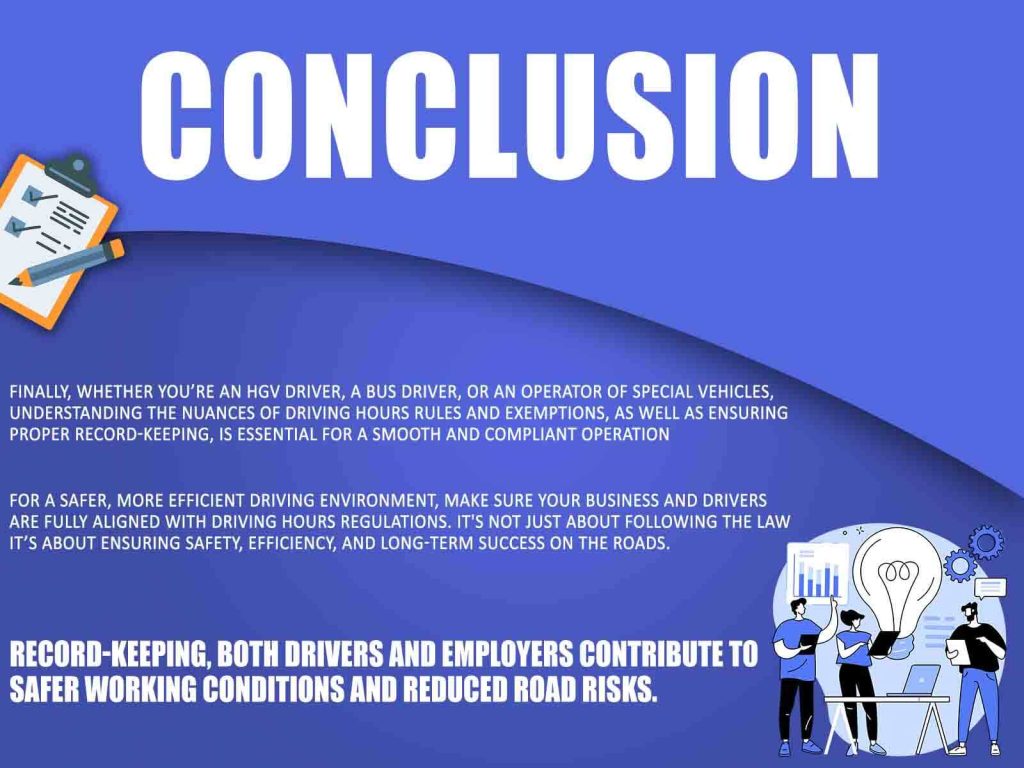
In conclusion, driving hours regulations are crucial for maintaining safety on the roads and ensuring the well-being of drivers, particularly in industries like HGV driving and bus transportation. By strictly adhering to these rules, including daily driving hours, weekly rest periods, mandatory breaks, and proper tachograph record-keeping, both drivers and employers contribute to safer working conditions and reduced road risks.
Employers must actively monitor compliance, manage scheduling effectively, and ensure their drivers understand the importance of tacho breaks and rest periods. Meanwhile, enforcement of these regulations ensures accountability, with significant penalties in place for non-compliance, safeguarding the transport industry from unsafe practices.
Finally, whether you’re an HGV driver, a bus driver, or an operator of special vehicles, understanding the nuances of driving hours rules and exemptions, as well as ensuring proper record-keeping, is essential for a smooth and compliant operation.
For a safer, more efficient driving environment, make sure your business and drivers are fully aligned with driving hours regulations. It’s not just about following the law it’s about ensuring safety, efficiency, and long-term success on the roads.
Source / Ref.: Gov.uk Contains public sector information licensed under Open Government Licence v3.0.
Written by [Ketan Borada / British Portal Team] – Founder of British Portal, dedicated to providing accurate and up-to-date information on UK public services and benefits.Related Posts

Previous Post
Next Post







- Business
 5
5 - Cricket5
- Department for Education49
- Departments3
- Driving and Transport
 53
53 - Education45
- Finance6
- Football13
- Golf3
- Government
 108
108 - Guides1
- Health
 5
5 - Health4
- International Politics9
- Law and Justice31
- Money and Tax23
- National Politics4
- News68
- Politics6
- Sports38
- Technology5
- Tennis3
- Transportation4
- Uncategorized4
- Visa
 17
17 - Visas and Immigration
 24
24 - Weather1