
Child benefit is a vital payment that helps parents and guardians manage the costs of raising children in the UK. It offers financial support to those responsible for a child under 16, or under 20 if they stay in approved education or training. This guide explains who can claim, how much you might get, and how to apply with ease.
Who Can Claim Child Benefit?
To claim child benefit, you must be responsible for a child under 16, or under 20 if they’re in full-time approved education or training. Responsibility typically means the child lives with you or you contribute to their care and upbringing.
Only one person can claim for each child. So, even if parents live separately, the payment goes to the parent who the child lives with most of the time.
You can claim if:
- You live in the UK.
- You’re the child’s parent, guardian, or main carer.
- You financially support the child or provide their daily care.
You may not be eligible if:
- You live outside the UK for extended periods.
- Another person is already claiming for the same child.
Even if you or your partner earn more than £60,000 a year and must pay the High-Income Child Benefit Tax Charge, it can still be worth claiming. You can opt out of payments but still receive National Insurance credits that count towards your State Pension.
How Much is Child Benefit?
The amount of child benefit you receive depends on how many children you’re claiming for. The government updates these rates each tax year.
Current rates (2024–25):
- £25.60 per week for your eldest or only child.
- £16.95 per week for each additional child.
These payments are usually made every four weeks into your bank account. In some cases, such as if you’re a single parent, you can ask for weekly payments instead.
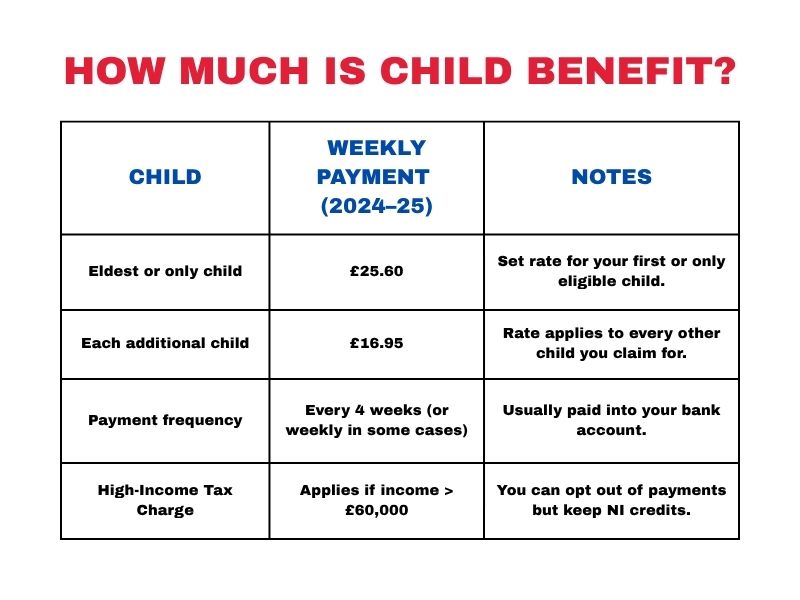
It’s important to know that these payments are not affected by your savings or any other income. However, if you or your partner earn over £60,000 a year, you might need to pay the High-Income Child Benefit Tax Charge. You can choose not to receive the money but still fill out the claim form to protect your entitlement to National Insurance credits.
How to Claim Child Benefit
Claiming child benefit is simple if you follow the right steps. It’s best to apply as soon as your child is born or you become responsible for them.
Step-by-step guide
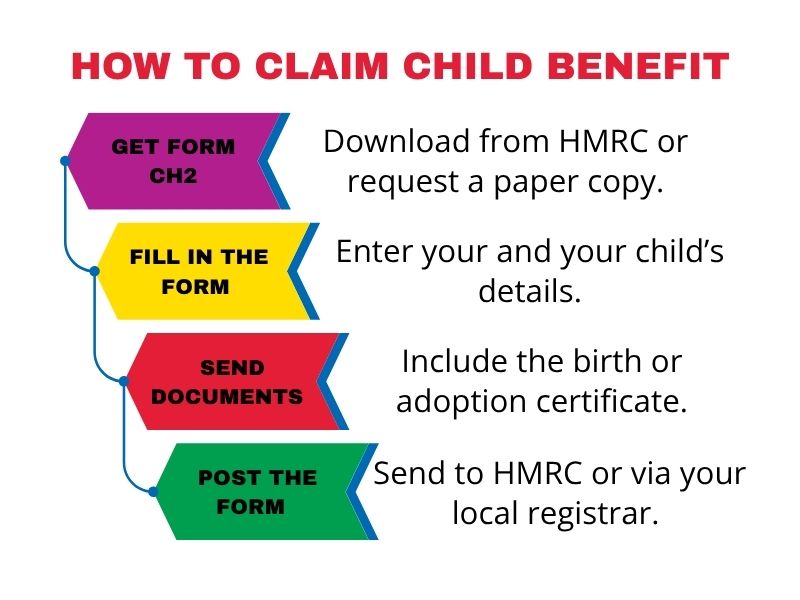
- Get the form CH2 — You can download it from the HMRC website or ask for a paper form.
- Complete the form — Fill in all the details about you and your child.
- Send supporting documents — Include the child’s original birth certificate or adoption certificate.
- Submit the form — Post it to the address shown on the form. If you register your baby’s birth at the same time, you might be able to submit your claim through the local registrar.
Can I claim online?
If your child was born in the UK, and you have a Government Gateway account, you may be able to apply online through HMRC’s website.
Always keep copies of any documents you send, and if you post your claim, consider using recorded delivery.
When to Claim Child Benefit
It’s best to claim child benefit as soon as possible. This ensures you receive payments from the earliest eligible date and don’t miss out on National Insurance credits.
When should you apply?
- You can claim right after your child is born or comes to live with you.
- If you delay, don’t worry claims can be backdated for up to 3 months.
Why claim early?
- You secure financial support quickly.
- You protect your entitlement to National Insurance credits, which help build your State Pension.
- You avoid gaps that could affect future benefits.
Even if you decide not to receive the actual payments because of the High-Income Child Benefit Tax Charge, submitting a claim ensures you still receive the credits.
High-Income Charge and Other Considerations
If you or your partner earns more than £60,000 a year, you may need to pay the High-Income Child Benefit Tax Charge. This charge effectively reduces the benefit you receive, depending on how much you earn over that threshold.
What are your options?
- Still claim, but pay the charge: You can receive the payments and pay the tax charge through your Self Assessment tax return.
- Opt out of payments: You can choose not to get the payments but still register your claim. This way, you protect your right to National Insurance credits.
Other important points
- Tell HMRC about any changes, like:
- Your address or bank details.
- Changes in your child’s living arrangements.
- If your income crosses the £60,000 threshold.
- Remember: Failing to update HMRC can lead to overpayments or penalties.
How Long Does It Take?
After you submit your child benefit claim, HMRC will process it and arrange payments if you are eligible. The time it takes can vary.
Standard processing time
- Most claims are processed within 6 to 12 weeks.
- If additional information is needed, or documents are missing, it could take longer.
What can cause delays?
- Incomplete or incorrect forms.
- Missing original birth or adoption certificates.
- Changes in family circumstances that need extra checks.
Useful Tips for Claiming Child Benefit
Making a smooth child benefit claim is easier when you’re well-prepared. Follow these tips to avoid common mistakes and speed up the process.
Top tips
- Apply early: Don’t wait, start your claim as soon as possible after the child’s birth or arrival.
- Keep documents ready: Have your child’s birth or adoption certificate and your bank details to hand.
- Use the right form: Always use the latest CH2 form from HMRC’s official website.
- Check before sending: Review your form carefully to ensure no sections are missed or filled incorrectly.
- Consider recorded delivery: This helps confirm your documents reach HMRC safely.
- Register the claim even if opting out: This secures National Insurance credits for your State Pension.
Need help?
If you’re unsure at any stage, contact HMRC’s Child Benefit helpline or check the official GOV.UK website for guidance.
Conclusion
Claiming child benefit is a simple yet important step to support your family’s finances. Whether you’re a new parent or taking responsibility for a child, making a claim ensures you receive valuable payments or National Insurance credits.
Don’t delay, apply as soon as you can. Check your eligibility, gather your documents, and submit your claim to avoid missing out. If you need help, HMRC and trusted organisations offer clear guidance.
By understanding how child benefit works, you can secure the support your child deserves and protect your future benefits.
Written by [Ketan Borada / British Portal Team] – Founder of British Portal, dedicated to providing accurate and up-to-date information on UK public services and benefits.
Previous Post
Next Post







- Business
 5
5 - Cricket5
- Department for Education49
- Departments3
- Driving and Transport
 53
53 - Education45
- Finance6
- Football13
- Golf3
- Government
 108
108 - Guides1
- Health
 5
5 - Health4
- International Politics9
- Law and Justice31
- Money and Tax23
- National Politics4
- News68
- Politics6
- Sports38
- Technology5
- Tennis3
- Transportation4
- Uncategorized4
- Visa
 17
17 - Visas and Immigration
 24
24 - Weather1