Car ownership cost surprises many drivers once the excitement of purchase fades. It’s not just the price tag or the fuel bills, there’s a web of hidden costs that quietly add up. From insurance and depreciation to maintenance and taxes, the total cost of ownership can be far more than expected.
In this guide, we’ll break down all the ownership costs that come with having a vehicle, helping you plan ahead and avoid nasty surprises.
Fuel, Maintenance & Repairs
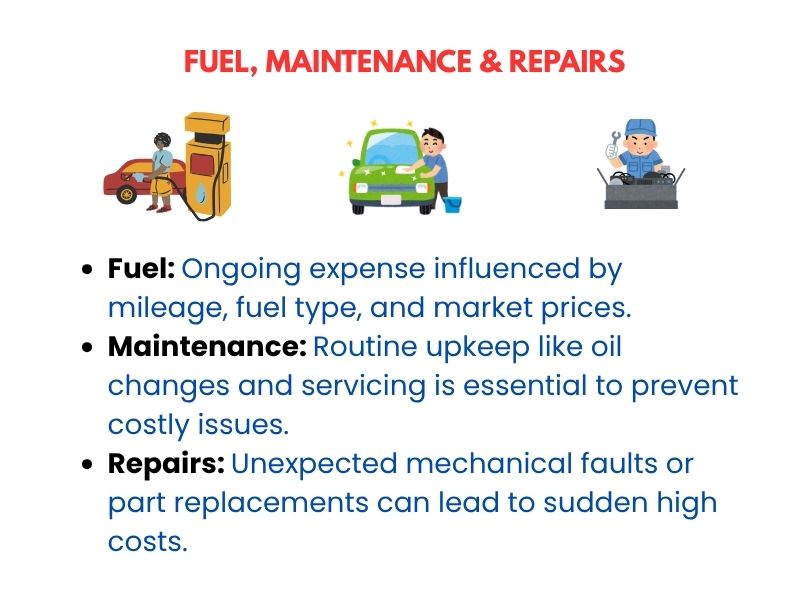
Fuel prices fluctuate often, but they remain a major car ownership cost. On average, UK drivers spend around £1,200–£1,500 annually on fuel. The figure varies with your car’s efficiency, mileage, and petrol prices.
Routine maintenance is another major outlay. Simple services – oil changes, filters, and checks, can cost £150 to £300 a year. But unexpected repairs can quickly add up. Tyre replacements, brake pads, and clutch issues might push your ownership costs to over £500 yearly.
Skipping regular maintenance might save cash short-term but often leads to higher bills later. This makes budgeting for both routine care and occasional repairs vital to understanding the cost owning a car.
How Car Ownership Cost Affects Insurance Premiums
Insurance is required by law, and its cost varies by age, driving record, and location. For new drivers, annual premiums often exceed £1,000. Even experienced drivers might pay £400–£600 per year.
Your vehicle type matters too. A high-performance car or one without modern safety features may come with higher premiums. Comparison sites help, but always read the fine print. Opting for a cheaper policy might result in higher excess fees or limited coverage, adding to your total cost of ownership if things go wrong.
Tax, MOT & Depreciation Impact on Car Ownership Cost
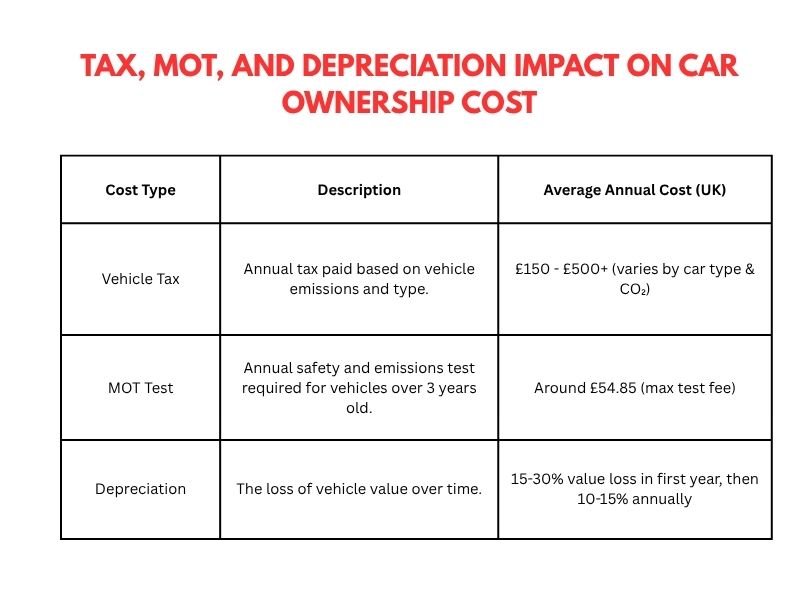
Road tax, officially known as Vehicle Excise Duty (VED), depends on your car’s CO₂ emissions. Zero-emission vehicles may be tax-free, but petrol or diesel cars can cost up to £165–£585 per year.
The MOT test, required annually for vehicles over three years old, typically costs £40–£55. If your car fails, repairs could cost hundreds more, further increasing your car ownership cost.
Depreciation is one of the largest hidden costs. A new car loses around 40–60% of its value in the first three years. That’s thousands of pounds you’ll never recoup, making depreciation a silent yet significant factor in the total cost of ownership.
Financing and Interest Charges
Many drivers buy cars with loans or hire purchase agreements. While spreading payments helps budgeting, it adds interest fees to the cost owning a car.
Interest rates vary, often ranging from 3% to 15% APR depending on credit scores and loan terms. Over several years, this interest can add thousands of pounds to the total ownership costs.
Leasing a car can reduce upfront costs but may have mileage limits and penalties, which can increase your total cost of ownership if you’re not careful.
Vehicle Tax and Its Impact on Ownership Costs
Vehicle tax is a mandatory fee that adds to the total car ownership cost. The amount you pay depends on your car’s emissions, engine size, and fuel type. Newer, low-emission vehicles generally attract lower tax rates.
Failing to pay vehicle tax can lead to hefty fines and penalties, increasing your cost of owning a car significantly. Staying up-to-date with tax payments is essential to avoid unexpected charges.
Conclusion
Understanding the car ownership cost goes far beyond just the sticker price. From depreciation and insurance premiums to fuel, maintenance, and unexpected hidden expenses, the total cost of ownership can surprise many drivers.
Being aware of these factors helps you plan better financially and make smarter decisions when buying or maintaining a vehicle. Ultimately, knowing the full scope of ownership costs ensures you avoid unwelcome surprises and enjoy your car with peace of mind.
Written by [Ketan Borada / British Portal Team] – Founder of British Portal, dedicated to providing accurate and up-to-date information on UK public services and benefits.
Previous Post
Next Post







- Business
 5
5 - Cricket5
- Department for Education49
- Departments3
- Driving and Transport
 53
53 - Education45
- Finance6
- Football13
- Golf3
- Government
 108
108 - Guides1
- Health
 5
5 - Health4
- International Politics9
- Law and Justice31
- Money and Tax23
- National Politics4
- News68
- Politics6
- Sports38
- Technology5
- Tennis3
- Transportation4
- Uncategorized4
- Visa
 17
17 - Visas and Immigration
 24
24 - Weather1