
Across the UK, there’s a constant call for more homes. Councils are under significant pressure to meet challenging housing targets, but identifying suitable land and navigating the planning process can be complex and slow. One major hurdle often lies hidden away: decades of historical planning records, often stored on paper or microfiche, making vital information difficult and time-consuming to access.
Now, an experimental approach using Artificial Intelligence (AI) is being trialled, offering a potential glimpse into a more efficient future for local planning departments.
The Challenge: Mountains of Paperwork Blocking Progress
Imagine filing cabinets stretching for miles, or boxes filled with delicate old maps and documents. For many council planning departments, this isn’t far from reality. Over the decades, huge amounts of information about land use, planning decisions, building control, and site histories have accumulated.
This information is crucial for:
- Identifying land suitable for new housing developments.
- Understanding past planning decisions and conditions tied to specific sites.
- Checking for potential constraints like environmental protections or historical designations.
- Processing new planning applications efficiently and accurately.
However, accessing this information currently relies heavily on manual searches. Planning officers might spend hours, or even days, sifting through physical archives or poorly indexed digital scans. This creates bottlenecks, leading to:
- Delays in the planning process.
- Difficulties in quickly identifying potential development sites.
- Increased workload for already stretched council staff.
- Slower delivery of much-needed housing.
Essentially, valuable data that could help speed up house building is often locked away, hard to find, and slow to use.
Introducing the AI Experiment: Digitising the Past
To tackle this challenge, the UK government’s Department for Levelling Up, Housing and Communities (DLUHC) is backing trials involving new AI software in several local councils.
What is this AI doing?
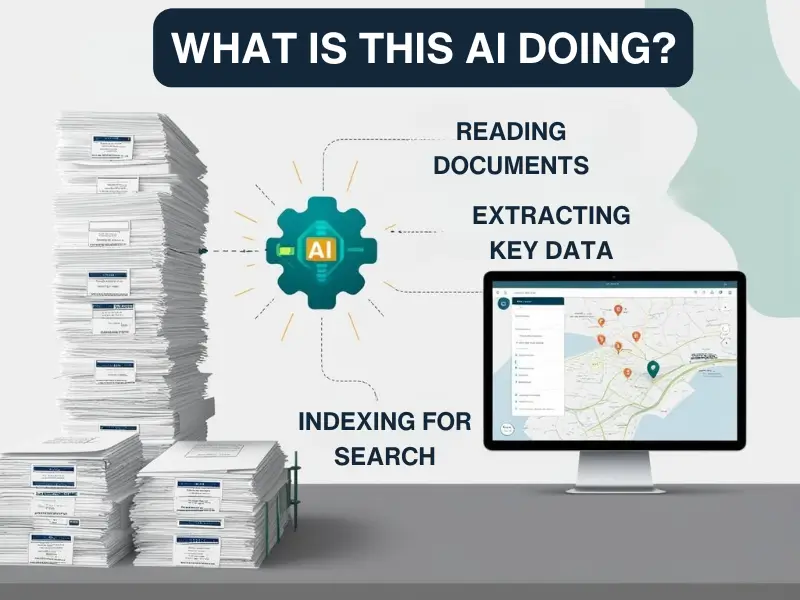
It’s important to understand this isn’t about AI making planning decisions itself. Instead, this experimental technology focuses on the specific task of dealing with those historical records:
- Reading Documents: The AI is designed to automatically ‘read’ and understand various types of planning documents, even older or varied formats.
- Extracting Key Data: It aims to identify and pull out crucial pieces of information, like site boundaries, addresses, planning reference numbers, dates, and specific conditions mentioned in the text.
- Indexing for Search: The goal is to create a comprehensive, searchable digital database from these old records.
Think of it like teaching a computer to rapidly read, sort, and catalogue an entire library’s worth of planning history, making it instantly searchable with a few clicks.
Which councils are involved?
These initial trials, part of the government’s wider £3.25 million PropTech (Property Technology) Engagement Fund, are taking place in:
- Southwark Council
- Nottingham City Council
- Newcastle-under-Lyme Borough Council
These councils are testing how effectively the AI can handle their vast archives and whether it genuinely speeds up access to information.
Why This Matters: Potential Benefits for Housing and Efficiency

If these AI experiments prove successful, the potential benefits could be significant:
- Faster Land Identification: By making records instantly searchable, councils could identify suitable brownfield sites or underused land for development much more quickly.
- Speeding Up Planning Applications: Accessing historical site data faster could reduce delays in processing new applications, helping developers get started sooner.
- More Informed Decisions: Comprehensive digital data could lead to better-informed planning policies and strategies.
- Freeing Up Council Resources: Automating the time-consuming task of record searching could free up planning officers to focus on more complex assessment work and community engagement.
- Potential for Cost Savings: Over time, increased efficiency could lead to better use of council budgets and taxpayer money.
Ultimately, the hope is that by streamlining this crucial background work, the entire process of planning and delivering new homes can become faster and more effective.
Part of a Bigger Picture: Government Strategy and Council Needs
This AI digitisation project isn’t happening in isolation. It connects to broader trends and strategies:
Central Government’s AI Push:
The Department for Levelling Up, Housing and Communities (DLUHC) – the same department backing these trials – has recently established a dedicated Directorate for Analysis, AI and Automation.
- What does this mean? It shows the government’s strong commitment to using AI and data science, especially in housing and planning.
- Why is it relevant? The project shows how the government is using technology to improve operations and service delivery. This isn’t just a small, random experiment; it’s aligned with a larger vision.
Councils Seeking Efficiency and Modernisation:
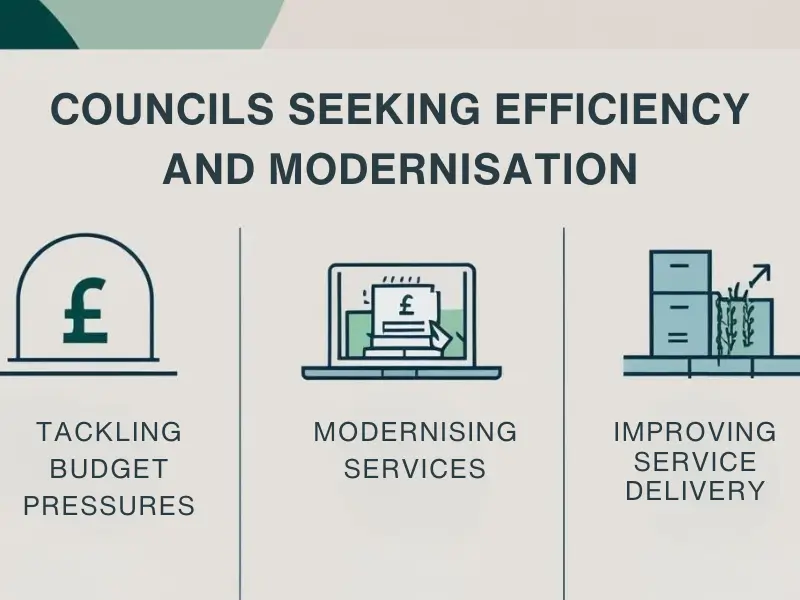
Local councils across the UK are increasingly looking towards technology like AI for broader reasons:
- Tackling Budget Pressures: Councils face ongoing financial challenges. AI offers the potential to automate tasks, improve efficiency, and reduce operational costs, fitting into a wider context where the public sector is exploring AI for significant savings.
- Modernising Services: Many councils grapple with outdated “legacy” IT systems and paper-based processes. Governments and organisations use AI to modernise systems and deliver services more effectively in the digital age.
- Improving Service Delivery: The ultimate aim is often to provide faster, more responsive services to residents, whether it’s processing planning applications or handling other council functions.
The AI planning record project is, therefore, a specific example of this wider trend where councils, supported by central government initiatives, are exploring technology to overcome long-standing operational challenges.
Important Considerations: Hopes vs. Hurdles
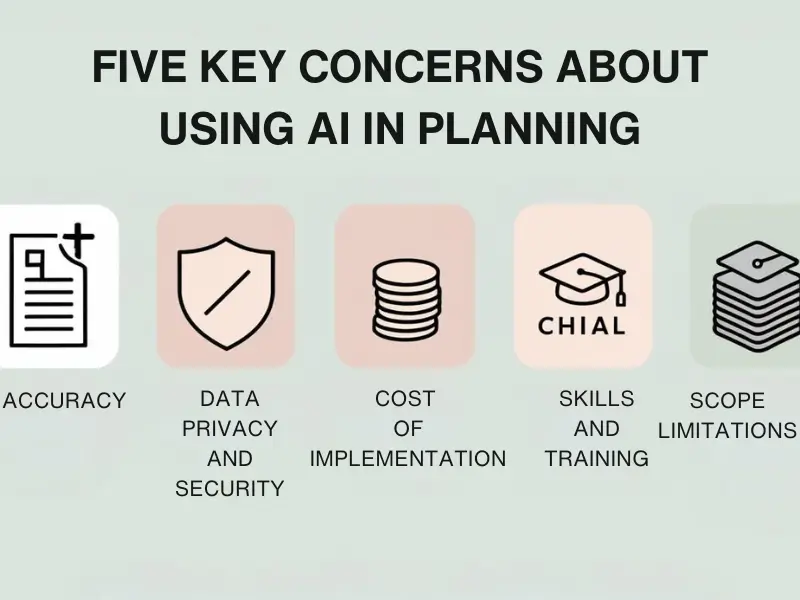
While the potential is exciting, it’s crucial to remember that the government itself describes this AI software as “experimental.” Success is not guaranteed, and several factors need careful consideration:
- Accuracy: How reliable is the AI at reading and interpreting old, potentially damaged, or handwritten documents? Errors in digitisation could lead to incorrect data and flawed decisions down the line. Rigorous testing and quality control will be vital.
- Data Privacy and Security: Digitising historical records, which may contain sensitive information, raises questions about data protection and cybersecurity. Robust measures will be needed.
- Cost of Implementation: While AI might offer long-term savings, there’s an upfront cost in acquiring the technology, setting it up, and potentially integrating it with existing council systems.
- Skills and Training: Council staff will need training to use these new digital tools effectively and manage the resulting data.
- Scope Limitations: This specific AI application focuses on accessing existing information faster. It doesn’t solve other complex planning challenges like infrastructure provision, community objections, or viability assessments.
What Could This Mean for UK Residents?
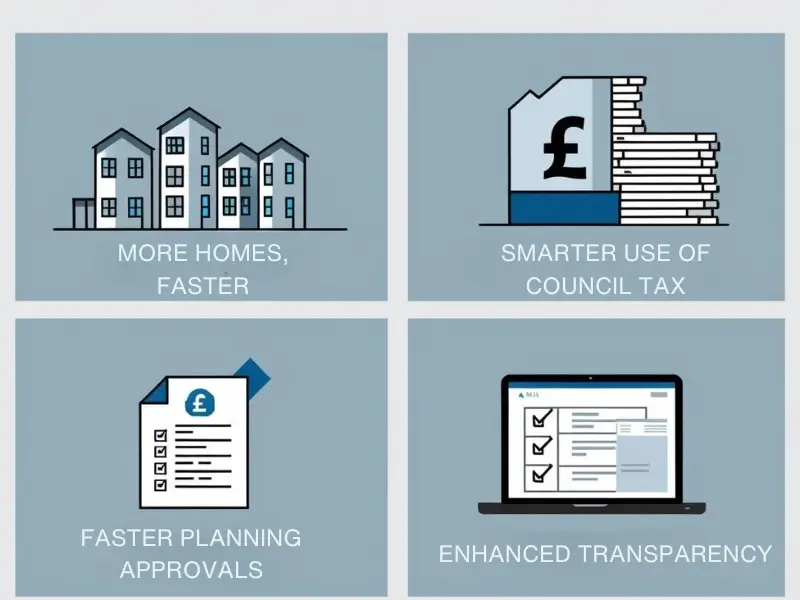
So, why should the average person care about AI reading old council files? If these trials are successful and the technology is adopted more widely, it could eventually mean:
- Potential for More Homes Built Faster: Reducing planning delays could contribute, alongside other measures, to increasing the supply of new homes in local areas.
- More Efficient Use of Council Tax: Councils can use their resources more effectively when they spend less time on manual searches.
- Improved Planning Services: A smoother, faster planning process could benefit homeowners looking to extend their property as well as larger developers.
- Greater Transparency: Over time, fully digitising planning data could make it easier for people to access planning info online, even if that’s not the main goal right now.
Looking Ahead: Watching the Pilots
The key next step is to monitor the outcomes of the pilot schemes in Southwark, Nottingham, and Newcastle-under-Lyme. We need to see:
- Does the AI genuinely save time and resources?
- How accurate is the digitisation process?
- What are the practical challenges encountered by the councils?
As a result, the trial results will help show if this technology can realistically help councils manage old records and meet housing targets.
This experimental use of AI in planning archives represents a small but potentially significant step. Experts are using modern technology to improve public services and help solve the UK’s housing shortage. While it’s early days, it’s a development worth watching.
Read more about Freedom of Information Request UK – How to Apply Easily
It speeds up accessing old planning records. Manual searches through paper or microfiche are slow, causing delays and blocking house building.
No. It reads old documents and extracts key data (sites, dates, rules). It builds a searchable database but doesn’t judge applications.
Initial government-backed trials are underway at Southwark Council, Nottingham City Council, and Newcastle-under-Lyme Borough Council.
Faster land identification, quicker planning approvals, better decisions, freed-up staff time, cost savings, and ultimately, faster housing delivery.
Yes. Accuracy with old documents, data privacy, setup costs, staff training, and the fact it only solves record access issues are key considerations.
Source / Ref.: Gov.uk Contains public sector information licensed under Open Government Licence v3.0.
Written by [Ketan Borada / British Portal Team] – Founder of British Portal, dedicated to providing accurate and up-to-date information on UK public services and benefits.Related Posts



Previous Post
Next Post







- Business
 5
5 - Cricket5
- Department for Education49
- Departments3
- Driving and Transport
 53
53 - Education45
- Finance6
- Football13
- Golf3
- Government
 108
108 - Guides1
- Health4
- Health
 5
5 - International Politics9
- Law and Justice31
- Money and Tax23
- National Politics4
- News68
- Politics6
- Sports38
- Technology5
- Tennis3
- Transportation4
- Uncategorized4
- Visa
 17
17 - Visas and Immigration
 24
24 - Weather1