To become a driving instructor in the UK, you’ll embark on a rewarding career that offers flexibility, independence, and the chance to make a real impact. Teaching learners to drive not only allows you to build a fulfilling business but also provides an essential life skill that can change lives.
However, before you can offer driving lessons for payment, you must meet certain qualifications and DVSA approval standards. This guide covers everything you need to know in 2025, from eligibility requirements to earning potential as a certified instructor.
Eligibility Requirements to Become a Driving Instructor
To become a driving instructor in the UK, you must meet specific legal and professional criteria set by the DVSA. These ensure you’re safe, skilled, and suitable for teaching others on the road.
Basic Legal Requirements
You must:
- Be at least 21 years old.
- Have held a full UK or EU driving licence for a minimum of 3 years.
- Be able to read a standard number plate from 26.5 metres (with glasses/contact lenses if needed).
You must also be legally allowed to work in the UK.
Driving Record Requirements
The DVSA is strict about your driving history:
- You must have 6 or fewer penalty points on your licence.
- You must not have been disqualified from driving in the last 4 years.
- Your driving record should be clean and consistent with safe driving behaviour.
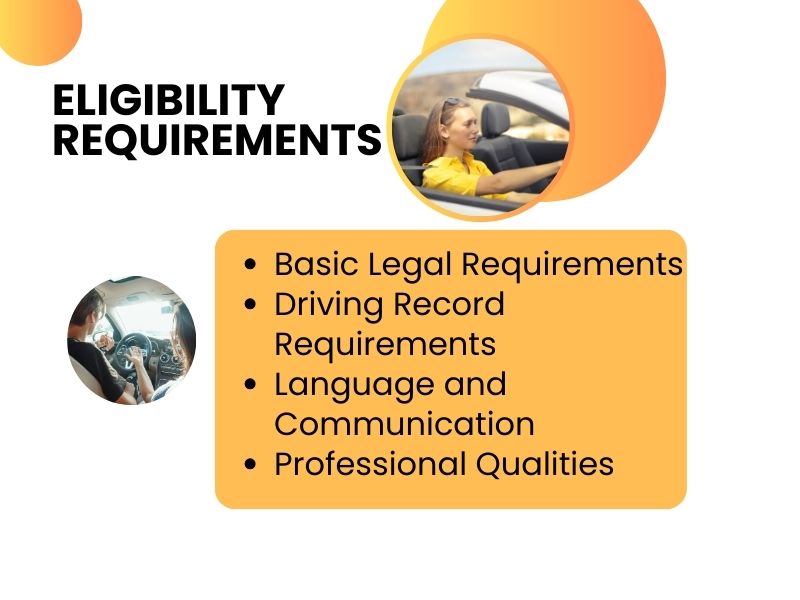
Language and Communication
Fluency in English is crucial. You need strong communication skills to explain road rules, correct errors, and guide learners safely. There is no formal language test, but this is assessed indirectly during training and the Part 3 instructional ability test.
Professional Qualities
You must be:
- Patient and calm under pressure.
- Confident in explaining driving theory and techniques.
- Able to assess and respond to different learner needs.
ADI Qualification Tests Explained for Becoming a Driving Instructor
To become an Approved Driving Instructor (ADI), you must pass three qualifying tests set by the DVSA. These are designed to assess your knowledge, driving skills, and ability to teach.
Part 1: Theory Test
This part checks your understanding of:
- Road safety and the Highway Code
- Instructional techniques
- Driving law and hazard awareness
It includes:
- 100 multiple-choice questions
- Hazard perception test (14 video clips)
You need:
- At least 85/100 on the questions (with minimum in each section)
- At least 57/75 in hazard perception
You can take Part 1 as many times as needed (valid for 2 years).
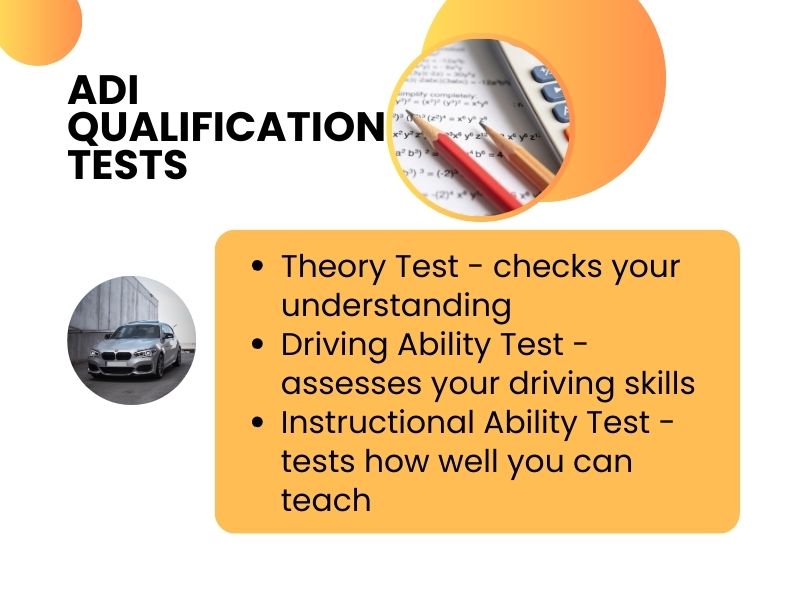
Part 2: Driving Ability Test
This test assesses your own driving skills. It’s similar to an advanced driving test and includes:
- An eyesight check
- Five manoeuvres (e.g. reverse, emergency stop)
- Driving on different road types
You’re allowed:
- Up to 6 driving faults
- No serious or dangerous faults
You have 3 attempts to pass.
Part 3: Instructional Ability Test
The final part tests how well you can teach a real pupil:
- A DVSA examiner observes a 45-minute driving lesson.
- You must show how you plan, deliver, and adapt instruction.
- Focus on risk management and teaching effectiveness.
Scoring:
- Grade A or B is a pass
- Grade F is a fail
Like Part 2, you only get 3 attempts within the 2-year window from passing Part 1.
Training and Preparation to Become a Driving Instructor
Before taking the ADI tests, most candidates choose to complete a driving instructor training course. This helps you prepare thoroughly for all three parts of the qualification process.
Types of Training Courses
You can choose from:
- Franchise Training Schemes
- Offered by big companies like AA, RED Driving School, or Bill Plant.
- Often come with a job guarantee once you qualify.
- May include vehicle lease and business support.
- Independent ADI Trainers
- More personalised and flexible.
- Usually cheaper than large franchises.
- Ideal for learners who prefer one-on-one tuition.
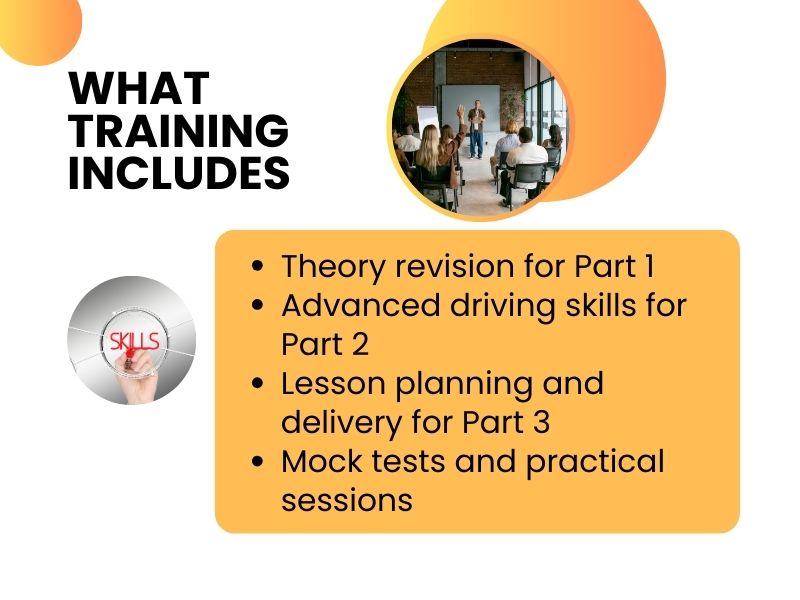
What Training Includes
Typical driving instructor training covers:
- Theory revision for Part 1
- Advanced driving skills for Part 2
- Lesson planning and delivery for Part 3
- Mock tests and practical sessions
You can choose between in-person, online, or blended learning formats.
Training Costs
- On average, instructor training costs £1,500–£4,000.
- Some providers offer pay-as-you-train plans.
- Be wary of offers that sound too cheap quality matters for your success.
Optional: Apply for a Trainee Licence
After passing Part 2, you can apply for a trainee driving instructor licence (pink badge). This allows you to:
- Teach learners for up to 6 months
- Gain real experience before Part 3
You must do at least 40 hours of Part 3 training before applying.
Costs of Becoming a Driving Instructor
Understanding the full cost of becoming a driving instructor helps you plan ahead and avoid surprises. Let’s break it down.
Breakdown of Key Costs
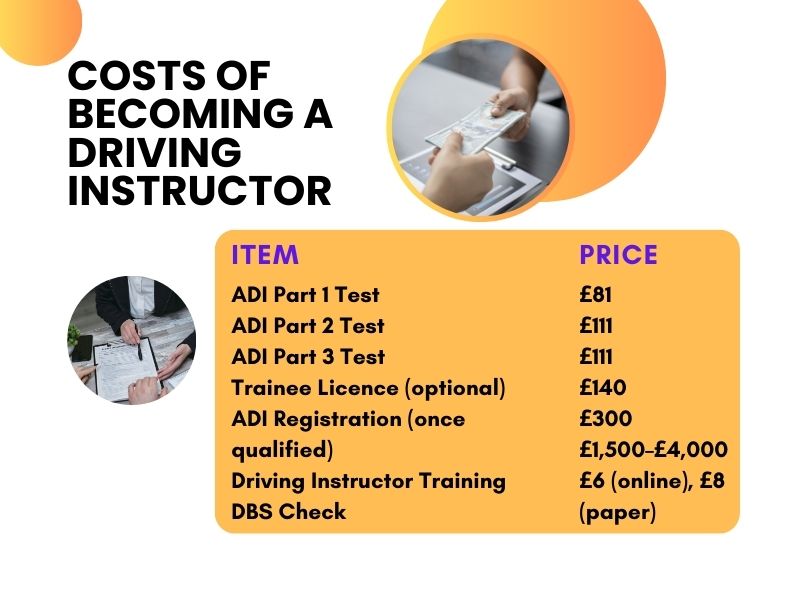
Total Estimated Cost: Between £2,200 and £4,700
Additional Costs
Don’t forget:
- Car insurance (private or dual control)
- Fuel and maintenance
- Learner car modifications (like dual pedals)
- Teaching materials (apps, worksheets, mirrors)
Ways to Save
- Compare training providers for best value
- Use a personal car for Part 2 (if eligible)
- Buy second-hand teaching equipment
Registering as a Driving Instructor in the UK
Once you’ve passed all qualifying tests, the final step is registering as an Approved Driving Instructor (ADI).
How to Register
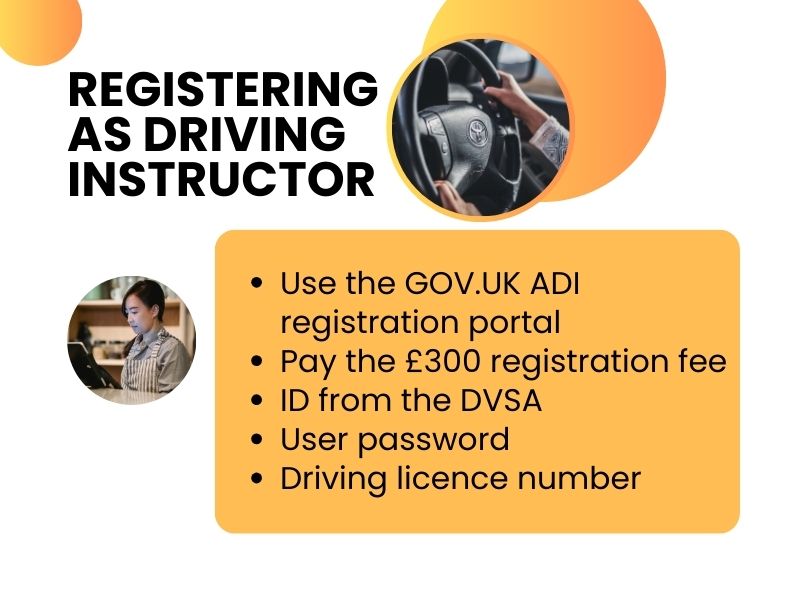
You must apply to join the ADI register within 12 months of passing the Part 3 test.
Apply Online:
- Use the GOV.UK ADI registration portal
- Pay the £300 registration fee
You’ll receive your ADI certificate (badge) by post. Display this in your car’s windscreen when teaching.
ADI Badge Explained
Your badge proves you’re legally registered. There are two types:
- Green Badge – Full ADI (valid for 4 years)
- Pink Badge – Trainee licence holder (valid for 6 months)
Re-Registering
You must renew your ADI registration every 4 years and keep your standards up through check tests and CPD (continued professional development).
Earning Potential & Career Options
Being a driving instructor offers flexible hours and solid earning potential—especially if you manage your own business.
How Much Can Driving Instructors Earn?
Earnings vary based on location, experience, and hours worked. Here’s a general breakdown:
| Work Type | Estimated Weekly Income | Annual Income (Est.) |
|---|---|---|
| Part-time (20 hrs) | £400 – £600 | £20,000 – £30,000 |
| Full-time (40 hrs) | £800 – £1,200 | £40,000 – £60,000+ |
Factors that influence income:
- Your hourly rate (£25–£35 typical range)
- Whether you’re franchised or independent
- Fuel and car maintenance costs
Career Progression
Options beyond standard lessons:
- Train other instructors – Become an ORDIT registered trainer
- Fleet training – Teach company drivers
- Advanced driving tuition – E.g., Pass Plus, motorway lessons
- Specialised instruction – E.g., disability-adapted driving
Self-Employed vs. Franchise
- Self-employed: Keep all earnings, manage your diary and costs
- Franchise: Pay a weekly fee for branding, admin, marketing, and pupil supply
Choose the model that suits your goals and lifestyle.
Maintaining Your ADI Status
Once you’ve passed your tests and become an Approved Driving Instructor (ADI), it’s important to maintain your ADI status to continue offering driving lessons legally.
ADI Licence Renewal
Your ADI licence is valid for four years, after which you’ll need to renew it to keep teaching. The renewal process involves:
- Paying a renewal fee of £300.
- Completing a DBS check (Disclosure and Barring Service) to ensure there’s no criminal record.
- Passing a standards check, where your instructional ability is assessed during an actual driving lesson.
Standards Check
The standards check is a crucial part of maintaining your ADI status. During this assessment, an examiner observes how well you:
- Plan and deliver a lesson
- Handle student concerns
- Manage risk during the lesson
To pass, you must demonstrate excellent teaching skills and meet DVSA expectations. If you fail, you’ll have the chance to reattempt it, but multiple failures could result in removal from the ADI register.
Displaying Your ADI Badge
When you’re a registered ADI, it’s a legal requirement to display your ADI badge during lessons. Your students should be able to see it clearly, as it’s your proof of being a qualified instructor.
Challenges and Benefits of Becoming a Driving Instructor
Pros
- Flexible Hours: You can choose your work schedule.
- Be Your Own Boss: Manage your own business or franchise.
- High Demand: Consistent need for instructors, especially post-pandemic.
- Job Satisfaction: Rewarding work helping learners pass their driving tests.
- Career Growth: Opportunities to specialise or expand into training roles.
Cons
- Initial and Ongoing Costs: Training, exams, and car maintenance can be expensive.
- Irregular Income: Earnings can fluctuate, especially when starting.
- Unsociable Hours: Work is often needed on evenings or weekends.
- Pressure: Responsibility for student safety can be stressful.
- Admin Work: Managing schedules and records takes time, especially for independents.
Becoming a driving instructor in the UK offers a rewarding and flexible career path. It requires meeting eligibility criteria, undergoing rigorous training, and passing the ADI tests. Once qualified, you can work independently or within a driving school, with opportunities to specialise in various areas or progress into training others. With the right skills, dedication, and passion for teaching, this profession can offer both job satisfaction and financial stability.
FAQs
It typically takes 6 to 12 months, depending on training speed and test availability.
The total cost can range from £1,600 to £4,000, including training and test fees.
Yes, but you must undergo comprehensive training and pass the ADI tests.
Yes, you must renew it every four years and pass a standards check.
Earnings typically range from £25,000 to £40,000 per year, depending on hours and location.
Source / Ref.: Gov.uk Contains public sector information licensed under Open Government Licence v3.0.
Written by [Ketan Borada / British Portal Team] – Founder of British Portal, dedicated to providing accurate and up-to-date information on UK public services and benefits.Related Posts

Previous Post
Next Post




- Business
 5
5 - Cricket5
- Department for Education49
- Departments3
- Driving and Transport
 53
53 - Education45
- Finance6
- Football13
- Golf3
- Government
 108
108 - Guides1
- Health
 5
5 - Health4
- International Politics9
- Law and Justice31
- Money and Tax23
- National Politics4
- News68
- Politics6
- Sports38
- Technology5
- Tennis3
- Transportation4
- Uncategorized4
- Visa
 17
17 - Visas and Immigration
 24
24 - Weather1