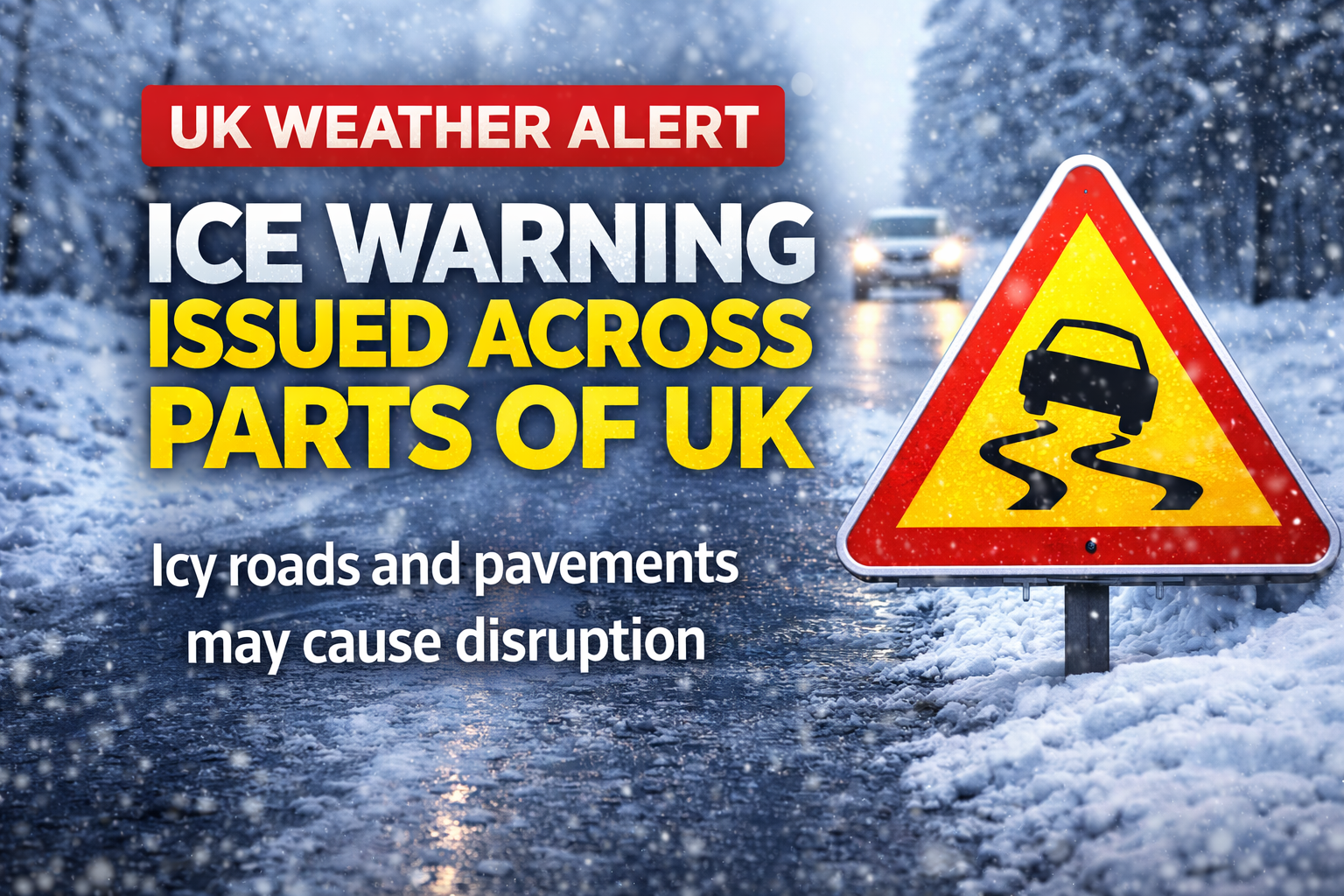
As winter conditions tighten their grip across the UK, the Met Office has issued yellow ice warnings for several regions in England, Wales and Northern Ireland. The warnings come as temperatures drop sharply following days of rain, raising concerns about dangerous icy surfaces and possible travel disruption. Authorities are urging people to remain cautious, especially during early morning and late-night hours when ice is most likely to form. UK Weather Alert: Ice Warning Issued Across Parts of UK as temperatures drop sharply following recent rainfall. The Met Office has urged people to stay cautious, warning of icy roads, pavements and possible travel disruption in affected areas.
Why Have Ice Warnings Been Issued?
The recent spell of heavy rainfall across many parts of the UK has left roads, pavements and open areas damp. With colder air now moving in, temperatures are expected to fall close to or below freezing overnight. When wet surfaces freeze suddenly, ice can form quickly, often without being visible. This creates hazardous conditions for pedestrians, cyclists and drivers alike, even in areas where snowfall has not occurred.
Regions Under Ice Alert
1.England and Wales
A yellow ice warning has been issued for large parts of Wales and South West England, beginning late Sunday night and continuing into Monday morning. During this period, untreated roads and walkways may become slippery.
2. Northern Ireland
Northern Ireland is also under a yellow warning, with icy conditions expected from Sunday evening through early Monday. The combination of wet ground and falling temperatures increases the likelihood of widespread icy patches.
Potential Impact on Travel and Daily Life
The Met Office has warned that icy conditions could lead to:
- Slippery roads and pavements
- Difficult driving conditions, especially during early commutes
- Increased risk of accidents and minor injuries
- Delays to road travel and local transport
Drivers are advised to be particularly careful on side roads, bridges and rural routes, which are more likely to freeze and may not be treated in time. Pedestrians should also take extra care, as footpaths can become dangerous even when main roads appear clear.
Weather Pattern Behind the Sudden Freeze
Meteorologists explain that the icy conditions are the result of a rapid weather shift. After days of mild but wet weather, colder air has arrived, causing temperatures to drop overnight. This pattern is common during winter months, when rain followed by cold nights leads to frost and ice rather than snow. Even small drops in temperature can turn leftover moisture into ice, catching people off guard.
Safety Tips to Reduce Risk
To stay safe during the ice warning period, people are advised to:
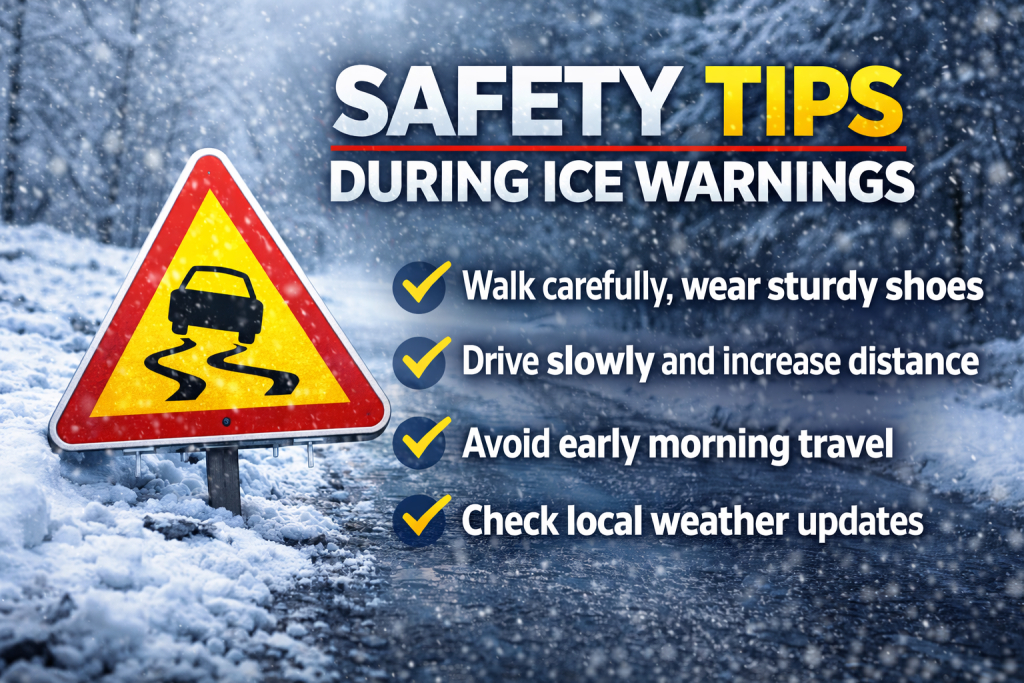
- Walk slowly and wear shoes with good grip
- Avoid unnecessary travel during early morning hours
- Drive cautiously and reduce speed
- Leave extra distance between vehicles
- Check local weather updates before heading out
Employers and schools may also need to remain flexible, particularly if conditions worsen overnight.
Conclusion
While yellow warnings indicate low to moderate risk, they should not be ignored. Icy conditions can develop suddenly and cause serious inconvenience or injury if precautions are not taken. As winter weather continues to fluctuate across the UK, staying informed and alert remains the best way to stay safe. Residents in affected areas are encouraged to monitor official weather updates and plan their movements carefully.UK Weather Alert: Ice Warning Issued Across Parts of UK as falling temperatures raise the risk of icy roads, pavements and travel disruption across several regions.
1. Why has the Met Office issued ice warnings?
Ice warnings have been issued because temperatures are dropping below freezing after recent rainfall. Wet surfaces are expected to freeze overnight, creating slippery and potentially dangerous conditions on roads and pavements.
2. Which areas are affected by the ice warning?
Parts of England, Wales and Northern Ireland are under a yellow ice warning. These regions are more likely to see icy patches, especially during late-night and early morning hours.
3. How long will the icy conditions last?
The ice warnings are expected to remain in effect from Sunday night through Monday morning. However, conditions may change depending on temperature and weather updates, so it is advised to keep checking official forecasts.
Written by [Ketan Borada / British Portal Team] – Founder of British Portal, dedicated to providing accurate and up-to-date information on UK public services and benefits.Previous Post
Next Post







- Business
 5
5 - Cricket5
- Department for Education49
- Departments3
- Driving and Transport
 53
53 - Education45
- Finance6
- Football13
- Golf3
- Government
 108
108 - Guides1
- Health
 5
5 - Health4
- International Politics9
- Law and Justice31
- Money and Tax23
- National Politics4
- News68
- Politics6
- Sports38
- Technology5
- Tennis3
- Transportation4
- Uncategorized4
- Visa
 17
17 - Visas and Immigration
 24
24 - Weather1