Assistive tech SEND pilots are changing how children with special educational needs experience learning in UK schools. The government has launched a £1.7 million programme to provide inclusive tools in over 4,000 schools across 32 local authorities. This initiative, part of a wider education reform, introduces a “lending library” model that allows schools to trial assistive devices before committing to purchases.
Children with SEND including those with autism, ADHD, and dyslexia will now have access to tools like reading pens, iPads, and communication aids. These resources not only support communication and comprehension but also build confidence and independence.
With rising demand for SEND services across the country, this pilot could be a game-changer in closing the accessibility gap in mainstream education.
Overview of the Assistive Tech Initiative
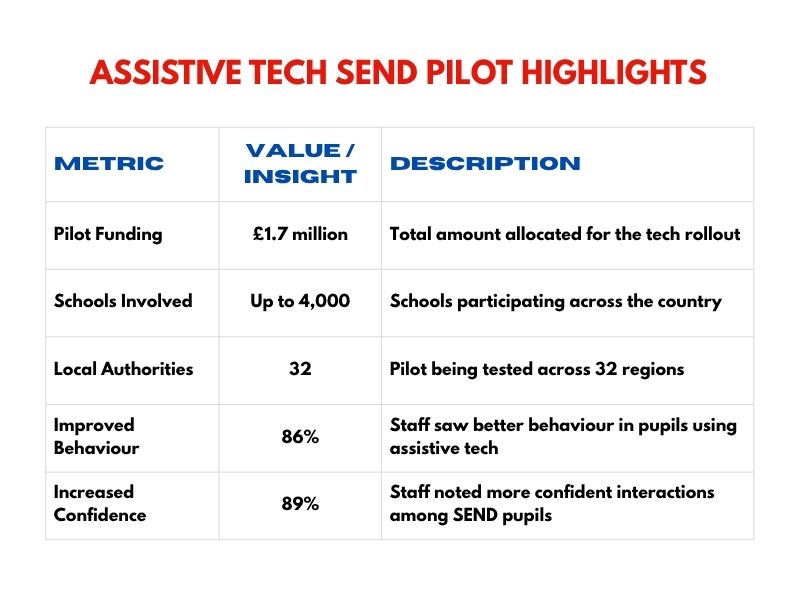
The assistive tech SEND initiative marks a major investment in educational equality. Backed by £1.7 million in funding, the pilot is being implemented across 32 local authorities and over 4,000 schools. Its core goal is to ensure that pupils with special educational needs and disabilities (SEND) receive tailored digital support early in their education journey.
This pilot takes a strategic approach. Schools can now borrow and trial various assistive technologies, such as:
- Reading pens for pupils with dyslexia
- iPads equipped with specialist apps
- Speech-to-text software
- Communication tablets for non-verbal children
These tools will be tested within classrooms before any purchasing decisions are made. This “try-before-you-buy” structure prevents resource waste and ensures that devices meet individual learning needs.
The scheme also supports teachers. By allowing staff to observe what works best, it empowers them to make informed decisions, resulting in more personalised and inclusive teaching strategies.
This assistive tech SEND pilot is not just about gadgets. It’s about using smart, accessible tools to bridge educational gaps and enhance the classroom experience for thousands of pupils.
Lending Library Model Expands Access
One of the most practical features of the scheme is its innovative lending library model. This approach gives schools the flexibility to test a range of learning tools before making any financial commitment. Within this model, the use of assistive tech SEND devices becomes more sustainable and strategic.
Schools can borrow tools like digital tablets, voice recognition software, and reading aids to assess how they fit specific student needs. Rather than investing in expensive technology that may not be effective, staff get to trial each device in real-world classroom settings.
This model also enables local authorities to share resources efficiently. A device that supports a non-verbal student in one school might later serve a child with autism in another. It’s a smart, scalable way to match technology to diverse needs.
Moreover, the lending system allows for training opportunities. Staff can learn how to integrate assistive tools seamlessly into lesson plans, which enhances their confidence in supporting SEND learners effectively.
By removing the pressure of permanent purchases, the assistive tech SEND lending model promotes responsible innovation where the focus remains on pupil outcomes, not product costs.
Targeted Benefits for SEND Pupils
While technology benefits all learners, the impact of assistive tech SEND tools is especially profound for children with complex needs. These tools are not just academic aids they’re bridges to better communication, deeper engagement, and increased independence.
For pupils with dyslexia, reading pens and audio-support apps help decode text quickly, boosting reading confidence. Students on the autism spectrum benefit from visual schedules and communication tablets that reduce anxiety and improve social interaction. Children with ADHD or concentration challenges gain from noise-cancelling headphones and distraction-free digital platforms.
Schools involved in the pilot are already reporting strong outcomes. Early feedback shows:
- 86% of staff saw improved behaviour
- 89% noticed enhanced confidence among SEND pupils
- Teachers observed greater participation and focus in daily tasks
By embedding assistive tech SEND tools into routine learning, educators are reshaping how support is delivered less reactive, more proactive. These resources give children the power to express themselves, keep pace with peers, and enjoy learning in a way that feels natural and inclusive.
Context: Rising Demand in the SEND Sector
The rollout of assistive tech SEND tools comes at a critical time for UK education. Demand for SEND support is rising faster than ever, placing immense pressure on schools, teachers, and local authorities.
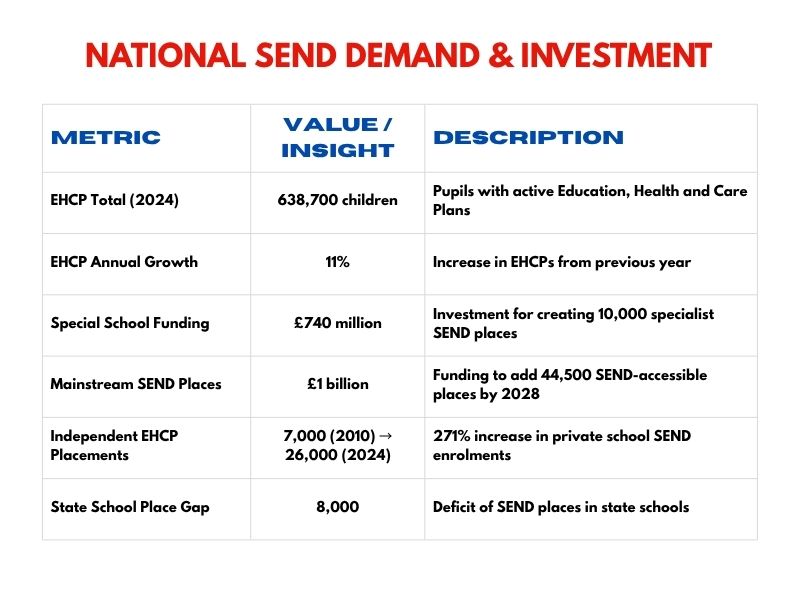
According to recent government figures, the number of pupils with Education, Health and Care Plans (EHCPs) has increased by 11% in the past year, reaching nearly 639,000 children. This growing population of learners with additional needs requires targeted resources and early support to prevent long-term educational gaps.
Mainstream schools often struggle to meet these rising demands without scalable tools. That’s where digital solutions play a vital role. By introducing assistive tech SEND support through lending libraries, schools can begin offering immediate and customised help without waiting for full diagnostic or funding delays.
In addition, early access to the right tools reduces the risk of academic underachievement and social isolation. The right device at the right time can transform a pupil’s school experience from one of frustration to one of inclusion and engagement.
This initiative, therefore, doesn’t just respond to numbers it addresses real, urgent needs in the classroom.
Wider SEND Reform Initiatives
While the assistive tech SEND pilot is a breakthrough, it’s just one part of the government’s broader reform agenda. A national effort is underway to transform SEND education, with a focus on earlier intervention, better classroom environments, and increased specialist places.
The Department for Education has committed £740 million to expand special needs capacity across England. This investment will help create 54,500 new school places for children with SEND offering more tailored environments, smaller class sizes, and specialised teaching staff.
In addition, the government’s SEND and AP Improvement Plan aims to reduce delays in support and give families more confidence in the system. This includes:
- National standards for SEND identification and response
- Streamlined processes for EHCPs
- Focused teacher training on inclusive education
- Better accountability and oversight in local authorities
Crucially, technology is being embedded into this vision. With assistive tech SEND tools already proving effective in pilot schools, future policies will likely integrate these digital resources as standard, not optional extras.
This layered reform blending infrastructure, strategy, and tech ensures that SEND pupils are no longer afterthoughts but central to classroom innovation.
Technology in the Broader SEND Ecosystem
In today’s classrooms, digital tools have become essential not just for learning, but for levelling the playing field. The impact of assistive tech SEND devices extends beyond isolated support plans; they are reshaping entire learning ecosystems.
These technologies encourage independence in children who might otherwise depend heavily on classroom aides. For instance, speech-to-text apps allow non-verbal students to engage directly with peers and teachers. Screen readers and audio description tools enable pupils with visual impairments to explore content without delay. This autonomy fosters confidence and promotes a sense of belonging.
What’s more, the benefits of assistive technology often spill over into general teaching practices. When a class uses visual timetables or noise-reducing tools, the entire group benefits not just those with diagnosed conditions. In this way, assistive tech SEND innovations support inclusive teaching for all learners.
Parents also report improved communication between home and school when tech is involved. Devices with shared learning logs or homework tracking tools create stronger links between families and teachers, ensuring everyone works toward the same goals.
Ultimately, embedding these tools within broader strategies helps create a system where no child is left behind regardless of diagnosis or background.
Next Steps & Future Rollout
The success of the pilot has laid a strong foundation for future transformation. If current outcomes continue, assistive tech SEND tools could become a permanent fixture in UK classrooms. The government plans to review results from participating schools and assess how the lending model can be scaled nationwide.
A key part of the next phase involves evaluating cost-effectiveness, user feedback, and pupil progress. Data from the 32 local authorities will help determine what tools should be prioritised and how training can be standardised across regions.
There are also digital infrastructure upgrades underway. The Department for Education is working to enhance Wi-Fi capacity, secure data handling, and classroom connectivity ensuring that schools are ready to support assistive devices without technical barriers.
If fully rolled out, this scheme could transform how SEND support is delivered. The emphasis will shift from reactive diagnoses to proactive, technology-driven learning interventions. Through better planning, strong leadership, and innovative tools, assistive tech SEND will no longer be an extra it will be embedded in every child’s learning journey.
The momentum is clear: a more inclusive, accessible, and personalised education system is no longer a distant goal it’s already taking shape.
FAQs
Assistive tech SEND refers to digital tools that support pupils with special educational needs.
Over 4,000 schools across 32 local authorities are involved in the current pilot.
Tools include reading pens, iPads, speech-to-text software, and communication tablets.
No, schools borrow devices through a lending model to trial them before purchase.
Students show improved confidence, communication, and classroom participation.
Yes, it complements national SEND reforms and expanded funding for specialist support.
If successful, the government plans to roll it out more widely across the UK.
Related Posts



Previous Post
Next Post







- Business
 5
5 - Cricket5
- Department for Education49
- Departments3
- Driving and Transport
 53
53 - Education45
- Finance6
- Football13
- Golf3
- Government
 108
108 - Guides1
- Health4
- Health
 5
5 - International Politics9
- Law and Justice31
- Money and Tax23
- National Politics4
- News68
- Politics6
- Sports38
- Technology5
- Tennis3
- Transportation4
- Uncategorized4
- Visa
 17
17 - Visas and Immigration
 24
24 - Weather1