Dashcams legal in UK is a question many drivers are asking in 2025.
With roads becoming busier and scams more frequent, dashcams are now essential for many motorists. These small cameras record everything from near misses to accidents, offering reliable footage in disputes. But while their use is growing fast, not everyone is clear about their legality, privacy impact, or insurance implications.
In this guide, we’ll explore whether dashcams are legal in the UK, the rules for using them, the benefits and risks, and whether investing in one is the right move for you. We’ll also cover the latest 2025 updates and compliance tips, so you stay safe and within the law.
Are Dashcams Legal to Use on UK Roads?
Yes, dashcams are legal to use on all UK roads as long as they follow certain regulations.
Most private car owners can install a dashcam without any special permission. These cameras help capture road incidents, assist in insurance claims, and deter dangerous driving. However, where and how you position them matters. According to UK dashcam rules, the camera must not obstruct your view through the windscreen. Devices should be mounted behind the rear-view mirror or near the dashboard’s edge, within the wiper area.
For commercial vehicles like taxis or fleet cars, things get stricter. Dashcams that record inside the vehicle must comply with GDPR dashcam regulations. This includes displaying clear notices for passengers and ensuring data is securely stored and only kept as long as needed.
The legal position becomes even more important when sharing footage. If your camera captures faces, number plates, or conversations, it falls under data protection law. You may be considered a data controller if you share or store this footage for non-personal use.
So, while dashcams legal in UK is a yes, it’s your responsibility to use them correctly especially with evolving privacy and insurance standards in 2025.
Do Dashcams Affect Car Insurance?
In 2025, dashcams play a growing role in shaping car insurance premiums across the UK.
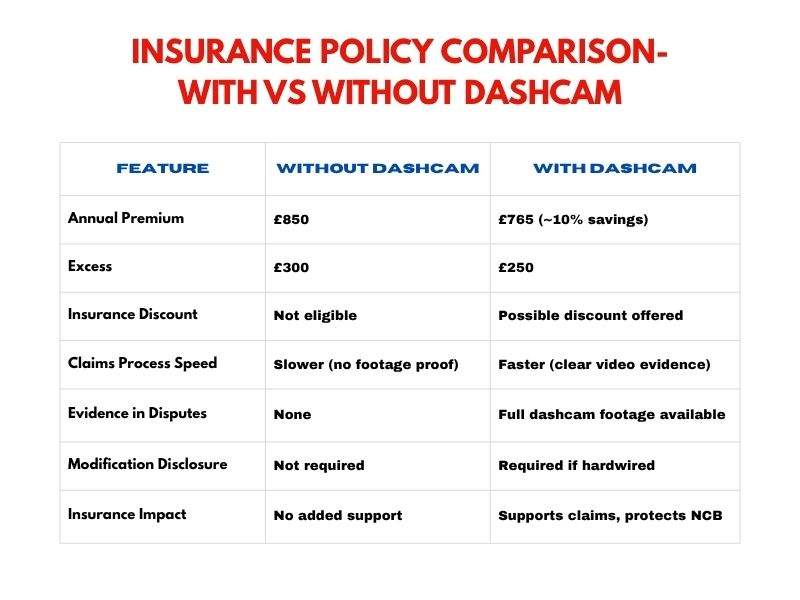
While having a dashcam won’t guarantee a discount, many insurers view them favourably. They provide concrete evidence in the event of an accident, helping resolve disputes faster. Some providers now offer lower premiums or incentives for drivers who regularly use dashcams especially those that are hardwired and record in high quality.
Since dashcams legal in UK under current law, drivers can freely submit footage as supporting evidence. However, insurers often require the camera to meet specific conditions before considering the footage valid.
To benefit from dashcam-related insurance perks, make sure to:
- Inform your insurer if your dashcam is hardwired (classified as a vehicle modification)
- Use a model with time-stamp, GPS, and clear night vision
- Ensure the device doesn’t block your windscreen view
- Keep the footage secure and avoid tampering with recordings
- Upload the footage promptly when requested during a claim
Installing a dashcam might not only support your claim; it could also protect your no-claims bonus and help you avoid being unfairly blamed.
Dashcam Privacy Laws and GDPR Explained
Dashcams are powerful tools but they also come with legal responsibilities, especially around privacy and data protection.
In the UK, dashcam recordings can fall under General Data Protection Regulation (GDPR) if they capture identifiable people or number plates. This applies particularly when footage is shared online or submitted to third parties such as police or insurers. Drivers must respect others’ privacy rights while recording on public roads.
Because dashcams legal in UK includes compliance with GDPR, failing to follow privacy rules may lead to fines or legal trouble.
To stay GDPR-compliant while using a dashcam, make sure to:
- Avoid uploading dashcam footage on social media without blurring faces and plates
- Use signage in taxis or commercial vehicles to notify passengers about recording
- Keep recordings only as long as necessary delete old files regularly
- Encrypt and securely store any sensitive footage
- Avoid recording private properties or private conversations unnecessarily
Understanding dashcam privacy laws ensures that your device works for you, not against you. When used lawfully, it can be both a legal ally and a safety companion.
Sharing Dashcam Footage with Police or Courts
Sharing dashcam footage is common practice in the UK especially after road accidents, traffic offences, or hit-and-run incidents.
If the footage is clear, time-stamped, and legally obtained, it can support investigations and court cases. Many police forces across the UK have dedicated portals like Operation Snap to receive and review video submissions. Whether it’s speeding, dangerous driving, or a road rage incident, your footage might help bring offenders to justice.
Since dashcams legal in UK also means adhering to data handling protocols, it’s essential to follow the correct steps when sharing recordings.
Here’s what to know:
Submitting to Police
- Upload via the official police portal
- Include context like date, time, and location
- Don’t edit the footage, it must be original
Using in Court
- Footage can be presented as legal evidence
- Videos must show the full event, not just selected clips
- Metadata like GPS and speed readings boost credibility
Dashcams don’t just record, they speak for you when it matters. Use them responsibly, and they can become a trusted witness on your behalf.
Getting a Dashcam in 2025: What to Look For
With more options than ever, choosing the right dashcam in 2025 can be overwhelming.
Drivers are no longer just asking should I get a dashcam, but also which model suits their needs. Whether you’re buying for personal security, fleet monitoring, or insurance peace of mind, the right features make all the difference.
Since dashcams legal in UK as long as they follow usage rules, selecting a compliant and effective model is crucial.
Key features to look for in the best dashcams 2025 UK:
- High resolution: Aim for at least 1080p or 2K for clear footage
- GPS tracking: Captures speed and location data, vital for insurance or police reports
- Wide-angle lens: Covers more of the road, reducing blind spots
- Loop recording: Automatically overwrites old footage to save space
- G-sensor & emergency lock: Protects footage in a collision
- Wi-Fi & app control: Allows easy access, backup, and sharing
- Parking mode: Records incidents when the vehicle is unattended
- Interior or dual lens: Essential for taxis, Uber, or fleet vehicles
The best dashcam is the one that balances reliability, legal compliance, and ease of use.
Conclusion
By now, the answer to the question “Are dashcams legal in UK?” should be crystal clear.
Yes, they are but legality comes with responsibilities. You must install the device correctly, avoid obstructing your view, comply with GDPR dashcam regulations, and inform your insurer if the device is hardwired. When used properly, dashcams offer significant advantages: accident evidence, insurance benefits, parking protection, and even improved driving habits.
In 2025, dashcams are more than just gadgets they’re trusted tools for safe, responsible motorists. Whether you’re a private driver, taxi operator, or part of a fleet, using a dashcam within legal limits enhances security and accountability.
If you’ve been asking yourself “should I get a dashcam?”, the answer is yes provided you’re ready to follow the rules and choose a model that fits your driving needs.
So, stay informed, drive responsibly, and let your dashcam be your silent witness on every journey.
FAQs
Yes, dashcams are legal in the UK if installed correctly and used responsibly.
Yes, especially if it’s hardwired, as it may count as a vehicle modification.
Yes, clear and unedited dashcam footage is accepted as legal evidence in UK courts.
Yes, if it captures identifiable people or number plates, GDPR rules apply.
Some insurers offer discounts if you have a dashcam, but not all do.
Yes, but you must inform passengers and display clear recording notices.
Related Posts

Previous Post
Next Post






- Business
 5
5 - Cricket5
- Department for Education49
- Departments3
- Driving and Transport
 53
53 - Education45
- Finance6
- Football13
- Golf3
- Government
 108
108 - Guides1
- Health4
- Health
 5
5 - International Politics9
- Law and Justice31
- Money and Tax23
- National Politics4
- News68
- Politics6
- Sports38
- Technology5
- Tennis3
- Transportation4
- Uncategorized4
- Visa
 17
17 - Visas and Immigration
 24
24 - Weather1