
Rachel Reeves budget 2025 signals a major shift in UK government spending priorities. In her first spending review as Chancellor, Reeves unveiled plans for a 2.3% real-term rise in departmental budgets each year, reversing more than a decade of austerity.
Her vision centres on rebuilding public services, modernising infrastructure, and reviving regional growth through direct investment. With bold fiscal adjustments and targeted spending, the Labour government is positioning itself as the engine of national renewal.
Departmental Budgets Get a Real-Term Boost
In the Rachel Reeves budget 2025, the UK’s government departments will see an average annual real-term increase of 2.3%. This decision marks a major departure from the limited growth experienced under previous Conservative-led reviews. Reeves’ strategy aims to reverse underfunding in key sectors and kickstart public service reform.
Over the course of the spending review period, this rise is projected to inject around £190 billion more into frontline services compared to previous allocations. Reeves stressed the importance of funding stability, describing the uplift as “a downpayment on a decade of national renewal.”
Key Departments to Gain
Several departments stand out as primary beneficiaries:
- NHS and Health Services
The National Health Service will receive an additional £29 billion, spread over the next five years. This increase is designed to address staff shortages, reduce waiting times, and improve mental health services. - Education and Schools
Schools in England will see a £4.5 billion uplift, plus extra capital for building repairs and new schools. Reeves promised a “safe and modern” environment for every pupil. - Defence and National Security
Spending here is expected to rise to 2.6% of GDP by 2027, ensuring funding for military readiness and a new Border Security Command. - Housing and Communities
Social housing will benefit from a £39 billion investment over ten years to tackle the UK’s housing shortage.
This real-term budget rise underlines Labour’s broader effort to rebuild core institutions and infrastructure that were stretched under austerity measures.
Sector-Specific Spending Highlights
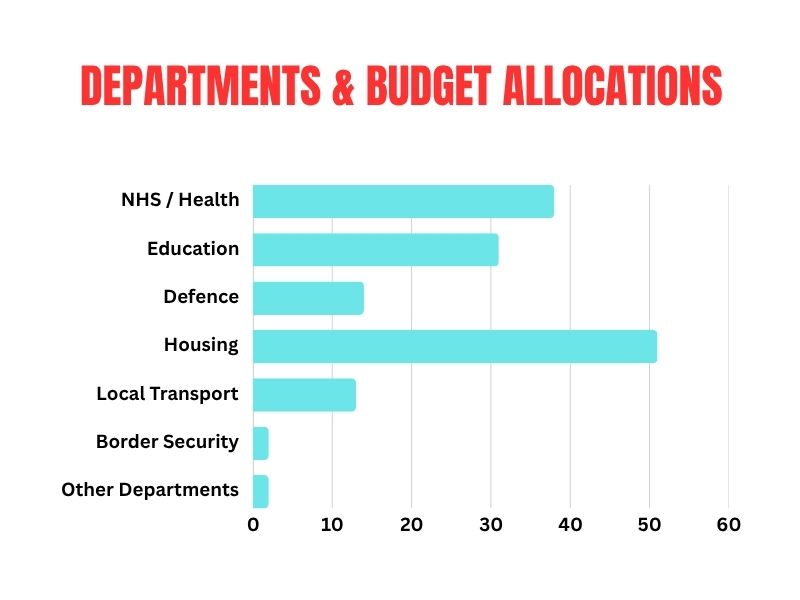
The Rachel Reeves budget 2025 outlines how individual sectors will benefit from the largest government spending shift in over a decade. With a clear focus on essential services, the budget breakdown reveals targeted investments that support Labour’s long-term growth plan.
NHS: £29 Billion to Rebuild Health Services
The health service receives one of the most significant boosts. An additional £29 billion over five years will be directed toward reducing backlogs, hiring more staff, and improving healthcare facilities. This includes investments in mental health care, urgent treatment centres, and GP access.
Education: Safer Schools and New Builds
Reeves has committed £2.3 billion annually for repairing and upgrading existing schools. On top of this, a further £2.4 billion will be allocated to building new schools, addressing overcrowding and outdated infrastructure. She also announced increased funding for teacher recruitment and retention initiatives.
Defence: Security in a Shifting World
The UK government will raise defence spending to 2.6% of GDP by 2027, reinforcing NATO commitments and modernising military capabilities. It will also invest £11 billion in the Ministry of Defence and launch a £280 million-a-year Border Security Command to curb illegal immigration.
Housing: A Long-Term Approach to Affordability
A £39 billion investment in social housing will support the construction of thousands of new affordable homes. Reeves says this is aimed at reversing decades of underbuilding and reducing homelessness rates.
Local Transport: Levelling Up Access
Outside of London, local transport budgets will increase fourfold, providing vital infrastructure for underserved regions. As a result, this is central to Labour’s promise to “level up” towns and cities through better connectivity.
Furthermore, from healthcare to housing, the Rachel Reeves budget 2025 sets out a clear plan for building a stronger, fairer Britain.
East–West Rail: Linking Oxford and Cambridge
The Rachel Reeves budget 2025 also champions strategic transport links none more prominent than the long-awaited East–West Rail. With a £2.5 billion investment, the government will fast-track the railway connection between Oxford and Cambridge, boosting innovation, housing, and regional mobility.
A Critical Innovation Corridor
The Oxford–Cambridge arc is home to world-leading universities, tech companies, and research hubs. However, poor east-west transport links have long stifled its economic potential. The new rail line is set to change that.
- The Bicester to Bletchley section is due to be completed by 2025.
- The full link, connecting Oxford to Cambridge, is expected to be delivered during the 2030s.
This initiative will support over 1 million homes and jobs across the corridor and is central to government investment in future growth sectors such as green energy, life sciences, and AI.
Reeves’ Transport Funding Strategy
Chancellor Reeves described East–West Rail as “a spine for prosperity,” emphasising its role in unlocking housing and employment growth. The route will also support sustainable travel, taking cars off the road and reducing emissions.
The Oxford Cambridge rail link is a key example of Labour’s intent to rebuild not just the economy, but physical connections that drive long-term prosperity.
Broader Infrastructure and Transport Investment
Beyond the East–West Rail, the Rachel Reeves budget 2025 outlines a national strategy to improve infrastructure, particularly in transport. Reeves is shifting focus toward regional equity, aiming to close the gap between London and other areas.
£3.5 Billion for Rail Across the Regions
Reeves committed £3.5 billion for key regional rail upgrades, including:
- Transpennine Route (Manchester–Leeds)
- Midlands Rail Hub (Birmingham connections)
- South Wales Main Line modernisation
These projects aim to cut journey times, boost productivity, and improve service reliability for businesses and commuters alike.
Investing Outside London
Unlike previous budgets, Reeves’ approach gives local authorities four times more funding to support:
- Bus and tram system upgrades
- Rural transport links
- Cycling and pedestrian projects
Building a Greener, Connected Future
Moreover, the Rachel Reeves budget 2025 supports net-zero goals through electrification, cleaner buses, and expanded rail freight. In doing so, Labour’s plan rebuilds UK transport with a focus on both sustainability and wider accessibility.
Fiscal Strategy and Political Response
Rachel Reeves will fund the 2025 budget through targeted tax reforms and growth-focused borrowing. Reeves plans to close tax loopholes, raise revenue from non-domiciled residents, and borrow responsibly for infrastructure. She claims full funding for the spending and aligns it with OECD standards.
Opposition parties criticised the lack of an OBR forecast and warned of debt risks. Reeves dismissed the concerns, calling her plan “balanced and bold.” Her strategy reflects a shift from austerity to active investment aiming to fuel long-term growth while restoring public services.
Conclusion
The Rachel Reeves budget 2025 represents a decisive shift in economic direction. After years of restrained spending, Reeves’ plan signals a return to proactive government investment aimed at renewing public services, connecting regions, and driving long-term growth.
With key increases in health, education, defence, and transport, this budget reflects Labour’s intent to rebuild national infrastructure and restore public trust. The East–West Rail, expanded regional funding, and a green transport push show a strategy rooted in both economic logic and social purpose.
Despite political pushback, Reeves remains firm on her fiscally responsible yet growth-driven vision. She has framed this budget as just the beginning of a decade-long plan to reshape Britain’s economic model.
For voters and communities, the message is clear: investment is back, and it’s meant to serve everyone not just the capital. The Rachel Reeves budget 2025 lays the groundwork for a more balanced, connected, and resilient United Kingdom.
FAQs
It outlines Labour’s plan to boost public spending and drive economic growth.
Health, housing, education, and transport see the largest increases.
£29 billion over five years, averaging £5.8 billion per year.
No, it was announced without an Office for Budget Responsibility forecast.
Yes, local authorities will receive four times more funding than before.
It focuses on closing the regional inequality gap with targeted investment.
Related Posts



Previous Post
Next Post







- Business
 5
5 - Cricket5
- Department for Education49
- Departments3
- Driving and Transport
 53
53 - Education45
- Finance6
- Football13
- Golf3
- Government
 108
108 - Guides1
- Health4
- Health
 5
5 - International Politics9
- Law and Justice31
- Money and Tax23
- National Politics4
- News68
- Politics6
- Sports38
- Technology5
- Tennis3
- Transportation4
- Uncategorized4
- Visa
 17
17 - Visas and Immigration
 24
24 - Weather1