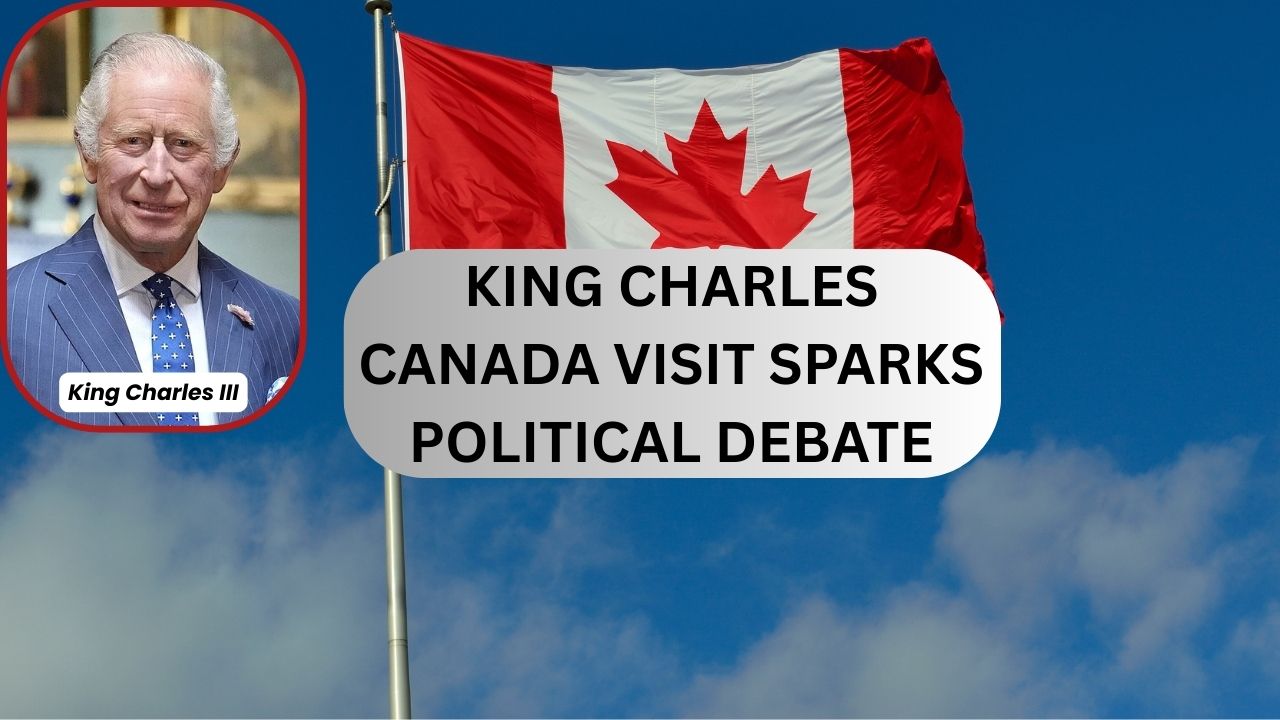
King Charles Canada visit has stirred heated political debate across the country. As the monarch landed in Canada for the first time since taking the throne, the focus swiftly shifted from the ceremony to the controversy. Politicians, republican supporters, and indigenous leaders expressed doubts about the monarchy’s continued applicability in a multicultural, modern Canada.
The situation was heightened when former US President Donald Trump openly questioned the Crown’s future in Canada, raising more questions about King Charles’s presence. Questions about colonial heritage and growing republican enthusiasm made this visit much more than a royal rite; it became a political hot spot.
King Charles Canada Visit Begins Amid Debate
There have been increasing calls in recent years for Canada to break its constitutional ties to the British monarchy. The King Charles Canada visit has amplified those voices, particularly among younger Canadians and Indigenous leaders.
With many people considering the monarchy to be a colonial remnant, polling indicates a continuous drop-in support for it. This discomfort was highlighted during the visit. Despite the cordial reception given to the King by some Canadians, others demonstrated with signs demanding a republic and an end to hereditary rule.
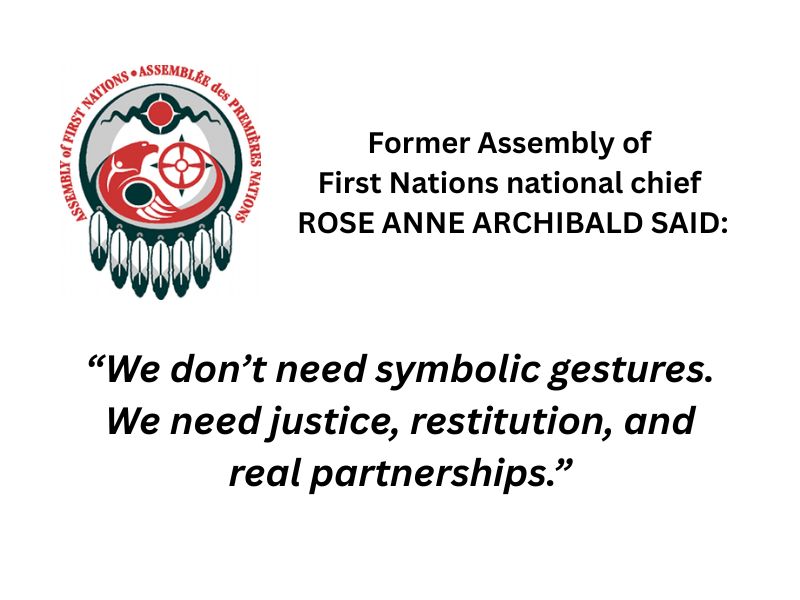
Indigenous leaders demanded more significant action over ceremonial visits and challenged the Crown’s symbolic role in treaties. Former Assembly of First Nations national chief Rose Anne Archibald said:
“We don’t need symbolic gestures. We need justice, restitution, and real partnerships.”
Citizens for a Canadian Republic and other Republican organisations took advantage of the event to advocate for constitutional reform.
What’s their message? That Canada should finally elect its head of state rather than inherit one from a distant nation.
Trump Sparks Controversy in Canada
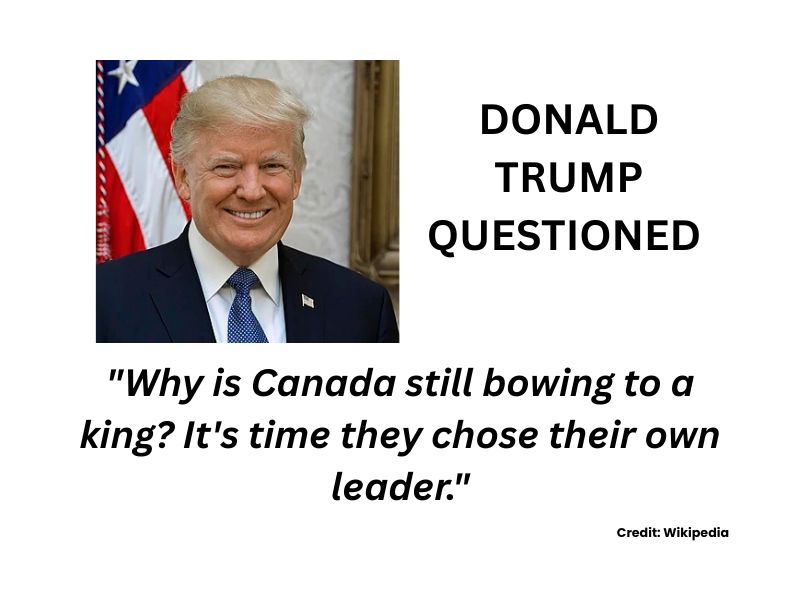
The King Charles Canada visit took an unexpected turn when former U.S. President Donald Trump weighed in. Trump questioned Canada’s allegiance to the British Crown while speaking at a rally in Michigan, saying:
“Why is Canada still bowing to a king? It’s time they chose their own leader.”
Trump has no formal position in Canadian politics, but his remarks generated a lot of discussion online and dominated headlines. Although some saw his comments as meddling, they also mirrored the opinions of many Canadians who already questioned the monarchy’s continued significance.
In a measured response, Canadian Prime Minister Justin Trudeau acknowledged that “national conversations about identity are valid” while also restating Canada’s constitutional framework. Opposition politicians, especially those from the NDP and Bloc Québécois, took advantage of the opportunity to reiterate their republican claims.
Deep cultural gaps were shown by the occurrence. Trump’s remarks struck monarchists as unsuitable and ignorant. They strengthened the emerging global agreement among republicans that the monarchy is out of date.
Social media responses from the public further revealed a generational divide:
- Traditional preservation was favoured by older Canadians.
- Younger Canadians asked why the constitution still mentions a foreign king.
Public Divides Over King Charles Canada Visit
The King Charles Canada visit brought Canada’s cultural fault lines into the spotlight. Reactions differed greatly amongst provinces; some considered the royal attendance to be an honour, while others thought it was an antiquated custom that had little bearing on contemporary Canadian society.
Republican enthusiasm was particularly high in Quebec. Signs reading “Not our King” and “Time for a Canadian head of state” were held by crowds in Montreal. In the meantime, royal fans wearing royal memorabilia and waving Union Jacks attended ceremonial events in portions of British Columbia and Ontario.
Age and background differences in Canadians’ attitudes towards the monarchy were also identified by the visit.
- The institution was generally respected by older generations.
- Indigenous populations, immigrants, and younger individuals all showed rejection or apathy.
This split was mirrored in the media coverage. Panel debates on constitutional reform were intercut with the royal event by national broadcasters, and social media became a platform for memes, satire, and hashtags like #AbolishTheMonarchy that were trending across Canada.
This range of viewpoints highlights a crucial point: the future of the monarchy in Canada is still up in the air, and the King’s visit generated more discussion rather than unity.
Symbolism and Tradition in the King Charles Canada Visit
Despite the controversy, the King Charles Canada visit maintained the familiar pageantry of royal tradition. Events including as walkabouts, ceremonies, and encounters with dignitaries were meticulously planned to demonstrate the continuity between Canadian institutions and the monarchy.
The King met with veterans of the Canadian military, visited Indigenous villages, and participated in wreath-laying events. Each destination was thoughtfully chosen to honour common history and convey unity. The King was commended by royal observers for his mannerisms, characterising his tone as more “reflective than regal.”
He also made a statement in which he acknowledged “historic wrongs” against Indigenous peoples, which some Indigenous leaders cautiously praised. However, detractors contended that in reality, words meant little in the absence of tangible policy change.
Royalists, however, were interested in the symbolism. They saw the visit as a confirmation of Canada’s ties to the Crown and the Commonwealth. Commonwealth supporters emphasised that a constitutional monarchy offered identity and stability during a period of world unpredictability.
The visit was presented by royal historians as an essential measure of King Charles’s continued importance. According to one historian:
“This was less about pomp and more about whether the King can still serve a purpose in Canadian life.”
Indigenous Voices Respond to Royal Visit
One of the most significant aspects of the King Charles Canada visit was its interaction with Indigenous communities. The King acknowledged historical injustices and the Crown’s role in colonialism during his meetings with leaders of First Nations, Métis, and Inuit groups.
Although some people applauded these gestures, they also rekindled debates over treaty duties, land rights, and the preference for tangible action over symbolic recognition. Numerous Indigenous elders emphasised that systemic change must come after acknowledgements and apologies.
Local leaders in Nunavut were grateful for the King’s engagement, but they continued to insist that Canada keep its commitments.
According to one elder:
“The Crown made promises to our people. A visit does not replace action.”
The monarchy has historically stood for colonial power, which included the forcible removal of Indigenous peoples, activists also emphasised. Even though the visit was meant to be a sign of forgiveness, many were reminded of the ongoing fights over self-governance, water rights, and land claims.
The royal visit sparked more questions than it did answers for Indigenous advocates, highlighting the disconnect between ceremonial symbolism and real advancement.
Future Questions After King Charles Canada Visit
The King Charles Canada visit may go down as a pivotal moment in Canada’s relationship with the monarchy. Despite being presented as a unifying act, the visit revealed significant differences in public opinion, particularly among marginalised groups and younger Canadians.
Politically, the tour reignited the constitutional revision discussion. Republican voices in Parliament and civil life are becoming more powerful, despite the fact that no major party has formally suggested severing relations with the monarchy. NDP leaders have started to allude to the necessity of national discourse, while the Bloc Québécois has long demanded a separation from the Crown.
Following the visit, surveys showed that more Canadians are in favour of having a Canadian head of state. Overall, support for the monarchy is waning, particularly in urban and ethnic groups, but it remains stronger in rural areas and among older adults.
Canada is not alone in the world. Other Commonwealth countries, such as Jamaica and Australia, are publicly contemplating becoming republics. The growing possibility that Canada may eventually return to its constitutional monarchy model was brought to light by King Charles’s visit.
Now, the question is not whether the conversation will take place, but rather when.
Written by [Ketan Borada / British Portal Team] – Founder of British Portal, dedicated to providing accurate and up-to-date information on UK public services and benefits.Related Posts


Previous Post
Next Post







- Business
 5
5 - Cricket5
- Department for Education49
- Departments3
- Driving and Transport
 53
53 - Education45
- Finance6
- Football13
- Golf3
- Government
 108
108 - Guides1
- Health
 5
5 - Health4
- International Politics9
- Law and Justice31
- Money and Tax23
- National Politics4
- News68
- Politics6
- Sports38
- Technology5
- Tennis3
- Transportation4
- Uncategorized4
- Visa
 17
17 - Visas and Immigration
 24
24 - Weather1