Knowing what to do after car crash can help you save money, time, and stress. Everything from your recuperation to your car insurance after accident is impacted by quick decisions. It’s not only about your car; it’s also about your rights, safety, and legal protection.
Every second matters, whether it’s a small bump or a serious crash. You need to remain composed, collect proof, and get in touch with your insurance provider right away. This article helps you avoid common errors and firmly support your claim by guiding you through the necessary actions to take after a car crash in the UK.
Stop, Stay Safe, and Check for Injuries
No matter how minor the collision appears, you are required by law to stop after a car crash. It is illegal to continue without stopping. Turn on your warning lights to warn other drivers once your car is safe.
If at all feasible, move to a safe area, but stay at the scene. Safety, both yours and others’, is your top priority. Look for injuries on both you and the other passengers. Call 999 right away and request medical attention if someone is wounded.
Getting medical attention is crucial, even if the injuries appear to be small. Concussions and whiplash may not show up right away. Having a medical record can support your car insurance after accident claim later.
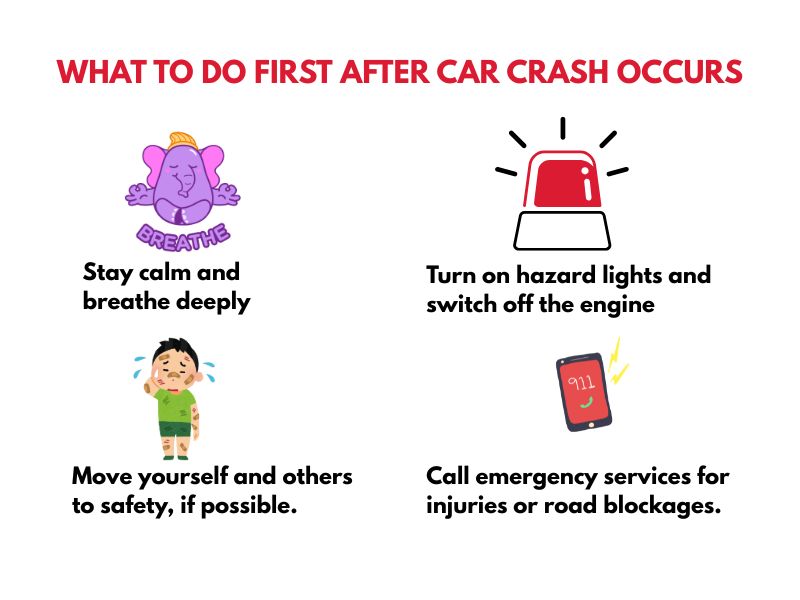
First, do the following:
- Remain composed and take deep breaths.
- Switch on the danger lights and turn off the engine.
- If it’s safe to move, get everyone else and yourself to safety.
- If there are any injuries or if the road is stopped, contact emergency services.
You should only start gathering data if everyone is safe and secure.
When to Call the Police After Car Crash
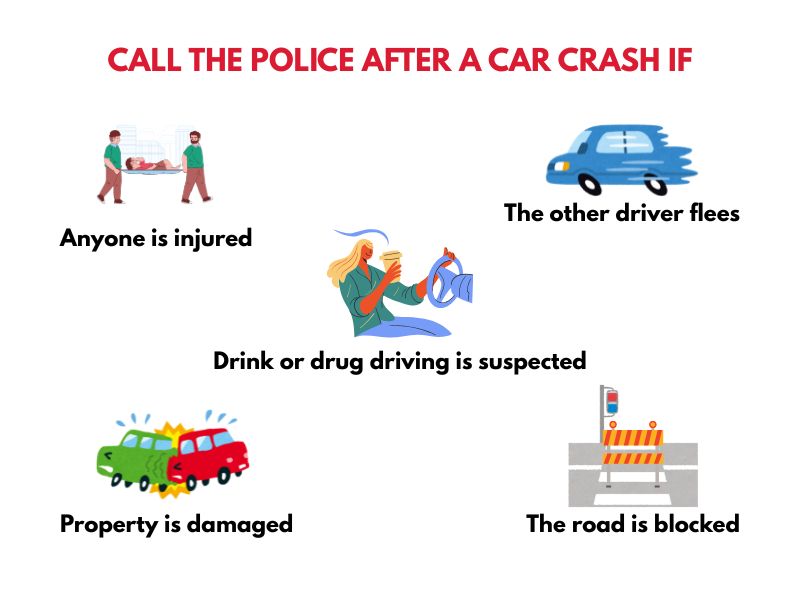
After an automobile accident, you have to call the police if:
- Someone is injured
- The other driver leaves the scene
- You suspect drink or drug driving
- There’s damage to property
- The road is blocked
If you don’t call the police at the scene, get in touch with them within 24 hours. It is against the law and subject to fines to fail to report a significant occurrence. Police participation is essential in hit-and-run instances in order to track down the perpetrator and to claim your car insurance after accident.
Remain truthful when you communicate with the police. Refrain from placing blame. Enter your driving licence, car’s registration, and insurance details. Make a note of everything you recall while it’s still fresh because the police might later ask for a written statement.
Officers will make a report if they are on the scene. As this bolsters your insurance claim and can be required in court if liability is contested, find out how to get a copy.
Exchange Details with Everyone Involved
Give the other motorist your information when it’s safe to do so. It’s required by law, even if the collision doesn’t seem serious.
The following must be shared and gathered:
- Full name and address
- Driving licence number
- Insurance details, including provider and policy number
- Car’s registration number
If the other driver declines to provide information, take note of their license plate and notify the authorities. Obtain the names and contact information of any passengers or witnesses as well.
Be courteous, but don’t point the finger. Your insurance provider’s capacity to defend your case may be impacted by any admissions. Control your emotions and concentrate on the facts.
Remember, this information is vital for your car insurance after accident claim and can protect you from false liability.
Take Photos After Car Crash for Evidence
One of the most reliable types of evidence after car crash is a photograph. They aid in providing an explanation, particularly in cases of disagreement or contention.
Use your phone to take clear pictures of:
- All vehicles involved from multiple angles
- Number plates
- Skid marks or debris on the road
- Traffic signs and signals nearby
- Injuries, if safe and appropriate
- Road and weather conditions
Check the area for any CCTV cameras that may have captured the collision. Take note of its location since occasionally people will ask to see footage.
Additionally:
- Note the date and time.
- Write a succinct account of what transpired.
- Add any odd behaviour, such as careless driving.
All of this protects you in the event that someone provides false information and supports your auto insurance following an accident claim.
Inform Insurance Provider After Car Crash
After the vehicle accident, get in touch with your insurance provider as quickly as you can. Even if you aren’t filing a claim right away, most plans require you to report an accident within 24 hours.
Give precise information, such as:
- What happened
- The other driver’s insurance details and contact information
- Any injuries or damages
- Photos and statements you’ve collected
Be forthright and truthful, but refrain from taking responsibility. The next steps, like scheduling auto repairs or filing a claim, will be explained by your insurer.
Early notification helps prevent problems or later denials of claims. It also avoids penalties or increased premiums and maintains the validity of your policy.
Keep Records and Write a Statement
Keeping accurate records following an automobile accident is crucial. Make copies of every document pertaining to the event.
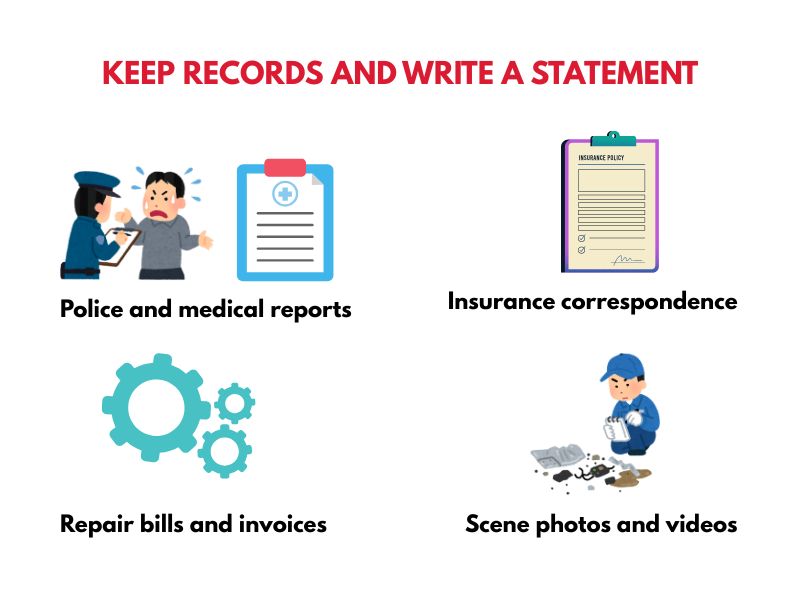
This comprises:
- Police reports
- Medical reports from any medical attention received
- Correspondence with your insurance provider
- Repair bills and invoices
- Photos and videos you took at the scene
It is helpful to write a thorough statement regarding the accident while your memory is still clear in case there are any disagreements. Add times, places, weather, and other pertinent information.
Providing your insurer with this statement and, if required, the police can help you make a stronger case. For your personal reference, keep a copy.
Know Your Rights After Car Crash
After a car crash, knowing your rights helps you take control of the situation. You have the right to:
- Receive fair treatment from your insurance provider
- Seek medical attention without delay
- Access police reports related to the incident
- Claim compensation if another driver was at fault
If you’re feeling overburdened, think about speaking with an accident expert or legal advisor. They can help you with compensation claims, particularly those involving auto damage or personal injury.
Additionally, your driving licence may be checked if the crash involves serious injury or suspected violations. Cooperate fully with authorities to avoid penalties.
To prevent losing benefits, keep a tight eye on your insurance coverage, claims, and deadlines.
Conclusion
Knowing what to do after car crash incidents ensures your safety and protects your rights. Always pull over, look for injuries, give the police a call if necessary, and share critical information. To bolster your claim, gather supporting documentation such as witness accounts and photographs. Keep detailed records and notify your insurance provider as soon as possible.
By doing these actions, you can deal with the fallout in a composed and assured manner. Your recovery and insurance claim depend on you being informed, being safe, and acting sensibly.
FAQs
Stop, check for injuries, call emergency services, and exchange details.
Yes, if there are injuries, road blockages, or if someone refuses to share details.
Names, addresses, insurance details, driving licence numbers, and car registration.
Yes, photos help document damage and support your insurance claim.
Yes, a written statement helps you recall facts and back up your claim.
Yes, you can seek compensation through your insurer or a legal claim.
Yes, CCTV footage can support your version of events in a dispute.
Yes, all crashes must be reported to your insurer and, in some cases, the police.
Previous Post
Next Post





- Business
 5
5 - Cricket5
- Department for Education49
- Departments3
- Driving and Transport
 53
53 - Education45
- Finance6
- Football13
- Golf3
- Government
 108
108 - Guides1
- Health
 5
5 - Health4
- International Politics9
- Law and Justice31
- Money and Tax23
- National Politics4
- News68
- Politics6
- Sports38
- Technology5
- Tennis3
- Transportation4
- Uncategorized4
- Visa
 17
17 - Visas and Immigration
 24
24 - Weather1