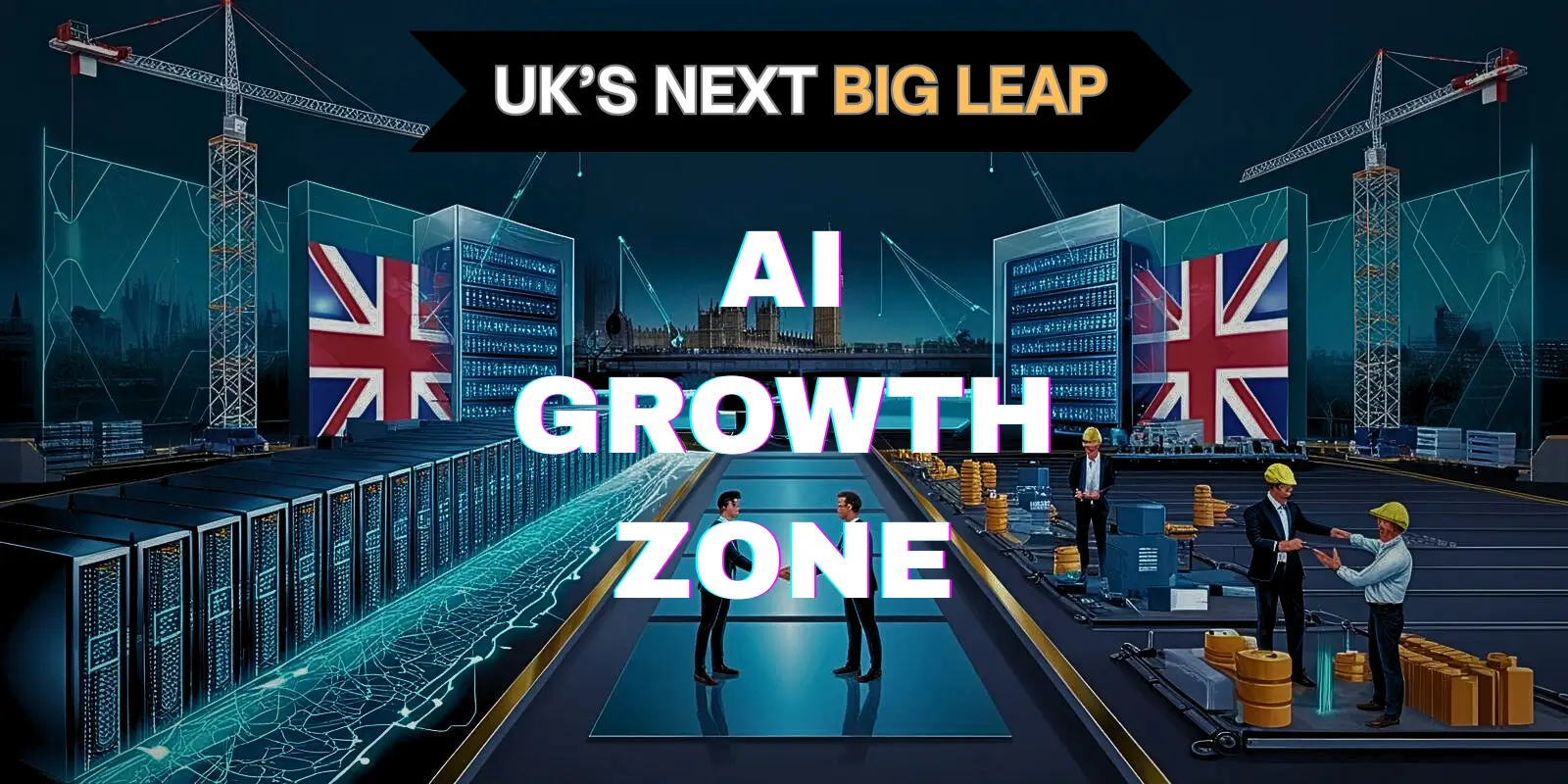
The United Kingdom has just advanced its strategy to be a global leader in artificial intelligence (AI). In a key development, the government officially launched the next stage for its planned AI Growth Zones. This initiative moves forward, bringing together crucial partners to accelerate the establishment of these vital innovation centres.
Building on significant interest shown earlier in the year, investors and local authorities met on April 30th, 2025, marking the start of the formal selection process for these zones. This step signals that the UK’s plans for driving AI economic growth are actively progressing.
Understanding AI Growth Zones
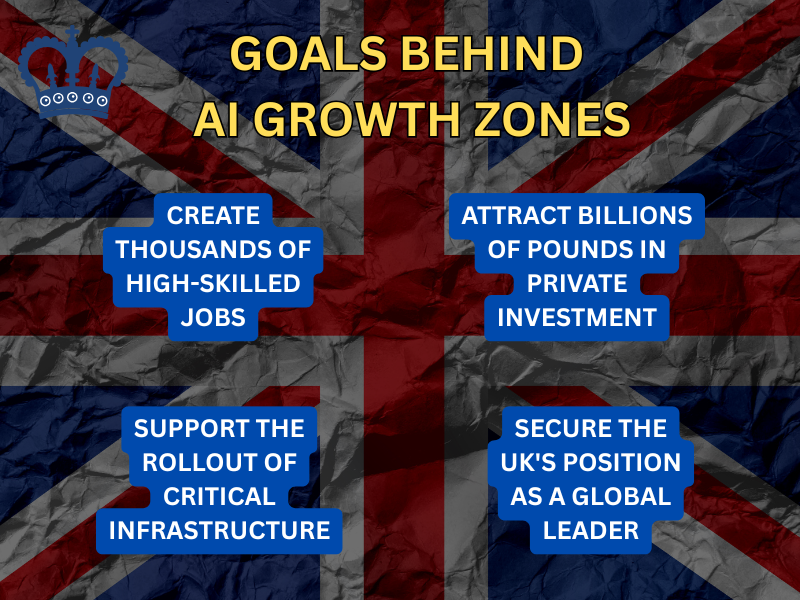
What exactly are these AI Growth Zones? They are planned as designated areas across the country intended to become hubs for AI development. The stated goals behind this UK Government AI Initiative are clear:
- To create thousands of high-skilled jobs for people across the UK.
- To attract billions of pounds in private investment, crucial AI investment in the UK, boosting local economies.
- To support the rollout of critical infrastructure needed for AI, such as powerful data centres and energy connections.
- To revitalise local communities, with potential for transforming former industrial sites.
- To secure the UK’s position as a global leader in Artificial Intelligence.
Essentially, the zones aim to concentrate resources and activity to help AI growth UK happen more quickly and effectively.
From Strong Interest to Formal Selection
The process began earlier in 2025 with a call for ‘Expressions of Interest‘ (EOI). This allowed councils, businesses, and organisations nationwide to register their interest in hosting an AI Growth Zone in the UK.
The response, according to the government announcement, was significant:
- Over 200 expressions of interest were received.
- These submissions came from every corner of the UK, indicating broad national interest.
This level of interest paved the way for the current phase. The government has now started the ‘formal qualifying process’. This requires interested parties to submit detailed proposals, demonstrating they meet the necessary criteria.
The meeting on April 30th, 2025, involved AI Minister Feryal Clark and the Prime Minister’s AI Adviser Matt Clifford engaging with investors and representatives from local authorities. This event served to outline the government’s vision, clarify requirements, and discuss the timeline.
The Crucial Roles of Investors and Local Authorities
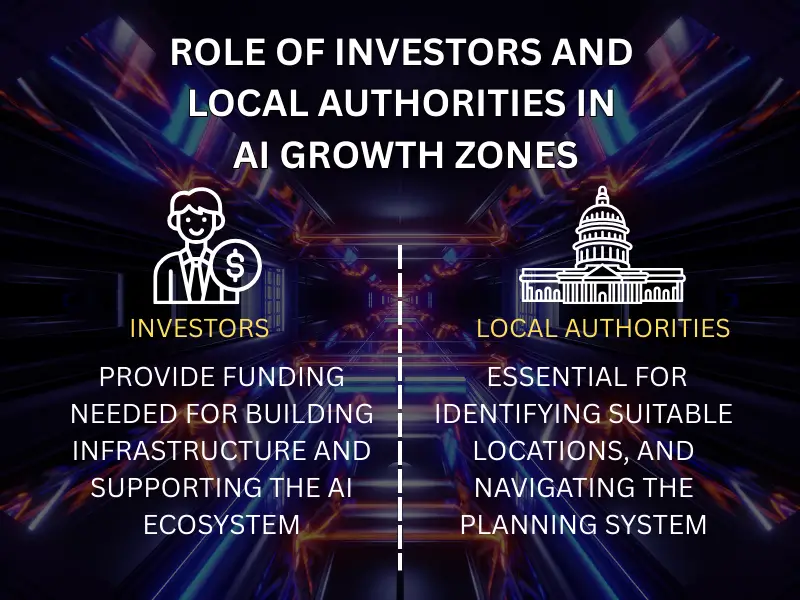
Establishing these AI Growth Zones relies on partnership. The government explicitly highlights the vital roles of investors and local authorities:
- Investors: They are providing the significant funding needed to build infrastructure and support the AI ecosystem within the zones.
- Local Authorities: Their involvement (Local Authorities for AI in UK) is essential for identifying suitable locations, navigating the planning system, and helping ensure the zones align with local needs and potential.
What Makes a Successful AI Growth Zone? Key Requirements
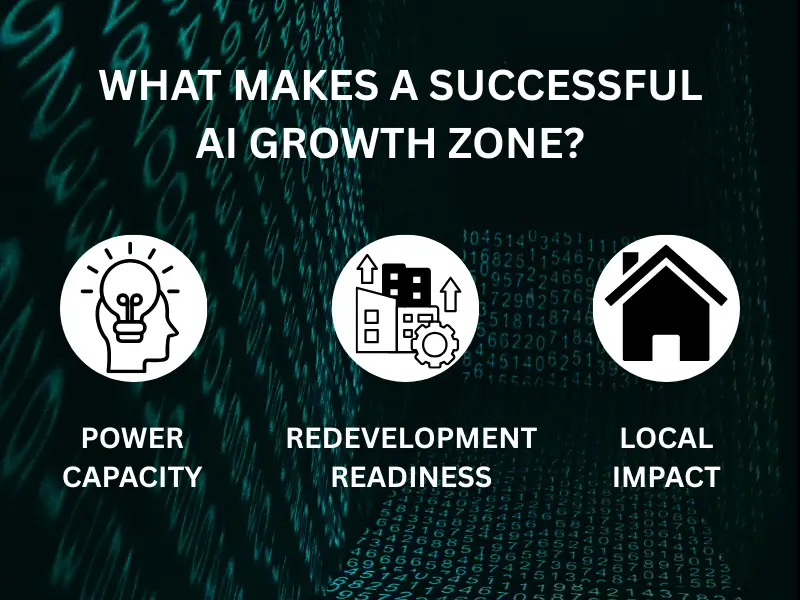
The government has outlined specific criteria for potential hosts during this qualifying stage, with a strong focus on infrastructure capability:
- Major Power Access: Applicants must demonstrate access to existing power connections of at least 500 megawatts (MW) – stated as enough to power 2 million homes – or provide a clear plan to achieve this. This reflects the significant energy demands of large-scale AI infrastructure.
- Site Readiness: Potential sites mentioned include former industrial areas with existing land and infrastructure suitable for redevelopment, aiming for quicker setup times.
- Local Impact: Proposals must detail the positive local impact anticipated, particularly regarding job creation and economic benefits.
Speeding Things Up: Streamlined Planning
A key feature of the AI Growth Zone rollout plan is the promise of speed, facilitated by streamlined planning approvals.
According to the announcement, this means:
- An effort to reduce typical delays in planning for major infrastructure.
- Allowing construction (‘spades in the ground’) to start more quickly.
- Specifically targeting the fast-tracking of critical infrastructure like data centres and high-capacity energy connections.
The Prime Minister’s AI Adviser, Matt Clifford, was quoted as emphasising the need for speed, stating:
“Speed is everything.”
What to Expect Next
With the formal qualifying process launched at the end of April 2025, here is the timeline provided in the announcement:
- Summer 2025: The government intends to announce the first additional sites selected to host AI Growth Zones.
- End of 2025: The stated ambition is for building work to commence at these sites by the end of this year.
These zones are envisioned as becoming important UK Tech Hubs, contributing to the nation’s AI capabilities.
Why This Matters Now
This initiative is presented as a key part of the broader UK AI Strategy and the government’s “Plan for Change“. Minister Feryal Clark describes AI as key to future prosperity, comparing its impact to that of coal and steam in the past.
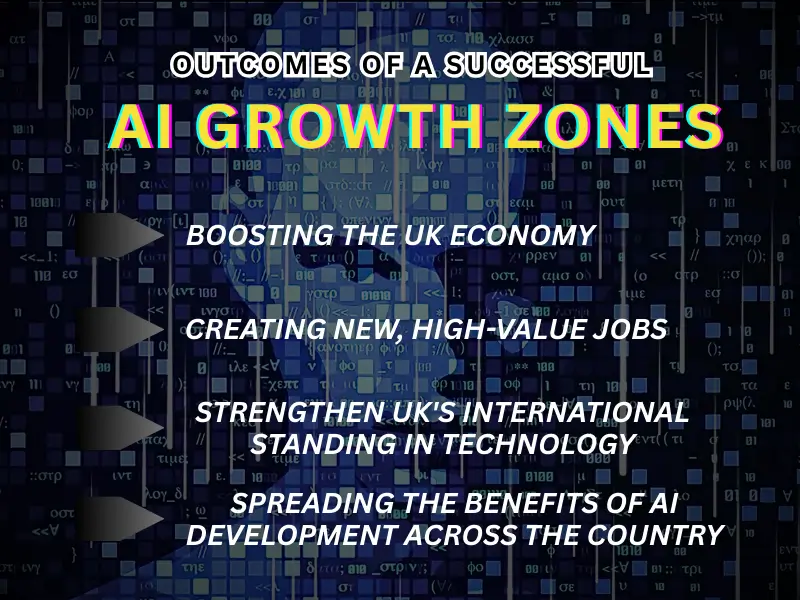
The intended outcomes of successful AI Growth Zones include:
- Boosting the UK economy.
- Creating new, high-value jobs regionally.
- Strengthening the UK’s international standing in technology.
- Spreading the benefits of AI development across the country.
UK’s AI Ambition Gains Speed in 2025
Momentum for the UK’s AI Growth Zones is building as of late April 2025. Following substantial national interest, the formal process for selecting host sites is now officially underway. Investors and local authorities are actively laying the groundwork, backed by a clear commitment to faster development. The announcements expected in Summer 2025 will be a key milestone as the UK moves forward with its plans for an AI-driven future.
Frequently Asked Questions
Large-scale AI development relies heavily on powerful data centres, which consume significant energy. Setting a high threshold like 500 MW ensures selected zones have, or can realistically achieve, the essential power infrastructure needed to support these demanding operations from the outset.
It aims to accelerate the approval process specifically for critical infrastructure related to the zones (like data centres or power connections), reducing typical delays. Although the process is faster, local authorities remain involved to balance speed with local needs, even if the exact mechanisms weren’t initially detailed.
The initiative aims for broader community revitalisation. This could include upgrades to local infrastructure (e.g., power grid), attracting diverse investments beyond just AI companies, and creating secondary jobs in construction, services, and supply chains supporting the zone.
April 30th marked the start of the formal qualifying process. Potential hosts now need to submit detailed bids showing they meet the criteria. These bids will be evaluated before the first successful sites are officially announced, which is planned for Summer 2025.
This timeline reflects the government’s strong desire for rapid progress (“speed is everything”). Its success will likely depend on how effectively the streamlined planning works, the readiness of the chosen sites, and how quickly initial investments materialise after the summer announcements.
Source / Ref.: Gov.uk Contains public sector information licensed under Open Government Licence v3.0.
Written by [Ketan Borada / British Portal Team] – Founder of British Portal, dedicated to providing accurate and up-to-date information on UK public services and benefits.Related Posts



Previous Post
Next Post
Previous Post

Next Post






- Business
 5
5 - Cricket5
- Department for Education49
- Departments3
- Driving and Transport
 53
53 - Education45
- Finance6
- Football13
- Golf3
- Government
 108
108 - Guides1
- Health4
- Health
 5
5 - International Politics9
- Law and Justice31
- Money and Tax23
- National Politics4
- News68
- Politics6
- Sports38
- Technology5
- Tennis3
- Transportation4
- Uncategorized4
- Visa
 17
17 - Visas and Immigration
 24
24 - Weather1