
The educational environment continues to evolve at a rapid pace which makes Religious Education (RE) play a specific and vital role within it. The transformation of religious education curriculum and learning platforms and teaching methods need understanding because they must address the needs of current digital-based diverse students. The future of Religious Education in UK Schools is bound to be progressive, opening a way to more integrated and digitized learning, as well as increase the understanding of diverse religious beliefs.
The Changing Face of Religious Education
Religious education curriculum in most schools in UK has a narrow perspective which largely taught Christianity with a little touch on other religions of the world. But, of course, contemporary society can be characterized by its diversity, which creates the need for the enrichment of religious education.
Future curriculums are expected to:
1.Include more world religions in it.
2.Include secular and non-religious worldviews.
3.The primary aspects to emphasize are critical thinking and the recognition and valuing of the diversity of views.
4.Engage the reader in ethical, philosophical, and spiritual conversations.
Such changes will not only enable students to comprehend religion but also should enable students reason about morality and appreciate the value of fellow human beings in a diverse society.
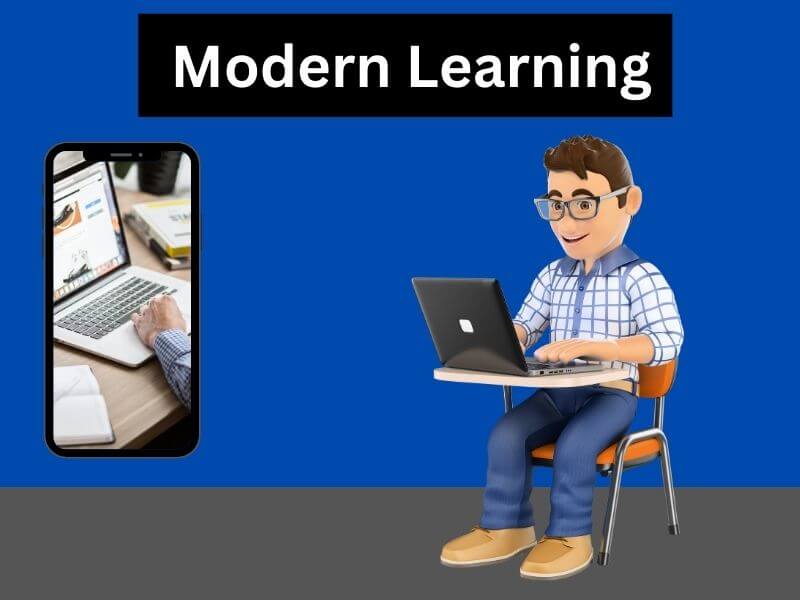
Modern Learning
The move towards a major transformation of classroom-based religious education has become visible to everyone. Religious education platforms that operate online allow students easier access to information that is varied and substantial. Textbooks no longer hold your reading time captive since you gain access to worldwide teaching resources as well as multimedia content through interactive learning modules that animate religious subject matter.
Redefining the Religious Education Curriculum
The religious education curriculum is being changed to make it more relevant as well. It now is a wider range around perspectives, or it has more ethics, it has more interfaith, more dialogue. Both as a learner and an educator, you can anticipate the emphasis being on critical thinking, empathy and on respecting with differences. The new approach will enable you to prepare for a multi-faith society where knowledge of other beliefs is not only advantageous but also essential.
The Rise of Adult Religious Education
Another new efficient trend today is religious education for adults. Whether a student continues education to refine his or her personal knowledge or improve professional avenue, new courses are offered to help adults enhance their knowledge in religion, spirituality, and philosophy. These programs are usually customization, and one can learn according to their schedule without needing to attend a physical class.
Homeschooling and Religious Education
So, if you are in a homeschooling family, you should be happy to know that there is a vast number of homeschool religious education resources available as well as even more flexible than before. Among the homeschooling advantages, a vast number of curriculums, beneficial online resources, and supportive communities allow parents to give their children religious education which corresponds to their faith and belief system.

Embracing Virtual Religious Education
One of the chief new features that you will be able to observe is virtual religious education. Distance is no longer a barrier because with live streamed classes, multiple virtual reality learning sessions, and virtual membership to certain faith communities. This has created room for equal learning opportunities, options that make learning universally accessible and conducive to every learner that would have been inconceivable the past decade.
conclusion
Radical changes in religious education in schools across the United Kingdom are now emerging in attempts that signal the beginning of what is set to be an inclusive, flexible classroom involving the integration of technology. Owing to new technologies in distance learning through computers and internet, students and the adults have more opportunities than ever before to study about religions and value system and philosophy among other things. Amendments to the religious education curriculum will help to deliver the learning of religious knowledge to the students in the multicultural society so that they will be able to understand the modern society better after receiving the religious training. Thus, religious education, in our case, fully deserves to advance in its perspectives, looking forward to creating open-minded, polite, and thoughtful individuals for humanity.
FAQ
School’s religious education is becoming liberal, it encompasses all main religions, atheism, and humanism, as well as encouraging pupil’s critical thinking and ethical reflection.
Online religious education enhances the ways of learning by providing tools, moving lessons, and lectures that would let the students approach various religions.
With the help of high technologies, virtual religious education enables to immerse students in the non Authority religious lessons with the use of virtual reality, possibility to attend the online classes, and other live-stream services.
Yes This is because there is drastic shift towards adult religious education, for example, through online classes, workshops, as well as correspondence courses that do not compel the adults to disengage from their work in order to gain religious education.
Read More Posts
Related Posts



Previous Post
Next Post







- Business
 5
5 - Cricket5
- Department for Education49
- Departments3
- Driving and Transport
 53
53 - Education45
- Finance6
- Football13
- Golf3
- Government
 108
108 - Guides1
- Health4
- Health
 5
5 - International Politics9
- Law and Justice31
- Money and Tax23
- National Politics4
- News68
- Politics6
- Sports38
- Technology5
- Tennis3
- Transportation4
- Uncategorized4
- Visa
 17
17 - Visas and Immigration
 24
24 - Weather1