
Golf in the Olympics has been a topic of debate for years. With its return to the Olympic Games in 2016, golf’s inclusion sparked both excitement and controversy.
Some argue that golf should be reserved for its own prestigious tournaments, such as The Masters or the U.S. Open, rather than being part of the Olympics.
However, others believe that golf has the potential to thrive on the global stage. This would introduce new fans to the sport and enhance its global appeal.
In this article, we will explore the arguments for and against golf’s inclusion in the Olympic Games. We will also examine the potential impact it could have on the sport and its athletes.
The History of Golf in the Olympics
Golf’s inclusion in the Olympics isn’t a new concept. The sport made its debut at the 1900 Paris Olympics. However, it was dropped after the 1904 Olympics in St. Louis.
For over a century, golf was absent from the Olympic Games. Many believed it didn’t fit the traditional Olympic ideal.
In 2016, golf was reintroduced to the Olympics during the Rio Games. It was included again in the Tokyo 2020 Olympics. Over 10 million viewers tuned in to watch golf’s return to the Olympics in 2016.
The return of golf was met with mixed reactions. Some viewed it as a way to modernize the Olympics. They believed it could bring in new audiences, while others felt it undermined the tradition of the Games.
Regardless of the differing opinions, the inclusion of golf in the Olympics is a significant moment. It marks an important point in the history of both the sport and the Games themselves.
Why Some People Think Not to Include Golf in the Olympics
Doesn’t Represent the Olympic Ideal:
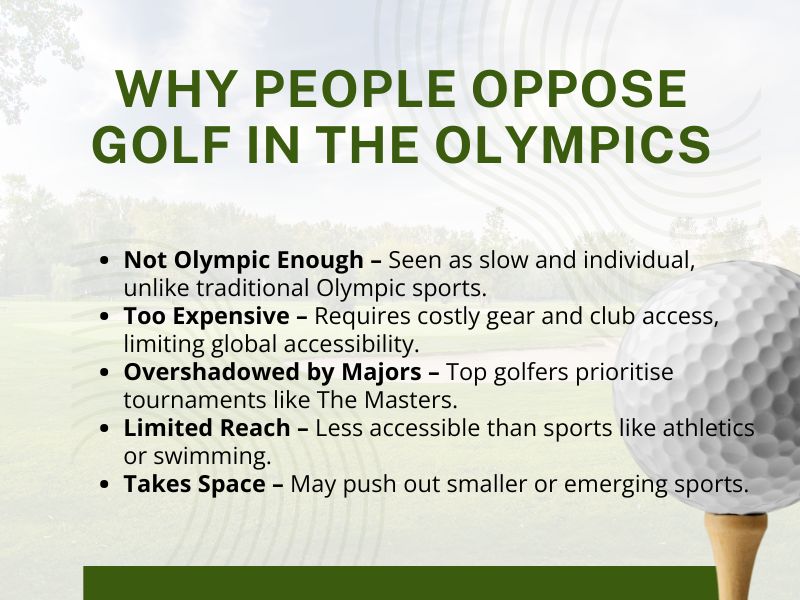
One of the primary arguments against golf’s inclusion in the Olympics is that it doesn’t align with the traditional values of the Games. The Olympics have long been associated with athleticism, teamwork, and physical endurance.
In contrast, golf is an individual sport that focuses on precision, technique, and mental strength. Some critics argue that golf’s slow pace and reliance on individual skill make it less suited for the Olympics. They feel the Games are better suited to sports with faster-paced action and a team-oriented atmosphere.
Not Accessible Enough:
Another common argument against golf in the Olympics is that the sport isn’t as accessible to people around the world as other Olympic sports. Golf requires expensive equipment, membership at golf clubs, and access to well-maintained courses.
For many, this makes golf an elitist sport, one that is out of reach for those in lower-income regions. Other Olympic sports, like athletics or swimming, don’t have the same financial barriers to entry. This makes them more accessible to athletes from all backgrounds.
In contrast, the average cost to join a golf club in the UK is about £1,000 per year. This amount excludes other expenses such as equipment and green fees.
Focus on Major Tournaments:
Golf has a rich tradition of prestigious tournaments, such as The Masters, the U.S. Open, and the British Open, which many golfers view as the ultimate achievement in the sport. For many top players, these events are the pinnacle of success, and the Olympics may not hold the same allure.
Critics argue that adding golf to the Olympics could diminish the importance of major golf tournaments. Olympic gold might overshadow these long-standing events, potentially affecting their prestige.
Risk of Pushing Other Sports Out:
There is also the concern that adding golf to the Olympics could push out other sports. The Olympic Games have a limited number of events they can feature. Some worry that the inclusion of golf could take space away from lesser-known or developing sports.
The inclusion of golf could make it harder for other sports to gain recognition and support. This could potentially harm their development on the global stage.
Why You Should Include Golf in the Olympics
Boosts the Global Reach:
Despite the criticisms, there are many compelling reasons why golf should be part of the Olympics. One of the biggest benefits of Olympic inclusion is the potential for increased global exposure.
The Olympics bring together athletes from all over the world. Golf’s presence on this stage could introduce the sport to countries where it’s not traditionally popular. This would give golf a chance to grow in new markets, allowing for potential new players to take up the sport and increasing its global popularity.
For example, countries in Africa, South America, and Asia could benefit from greater exposure to golf through the Olympics. Golf is played in more than 120 countries, with a growing number of participants in nations like China and India.
Opportunity to Grow the Game:
Golf’s inclusion in the Olympics also presents an opportunity for the sport to grow. With the attention that comes from being part of the global sporting spectacle, golf could attract new sponsors. It could also gain increased media coverage and draw in new fans.
This, in turn, could lead to more tournaments, better facilities, and greater support for golfers at all levels. The Olympics would allow golf to showcase its unique appeal to a wider audience, helping to secure its place in the future of international sport.

Attracts Top Athletes: The Impact of Golf in the Olympics
For athletes, the Olympics represent the pinnacle of achievement. Having golf in the Olympics would offer golfers the opportunity to pursue an Olympic gold medal, which is considered one of the highest honors in sports.
This could motivate top golfers to participate, even if they are already successful in major tournaments. The chance to represent their country and compete on the global stage is a compelling reason for many athletes to be part of the Olympic Games.
Golf has already seen many top players, such as Rory McIlroy and Justin Rose, participate in the Olympics. These athletes view the Games as an opportunity to showcase their skills and represent their country, just as athletes in other sports do.
Over 100 male and female golfers participated in the 2020 Tokyo Olympics, representing 40+ countries.
Promotes Fair Play:
Golf’s presence in the Olympics could also contribute to the diversity of the sport. The Olympics offer a level playing field for athletes from all backgrounds, including those from countries where golf isn’t a major sport.
For instance, golf could inspire athletes from countries like India, China, and Brazil. The sport is growing in popularity in these nations.
However, it hasn’t yet reached the level seen in countries like the UK or the U.S. The Olympics would give athletes from these nations a chance to compete on the global stage. This could help foster a more inclusive community in the sport.
Fits with Olympic Values:
While it’s true that golf differs from many other Olympic sports in terms of format and style, it still aligns with the core values of the Games. The Olympic spirit is about individual achievement, dedication, and excellence.
Golf, as a sport that rewards skill, mental focus, and perseverance, embodies these values. The inclusion of golf could show that the Olympic Games are evolving. It would highlight the Games’ ability to adapt. This would bring in a wider range of sports. It would celebrate different forms of athleticism and achievement.
How Golf in the Olympics Format Could Evolve
The Potential Impact of Innovations of Golf in the Olympics
If golf were to remain in the Olympics, there is room for innovation in how the sport is played. The current format features individual competitions for both male and female athletes. However, it could evolve to include team events or mixed-gender formats.

This would be similar to other Olympic sports. Such changes could increase the drama and excitement of the competition, bringing a fresh perspective to the sport.
By introducing new formats, golf could better align with the fast-paced and spectator-friendly nature of many other Olympic events. It could also attract a broader audience, particularly younger fans who are interested in dynamic and entertaining sporting events.
In 2016, Olympic golf helped raise $70 million in sponsorship revenue for the sport.
Conclusion
Golf’s inclusion in the Olympics is a complex and multi-faceted issue. While some argue that it doesn’t fit the traditional Olympic model, others see great potential for growth and global exposure. Golf could bring fresh energy to the Olympic Games. It would provide a platform for athletes worldwide to compete. These athletes would have the chance to showcase their talents.
Whether or not golf belongs in the Olympics, it has a rich history. The sport also has a bright future. Its presence in the Games could mark a step forward in its global evolution.
Written by [Ketan Borada / British Portal Team] – Founder of British Portal, dedicated to providing accurate and up-to-date information on UK public services and benefits.Related Posts



Previous Post
Next Post







- Business
 5
5 - Cricket5
- Department for Education49
- Departments3
- Driving and Transport
 53
53 - Education45
- Finance6
- Football13
- Golf3
- Government
 108
108 - Guides1
- Health
 5
5 - Health4
- International Politics9
- Law and Justice31
- Money and Tax23
- National Politics4
- News68
- Politics6
- Sports38
- Technology5
- Tennis3
- Transportation4
- Uncategorized4
- Visa
 17
17 - Visas and Immigration
 24
24 - Weather1