Esports is no longer just a digital pastime it’s a booming global industry reshaping the modern economy. What began as grassroots competitions among gamers has evolved into a billion-pound market influencing technology, media, education, and regional development.
From sold-out arenas to multimillion-pound investments, the economic impact of esports spans sponsorships, employment, real estate, and more. As both the UK and global markets recognise its potential, esports are becoming an essential driver of innovation, job creation, and cross-sector partnerships.
This article explores the core revenue streams, employment opportunities, and regional variations shaping the future of the esports economy starting with the key financial pillars that sustain its growth.
Key Revenue Streams Fueling Economic Impact
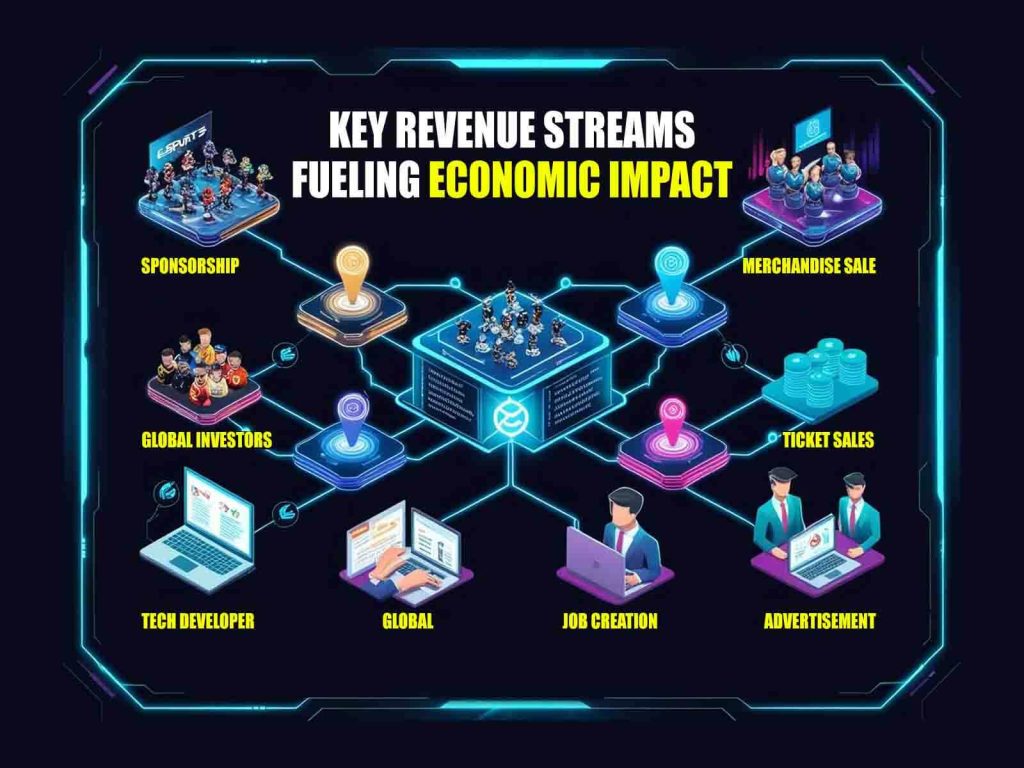
The economic impact of esports hinges on several dynamic revenue streams that fuel the industry’s growth. These streams not only support teams and tournaments but also attract global investors, tech developers, and job creators.
Sponsorships and Advertising
Brands now see esports as a goldmine for engaging younger, tech-savvy audiences.
- Sponsorships make up the largest slice of esports revenue, accounting for over 40% globally.
- Companies like Red Bull, Intel, and Coca-Cola partner with teams, events, and influencers.
- UK-based esports organisations also benefit from regional and national sponsorship deals, boosting local economies.
Advertising complements sponsorships through in-game placements, banners on streams, and product integrations that reach millions in real-time.
Media Rights
Media rights are another vital part of the esports economy.
- Streaming platforms like Twitch, YouTube, and Facebook Gaming compete for exclusive broadcasting rights.
- Traditional broadcasters such as the BBC and Sky Sports have also experimented with esports coverage.
- These deals generate substantial income for organisers and increase visibility across global markets.
Merchandising and Ticket Sales
Fan-driven revenue plays a huge role in building a sustainable esports ecosystem.
- Teams sell branded apparel, gaming peripherals, and digital content.
- Major events in cities like London, Birmingham, and Manchester generate local footfall and tourism revenue.
- Ticketed live events in dedicated arenas are making a comeback post-pandemic, adding to the industry’s financial footprint.
Prize Pools
Large-scale tournaments offer multi-million-pound prize pools.
- The International (Dota 2) and Fortnite World Cup have awarded record-breaking sums.
- These pools are often funded by game publishers and in-game community contributions.
- Prize money attracts elite global talent and media attention, reinforcing the industry’s prestige.
Player Salaries
Top esports players now earn salaries on par with traditional athletes.
- UK teams in games like League of Legends, Valorant, and Counter-Strike employ players full-time.
- Salaries are often supplemented by endorsements, streaming income, and prize winnings.
- As demand for professional players increases, salaries are expected to rise especially in Europe and North America.
Esports Betting
Betting has emerged as a fast-growing revenue channel.
- Esports betting sites allow users to wager on match outcomes, much like traditional sports.
- While regulation varies by country, the UK Gambling Commission monitors legal esports betting platforms.
- Betting contributes significantly to tax revenue and overall industry valuation.
In-game Purchases and Monetization
Publishers benefit from integrated in-game economies.
- Skins, loot boxes, battle passes, and cosmetics generate billions.
- Titles like Fortnite, Apex Legends, and Call of Duty lead in digital microtransactions.
- This model sustains free-to-play games and funds tournaments, marketing, and player development.
Investment, Technology, and Infrastructure
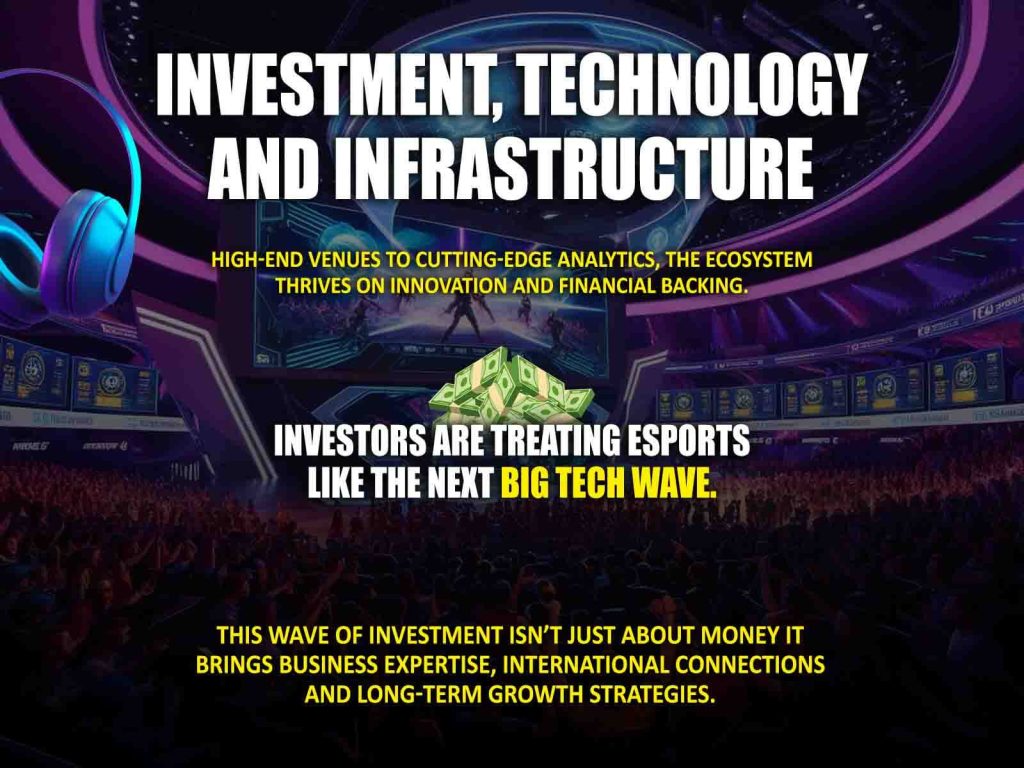
As the economic impact of esports accelerates, so too does the investment into the infrastructure that supports it. From high-end venues to cutting-edge analytics, the ecosystem thrives on innovation and financial backing.
Venture Capital and Private Investment
Investors are treating esports like the next big tech wave.
- Global venture capital firms have invested over £3 billion into esports since 2018.
- UK startups focusing on gaming tech, content platforms, and esports data are drawing serious interest.
- Private equity is also flowing into team organisations, training facilities, and tournament operators.
This wave of investment isn’t just about money it brings business expertise, international connections, and long-term growth strategies.
Dedicated Esports Venues
Physical spaces play a pivotal role in legitimising the esports experience.
- London’s Red Bull Gaming Sphere and Confetti X in Nottingham are examples of UK-based esports hubs.
- These venues host tournaments, bootcamps, and fan meetups, attracting both players and tourists.
- Events in such venues create local employment and increase regional revenue through hospitality and transport.
Internationally, purpose-built stadiums in places like Seoul, Shanghai, and Los Angeles highlight the global trend toward esports urban development.
Technology and Analytics
Behind every pro team is a layer of tech-driven performance.
- Real-time analytics track player stats, reaction times, and team synergy.
- AI and machine learning optimise training schedules and gameplay review.
- UK firms specialising in esports analytics and hardware are becoming crucial partners for elite teams.
Moreover, tech innovations improve viewer experiences through enhanced graphics, VR arenas, and interactive live streams fueling deeper fan engagement and additional revenue.
The Role of Key Stakeholders in the Esports Industry
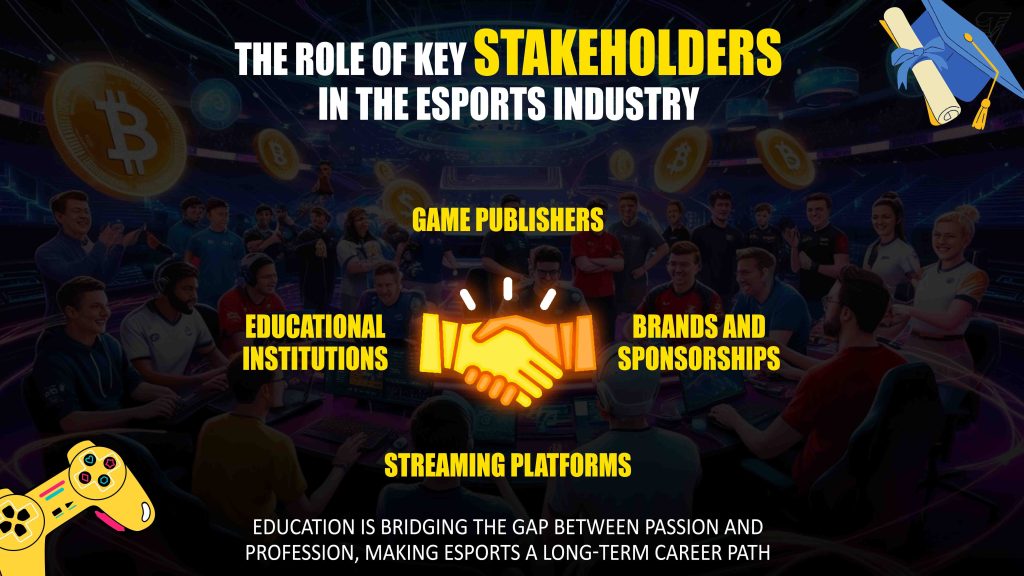
The economic impact of esports wouldn’t be possible without the collaboration of multiple stakeholders. Each plays a vital role in scaling the industry and delivering value across the ecosystem.
Game Publishers
Publishers are the backbone of the esports economy.
- Companies like Riot Games, Valve, and Activision Blizzard fund tournaments, set rules, and create competitive formats.
- In the UK, publishers often collaborate with universities, leagues, and venues to expand their reach.
- They also monetise in-game content, generating continuous revenue streams beyond game sales.
Without publisher support, competitive scenes wouldn’t be sustainable or scalable.
Streaming Platforms
Esports thrives in the digital world, and streaming platforms drive its visibility.
- Twitch remains the dominant player, but YouTube and Facebook Gaming are closing in.
- Platforms earn through ads, subscriptions, and partnerships with event organisers.
- UK-based streamers and influencers often sign exclusive deals, creating a domestic streaming economy.
These platforms act as broadcasters, media companies, and communities all rolled into one.
Brands and Sponsorships
Big brands now see esports as part of mainstream culture.
- Non-endemic sponsors like banks, car makers, and energy drinks invest millions into esports exposure.
- Sponsorships in the UK include national campaigns, product tie-ins, and community events.
- These partnerships create marketing value while funding teams, tournaments, and grassroots initiatives.
As a result, brands aren’t just advertising they’re shaping the culture of modern e sports.
Educational Institutions
Universities and schools are embracing e sports academically and professionally.
- The UK is home to dozens of institutions offering e sports degrees, certifications, and societies.
- Courses cover event management, digital media, team coaching, and game design.
- Partnerships with teams and companies help students transition directly into the workforce.
Education is bridging the gap between passion and profession, making esports a long-term career path.
Esports and Its Impact on Employment and Local Economies
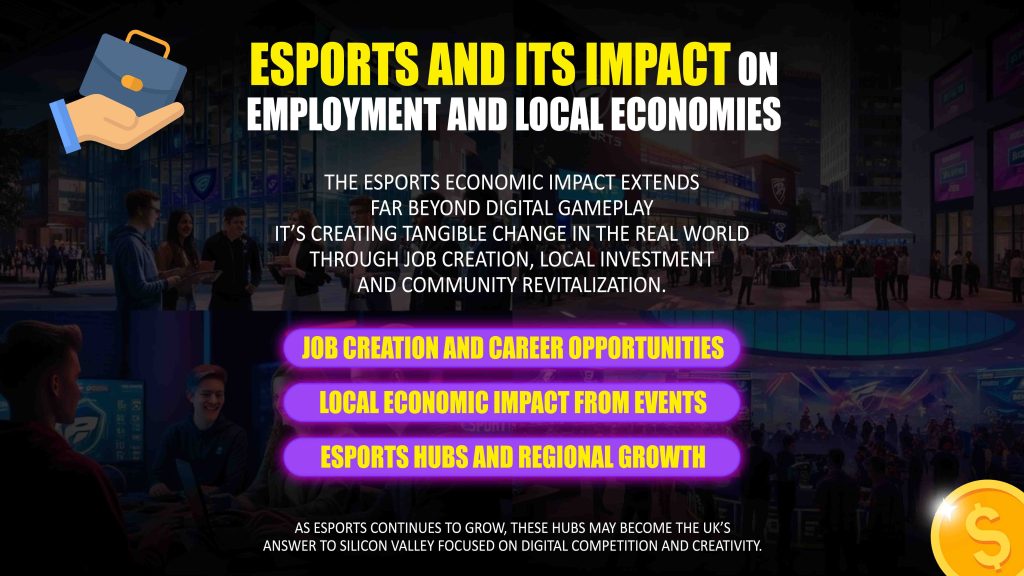
The esports economic impact extends far beyond digital gameplay it’s creating tangible change in the real world through job creation, local investment, and community revitalization.
Job Creation and Career Opportunities
E sports support a wide array of careers across multiple sectors.
- Roles include players, coaches, analysts, content creators, marketers, event planners, and developers.
- UK job listings in esports have grown steadily, with cities like London and Manchester leading the way.
- Freelance and remote opportunities are booming, offering flexibility and global collaboration.
Beyond competitive play, career paths also exist in broadcasting, production, legal support, and public relations.
Local Economic Impact from Events
Live e sports events inject money directly into local economies.
- Tournaments and conventions fill hotels, restaurants, and public transport systems.
- A 2023 League of Legends event in London generated over £2 million in local spending.
- Councils and tourism boards now view esports as a legitimate tool for economic development.
Small towns and cities can benefit by hosting mid-size events, fan meetups, or bootcamps.
Esports Hubs and Regional Growth
Some regions are developing into e sports innovation clusters.
- London, Birmingham, and Nottingham are emerging as UK esports hubs, supported by infrastructure and investment.
- These hubs attract talent, startups, and media production companies.
- They also boost real estate markets with demand for offices, studio spaces, and gaming venues.
As esports continues to grow, these hubs may become the UK’s answer to Silicon Valley focused on digital competition and creativity.
Global Reach and Regional Variations in Esports
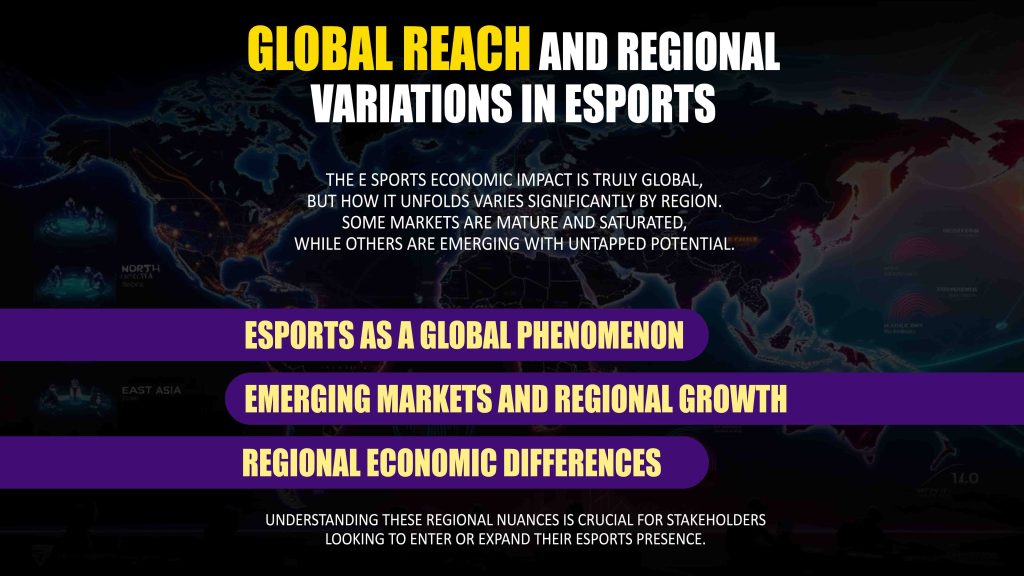
The e sports economic impact is truly global, but how it unfolds varies significantly by region. Some markets are mature and saturated, while others are emerging with untapped potential.
Esports as a Global Phenomenon
E sports events draw millions of viewers from every continent.
- In 2024, global esports revenue topped £1.2 billion, with over 600 million viewers worldwide.
- Major tournaments are broadcast in multiple languages and hosted across Europe, Asia, and the Americas.
- Cross-border teams, sponsorships, and leagues fuel international collaboration and competition.
This global scale allows brands and investors to think beyond borders and tap into culturally diverse markets.
Emerging Markets and Regional Growth
While Asia and North America dominate revenue, new regions are rising fast.
- Latin America, Eastern Europe, and Southeast Asia are seeing double-digit growth in viewership and player participation.
- Mobile esports, especially, is driving expansion in regions with lower PC and console access.
- Governments in countries like Brazil and India are starting to back e sports through regulation and funding.
These areas represent exciting frontiers for game publishers, advertisers, and tech companies.
Regional Economic Differences
Economic impact differs depending on local infrastructure, tech access, and cultural acceptance.
- The UK’s mature tech sector and public enthusiasm support steady e sports growth.
- In contrast, countries with limited broadband or social stigma toward gaming grow more slowly.
- However, once infrastructure catches up, these markets often leapfrog stages of development.
Understanding these regional nuances is crucial for stakeholders looking to enter or expand their esports presence.
The UK-Specific Economic Impact of Esports
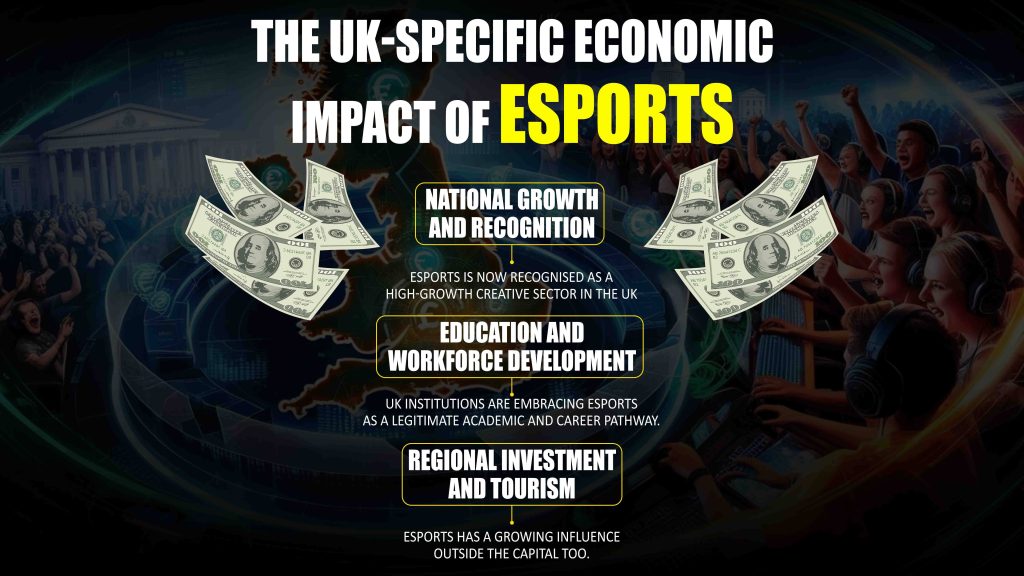
The esports economic impact in the UK is gaining serious momentum. With increased government recognition, private investment, and a growing fanbase, the nation is carving out its place on the global e sports stage.
National Growth and Recognition
Esports is now recognised as a high-growth creative sector in the UK.
- The UK games industry, including esports, contributes over £2.9 billion annually to GDP.
- Government bodies like UKIE and DCMS support e sports with research, funding, and policy guidance.
- London’s inclusion in the League of Legends MSI 2023 tournament marked a milestone in international credibility.
Esports is now more than a pastime it’s part of the UK’s digital economy strategy.
Education and Workforce Development
UK institutions are embracing esports as a legitimate academic and career pathway.
- Over 30 universities now offer e sports degrees or modules.
- BTEC qualifications in e sports are available at the college level.
- These courses help students build real-world skills in event management, marketing, and media production.
The result? A new generation trained for e sports-related careers in and beyond the UK.
Regional Investment and Tourism
Esports has a growing influence outside the capital too.
- Cities like Manchester, Birmingham, and Glasgow are investing in gaming arenas and digital campuses.
- E sports festivals and tournaments attract visitors, boosting local hospitality and transport sectors.
- The UK’s central time zone and global language accessibility also make it a strategic location for international events.
Together, these elements make esports a viable economic driver across the nation.
Challenges and Future Trends in E sports
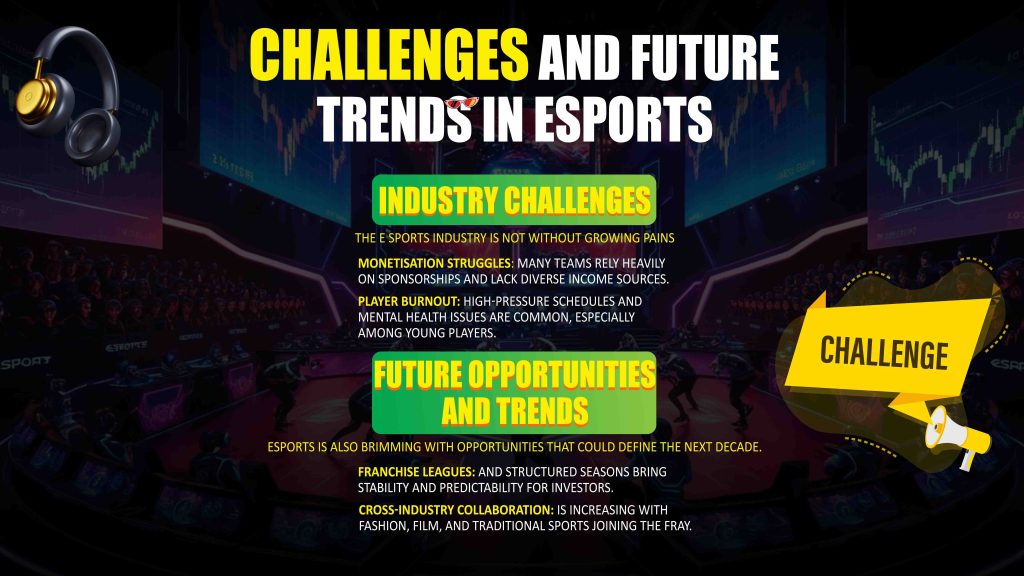
Despite its rapid rise, the economic impact of esports faces hurdles that could shape its trajectory. Still, innovation and adaptability continue to define its future.
Industry Challenges
The e sports industry is not without growing pains.
- Monetisation struggles: Many teams rely heavily on sponsorships and lack diverse income sources.
- Player burnout: High-pressure schedules and mental health issues are common, especially among young players.
- Regulation gaps: The UK lacks a unified body overseeing esports governance and safeguarding.
- Sustainability: Concerns over energy consumption and e-waste from hardware upgrades remain unresolved.
Addressing these issues is critical for maintaining credibility and long-term viability.
Future Opportunities and Trends
Esports is also brimming with opportunities that could define the next decade.
- Franchise leagues and structured seasons bring stability and predictability for investors.
- Cross-industry collaboration is increasing with fashion, film, and traditional sports joining the fray.
- AI and data analytics offer new frontiers in coaching, performance tracking, and fan engagement.
- Mobile e sports are exploding in regions with lower PC access, driving global growth.
- Web3 integration and digital ownership through NFTs and tokens are emerging, albeit cautiously.
In the UK, continued government support, grassroots development, and regional investment can keep esports on an upward path.
Conclusion
The economic impact of esports is undeniable, with a profound influence on job creation, local economies, and global entertainment. As it continues to evolve, esports are set to transform digital competition into a sustainable, mainstream industry.
The UK is well-positioned to harness the growing opportunities within this space, with strategic investments, educational initiatives, and infrastructure developments paving the way for future success. However, challenges such as regulation gaps, player wellbeing, and sustainability must be addressed for the sector to realise its full potential.
Looking ahead, e sports will continue to grow, not just as a form of entertainment, but as a cornerstone of the global digital economy. With the right mix of investment, innovation, and collaboration, esports will remain a vital driver of economic growth, both in the UK and across the globe.
FAQs
Esports significantly contribute to global economies through sponsorships, media rights, merchandising, and local event impacts.
Esports generate careers in event management, content creation, marketing, and team roles, boosting employment worldwide.
Sponsorships, advertising, media rights, prize pools, and in-game purchases are major revenue drivers for the esports industry.
Emerging markets like Southeast Asia, Latin America, and Eastern Europe are experiencing rapid growth in esports viewership and participation.
Esports events boost local economies by increasing tourism, hospitality spending, and creating job opportunities in host cities.
Esports face challenges such as player burnout, regulatory gaps, sustainability issues, and the need for more diverse income streams.
The UK sees economic growth through job creation, regional investment, educational programs, and hosting major esports events.
Previous Post
Next Post







- Business
 5
5 - Cricket5
- Department for Education49
- Departments3
- Driving and Transport
 53
53 - Education45
- Finance6
- Football13
- Golf3
- Government
 108
108 - Guides1
- Health
 5
5 - Health4
- International Politics9
- Law and Justice31
- Money and Tax23
- National Politics4
- News68
- Politics6
- Sports38
- Technology5
- Tennis3
- Transportation4
- Uncategorized4
- Visa
 17
17 - Visas and Immigration
 24
24 - Weather1