Formula 1 changes in the UK are redefining how fans experience the sport. As the 2025–26 seasons approach, sweeping updates to cars, engines, and race rules are set to shift the competitive landscape. From the evolution of F1 engines to the impact of sustainable fuel, every detail is engineered for speed, safety, and sustainability.
This blog explores the regulatory, technical, and team-based changes coming to Formula 1, especially those affecting UK teams and fans. With new talent, advanced technology, and a refined scoring system, the grid is bracing for its boldest transformation yet.
Formula 1 Key Regulatory and Technical Changes for 2025
Formula 1’s 2025 season kicks off with one of the most significant overhauls in its modern era. These rule changes are designed to improve racing quality, reduce costs, and reinforce long-term sustainability goals across the sport.
Aerodynamic Regulations in Formula 1
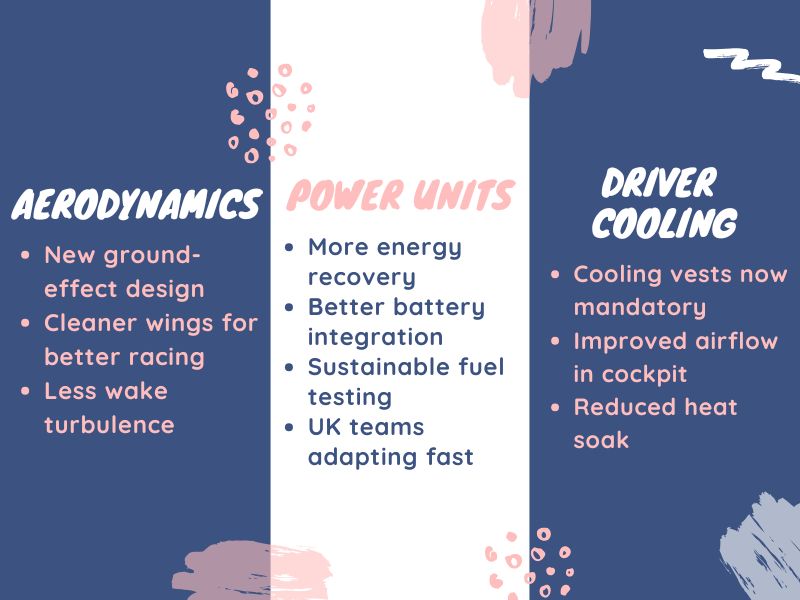
The FIA has introduced revised ground-effect designs to limit dirty air and increase overtaking. Front and rear wing adjustments now aim to enhance close racing while maintaining safety standards.
- Simpler, cleaner aerodynamic profiles
- Focus on improving airflow stability during tight battles
- Reduced wake turbulence behind cars
Formula 1 Power Unit Evolution
The shift toward electrified and sustainable F1 engines continues. While major changes are locked for 2026, transitional upgrades in 2025 prepare teams for that leap.
- Higher energy recovery thresholds
- Improved battery integration
- Early testing for F1 sustainable fuel components
And UK-based powerhouses like Mercedes and Red Bull Powertrains are already adapting their Formula 1 engines to meet upcoming demands.
Driver Cooling Systems
A new requirement mandates advanced driver cooling features. This comes in response to driver safety concerns in hotter venues like Qatar and Miami.
- Standardised cooling vests
- Revised cockpit airflow ducts
- Reduced heat soak during safety car periods
Rookie Driver Programme
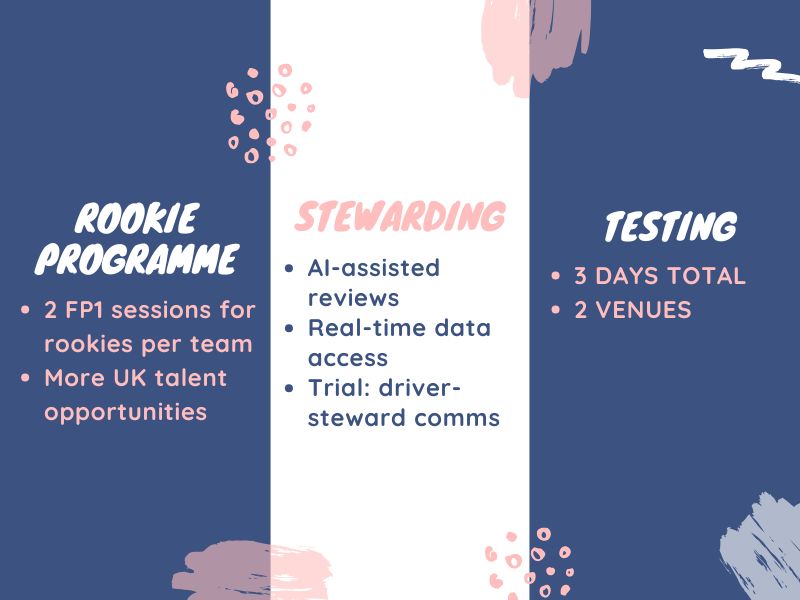
Teams are now obligated to allocate at least two FP1 sessions to rookie drivers per season. This opens the door for fresh British talent to showcase their skill in real-time.
Stewarding Enhancements
To ensure fairer outcomes and quicker decisions:
- More robust AI tools for incident reviews
- Real-time data access for race control
- Live radio between drivers and stewards (trial stage)
Changes to Scoring System
Sprint weekends will feature a revised point system:
| Position | Points (Sprint) |
| 1st | 10 |
| 2nd | 8 |
| 3rd | 6 |
| 4th | 5 |
| 5th | 4 |
| 6th | 3 |
| 7th | 2 |
| 8th | 1 |
Full race scoring remains unchanged, though there are early talks of tweaks for 2026.
Formula 1 Testing Regulations
Pre-season testing has been limited to 3 days across two venues. Teams must balance performance development with data collection in record time.
Qualifying and Grid Rules
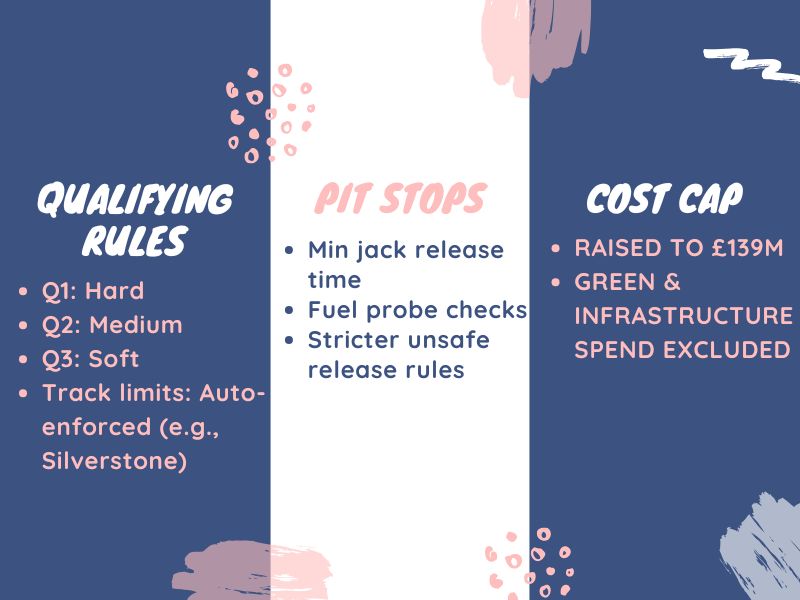
A revised tyre compound mandate will be tested. Drivers must use specific compounds in each round of qualifying, challenging strategy and adaptability.
- Q1: Hard
- Q2: Medium
- Q3: Soft
Track limit enforcement will also be automated at select venues like Silverstone and Monza.
Formula 1 Pit Stop Requirements
Minor but impactful changes include:
- Minimum jack release time for safety
- New fuel probe inspections during sessions
- Revised unsafe release penalties
Formula 1 Updated Cost Cap
The FIA has marginally raised the cost cap ceiling to £139 million for 2025. However, sustainability and infrastructure spending still fall outside of this cap, giving UK teams like Aston Martin and McLaren some developmental breathing room.
Key Team and Driver Changes in Formula 1
As Formula 1 gears up for the 2025 season, several major team and driver movements are set to reshape the grid. The upcoming changes reflect not just a desire for faster, more competitive cars, but also a shifting landscape in terms of team dynamics and driver talent.
Lewis Hamilton Joins Ferrari
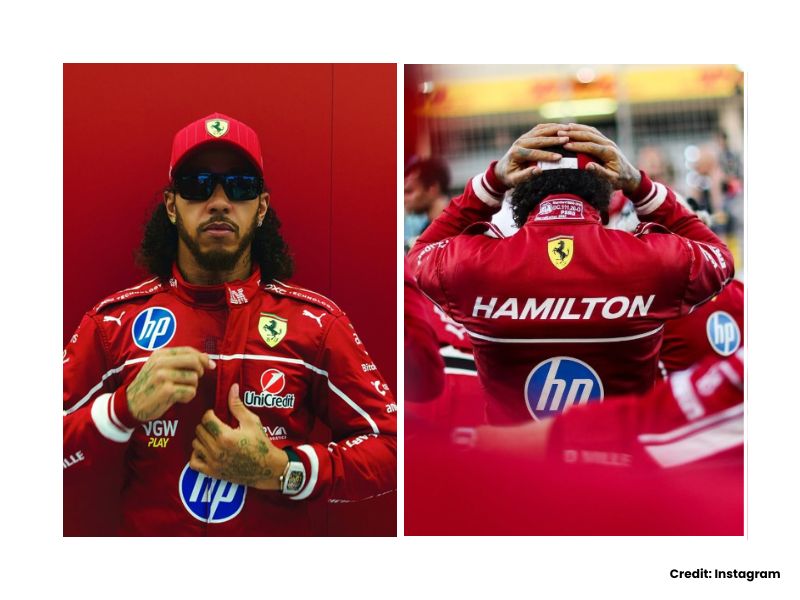
One of the most talked-about moves of 2025 is Lewis Hamilton’s transfer to Ferrari. After spending over a decade with Mercedes, Hamilton is ready to help Ferrari break its dry spell of no championship wins since 2007. The British driver, known for his exceptional skill and race craft, brings invaluable experience to the iconic Italian team.
- What it means for Ferrari: Hamilton’s arrival could be the key to unlocking Ferrari’s potential in the new era of F1. The team is expected to push hard for titles, especially with the new technical regulations coming into play.
- What it means for Hamilton: This move is a chance for Hamilton to add a fourth constructor’s title to his illustrious career, and perhaps more importantly, fulfil a dream of driving for Ferrari.
Source: Instagram
Rookie Surge in 2025
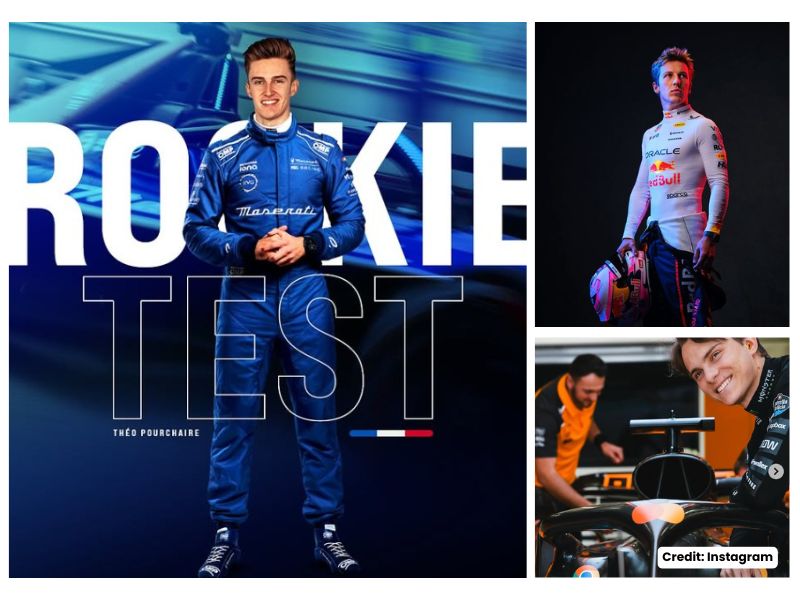
Rookie drivers are expected to make their debut in large numbers during the 2025 season. Teams are investing in young talent, with British drivers leading the way in this shift.
- Notable rookies:
- Oscar Piastri (McLaren), who has already made waves in testing, could be a rising star.
- Liam Lawson (AlphaTauri) has impressed during his limited appearances and is expected to take on a full-time seat.
- Theo Pourchaire (Alfa Romeo), another talented young driver, is set to battle for points in his rookie year.
Source: Instagram
The FIA’s rookie programme promotes inclusivity and ensures fresh talent enters the sport regularly. British teams like McLaren and Aston Martin are likely to benefit from this influx of new talent as they continue to push for podiums.
Red Bull Reshuffle
Red Bull is making waves in 2025 with some changes at the top. Christian Horner has confirmed that the team will continue to refine its operations for the new engine regulations coming in 2026.
While there are no major driver changes, there is speculation surrounding the future of Sergio Perez, who is under pressure from younger talent pushing for a seat.
- Red Bull’s future plans: With Max Verstappen continuing to dominate, Red Bull is preparing for the future with a focus on long-term sustainability. Expect a strong push to develop their 2026 power units, as Red Bull is one of the first teams to have a hybrid engine programme.
- Impact on UK-based Red Bull team: Red Bull’s Milton Keynes factory will lead new developments, especially in integrating sustainable fuel and AI into race strategy.
Focus on Sustainability and Technology in Formula 1
Formula 1 commits to sustainability and technological innovation in the 2025 season. In addition, these initiatives aim to reduce the sport’s environmental impact while pushing the boundaries of motorsport technology.
Sustainability Initiatives in Formula 1
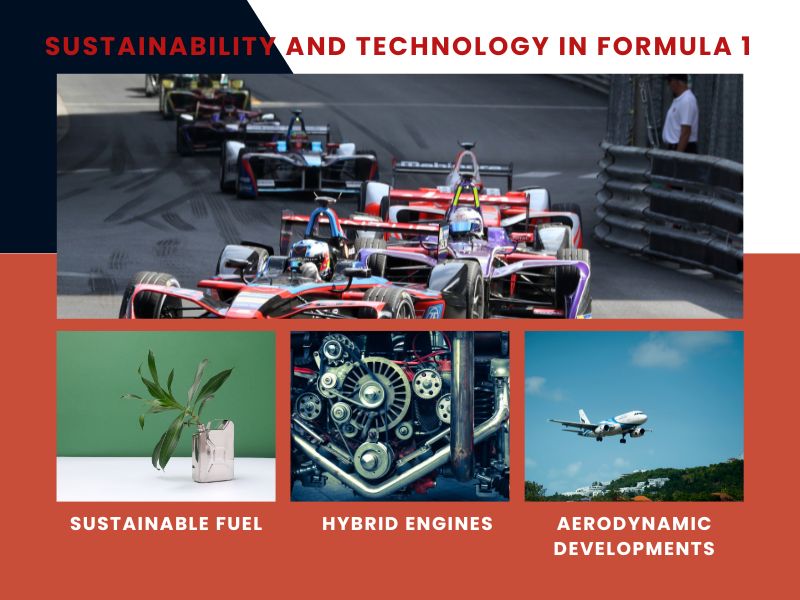
Sustainability is a key priority for F1 in 2025, with continued investment in sustainable fuels and eco-friendly technologies.
- Sustainable fuel: F1 cars will run on 100% sustainable fuel, reducing carbon emissions while maintaining the sport’s high performance.
- Hybrid engines: Teams will also rely on advanced hybrid power units that blend efficiency with power, helping to decrease the sport’s overall carbon footprint.
Technological Advancements in Formula 1
2025 will see groundbreaking technological advancements in car design, electronics, and performance.
- Power unit evolution: The F1 engines will continue evolving, with improved energy recovery systems, enhancing both efficiency and speed.
- Aerodynamic developments: New aerodynamic regulations will ensure better racing by allowing cars to follow each other more closely without losing performance.
Further, these advancements position Formula 1 as a leader in merging sustainability with cutting-edge technology, ensuring the sport’s future is both exciting and environmentally responsible.
Season Outlook and Challenges of Formula 1
The 2025 F1 season promises intense competition, unpredictable results, and exciting developments, but also presents a few key challenges for teams, drivers, and the sport as a whole.
Closer Racing Predicted
The latest aerodynamic regulations and car design advancements will bring closer racing and more wheel-to-wheel action in the 2025 season.
- Overtaking improvements: The new regulations aim to reduce turbulence, allowing drivers to race more closely without sacrificing speed.
- Strategic battles: As a result, fans can expect increased strategic battles throughout each race.
Midfield Teams in the Mix
Midfield teams are set to deliver stronger performances this year, as the updated cost cap and evolving technologies drive more competition at the front.
- Emerging challengers: Teams like McLaren and Aston Martin could upset the status quo, pushing for podium finishes.
No American Drivers of Formula 1 in 2025
Despite growing interest in the sport in the U.S., no American drivers will feature in 2025, meaning American fans will have to wait for future seasons for homegrown talent to take the wheel.
- Future prospects: This gap in American representation may spur more investment in U.S. driver development.
Key Challenges Ahead
F1 faces several challenges in 2025, including adapting to climate change goals, balancing sustainability with performance, and navigating regulation compliance.
- Environmental concerns: With the push for sustainable fuel, balancing performance and environmental goals remains a key challenge for F1 teams.
Conclusion
The 2025 Formula 1 season will mark a landmark year in the sport’s history, bringing exciting new challenges, regulations, and innovations. As teams adjust to the new aerodynamic regulations and power unit developments, we can expect more close racing and surprising results, particularly from the midfield teams.
The emphasis on sustainability and technological advancements ensures that F1 continues to lead the way in cutting-edge motorsport.
While fans will enjoy enhanced engagement through virtual access and esports integration, the absence of American drivers and the challenges of balancing performance with environmental goals will add complexity to the season.
Furthermore, the future of Formula 1 is bright, with the sport’s dedication to innovation and fan connection shaping an exciting path forward for 2025 and beyond.
Balancing sustainability goals with performance, adapting to new regulations, and meeting climate objectives.
FAQs
Aerodynamic regulations, power unit evolution, sustainability efforts, and new team dynamics.
F1 will use 100% sustainable fuel and focus on hybrid technology to reduce carbon emissions.
Expanded virtual access, enhanced F1 TV features, esports integration, and AR/VR experiences.
Midfield teams like McLaren and Aston Martin could challenge the top teams.
Despite growing interest, no U.S. drivers are confirmed for the 2025 season.
Balancing sustainability goals with performance, adapting to new regulations, and meeting climate objectives.
Related Posts



Previous Post
Next Post
Previous Post

Next Post






- Business
 5
5 - Cricket5
- Department for Education49
- Departments3
- Driving and Transport
 53
53 - Education45
- Finance6
- Football13
- Golf3
- Government
 108
108 - Guides1
- Health4
- Health
 5
5 - International Politics9
- Law and Justice31
- Money and Tax23
- National Politics4
- News68
- Politics6
- Sports38
- Technology5
- Tennis3
- Transportation4
- Uncategorized4
- Visa
 17
17 - Visas and Immigration
 24
24 - Weather1