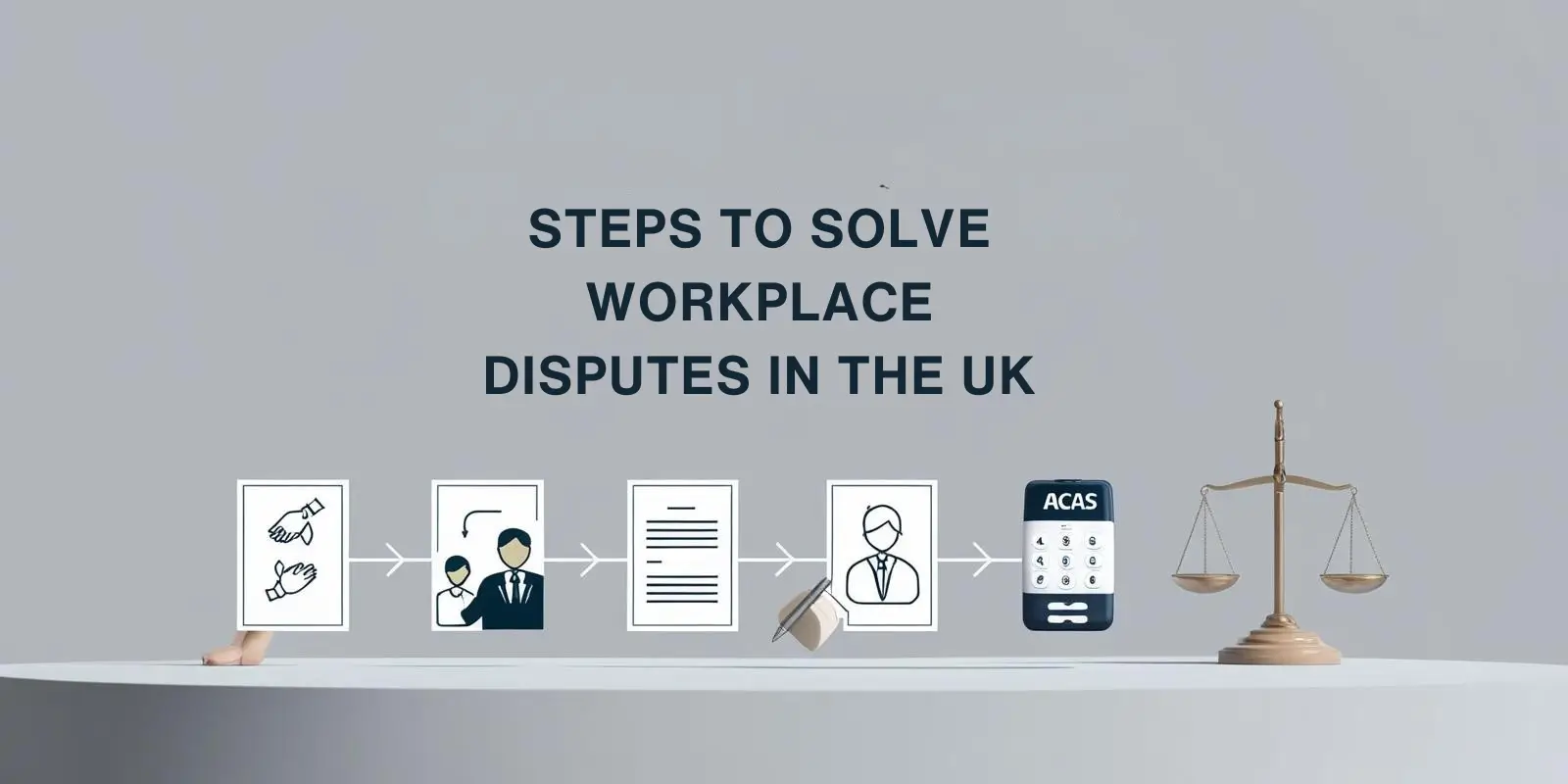
Experiencing disagreements or conflict at work can be incredibly stressful. Whether it’s a misunderstanding with a colleague, an issue with your manager, or a problem with your contract, these situations can affect your well-being and job performance. Fortunately, there are established ways to handle workplace disputes in the UK. Knowing the right steps can help you find a resolution fairly and professionally.
The goal is usually to resolve things as early and informally as possible. However, sometimes, more formal steps are needed. Here’s a look at the typical process and options available to you in the UK.
What Kind of Problems Are We Talking About?
Workplace disputes can arise from many situations. Understanding the nature of the problem is the first step. Common examples of workplace disputes include:
- Disagreements over pay, working hours, or holidays.
- Issues with health and safety.
- Concerns about disciplinary actions.
- Feeling bullied, harassed, or discriminated against.
- Problems with changes to your job role or contract.
- Conflicts with colleagues or managers.
Identifying the issue helps you decide the best way forward.
Step 1: Try to Resolve Things Informally
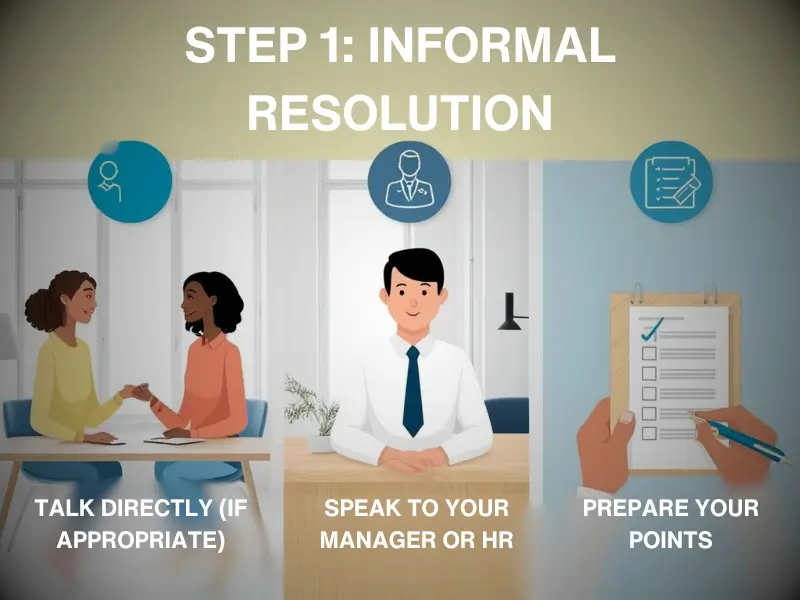
Before rushing into formal procedures, consider if the issue can be resolved through a simple conversation.
- Talk Directly (If Appropriate): If you feel comfortable and safe doing so, try talking directly to the person involved. Explain your concerns calmly and clearly. Listen to their perspective, too. A simple chat can often clear up misunderstandings.
- Speak to Your Manager or HR: If talking directly doesn’t work or isn’t appropriate, speak to your line manager. If the dispute involves your manager, approach their manager or your Human Resources (HR) department.
- Prepare beforehand: Think about what you want to say and what outcome you’re looking for. Make notes of specific incidents, including dates and times. Gather any relevant emails or documents. This preparation helps you present your case.
Many issues can be nipped in the bud at this stage, saving time and stress for everyone involved.
Step 2: Use Your Employer’s Formal Grievance Procedure
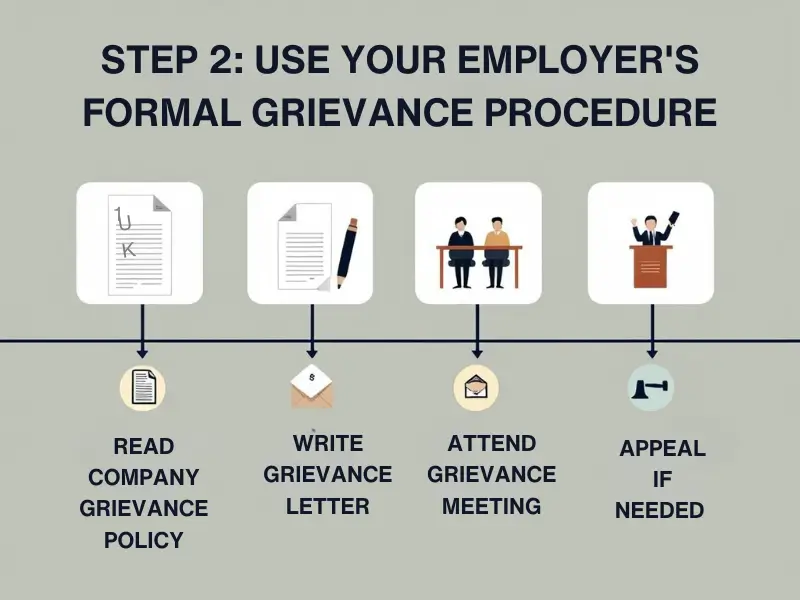
If informal steps don’t resolve the dispute with the employer or the issue is too serious for an informal chat, you usually need to raise a formal grievance.
- Check Your Company Policy: Your employer should have a written grievance procedure. You can usually find this in your staff handbook, intranet, or employment contract. Read it carefully – it will tell you exactly how to raise a grievance.
- Follow the ACAS Code: Employers in Great Britain should follow the ACAS Code of Practice on Disciplinary and Grievance Procedures. While not law itself, Employment Tribunals will consider whether the Code was followed when making decisions. Familiarise yourself with its recommendations.
- Write a Formal Grievance Letter: Clearly state that you are raising a formal grievance. Explain the problem in detail, including dates, locations, names of anyone involved, and any evidence you have. State what resolution you are seeking. Send this to the person specified in your company’s procedure (often HR or a designated manager).
- Attend a Grievance Meeting: Your employer should invite you to a meeting to discuss your grievance. You usually have the right to be accompanied by a work colleague or a trade union representative. Prepare for this meeting by reviewing your notes and thinking about the key points you want to make.
- Receive a Decision and Appeal: After the meeting, your employer should investigate and give you a decision in writing. If you’re unhappy with the outcome, you usually have the right to appeal. Your grievance procedure will explain how to do this.
Following the formal procedure is crucial. It gives your employer a proper chance to address the problem internally and shows you have acted reasonably if you need to take things further.
Step 3: Consider Workplace Dispute Mediation
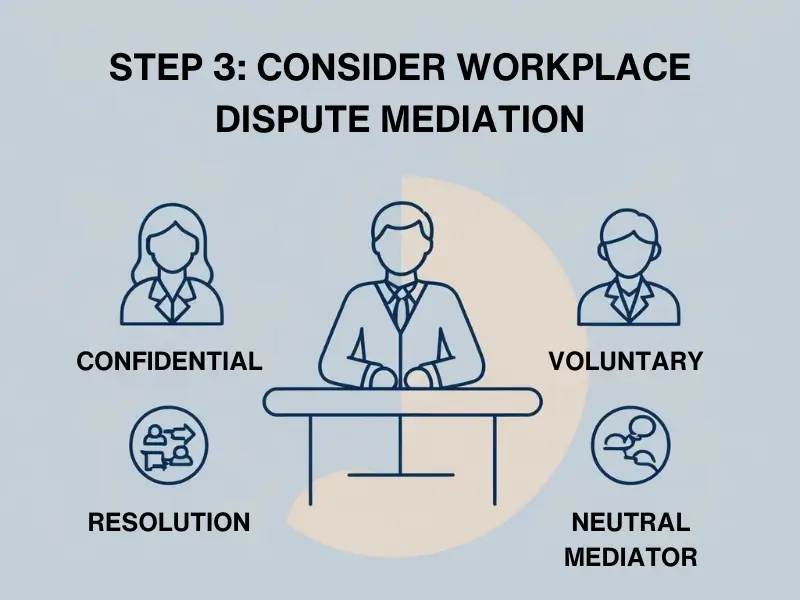
Sometimes, even after a formal grievance, disagreements persist. Before heading towards legal action, workplace dispute mediation can be a very effective option for workplace dispute resolution.
- What is Mediation? Mediation involves an impartial third party (the mediator) helping you and your employer discuss the issues and reach a mutually agreeable solution. The mediator doesn’t take sides or impose a decision; they facilitate the conversation.
- How does it work? It’s a voluntary process – both you and your employer must agree to try it. Discussions are confidential. The aim is to find practical solutions that work for everyone involved.
- Benefits: Mediation can be quicker, cheaper, and less stressful than formal legal routes. It can also help repair working relationships, which are often difficult after a formal dispute.
- Who Provides Mediation? Your employer might offer internal mediation, or you could use an external service. ACAS (the Advisory, Conciliation and Arbitration Service) offers mediation services and can provide more information.
Mediation offers a constructive way to solve a workplace dispute without the conflict escalating further.
Step 4: Getting Help from ACAS – A Key UK Resource
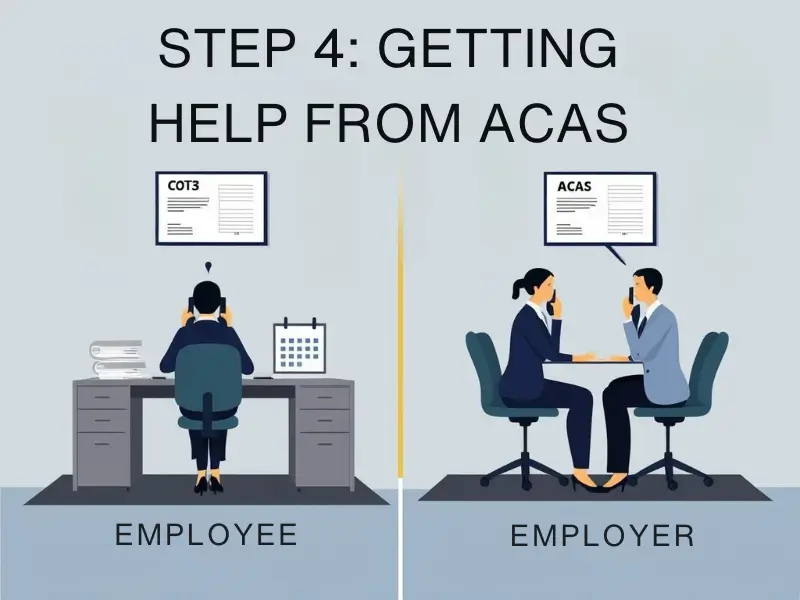
If internal procedures haven’t worked, ACAS is the next key point of contact in Great Britain (England, Scotland, Wales). They offer free, impartial workplace dispute advice and play a crucial role in resolving conflicts.
- ACAS Helpline: You can call the ACAS Helpline for free, confidential advice on your rights and options at any stage of a dispute.
- ACAS Early Conciliation (EC): This is a vital step. Before you can make a claim to an Employment Tribunal for most types of disputes, you must contact ACAS first to begin Early Conciliation.
- What happens? You notify ACAS about your potential claim. They will assign a conciliator who will talk to both you and your employer (separately and confidentially) to see if an agreement can be reached without going to a tribunal.
- Why is it important? It’s a mandatory requirement for most claims. Receiving an early conciliation notification about a workplace dispute from ACAS formally starts this process if your employer initiates it, or you will start it yourself before claiming.
- Outcomes: The conciliator will try to help you reach a settlement (often documented in a legally binding agreement called a COT3). If a settlement isn’t possible, ACAS will issue an EC certificate, which you need to proceed with a tribunal claim.
- Benefits: EC is free, confidential, and often helps resolve disputes much faster and with less stress than a tribunal. You don’t have to reach an agreement if you don’t want to.
Understanding the ACAS workplace dispute resolution services, especially Early Conciliation, is essential for anyone navigating a serious conflict at work in the UK. It’s a core part of how to resolve a workplace dispute formally.
Step 5: Employment Tribunal – The Last Resort
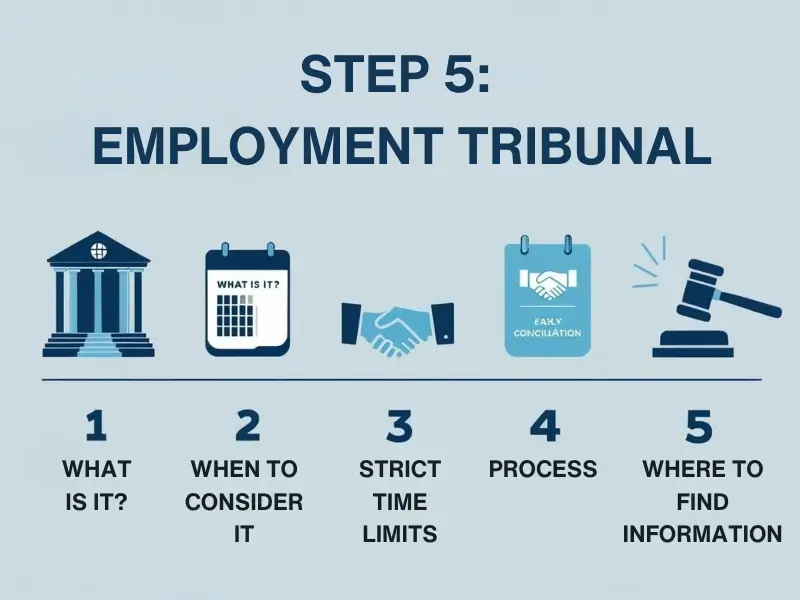
If all other avenues – informal talks, formal grievance, mediation, and ACAS Early Conciliation – have failed to resolve the issue, your final option may be to claim to an Employment Tribunal.
- What is it? An Employment Tribunal is like a court that deals specifically with workplace disputes. It hears evidence from both sides and makes legally binding decisions.
- When to Consider It: Tribunals handle claims relating to things like unfair dismissal, discrimination, unpaid wages, and breach of contract.
- Strict Time Limits: This is crucial! There are very strict time limits for making a tribunal claim – usually three months less one day from the date the incident happened (or the date your employment ended). You must start the ACAS Early Conciliation process before this deadline expires. Missing the deadline usually means you lose your right to claim.
- The Process: Making a claim involves filling out forms, submitting evidence, potentially attending hearings, and possibly facing legal costs (though there are no tribunal fees currently, legal representation can be expensive).
- Where to Find Information: The Gov.uk website provides detailed information on claiming an Employment Tribunal.
Tribunals should always be seen as a last resort due to the time, stress, and potential costs involved. The focus should always be on trying to solve a workplace dispute at an earlier stage if possible.
Key Takeaways
Navigating workplace disputes requires patience and understanding the correct procedures:
- Act Promptly: Don’t let issues fester. Address them as soon as possible.
- Start Informally: Try talking things through first, if appropriate.
- Use Formal Procedures: Follow your employer’s grievance procedure carefully.
- Know ACAS: Understand their role, use their Helpline, and engage fully with Early Conciliation.
- Consider Mediation: It can be a constructive alternative to formal action.
- Mind the Deadlines: Be acutely aware of the strict time limits for Employment Tribunal claims.
- Seek Advice: Use resources like ACAS and Citizens’ Advice. If the situation is complex, consider seeking advice from a trade union or employment solicitor.
Resolving problems at work can be challenging, but by following these steps and seeking the right support, you stand the best chance of finding a fair and satisfactory outcome.
Read more about How to Deal with Workplace Bullying in UK
Always try to resolve the issue informally first, if you feel safe and comfortable doing so. This could mean talking directly to the colleague involved, or speaking with your line manager or HR department. Prepare what you want to say beforehand.
The next step is usually to raise a formal grievance. Check your employer’s specific grievance procedure (often in your handbook) and follow it carefully. This typically involves writing a formal letter explaining the issue and attending a grievance meeting.
Yes, for most types of workplace disputes in Great Britain, you must contact ACAS to start Early Conciliation (EC) before you can make a claim to an Employment Tribunal. ACAS will try to help you and your employer reach a settlement first.
Mediation is a voluntary process where an impartial third party (a mediator) helps you and your employer discuss the dispute and try to find a mutually agreeable solution. It’s confidential and can be quicker and less stressful than formal legal action.
Yes, there are very strict time limits. Typically, you must start the process (including ACAS Early Conciliation) within three months less one day from the date the incident happened or your employment ended. Missing this deadline usually means losing your right to claim.
Source / Ref.: Gov.uk Nidirect.gov.uk Contains public sector information licensed under Open Government Licence v3.0.
Written by [Ketan Borada / British Portal Team] – Founder of British Portal, dedicated to providing accurate and up-to-date information on UK public services and benefits.Related Posts

Previous Post
Next Post






- Business
 5
5 - Cricket5
- Department for Education49
- Departments3
- Driving and Transport
 53
53 - Education45
- Finance6
- Football13
- Golf3
- Government
 108
108 - Guides1
- Health
 5
5 - Health4
- International Politics9
- Law and Justice31
- Money and Tax23
- National Politics4
- News68
- Politics6
- Sports38
- Technology5
- Tennis3
- Transportation4
- Uncategorized4
- Visa
 17
17 - Visas and Immigration
 24
24 - Weather1