Vehicle tax is a legal requirement for nearly every car on UK roads. Whether you’re driving a daily commuter or storing a classic car, keeping your tax up to date is essential.
The DVLA makes it simple to tax your vehicle, but missing deadlines or lacking proper documents can lead to fines, enforcement, or even clamping.
In this guide, we’ll explain how to check your vehicle status, the documents you need, ways to pay, and which vehicles may be exempt. If you’re buying, selling, or own a classic or electric car, these insights will help you stay compliant with vehicle tax rules and avoid surprises.
Checking Your Vehicle Tax Status
Knowing your vehicle status is crucial before you hit the road. The DVLA vehicles system makes it easy to verify if your car is taxed and road-legal. This check helps avoid unexpected penalties and ensures your records are current.
Regular checks are especially important if you’ve recently bought a car, transferred ownership, or moved home. It’s also helpful if you’re unsure whether your current vehicle tax is still valid.
How to Check Vehicle Status
You can check your vehicle tax and vehicle status quickly using several reliable methods. The DVLA provides online tools and accepts document-based checks to help you stay updated.
- Online
Visit the official DVLA vehicle tax checker. You’ll need your vehicle registration number. It confirms if your tax is current and shows the MOT status too.
- Logbook or Reminder
Your V5C registration certificate (logbook) or V11 tax reminder letter also shows when your tax is due. These are useful if you can’t get online.
- New Keepers
If you’ve just bought the vehicle, use the green slip (V5C/2) and check the tax status online. You’ll still need to tax your vehicle yourself, even if the previous owner had valid tax.
Taxing Vehicles
Once you’ve confirmed your vehicle’s tax status, the fastest way to proceed is to tax vehicle online through the official DVLA website. The DVLA offers several easy methods to pay, ensuring you can always stay compliant with vehicle tax regulations.
Methods of Taxation
- Online
The quickest way to tax your vehicle is online through the DVLA website. You’ll need your V5C registration number, a debit or credit card, and your MOT certificate online (if applicable).
- Phone
You can also tax your vehicle by calling the DVLA’s automated system. Keep your registration number and payment details ready when you call.
- Post Office
Alternatively, you can go to a participating Post Office. You’ll need your V5C or V11 reminder letter. This method is particularly useful if you don’t have access to the internet.
Required Documents for Vehicle Tax
To tax your vehicle, you’ll need specific documents depending on the method you choose. Make sure to have everything ready to avoid delays or issues when completing your tax application.
- V5C Logbook
The V5C registration certificate (also known as the logbook) is one of the most important documents. It provides key information about your vehicle, such as the make, model, and registered keeper. You’ll need the details from this document to complete the online or phone application.
- V11 Tax Renewal Reminder
The V11 is the reminder letter sent by the DVLA that informs you when your tax is due for renewal. It also provides a reference number to help you renew your vehicle tax quickly.
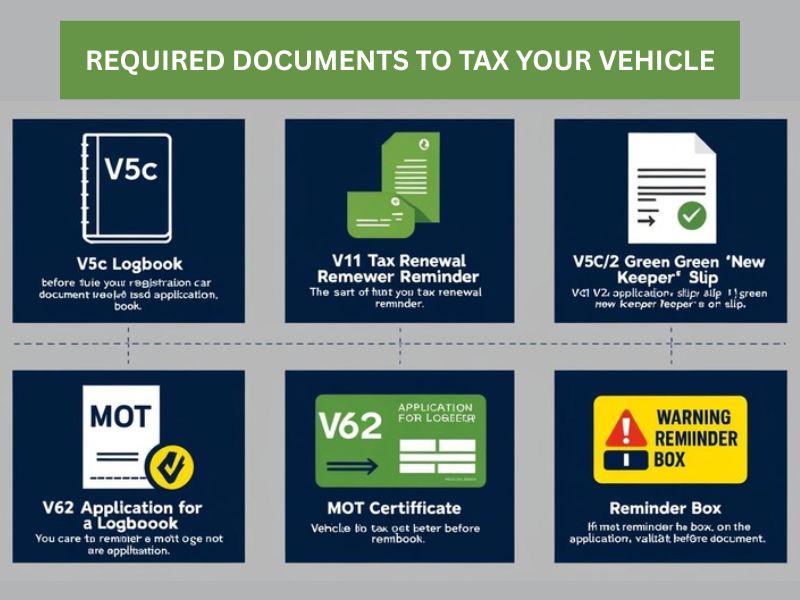
- V5C/2 Green ‘New Keeper’ Slip
If you’ve just bought a vehicle, the V5C/2 slip (green slip) proves you’re the new keeper. You’ll need this when taxing your vehicle for the first time as a new owner.
- V62 Application for a Logbook
If you’ve lost your V5C logbook, you’ll need to complete a V62 application to get a replacement. Without this document, you might face delays when trying to tax your vehicle.
- MOT Certificate
An MOT certificate is necessary to confirm that your vehicle is roadworthy. If your car is older than three years, you need a valid MOT certificate to tax your vehicle.
Note: If you’ve lost your logbook, you can still tax a vehicle without V5C by using a V62 application form along with other valid documents.
Key Aspects of Vehicle Tax
Understanding the key aspects of taxing vehicles is essential for every driver. There are several important points to know to ensure you stay compliant and avoid penalties.
- Legal Requirement
In the UK, it’s a legal obligation to tax your vehicle if you intend to drive it on public roads. Failing to pay vehicle tax can lead to fines, penalties, and even having your vehicle clamped or impounded.
- Consequences of Not Taxing
Not taxing your vehicle can result in a fixed penalty of £80, which increases if not paid on time. The DVLA may also take enforcement action, leading to the removal of your vehicle.
- Payment Options
You can pay your tax in full for the year or opt for monthly or six-monthly payments. For online payments, you can use a debit or credit card. Remember that timely payments will ensure your vehicle remains legal to drive.
- Myth Busting Facts
There are many myths surrounding taxing vehicles that can confuse drivers and lead to misunderstandings. Let’s clear up some common misconceptions to help you stay informed and avoid unnecessary mistakes.
Myth 1: If I Don’t Drive My Car, I Don’t Need to Tax It
Myth 2: The Tax Automatically Transfers When I Buy a Vehicle
Myth 3: If I Pay My Car Tax at the Post Office, It’s Done Forever
Myth 4: Classic Cars Never Need to Be Taxed
Myth 5: If I Have Electric Vehicle (EV) Tax Exemption, I’m Tax-Free Forever
Vehicle Tax When Buying or Selling
When you buy or sell a vehicle, the tax situation changes, and it’s important to manage these adjustments promptly. Both buyers and sellers need to take the necessary steps to ensure that the vehicle’s tax status is updated correctly.
- When Buying
If you’re purchasing a vehicle, it’s crucial to tax your vehicle immediately after the sale, as the tax doesn’t transfer to you automatically. The previous owner’s tax status is irrelevant after ownership changes. You can do this online, over the phone, or at the Post Office using the V5C/2 green ‘new keeper’ slip.
- When Selling
As the seller, you must notify the DVLA of the change of ownership. The new keeper must tax their vehicle straight away to avoid penalties. Don’t assume that they will automatically tax it. Always remind the buyer to update the vehicle’s tax status.
Tax Exemptions
Certain vehicles in the UK may be exempt from paying tax. These tax exemptions are typically based on the type of vehicle, its use, or its environmental impact. Let’s take a closer look at the most common categories of tax exemptions.
- Classic Car
Classic car that are over 40 years old are eligible for a tax exemption in the UK. If your vehicle qualifies for classic car tax exemption, you must still apply through the DVLA to ensure its officially recognised and recorded.
- Electric Vehicles (EVs)
Electric vehicles are eligible for a vehicle tax exemption due to their environmental benefits. Since they don’t emit CO2, EV owners are not required to pay road tax. However, if you switch to a hybrid or another type of low-emission vehicle, you may be eligible for a reduced tax rate.
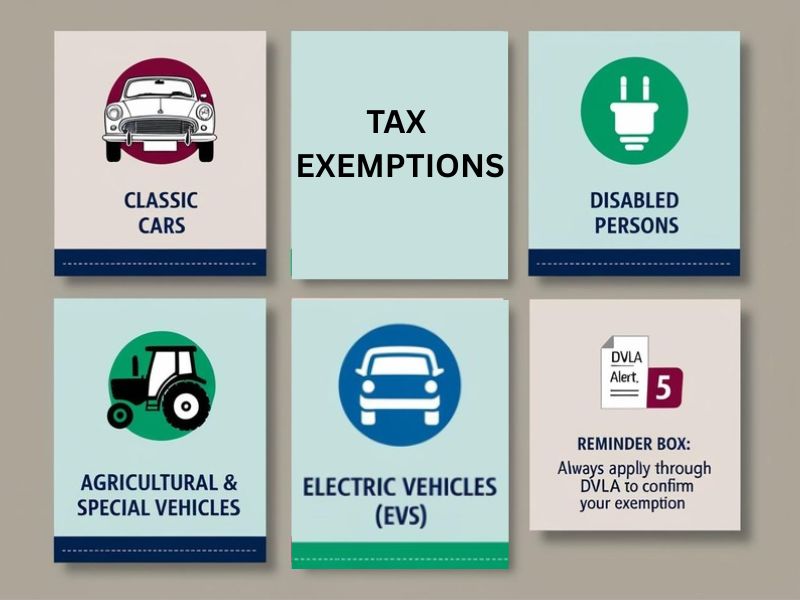
- Disabled Persons
Vehicles used by people with disabilities may also qualify for a vehicle tax exemption. To claim the exemption, you must receive certain benefits, such as the Personal Independence Payment (PIP). Once approved, your vehicle can be tax-exempt.
Agricultural & Special Vehicles
Some agricultural or special-purpose vehicles are exempt from taxes. This includes vehicles used for farming or maintaining public infrastructure, such as snowplows or road rollers. Owners must apply for the exemption based on the vehicle’s purpose.
Changes from April 2025
Starting 1 April 2025, the UK government has implemented significant changes to tax (Vehicle Excise Duty, or VED) that affect all vehicle owners, including those with electric vehicles (EVs). These changes aim to standardize tax rates across different vehicle types and encourage environmentally friendly choices.
Electric Vehicles (EVs)
Previously exempt from VED, EVs are now subject to tax. The new structure is as follows:
- First Year: A reduced rate of £10 applies to all new EVs.
- Subsequent Years: A standard annual rate of £195 applies.
- Expensive Car Supplement: EVs with a list price over £40,000 will incur an additional £425 annually for the first five years from the second tax payment onwards .
Hybrid and Plug-in Hybrid Vehicles
- First Year: A reduced rate of £110 applies.
- Subsequent Years: A standard annual rate of £195 applies.
- Expensive Car Supplement: Applies to vehicles over £40,000 in list price .
Internal Combustion Engine Vehicles
- First Year: Rates vary based on CO₂ emissions, with higher emissions leading to higher taxes. For example, vehicles emitting over 255g/km of CO₂ can face a first-year tax of up to £5,490 .
- Subsequent Years: A standard annual rate of £195 applies.
- Expensive Car Supplement: Applies to vehicles over £40,000 in list price .
Standard Rate for All Vehicles
From the second year of registration onwards, all vehicles, regardless of type, will pay a standard annual rate of £195. This includes cars, motorcycles, and light goods vehicles .
Additional Notes
- First-Year Rates: These are calculated based on the vehicle’s CO₂ emissions and are designed to encourage the purchase of low-emission vehicles.
- Expensive Car Supplement: This additional charge applies to vehicles with a list price over £40,000 and aims to contribute to road infrastructure costs .
These changes reflect the government’s commitment to reducing carbon emissions and promoting cleaner vehicles on UK roads. It’s essential for vehicle owners to be aware of these adjustments to avoid unexpected costs and ensure compliance with the new regulations.
Keeping Your Details Up-to-Date
Maintaining accurate details with the DVLA is essential for smooth taxing transactions. Keeping your information up-to-date ensures you won’t face fines or difficulties when taxing your vehicle or handling any legal matters related to your vehicle’s status.
- Why It’s Important
If your details are outdated, you might miss tax renewal reminders, risk paying fines, or face delays in selling your vehicle. It’s crucial to update your address or personal details to prevent complications.
- How to Update Your Details
You can update your personal details online via the DVLA website. If your name, address, or other personal information changes, make sure to notify the DVLA promptly.
- Change of Address: If you move house, updating your address with the DVLA will ensure your V5C logbook and tax reminders are sent to the correct address.
- Vehicle Details: Any changes to your vehicle (such as modifications or changes to the number plate) must be reported to the DVLA.
Related Posts
Previous Post
Next Post
Previous Post
Next Post






- Business
 5
5 - Cricket5
- Department for Education49
- Departments3
- Driving and Transport
 53
53 - Education45
- Finance6
- Football13
- Golf3
- Government
 108
108 - Guides1
- Health
 5
5 - Health4
- International Politics9
- Law and Justice31
- Money and Tax23
- National Politics4
- News68
- Politics6
- Sports38
- Technology5
- Tennis3
- Transportation4
- Uncategorized4
- Visa
 17
17 - Visas and Immigration
 24
24 - Weather1