Medical conditions and driving fall under strict DVLA regulation. You must legally notify the DVLA if a health issue may affect your ability to drive safely. Failing to do so could lead to serious consequences, including fines or driving bans.
The driver and vehicle standard agency has strict medical standards to protect both drivers and the public. This guide explains the full scope of DVLA medical conditions, what qualifies as notifiable, and how to apply for a driving licence after a medical condition.
We’ll also cover DVLA Group 1 medical standards, reporting procedures, and licence renewals after recovery.
DVLA List of Notifiable Medical Conditions
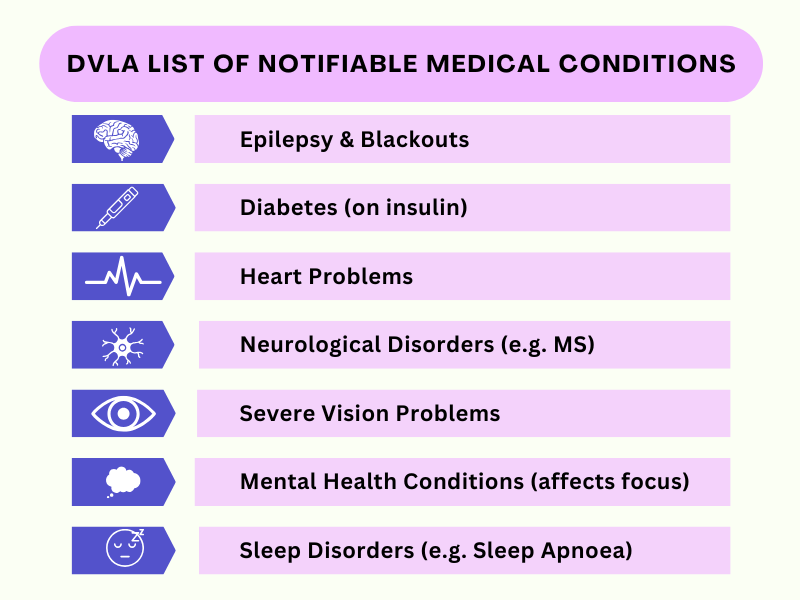
The DVLA outlines specific health problems you must declare in its list of notifiable medical conditions. These conditions can impact driving ability or decision-making, and reporting them helps reduce risks on the road.
Common DVLA notifiable conditions include:
- Epilepsy and blackouts
- Diabetes requiring insulin
- Heart issues, including arrhythmia and angina
- Neurological disorders such as multiple sclerosis
- Severe vision impairment or long sighted complications
- Mental health disorders affecting alertness
- Sleep-related issues like obstructive sleep apnoea
The DVLA includes these conditions under Group 1 medical standards, which apply to private cars and motorcycles. Once you report your condition, the agency may request additional documents such as a driver license medical form, a GP report, or arrange a medical test for driving licence clearance.
Not reporting a notifiable condition could result in a fine up to £1,000 or prosecution if you cause an accident. The driving standards agency urges all drivers to err on the side of caution and disclose health concerns promptly.
Medical Test for Driving Licence – What to Expect
If you report a health issue, the DVLA may require you to take a medical test for driving licence clearance. The aim is to assess whether your condition affects road safety. This decision is based on the nature of your illness and how it impacts your ability to drive.
Here’s what the medical test usually involves:
- Medical questionnaire: You’ll fill out a form specific to your condition. This helps the DVLA understand your diagnosis.
- GP or specialist report: The DVLA may contact your doctor or consultant for detailed notes.
- Vision assessment: Eyesight is critical. The DVLA may ask you to take an official eye test.
- Practical driving assessment: In rare cases, the DVLA conducts a specialist driving test under medical supervision.
The DVLA medical standards require thorough documentation. The DVLA might also ask you to submit a driver license medical form. The driver and vehicle standard agency will then review your case and decide whether to suspend, limit, or fully approve your driving licence.
These tests are free if arranged by the DVLA. If they request a test but you book it privately, you may bear the cost. Results can take a few weeks, depending on the complexity of your case and how quickly your doctor responds.
Remember, this isn’t a pass/fail test. It’s about checking whether you meet DVLA notifiable medical conditions criteria for safe driving.
DVLA Group 1 Medical Standards Explained
The DVLA Group 1 medical standards apply to drivers of cars and motorcycles. The DVLA uses these standards to determine whether you’re medically fit to hold a driving licence after a diagnosis. The aim is to ensure that private drivers can operate vehicles without posing a risk to themselves or others.
The DVLA medical standards assess both physical and mental fitness to drive. Some of the key areas they cover include:
- Eyesight: You must read a number plate from 20 metres and pass a visual field test. You may need to report conditions like cataracts or severe long sightedness to the DVLA.
- Neurological conditions: You must declare diseases like epilepsy, multiple sclerosis, or Parkinson’s to the DVLA. In many cases, you may be temporarily unfit to drive.
- Cardiac health: Heart attacks, irregular heart rhythms, and pacemaker use all fall under review.
- Mental health: Depression, psychosis, or severe anxiety can affect alertness and judgment. These also need reporting.
- Sleep disorders: If you suffer from narcolepsy or obstructive sleep apnoea, you must inform the DVLA.
Each condition is judged on severity, treatment plan, and whether symptoms are under control. If the DVLA feels you’re safe, they may issue a restricted licence or grant full permission.
These guidelines are reviewed regularly by the driving standards agency and aligned with expert medical advice. Keeping your DVLA medical licence valid means staying within these standards at all times.
How to Apply for Driving Licence After a Medical Condition
If your licence was suspended or you’re applying for the first time after illness, the DVLA has a clear process. To apply for driving licence after medical condition, you’ll need to show you meet the required medical standards and are safe to drive.
Here’s how to get started:
- Notify the DVLA: Use the GOV.UK portal or post the appropriate medical form. This is mandatory for all DVLA notifiable medical conditions.
- Gather medical evidence: A driver license medical form from your GP or consultant is often required. This will confirm your condition is stable and under control.
- Wait for DVLA review: Once submitted, the driver and vehicle standard agency will assess your case. They may request additional medical tests, as outlined in previous sections.
- Undergo assessments if needed: You may need a medical test for driving licence or vision exam. These ensure compliance with DVLA medical standards.
- Receive your outcome: If approved, your licence is restored. If not, the DVLA will explain why and whether you can appeal or reapply later.
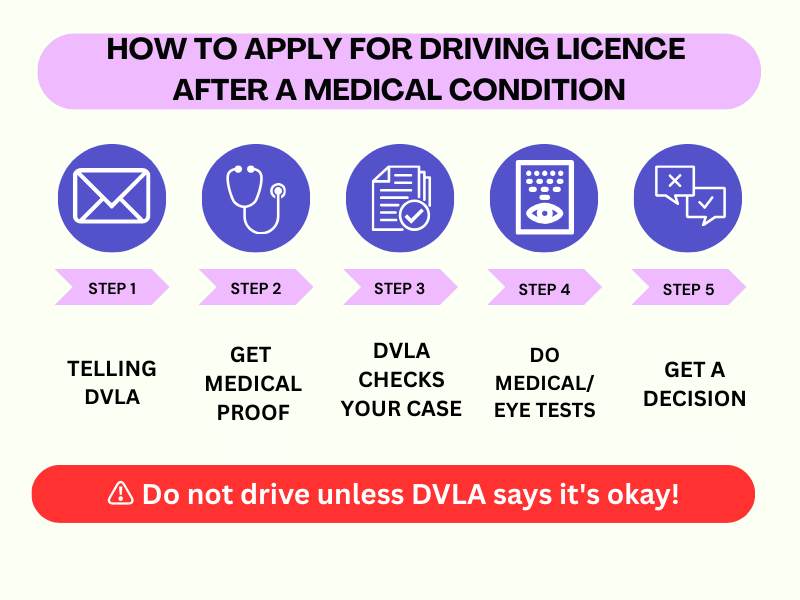
During this process, stay off the road unless the DVLA has given you written permission to drive. If you continue driving without approval, you risk fines or legal action.
Many drivers regain their DVLA medical licence successfully. The key is transparency, timely medical reports, and following up promptly.
DVLA Medical Licence Renewal Process
Renewing your DVLA medical licence is a routine requirement for drivers with certain health conditions. If you previously declared a notifiable illness, the DVLA may issue your driving licence for a limited time — typically one, two, or three years. To continue driving legally, you must renew it before it expires.
Here’s how the renewal process works:
- DVLA Reminder: You’ll usually receive a renewal pack 90 days before your licence expires. It includes the forms specific to your condition and a driver license medical form for your doctor to complete.
- Medical review: The DVLA may ask you to undergo a new medical test for driving licence renewal. This ensures you still meet DVLA medical standards and remain fit to drive.
- Send your application: Return the completed documents to the DVLA. Include updated contact details and declare any changes in your condition.
- Decision period: The DVLA may contact your GP, request hospital records, or arrange a specialist assessment. Processing can take several weeks, depending on your condition.
- Continue driving (if eligible): In some cases, the DVLA allows you to keep driving while they review your renewal. This only applies if your previous licence was valid and the DVLA hasn’t advised you to stop.
The driving standards agency manages the renewal process and enforces stricter rules for conditions listed under DVLA notifiable medical conditions. If your condition has improved or stabilised, your new licence may be valid for a longer term.
Always renew on time. Driving with an expired or invalid licence — especially linked to health — can lead to prosecution.
Staying Safe with Medical Conditions and Driving
Medical conditions and driving responsibilities go beyond personal health—they affect public safety. If you’re living with an illness that might impair your driving, it’s essential to follow the rules laid out by the Driver and Vehicle Licensing Agency (DVLA).
Notifying the DVLA of notifiable medical conditions ensures you’re driving legally and responsibly. Whether you’re dealing with long-term treatment, short-term recovery, or renewing a DVLA medical licence, the process is clear and built to protect everyone on the road.
For the full list of conditions and official guidance, visit the DVLA’s official page on medical conditions and driving.
Here’s a quick recap:
- Report any condition listed under the DVLA list of notifiable medical conditions
- Understand your obligations under DVLA Group 1 medical standards
- Be prepared for a medical test for driving licence if needed
- Follow the proper steps to apply for driving licence after a medical condition
- Keep up with your DVLA driving medical licence renewal when due
The driving standards agency has made it easier than ever to stay compliant. So, take action early, keep your medical records updated, and never hesitate to seek advice from your doctor or the DVLA.
Driving with medical awareness is not just a legal obligation—it’s a shared duty to protect lives on the road.
Source / Ref.: Gov.uk Contains public sector information licensed under Open Government Licence v3.0.
Written by [Ketan Borada / British Portal Team] – Founder of British Portal, dedicated to providing accurate and up-to-date information on UK public services and benefits.Related Posts
Previous Post
Next Post



- Business
 5
5 - Cricket5
- Department for Education49
- Departments3
- Driving and Transport
 53
53 - Education45
- Finance6
- Football13
- Golf3
- Government
 108
108 - Guides1
- Health4
- Health
 5
5 - International Politics9
- Law and Justice31
- Money and Tax23
- National Politics4
- News68
- Politics6
- Sports38
- Technology5
- Tennis3
- Transportation4
- Uncategorized4
- Visa
 17
17 - Visas and Immigration
 24
24 - Weather1