Navigating the UK legal system can seem complex, especially when proceedings involve someone who cannot manage the process themselves. In these situations, the courts ensure fairness by appointing someone to help. This person is known as a litigation friend. Understanding what a litigation friend is and their role is crucial for protecting vulnerable individuals’ rights during legal action.
Essentially, a litigation friend is an individual, organization, or sometimes the Official Solicitor, appointed to manage court proceedings on behalf of someone who cannot do it themselves. Their primary purpose is to ensure the person they represent has a fair chance to put their case forward and respond to claims. This role is fundamental to access justice within the UK system. The litigation friend’s role is centered on representation and decision-making in the best interests of the person involved in the court case.
When is a Litigation Friend Needed?
The requirement for a litigation friend arises in specific circumstances defined by court rules, primarily the Civil Procedure Rules (CPR), specifically CPR Part 21. These rules state that a litigation friend must be appointed in two main situations:
- Children: Anyone under the age of 18 involved in court proceedings (except for certain specific situations) must have a litigation friend to conduct the case on their behalf. This applies whether the child is bringing the claim (claimant) or responding to one (defendant). A common example is a parent acting as the litigation friend for their child in a personal injury claim.
- Protected Parties: This refers to individuals aged 18 or over who are deemed to lack the mental capacity to manage the specific legal proceedings themselves. Determining a lack of capacity involves considering if the person can understand the information relevant to the decisions they need to make, retain that information, use it to make a decision and communicate their decision. This often involves cases managed under the Court of Protection, making the term litigation friend Court of protection highly relevant. Someone might need a court of protection litigation friend if they have conditions like dementia, a severe learning disability, or a brain injury affecting their decision-making ability for the legal matter at hand. The question of what is a litigation friend court of protection points directly to this context.
It’s important to know when a litigation friend is required because proceeding without one when necessary can invalidate the legal steps taken.
Who Can Act as a Litigation Friend?
Not just anyone can step into this important role. The court needs assurance that the person appointed can act appropriately. So, who can qualify as a litigation friend? The criteria are straightforward:
- Ability to Act Fairly and Competently: They must be able to manage the proceedings in a way that is fair to the person they represent and handle the responsibilities involved competently.
- No Conflict of Interest: Their interests must not clash with the interests of the child or protected party they are representing. For example, if someone was partly responsible for an accident involving a child, they likely wouldn’t be a suitable litigation friend for the child’s claim arising from that accident. Avoiding a litigation friend conflict of interest is paramount.
- Undertaking to Pay Costs: They must agree if ordered by the court, to pay any costs associated with the litigation (though they usually have a right to be reimbursed from any money recovered by the represented party).
Common examples of litigation friends include:
- A parent or guardian for a child.
- A family member or close friend of a protected party.
- A solicitor acting in a professional capacity.
- Professional advocates or appointees (especially in Court of Protection cases).
- Charities or organizations working with vulnerable groups.
The Official Solicitor as Litigation Friend
What happens if no suitable friend, family member, or professional is willing or able to act? In these cases, particularly where the child or protected party is a defendant or involved in complex disputes, the court may appoint the Official Solicitor. The official solicitor litigation friend role is a safety net. If you’re not looking for a lawyer to represent you in court, consider having the court-appointed Official Solicitor step in. They’re a fallback option, who are there to represent complex or contentious matters when no one else can. In addition, all costs associated with this decision must be covered beforehand.
The Appointment Process: How Does Someone Become a Litigation Friend?
The process for appointing a litigation friend differs slightly depending on the circumstances and whether they are acting for a claimant or defendant, child, or protected party. Understanding who appoints a litigation friend is key – ultimately, it’s the court’s oversight, even if the process starts without a formal application.
- For a Child Claimant: Often, a person who meets the criteria can simply start acting. They state they are the child’s litigation friend on the claim form litigation friend section. They must file a certificate of suitability litigation friend (often Form N236) confirming they meet the criteria and consent to act. This certificate litigation friend is crucial. Completing the certificate of suitability of litigation friend correctly is a key step.
- For a Child Defendant or a Protected Party: An application to the court is usually required. This involves submitting an application notice (Form N235 may be relevant for the application to become a litigation friend) and the certificate of suitability of the litigation friend. The court must formally make an order appointing the litigation friend. Applying for litigation friend status involves these procedural steps. Individuals considering applying to be a litigation friend need to follow the court’s requirements carefully.
- Court Appointment: The court itself can initiate the appointment if it becomes clear one is needed and hasn’t been arranged.
Key documents often include the certificate of service litigation friend to show documents have been properly sent, and potentially a letter of authority litigation friend outlining their role, although the court order or certificate of suitability usually suffice. A letter of authority litigation friend template might be sought by some, but official court forms are standard.
Duties and Responsibilities: What Does a Litigation Friend Do?
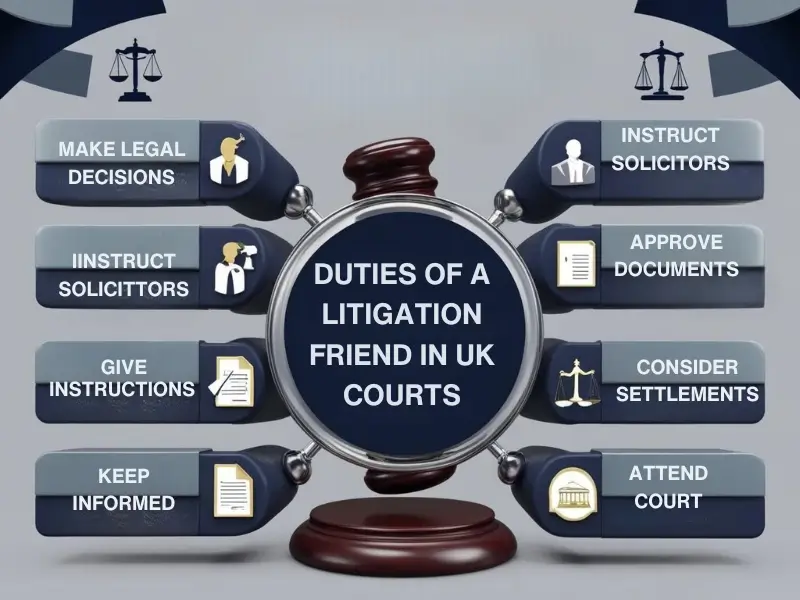
Acting as a litigation friend is a significant undertaking with clear responsibilities outlined in the CPR litigation friend rules. Their core duty is to fairly and competently conduct the proceedings in the best interests of the person they represent. This involves:
- Making Decisions: Making decisions about the direction of the case, including whether to start, continue, or settle the claim.
- Instructing Solicitors: Appointing and instructing solicitors (can a litigant friend instruct solicitors? Yes, this is a primary function) and considering their advice carefully. The litigation friend manages the case, but the represented person is still the ultimate client, underscoring their dynamic. Solicitors handling cases with litigant friends of clients need clear instructions from the LF.
- Giving Instructions: Providing instructions to the legal team on behalf of the child or protected party.
- Approving Documents: Reviewing and approving court documents, including the claim form litigation friend section and potentially signing disclosure statement documents (or instructing solicitors to do so). A litigation friend’s approval of the claim form details is needed.
- Considering Settlements: Carefully evaluating any offers to settle the case and deciding whether to accept them (often requiring court approval for children/protected parties).
- Keeping Informed: Updating the child or protected party on the case progress in an understandable way.
- Attending Court: Attending court hearings as required. (Note: A legal friend (LF) differs from a McKenzie Friend in court. An LF instructs solicitors with rights of audience, while a litigant friend cannot represent but may provide evidence.).
The duties of a litigation friend are comprehensive. It’s not just a title; it involves active management. The role of a litigant friend (using the alternative spelling some searchers use) is demanding but vital.
Understanding the Costs: Is a Litigation Friend Liable?
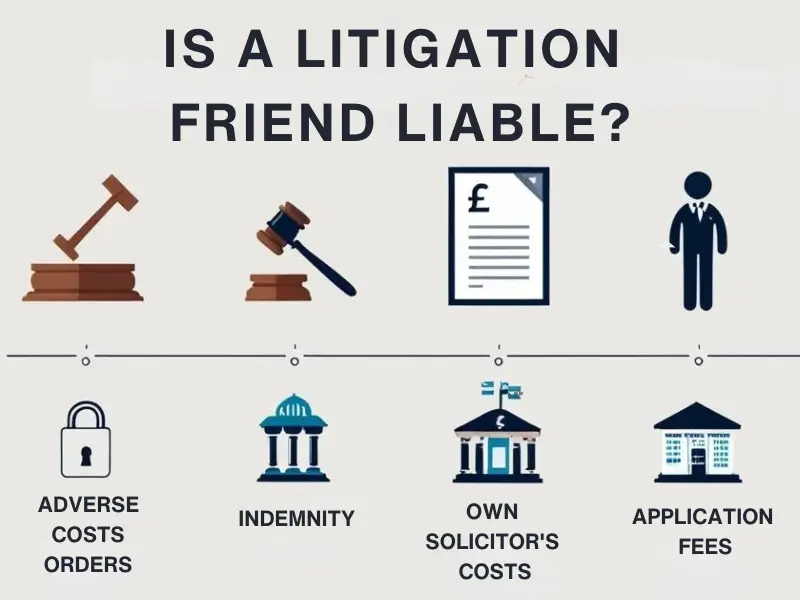
A major concern for potential litigation friends is costs. Are litigation friends liable for costs? Yes, potentially.
- Adverse Costs Orders: If the case is unsuccessful, the court might order the child or protected party to pay the opponent’s legal costs. Because the child/protected party isn’t managing the case directly, the litigation friend provides an undertaking to pay these costs if ordered. This is a key litigation friend’s responsibility for costs.
- Indemnity: The litigation friend has the right to be reimbursed for any costs they incur, either from the damages recovered by the represented party or their assets, particularly in Court of Protection cases.
- Own Solicitor’s Costs: The represented party is responsible for their own solicitor’s fees, usually paid from damages recovered.
- Application Fees: There might be minor application fees that litigation friend-related processes incur, but the main concern is liability for the opponent’s legal costs if the case is lost.
Understanding litigation friend cost implications is crucial before agreeing to act.
Litigation Friend vs. Other Roles: Clearing Up Confusion
It’s easy to confuse the litigation friend role with others who might assist someone in legal matters.
- McKenzie Friend: A McKenzie Friend provides moral support and quiet advice in court but cannot conduct the litigation, manage the case, or speak formally on the person’s behalf (unlike a litigation friend who instructs solicitors and directs the case). The question “Can McKenzie’s friend be assigned to sign the litigant’s name?” highlights this difference – a McKenzie friend cannot sign court documents or act legally for the litigant.
- Power of Attorney (PoA): Someone holding a Property and Financial Affairs Lasting Power of Attorney (LPA) can manage finances but usually doesn’t automatically have the right to conduct litigation. To be appointed as the litigation friend, an LPA holder may need to apply. The LPA itself isn’t generally sufficient.
These distinctions are important for understanding the unique authority and responsibility of litigation friends. The term litigant friend is sometimes used interchangeably, though litigation friend is the standard term in the CPR. So, the litigant friend meaning and litigation friend meaning point to the same role.
Ending the Role of a Litigation Friend
The appointment doesn’t necessarily last forever. It can end in several ways:
- Child Turns 18: When a child reaches 18, they can take over the proceedings themselves. You only need to notify the court that the child will now be acting on their own behalf.
- Protected Party Regains Capacity: If a protected party regains mental capacity, the litigation friend’s appointment can end.
- Court Order: The court may end the appointment if a suitable replacement is found. In such cases, a party may need to file an application (CPR application to substitute litigation friend) that outlines the authority to make this substitution.
- End of Proceedings: The role naturally ends when the case concludes.
Practical Tips for Acting as a Litigation Friend
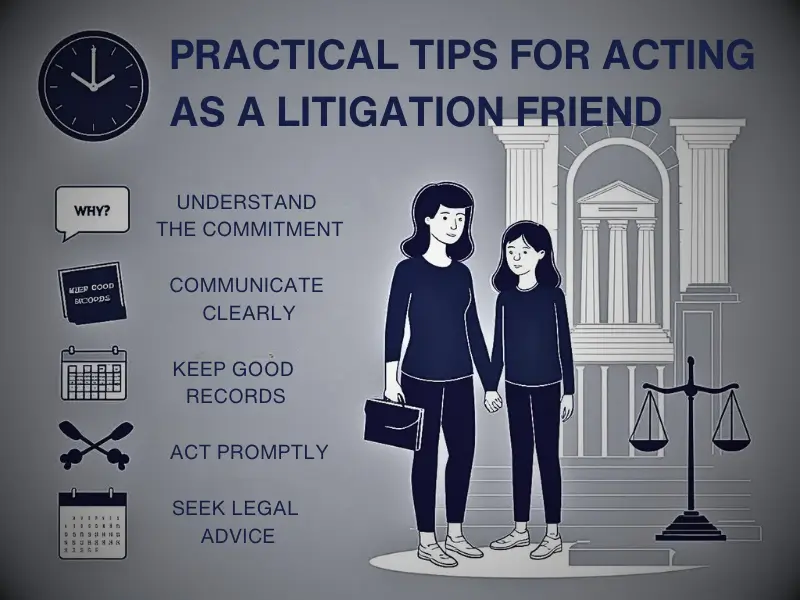
If you are asked or need to become a litigation friend (perhaps you’re a litigation friend parent), consider these points:
- Understand the Commitment: It can be time-consuming and emotionally demanding.
- Communicate Clearly: Maintain open communication with the solicitors.
- Keep Good Records: Keep copies of all important documents and correspondence.
- Act promptly: Respond to requests from solicitors and the court on time.
- Focus on Best Interests: Always prioritize the best interests of the child or protected party.
- Seek Legal Advice: Don’t hesitate to ask the appointed solicitors for clarification or advice on your duties.
This role is crucial for ensuring fairness. In friendly litigation or complex disputes, a litigation friend is essential for those who cannot navigate the system alone. Litigation friends play a crucial role in the UK justice system, especially as outlined by CPR guidelines. Knowing when one is needed is essential.
Read more about Role of a Police Community Support Officers (PCSO) in the UK
Source / Ref.: Gov.uk Contains public sector information licensed under Open Government Licence v3.0.
Written by [Ketan Borada / British Portal Team] – Founder of British Portal, dedicated to providing accurate and up-to-date information on UK public services and benefits.Related Posts


Previous Post
Next Post






- Business
 5
5 - Cricket5
- Department for Education49
- Departments3
- Driving and Transport
 53
53 - Education45
- Finance6
- Football13
- Golf3
- Government
 108
108 - Guides1
- Health
 5
5 - Health4
- International Politics9
- Law and Justice31
- Money and Tax23
- National Politics4
- News68
- Politics6
- Sports38
- Technology5
- Tennis3
- Transportation4
- Uncategorized4
- Visa
 17
17 - Visas and Immigration
 24
24 - Weather1