You’ve likely seen them patrolling your local streets – a visible, reassuring presence in the community. They are the Police Community Support Officers, often known simply as PCSOs. But what exactly do they do, and how do they fit into the broader picture of UK policing? Understanding the UK police community support officer role is key to appreciating their contribution.
They are not Police Constables, but they play a vital and distinct role as civilian staff employed by police forces. Think of the community support officer as a bridge between the police and the public they serve.
What Exactly is a Police Community Support Officer?
So, what is a police community support officer? In simple terms, PCSOs are uniformed staff who work to support regular police officers and engage with the community. They aim to be approachable, provide visibility, tackle low-level crime and anti-social behavior, and gather community intelligence. The police community support officer’s role revolves around being accessible with eyes and ears on the ground.
The police community support officer definition highlights their focus on prevention and reassurance. They are part of the wider police family, contributing to neighborhood policing. You might hear them referred to using variations like community police support officer or police support community officer, but the core function remains the same: supporting communities and police efforts. Essentially, police community support officers (PCSOs) are there to help.
What Does a PCSO Do Day-to-Day?
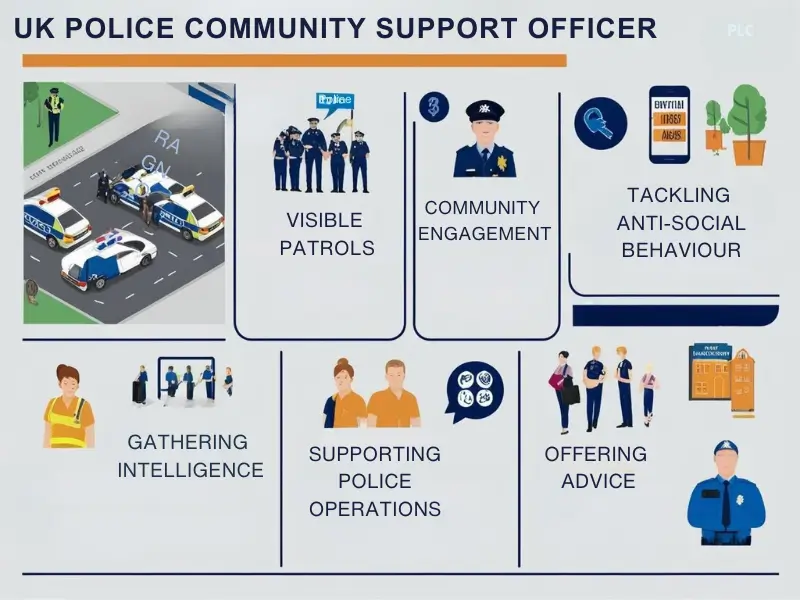
The question, “What does a police community support officer do?” has a varied answer, as tasks can change daily. However, the police community support officer role centers around several key areas. Understanding the PCSO role involves looking at their typical activities:
- Visible Patrols: Walking or cycling through neighborhoods, offering reassurance and deterring crime simply by being present.
- Community Engagement: Talking to residents and local businesses, listening to concerns, attending community meetings, and building relationships. This is central to the role of a police community support officer.
- Tackling Anti-Social Behaviour (ASB): Dealing with issues like low-level nuisance, graffiti, and neighborhood disputes.
- Gathering Intelligence: Acting as eyes and ears, reporting suspicious activity or community tensions back to police colleagues.
- Supporting Police Operations: Assisting with house-to-house inquiries, securing crime scenes, or managing traffic at events.
- Offering Advice: Guiding crime prevention and community safety.
- Working with Young People: Engaging with schools and youth groups.
The police community support officer job description often includes these core functions, outlining the police community support officer’s duties and the police community support officer’s role and responsibilities. Some forces might have slightly different priorities, but the essence of the police community support officer’s job role remains focused on community interaction and support. Answering “What is the role of a police community support officer?” involves understanding this blend of patrol, engagement, and problem-solving. The purpose of the police community support officer question is answered by their focus on accessible, preventative policing.
Understanding PCSO Powers
A common area of confusion related to PCOS powers. It’s crucial to know that PCSOs do not have the same powers as Police Constables. For example, a key question is “Can the police community support officer arrest?” The answer is generally no; they do not possess a general power of arrest like a police officer. Searches asking “Do police community support officers have the power of arrest?” reflect this common query. While there might be extremely limited circumstances linked to specifically designated powers where they can detain someone briefly, it’s not the same as an arrest. Any searches suggesting “community support police officer arresting” are usually based on misunderstanding the role.
So, what powers do police community support officers have? Their powers are specifically designated by the Chief Constable of their force and vary across the country. However, common police community support officer powers often include:
- Issuing Fixed Penalty Notices (FPNs) for certain minor offenses (like cycling on the pavement, littering, dog fouling).
- Requesting the name and address of someone acting anti-socially.
- Confiscating alcohol or tobacco from young people.
- Seizing vehicles being used to cause alarm or distress.
- Controlling traffic (for specific purposes, like escorting abnormal loads).
- Entering premises to save life or prevent serious damage.
These powers are designed to help them manage common neighborhood issues effectively without needing the full powers of a Constable. Always remember that powers can differ, so what a metropolitan police community support officer can do might vary slightly from a British transport police PCSO or one in West Yorkshire police.
PCSO vs Police Constable: What’s the Difference?
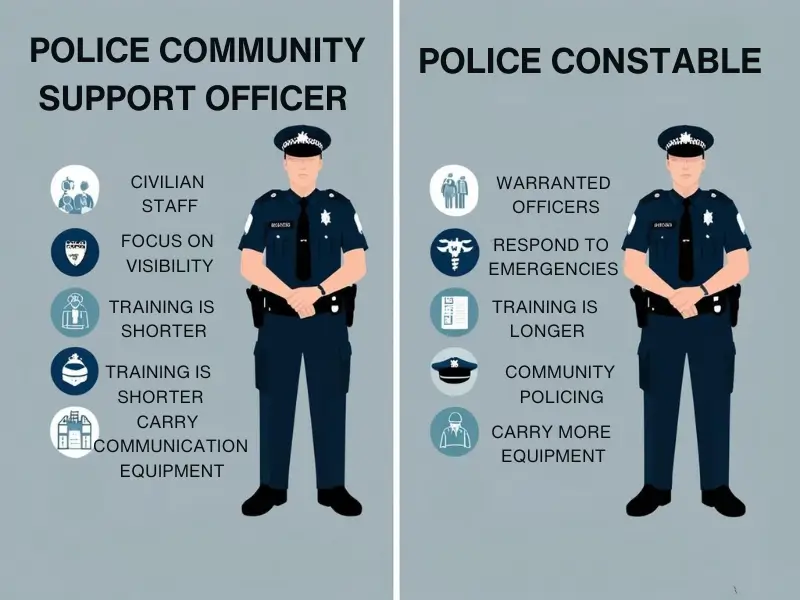
Many people ask, “Community support officer vs police officer?” or “police officer vs community support officer?“. It’s a valid question, as the roles are distinct:
- Role & Powers: Constables are warranted officers with full police powers, including arrest. PCSOs are civilian staff with limited, designated powers focused on community issues. So, is a community support officer a police officer? No, they are civilian staff.
- Focus: Constables respond to emergencies, investigate serious crimes, and make arrests. PCSOs focus on visibility, community liaison, preventing low-level crime, and tackling ASB.
- Training: Police Constable training is longer and covers a wider range of laws, procedures, and defensive tactics. PCSO training is shorter and tailored to their specific role and powers.
- Equipment: Constables carry more equipment, including handcuffs, batons, and PAVA spray (irritant spray). PCSOs typically carry communication equipment and sometimes items related to their specific powers, but not defensive equipment like Constables.
Understanding this difference helps clarify the unique value the PCSO police role brings.
Thinking of Becoming a PCSO? The Recruitment Journey
If working within your community and making a difference appeals to you, you might wonder how to become a police community support officer. The journey to becoming a PCO involves several steps, although the exact police community support officer recruitment process varies slightly between forces.
Eligibility
Before you apply for police community support officer roles, check the police community support officer entry requirements. Common criteria include:
- Age: Usually 18 years or older (no upper police community support officer age limit generally, but fitness is key).
- Nationality & Residency: UK citizenship or settled status, often with a minimum residency period in the UK. Some forces, like Surrey or other county forces, might have specific local residency rules.
- Qualifications: Often a minimum standard of education (e.g., GCSEs in English and Maths), but forces increasingly value life experience. Check the specific police community support officer qualifications required by the force.
- Fitness: A basic level of fitness is required to pass a medical and sometimes a fitness test.
- Driving Licence: Increasingly required, especially in county forces like Surrey Police or Thames Valley Police, but less so in dense urban areas like London (Met Police).
- Vetting: Background checks are essential due to the nature of the role.
Application & Assessment
- Application Form: Detailing your experience, skills, and motivations.
- Assessment Centre: Often involves role-play exercises, interviews, and written tests to assess your suitability. Preparing for common police community support officer interview questions is vital.
- Interview: A more formal interview stage.
- Checks: Fitness tests, medical examinations, and comprehensive vetting.
Training
Successful candidates undertake a dedicated training course, typically lasting several weeks. This covers laws relevant to their powers, communication skills, first aid, safety procedures, and local community knowledge. Some forces may offer a police community support officer apprenticeship route. Training might be residential or based at a specific force location, like the centers used by the Metropolitan Police or Thames Valley Police.
Joining the PCSO police community support officer ranks requires dedication and the right personal attributes – communication, problem-solving, and a genuine desire to help. If you’re ready to join police community support officer teams, start by researching specific forces.
What About Pay and Benefits?
A common question is “How much does a police community support officer earn?” or “simply about the PCSO wage”. The police community support officer’s salary varies depending on the force and experience.
- Starting Salary: Ranges typically from the low to mid £20,000s.
- London Weighting: Forces like the Metropolitan Police offer higher salaries (met police PCSO salary) due to London weighting allowances, reflecting the higher cost of living. Some forces bordering London, like Surrey Police or Hertfordshire Police, might offer fringe allowances.
- Shift Allowances: Additional payments are often made for working shifts and unsocial hours.
- Pension: PCSOs are usually eligible for the Local Government Pension Scheme (police community support officer pension).
Queries like “Do police community support officers get paid?” or “Are police community support officers paid?” can be answered with a definitive yes. Check the specific force’s recruitment page for the exact police community support officer pay scale and community support officer pay details, sometimes listed as police support officer salary or community support officer wage. Some listings might show the police community support officer’s gross salary. The PCSO salary varies, so research is key.
Working as a PCSO Across the UK
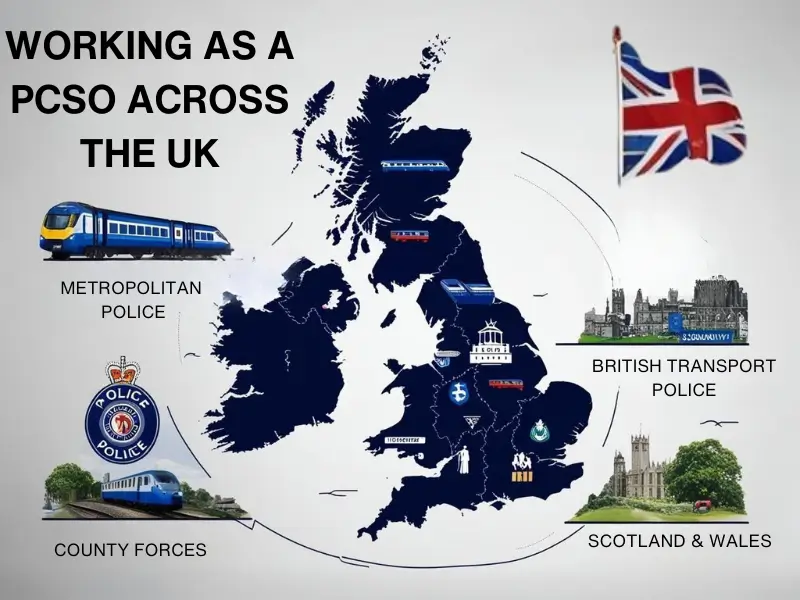
The experience of being a PCSO can differ depending on where you work.
- Metropolitan Police: Working as a metropolitan police PCSO (met PCSO) in London involves policing a vast, diverse, and densely populated area with unique challenges and a higher pay scale. You might work alongside police community support officers in London. Find police community support officer jobs on their site.
- British Transport Police (BTP): A British transport police PCSO (BTP police community support officer or BTP PCSO) works on the railway network, dealing with issues specific to transport hubs and travel.
- County Forces: PCSOs in forces like Thames Valley Police, Surrey Police, Kent Police, Hampshire Police, North Yorkshire Police, or Gloucestershire Police often cover a mix of urban and rural areas. Driving may be more essential, and community relationships can be deeply embedded. You might find roles advertised as a community support officer in Cheshire police or community support officer in Gwent police. Check specific force sites for Cheshire police community support officer or Durham police community support officer roles or vacancies in Devon and Cornwall, Hampshire, or Derbyshire.
- Scotland & Wales: While the core role is similar, specific powers, structures, and terminology under Police Scotland or Welsh forces (Gwent Police, North Wales Police) might differ slightly. Look for police community support officer Scotland information if interested there.
No matter the force, finding your local police community support officer is often possible through the force website. Searches like “police community support officer near me,” “local community support officer,” or “who is my local police community support officer?” reflect this need for local connection.
Finding Jobs and More Information
If you’re interested in police community support officer jobs, the best place to look is the official website of the police force you want to join. They list vacancies, detailed requirements, and application portals. Look for sections related to careers or vacancies for PCSOs. You might search for “police community support officer jobs near me” or specific locations like “police community support officer job Hemel Hempstead” or “police community support officer job Stockport”. Occasionally, niche terms like “police community service officer jobs” appear, but PCSO is the standard UK term. Keep an eye out for Kent police community support officer vacancies or similar postings.
For general information, the gov.uk website offers a basic overview, and the College of Policing website provides professional standards information. You might also find discussions on forums like police community support officer Reddit but always rely on official sources for application details.
If you need to reach a local PCSO for non-emergency community issues, use the non-emergency police number (101) or look for contact details on your local force’s neighborhood policing pages. Searching “police community support officer contact number” or “contact police community support officer” / “police community support officer contact” might lead you to the right non-emergency channels.
Read more about What is Civil Legal Advice? Do You Qualify?
Source / Ref.: Gov.uk Tvpcareers.co.uk Met.police.uk Contains public sector information licensed under Open Government Licence v3.0.
Written by [Ketan Borada / British Portal Team] – Founder of British Portal, dedicated to providing accurate and up-to-date information on UK public services and benefits.Related Posts


Previous Post
Next Post






- Business
 5
5 - Cricket5
- Department for Education49
- Departments3
- Driving and Transport
 53
53 - Education45
- Finance6
- Football13
- Golf3
- Government
 108
108 - Guides1
- Health
 5
5 - Health4
- International Politics9
- Law and Justice31
- Money and Tax23
- National Politics4
- News68
- Politics6
- Sports38
- Technology5
- Tennis3
- Transportation4
- Uncategorized4
- Visa
 17
17 - Visas and Immigration
 24
24 - Weather1