National emergencies in the UK require a careful balance between keeping people safe and protecting their basic rights. This report explains what happens during emergencies, what powers the government has, and how citizens can protect their rights while staying safe.
What Is a National Emergency?
A national emergency is not just any serious event or problem. In the UK, it has a specific legal definition. The Civil Contingencies Act 2004 defines an emergency as an event that threatens serious damage to human welfare, the environment, or national security.
Human welfare emergencies include situations that cause loss of life, illness, injury, homelessness or disrupt essential services like water or electricity. The government considers these threats to human welfare as potential grounds for declaring an emergency.
Recent Examples of National Emergencies
The COVID-19 pandemic represents one of the clearest recent examples of a national emergency. In March 2020, Prime Minister Boris Johnson declared the coronavirus outbreak a “moment of national emergency” and announced unprecedented restrictions on public life.
Severe flooding has also prompted debates about declaring national emergencies. In 2019, flooding in northern England led to hundreds of homes being evacuated, with political parties calling for a national emergency declaration.
Government Powers During Emergencies
When a national emergency occurs, the government can use special powers to respond quickly. These powers allow ministers to make regulations without going through the normal, lengthy parliamentary process.
Types of Emergency Powers
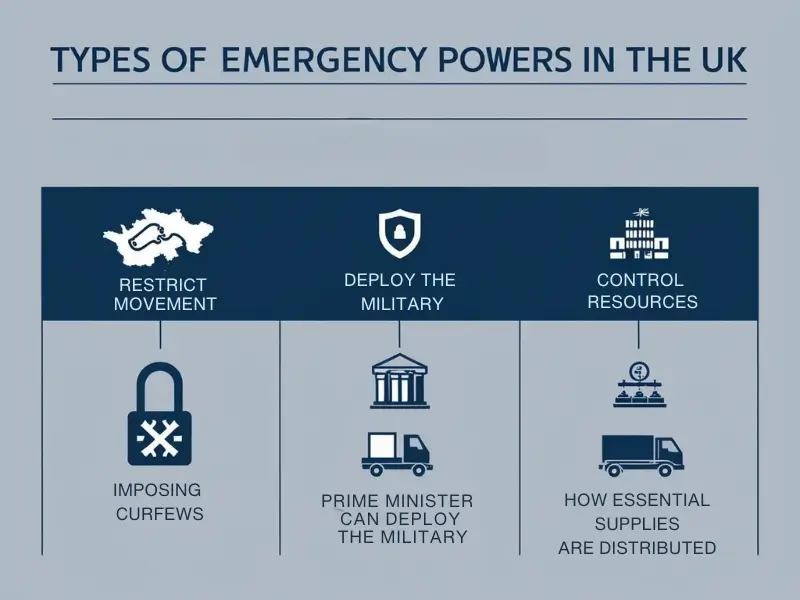
- The government can restrict movement by imposing curfews or travel bans. During the COVID-19 pandemic, the UK government limited people to leaving their homes only for essential shopping, one form of daily exercise, and necessary work that couldn’t be done from home.
- The government can control resources by directing how essential supplies are distributed. They can also shut down nonessential businesses and services. During COVID-19, all shops selling non-essential goods, churches, playgrounds, and libraries were closed.
- In extreme cases, the government can require individuals or organizations to take specific actions. The prime minister can deploy the military to assist with emergency response, as seen when the Army was sent to help with flood relief in 2019.
Legal Framework for Emergency Powers
Most emergency powers come from two main laws: the Public Health (Control of Disease) Act 1984 and the Civil Contingencies Act 2004.
- The Public Health Act gives ministers powers to deal with infectious disease outbreaks. This was the main law used during the COVID-19 pandemic.
- The Civil Contingencies Act provides broader emergency powers for any type of severe crisis. However, this act is meant to be used only as a last resort in the most serious emergencies.
- For the COVID-19 response, the government also created new legislation called the Coronavirus Act 2020, which gave additional powers specific to that emergency.
Safeguards and Limitations
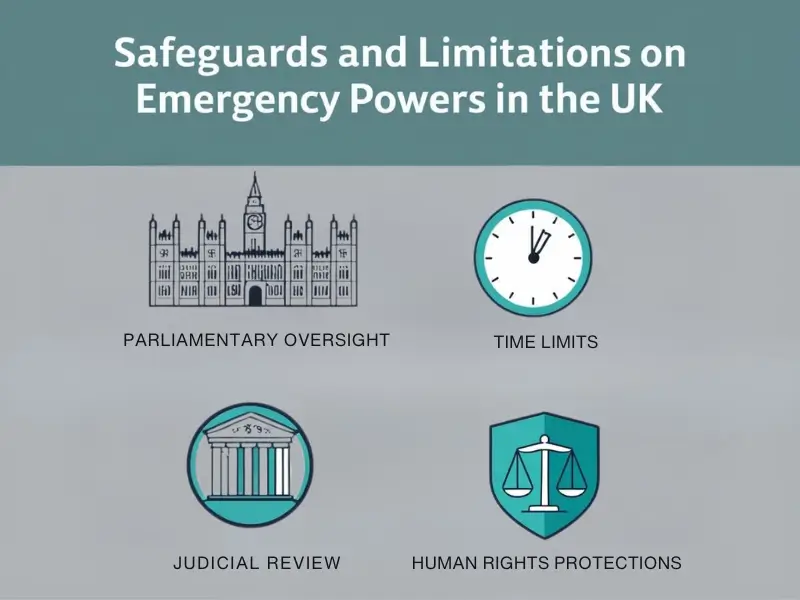
Emergency powers are not unlimited. Several important checks and balances exist to prevent the abuse of these powers.
Parliamentary Oversight
Parliament must approve emergency regulations. During COVID-19, MPs regularly reviewed and voted on lockdown measures.
Time Limits
Emergency regulations typically have expiration dates. They must be renewed if they are to continue. The COVID-19 lockdown measures were initially set for three weeks, with regular reviews thereafter.
Judicial Review
Courts can examine whether emergency measures are lawful. Judges can strike down measures that go beyond what the law allows.
Human Rights Protections
Even during emergencies, basic human rights remain protected. The government must show that any restrictions on rights are necessary and proportionate to the threat.
Types of Emergencies and Response Plans
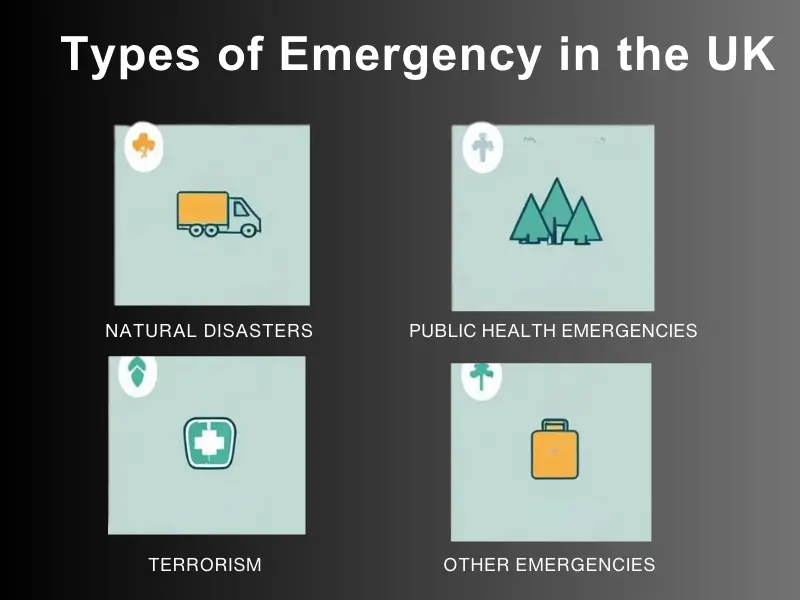
The UK prepares for different types of emergencies, each with specific response plans.
Natural Disasters
Flooding, severe weather, and other natural events can trigger emergency responses. Local councils, fire services, police, and ambulance services conduct regular training exercises to prepare for these events.
Public Health Emergencies
Pandemic diseases like COVID-19 require specific health measures. These may include restrictions on movement and gatherings to control disease spread.
Terrorism
The UK has specific protocols for terrorist incidents. The public is advised to follow the “Run, Hide, Tell” guidance: run to safety, hide if escape isn’t possible, and call the police when safe to do so.
Other Emergencies
The UK also plans for chemical incidents, nuclear accidents, and disruptions to utility supplies like water, gas, or electricity.
Your Rights During a National Emergency
Even during emergencies, you still have important rights. However, some rights may be temporarily limited to protect public safety.
Rights That Remain Protected
Your right to life and protection from inhuman treatment cannot be limited, even in emergencies. You still have the right to a fair trial and freedom from discrimination.
Rights That May Be Limited
During emergencies like lockdowns, authorities may restrict your freedom of movement. They might also temporarily limit your right to gather in groups. Additionally, public health measures such as contact tracing may invade your privacy. However, these measures must still respect privacy laws as much as possible.
Your privacy might be affected if contact tracing or other public health measures are needed. However, these measures must still respect privacy laws as much as possible.
Practical Steps for Citizens
There are several ways you can prepare for emergencies and protect your rights.
Stay Informed
Follow official government advice during emergencies. The UK now has an Emergency Alert system that can send warnings directly to mobile phones during serious incidents.
Keep updated through reliable news sources and official government websites. Check the National Risk Register, which explains the likelihood and possible effects of different emergencies.
Know Emergency Contacts
Save important emergency numbers: 999 for UK emergencies or 112 (which works across the EU).
Know who to contact for utility emergencies involving water, gas, or electricity.
Understand Local Plans
Find out how emergencies are planned for in your area. Local councils have specific plans for different types of emergencies.
Holding the Government Accountable
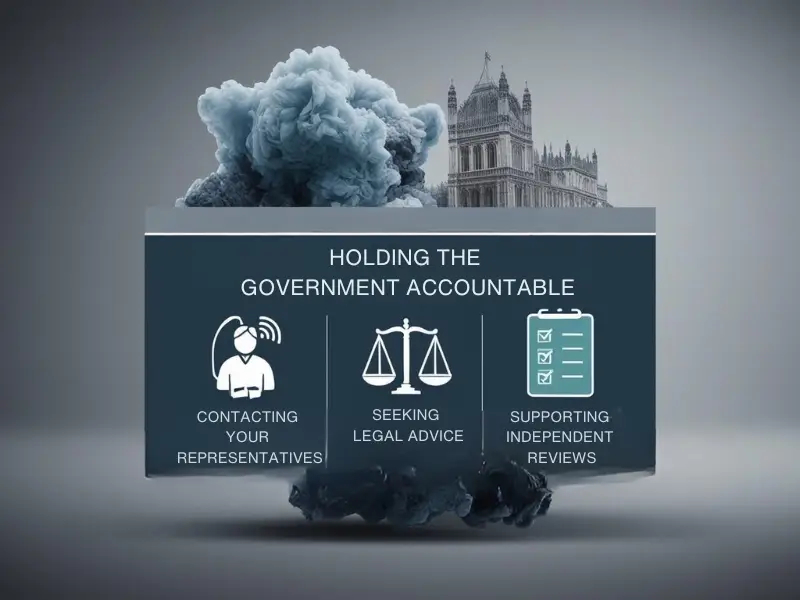
Citizens help ensure that emergency powers are used correctly.
Contacting Your Representatives
You can contact your MP with concerns about emergency measures. They can raise issues in Parliament on your behalf.
Seeking Legal Advice
If you believe your rights have been violated, seek legal advice. Many organizations offer free legal guidance during emergencies.
Supporting Independent Reviews
After major emergencies, independent inquiries often review the government’s response. Citizens can contribute to these reviews by sharing their experiences.
Where to Get Help
Several organizations provide support during emergencies.
Government Support
Local councils often provide emergency assistance. Central government departments may offer financial support for those affected by emergencies.
Voluntary Organizations
Age UK and other charities provide specialized support for vulnerable groups during emergencies.
Balancing Safety and Freedom
National emergencies test our society’s values. We must protect public safety while also safeguarding our fundamental rights and freedoms.
The UK’s legal framework aims to strike this balance by giving the government powers to act quickly while also providing oversight and time limits on those powers. Understanding these systems helps citizens know their rights and responsibilities during difficult times.
By staying informed, knowing your rights, and holding the government accountable, you can help ensure that emergency measures are both effective and fair.
Read more about Victim of Crime in the UK: Understanding Your Rights
The Civil Contingencies Act 2004 defines a national emergency in the UK as an event or situation that seriously threatens human welfare, the environment, or national security. Examples include pandemics, terrorist attacks, severe flooding, or other crises that disrupt essential services or pose significant risks to public safety and security.
The government can use special powers under the Civil Contingencies Act to restrict movement (e.g., curfews), control resources (e.g., regulating supply chains), and compel actions (e.g., deploying military assistance). These powers are temporary and subject to strict conditions, including parliamentary approval and judicial oversight.
Even during emergencies, safeguards like the Human Rights Act ensure that fundamental rights such as freedom of expression, privacy, and protection from discrimination remain protected. Emergency measures must be necessary, proportionate, and subject to parliamentary scrutiny and judicial review.
Citizens can stay informed through resources like the National Risk Register and local government plans. Saving emergency contacts (e.g., 999 or 112), understanding local resilience forums, and knowing their legal rights are essential steps for preparedness.
Emergency regulations have built-in safeguards such as sunset clauses (time limits), parliamentary approval within seven days, judicial reviews, and restrictions on actions that violate human rights or exceed proportionality requirements.
Source / Ref.: Gov.uk Tameside.gov.uk Contains public sector information licensed under Open Government Licence v3.0.
Written by [Ketan Borada / British Portal Team] – Founder of British Portal, dedicated to providing accurate and up-to-date information on UK public services and benefits.Related Posts
Previous Post
Next Post




- Business
 5
5 - Cricket5
- Department for Education49
- Departments3
- Driving and Transport
 53
53 - Education45
- Finance6
- Football13
- Golf3
- Government
 108
108 - Guides1
- Health4
- Health
 5
5 - International Politics9
- Law and Justice31
- Money and Tax23
- National Politics4
- News68
- Politics6
- Sports38
- Technology5
- Tennis3
- Transportation4
- Uncategorized4
- Visa
 17
17 - Visas and Immigration
 24
24 - Weather1