
Facing a legal problem can be stressful. Worrying about the cost of getting help can make things feel even harder. Fortunately, support is available. Legal aid exists in the UK to help people who cannot afford to pay for legal advice and representation. It is a vital part of ensuring access to justice for everyone, not just those who can easily pay.
Understanding Legal Aid UK can be the first step towards resolving your legal issue.
What Exactly Is Legal Aid?
At its core, legal aid is financial assistance provided by the government. It helps cover the costs associated with getting professional legal services. This law aid ensures that lack of funds doesn’t prevent someone from accessing justice, reflecting the principle of equal justice and free legal aid. The system has roots in measures like the Legal Aid and Advice Act 1949, designed to create a fairer legal landscape.
In England and Wales, the system is mainly managed by the Legal Aid Agency (LAA), an executive agency sponsored by the Ministry of Justice. Scotland has the Scottish Legal Aid Board (Legal Aid Board Scotland), and Northern Ireland has its system, often involving the Legal Aid Board (Legal Aid Board Ireland for context, though focused on the UK here). This aid legal support is crucial for many individuals navigating complex legal situations. The legal aid authority aims to ensure help reaches those who need it most.
What Types of Legal Issues Can Legal Aid Help With?
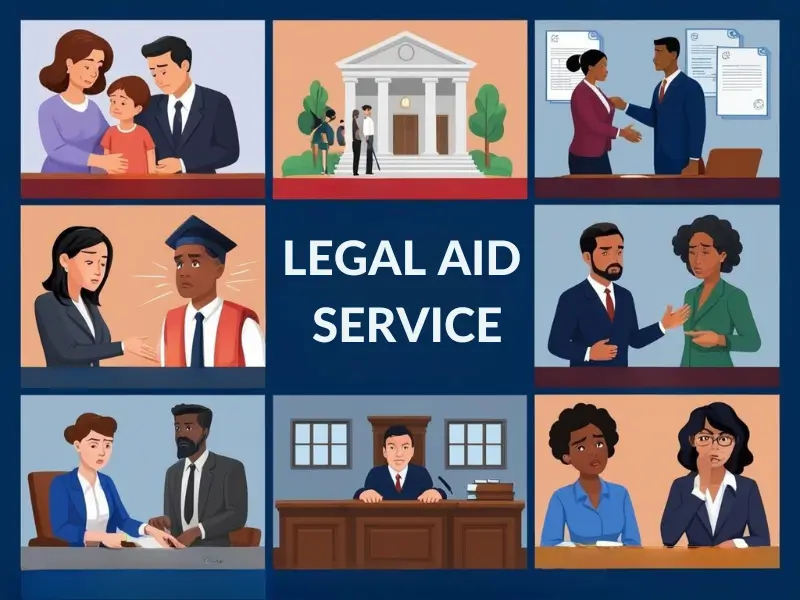
Legal aid services are not available for every type of legal problem. Funding is generally focused on specific, serious issues where legal help is essential. Here are some key areas:
- Family Law: This is a significant area. You might get legal aid for family law help for issues like divorce (legal aid divorce, legal aid divorce uk), separation, disputes about children (legal aid child custody, can I get legal aid for a child arrangement order), or cases involving domestic violence legal aid. Finding legal aid family solicitors or, specifically, legal aid divorce solicitors near me is often a priority for people in these situations. Family law help through family legal aid is a critical support. You can seek family law advice or family legal advice from specialist legal aid solicitors family law near me.
- Housing Issues: Help may be available if you are facing eviction, homelessness, or serious disrepair issues. Searching for legal aid housing solicitors near me can connect you with experts. Legal eviction aid can be crucial in preventing homelessness.
- Asylum and Immigration: Legal aid is often available for asylum claims and certain immigration matters. You might search for legal aid asylum solicitors near you. Recent discussions around UK asylum seekers’ legal aid increase highlight the importance of this area.
- Criminal Defence: If you are accused of a crime that could lead to prison, criminal legal aid is usually available, covering police station advice and court representation (legal aid crown court). You can find legal aid criminal solicitors near you.
- Debt and Welfare Benefits: Help might be available for serious debt problems (like bankruptcy) or challenging certain welfare benefit decisions, often through civil legal advice.
- Community Care and Mental Health: Assistance may be available for issues related to care services or mental health tribunals.
- Discrimination: Legal aid might cover cases involving unlawful discrimination.
- Education Law: Specialist legal aid education solicitors may assist with issues like special educational needs appeals.
- Employment Law: While less common now due to legal aid cuts, some limited help might be available, for example, through the Exceptional Case Funding scheme, potentially for a legal aid employment tribunal. Finding legal aid employment law support often requires checking specific criteria.
It’s important to note the distinction between civil legal aid (for non-criminal disputes) and criminal legal aid. The rules and eligibility can differ.
Who is Eligible for Legal Aid?
Getting legal aid usually depends on two main factors: the type of case and your financial situation. This determines who is eligible for legal aid.
- Scope of Your Case: As listed above, your problem must fall into one of the categories covered by legal aid. The criteria for legal aid also consider the merits of your case – generally, you need a reasonable chance of success, and the potential outcome must justify the cost.
- Means Test (Financial Eligibility): This checks if you can afford your legal costs. The Legal Aid Agency (LAA) looks at your income (wages, benefits, pensions), savings, and capital (like property). They also consider your essential living costs and family circumstances (e.g., partner’s income, number of children). This is known as qualifying for legal aid based on means. Eligibility for legal aid is carefully assessed.
How to Check Eligibility:
The easiest way to get an initial idea is to use the online legal aid checker or legal aid eligibility calculator available on the GOV.UK website. These tools provide an estimate but are not a final decision.
Special Cases:
In some situations, particularly involving domestic violence, legal aid, or child protection, the financial eligibility rules might be relaxed, or you might get help more quickly. Evidence of abuse is usually required. There’s also a scheme called Exceptional Case Funding (ECF) for cases not normally covered but where failing to provide aid would breach human rights or EU law.
So, can I get legal aid? The answer depends on these factors. You might wonder, do I qualify for legal aid? The best way to know for sure is to speak to a provider.
How Do I Apply for Legal Aid?
The process usually starts by finding a legal professional who offers legal aid.
- Find a Provider: Not all solicitors or advisors offer legal aid. You need to find specific legal aid solicitors or organisations contracted by the Legal Aid Agency. You can search online using terms like legal aid solicitors near me, solicitor near me, or more specifically, legal aid family law solicitors near me or free legal aid solicitors near me (though note legal aid isn’t always completely ‘free’ – see below). The GOV.UK website has a search tool to find providers in your area (Legal Aid England). Look for providers in cities like Legal Aid Birmingham (or Legal Aid Solicitors Birmingham), Legal Aid London, legal aid Manchester, Legal Aid Bristol, Legal Aid Brighton, Legal Aid Derby, or further afield like Legal Aid Edinburgh, Legal Aid Dundee, or Legal Aid Belfast. Be aware that a lack of providers in some areas creates legal aid deserts.
- Initial Consultation: Contact the provider. They will assess your problem and check if it’s the type of case potentially covered by legal aid. They will also help you understand the eligibility for legal aid based on your finances.
- The Application: If you seem eligible, the solicitor will help you complete the legal aid application form (legal aid application form UK). You will need to provide detailed evidence about your case and your financial situation (bank statements, pay slips, benefit letters, etc.). Honesty is crucial – providing false information on the legal aid declaration is serious. This application for legal aid is then submitted, often electronically, via the Legal Aid Agency portal (legal aid portal, legal aid online portal, legalaidonline, or ccms). You might be able to apply for legal aid online through some providers.
- Decision: The Legal Aid Agency reviews the application. If approved, you will receive a legal aid certificate, which confirms the funding. Your solicitor or legal aid barrister can then start work.
- Contributions: Depending on your financial situation, you might need to pay regular contributions towards your legal costs, even if you get legal aid. Your solicitor will explain this. Sometimes, if you win money or property, you might have to pay back some or all of your legal aid costs from that gain (the ‘statutory charge’).
Knowing how to apply for legal aid or how to obtain legal aid involves these key steps, usually guided by your chosen provider.
What if I Don’t Qualify for Legal Aid?
Not everyone meets the criteria for legal aid, often due to the type of case or financial means. Legal aid cuts in the UK have also reduced the scope over the years. If you don’t qualify, other options for legal assistance exist:
- Free Legal Advice: Many organisations offer initial or law-free legal advice. Citizens’ Advice, law centres, and university law clinics are good starting points. Search for free legal aid near me but understand this often refers to these initial free services rather than full government-funded legal aid. Find a legal advisor free consultation if possible.
- Pro Bono: Some solicitors and barristers offer free help (‘pro bono’) in certain cases.
- Conditional Fee Agreements: Known as ‘no win, no fee’ arrangements, these are common in personal injury cases but might be available for others. You only pay legal fees if you win.
- Fixed Fees: Some solicitors offer fixed prices for specific tasks, like drafting a will or handling an uncontested legal aid divorce.
- Legal Expenses Insurance: Check if you have this as part of your home or car insurance.
- Mediation: For family disputes, legal aid for mediation might be available even if you don’t qualify for court representation. It can be a less costly way to resolve issues.
Getting More Information
For official information, the GOV.UK website is the primary resource for legal aid in England and Wales. You can find the legal aid checker, provider search tools, and details about the Legal Aid Agency. You can also try the legal aid contact number (legal aid agency contact number) for general enquiries, though they cannot give legal advice. Their main office is the Legal Aid Agency London. Check the relevant government or board websites for legal aid Scotland or legal aid northern ireland.
Taking the Next Step
Navigating the legal system can feel daunting, especially when worried about costs. Legal aid provides a crucial safety net, offering access to legal assistance for those who need it most. Whether you need help with legal aid, family law, housing, asylum, or a criminal charge, don’t assume you can’t afford help.
Check your eligibility using the online tools. Search for legal aid solicitors or specialist providers like legal aid divorce lawyers near me. Understanding your options is the first step towards finding a resolution. Reach out and ask for help – the support you need might be within reach.
FAQs
1. How do I know if I’m eligible for legal aid in the UK?
Eligibility primarily depends on two things: the type of legal case (it must be an area covered by legal aid, like serious family, housing, asylum, or criminal matters) and your financial situation (a ‘means test’ looks at your income, savings, capital, living costs, and family circumstances). The blog recommends using the online legal aid checker on the GOV.UK website for an initial estimate, but a final decision comes after applying through a legal aid provider.
2. What kind of legal problems does legal aid actually cover?
Legal aid funding focuses on specific, serious issues. Key areas mentioned include family law (like divorce, child custody disputes, domestic violence), housing problems (eviction, homelessness), asylum and some immigration matters, criminal defence (especially if facing prison), serious debt issues (like bankruptcy), challenging certain welfare benefit decisions, community care, mental health tribunals, discrimination, and some education law matters (like special educational needs appeals). It doesn’t cover every legal problem.
3. How do I apply for legal aid?
Yes, legal aid is available for divorce in the UK, but only in specific circumstances. It’s usually limited to cases involving domestic abuse, where you can provide evidence like a police report or injunction. For standard divorces without abuse, legal aid was largely cut back in 2013, so you’d need to fund it privately or seek mediation (which legal aid can still cover).
4. What can I do if I don’t qualify for legal aid?
If you’re not eligible (due to the type of case or your finances), the blog suggests several alternatives: seeking initial free advice from organisations like Citizens Advice or law centres, looking for solicitors offering ‘pro bono’ (free) help, considering ‘no win, no fee’ agreements (Conditional Fee Agreements) where suitable, asking solicitors about fixed fees for specific tasks, checking if you have legal expenses insurance, or exploring mediation for family disputes (which might have different funding rules).
5.Is legal aid completely free? Do I have to pay anything?
Not necessarily. While it provides financial assistance, depending on your income and savings (even if you qualify), you might have to pay regular contributions towards your legal costs. Additionally, if you win money or property as a result of your case, you might have to repay some or all of your legal aid costs from that gain (this is called the ‘statutory charge’).
Source / Ref.: Noblesolicitors.co.uk Publiclawproject.org.uk Nidirect.gov.uk Contains public sector information licensed under Open Government Licence v3.0.
Written by [Ketan Borada / British Portal Team] – Founder of British Portal, dedicated to providing accurate and up-to-date information on UK public services and benefits.Related Posts


Previous Post
Next Post






- Business
 5
5 - Cricket5
- Department for Education49
- Departments3
- Driving and Transport
 53
53 - Education45
- Finance6
- Football13
- Golf3
- Government
 108
108 - Guides1
- Health4
- Health
 5
5 - International Politics9
- Law and Justice31
- Money and Tax23
- National Politics4
- News68
- Politics6
- Sports38
- Technology5
- Tennis3
- Transportation4
- Uncategorized4
- Visa
 17
17 - Visas and Immigration
 24
24 - Weather1