
The UK entertainment industry thrives on international talent, but bringing these stars to British stages and sports fields comes with specific tax responsibilities. If you’re organizing events with foreign performers, understanding the withholding tax system is crucial – not just for compliance, but for building successful relationships with international talent. This system differs significantly from how you might pay tax in UK for domestic performers or how you handle pay tax self-assessment for your business.
What Is Withholding Tax and Why Does It Matter?
Withholding tax is a payment collected from foreign entertainers and sportspersons performing in the UK. It works as an advance payment against their final UK tax bill. Just as you pay tax online for your regular business activities, this system ensures foreign performers contribute fairly to the UK tax system.
The concept is straightforward: when you pay someone who doesn’t live in the UK for a UK performance, you must deduct tax if the payment exceeds the personal allowance threshold. This applies even if the payment goes through a third party.
Think of it as similar to how you pay tax on rental income – it’s about ensuring everyone who earns in the UK contributes appropriately. Using a pay tax calculator can help determine exactly how much should be withheld.
Who Qualifies as Foreign Performers?

The range of performers subject to this tax is broader than many realize. It’s not just about headline acts at major venues. If you’re bringing in any of these professionals from abroad, withholding tax likely applies:
Sportspersons:
- Footballers
- Golfers and tennis players
- Motor racing drivers
- Boxers and wrestlers
- Cricketers
- Even chess players and darts competitors
Entertainers:
- Actors and singers
- Musicians and dancers
- Models (for certain events)
- Television personalities
- Radio hosts
- Sports commentators
Understanding who qualifies helps you plan properly – much like knowing when to pay tax for car purchases through DVLA or how to pay tax for self employed contractors.
What Appearances and Payments Trigger This Tax?
Withholding tax applies to a wide range of appearances and payment types. The tax is triggered whether the performance is live, recorded, or part of promotional activities.
Qualifying appearances include:
- Acting in theatre, TV, or film productions
- Concerts and festivals
- Sports events
- Advertising and promotional activities
- TV interviews
- Photo calls
Qualifying payments cover:
- Appearance fees
- Prize money and winnings
- Endorsement fees
- Media rights
- Exhibition income
- Box office percentages
- Even merchandise sales
This comprehensive approach ensures fair taxation across all revenue streams – similar to how pay tax brackets work for different income sources. Understanding these categories is as important as knowing how to pay tax bill obligations for your regular business expenses.
Calculating and Paying Withholding Tax
For payments exceeding the personal allowance, you should generally deduct tax at the UK basic rate of Income Tax. The process isn’t as complicated as figuring out a redundancy pay tax situation, but it does require attention to detail.
Here’s how the payment process works:
- Register with the Foreign Entertainers Unit (FEU) before making payments
- Receive Form FEU 1 for quarterly accounting
- Submit payments within 14 days of each quarter’s end
- Provide tax deduction certificates (Form FEU2) to performers
The payment schedule follows clear deadlines:
| Quarter end date | Payment due date |
| 30 June | 14 July |
| 30 September | 14 October |
| 31 December | 14 January |
| 5 April | 19 April |
This process is as important as when you pay tax online vehicle registrations through DVLA – failing to comply can result in penalties. Fortunately, you can pay tax HMRC directly through their online services.
Real-World Scenarios: How This Works in Practice
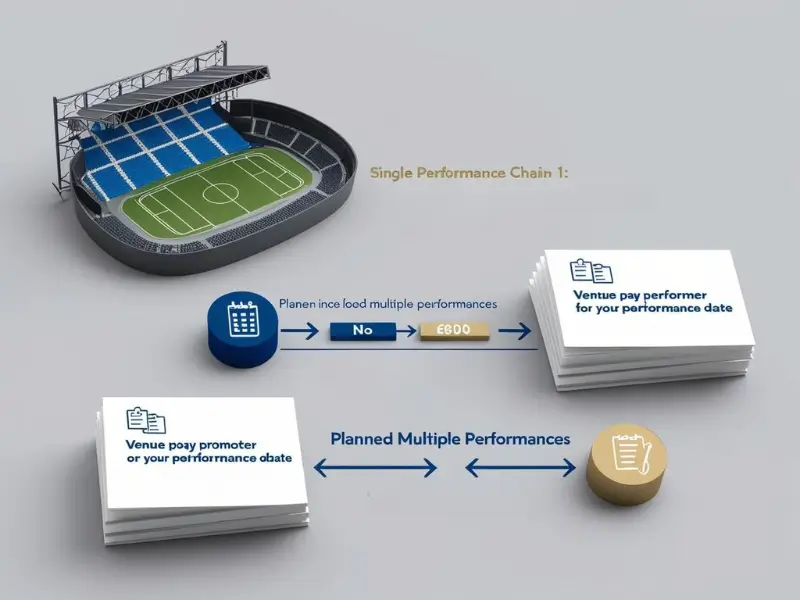
Let’s look at how this plays out in common situations:
Scenario 1: Single Performance
A promoter pays an international artist £8,000 for a one-off performance. Since this is below the personal allowance, no tax needs to be withheld. Later, the same artist is booked again for £5,000. Since the combined amount now exceeds the personal allowance, the tax must be withheld from the second payment.
Scenario 2: Planned Multiple Performances
If a promoter knows in advance they’ll be paying an artist for multiple performances totaling more than the personal allowance, they should withhold tax from every payment – even the first one. This forward planning is similar to how you might budget for pay tax council obligations throughout the year.
Scenario 3: The Payment Chain
When a venue pays a promoter who then pays a foreign performer, withholding happens at each stage. For example:
- A venue pays £100,000 to a promoter
- The venue withholds £20,000 as tax and pays £80,000 to the promoter
- The promoter agrees to pay a singer £60,000
- The promoter withholds £12,000 as tax and pays £48,000 to the singer
This cascade effect ensures proper tax collection at every stage – similar to how pay tax for car purchases works through various businesses in an auto supply chain.
Expenses and Special Situations
If you pay expenses (like flights or hotels) or give assets as payment to a foreign performer, this creates a special tax situation. The expense is treated as if tax has already been paid, meaning you must pay the tax from your own funds. This requires a “grossing up” calculation.
For example, if you buy a £1,000 airline ticket:
- Gross up the payment: £1,000 ÷ 80% = £1,250
- Calculate tax: £1,250 × 20% = £250 to pay to HMRC
However, you can apply for a reduced tax payment arrangement in some cases, which works similarly to making adjustments when you pay tax on savings or pay tax on pension distributions.
Avoiding Common Pitfalls and Penalties
Nobody wants to face a pay tax late penalty, especially when dealing with international talent. Here are key points to remember:
- Register with the FEU before making any payments to foreign performers
- Keep detailed records of all payments, even those below the threshold
- Understand payment chains and your obligations within them
- Consider the middleman scheme for approved payers
- Remember that VAT should not be included when calculating withholding tax
These practices are as important as understanding how do I pay tax for any business obligation. Proper compliance keeps your events running smoothly and helps you avoid unnecessary pay tax road blocks.
Simplifying Payments with HMRC
The Foreign Entertainers Unit (FEU) under HMRC streamlines the process of withholding tax payments, ensuring compliance without unnecessary hassle. HMRC also provides tools and resources to simplify other aspects of tax management. Simplify Your Tax Process with HMRC: HMRC offers various resources to help you understand your tax obligations and simplify the payment process, making it easier for you to stay on top of your finances. Learn how to make tax simple here!
Making International Talent Work for Your Business
Managing taxes for foreign performers doesn’t have to be overwhelming. By understanding the requirements and setting up proper systems, you can focus on creating great events while staying compliant.
Whether you’re organizing a small theatre production or a major sporting event, these tax responsibilities apply equally. Just as pay tax for vehicle obligations applies to all drivers regardless of vehicle size, withholding tax applies to all qualifying performances.
By properly handling these tax obligations, you’re not just following the law – you’re helping maintain a sustainable ecosystem that allows global talent to continue enriching the UK’s cultural and sporting landscape for years to come.
Understanding withholding tax is an essential skill for anyone in the UK entertainment business – as important as knowing how to pay tax credit overpayment or how to use a pay tax calculator UK for your regular business activities.
FAQs
1. What is withholding tax for foreign performers in the UK?
Withholding tax is a tax deducted from payments made to non-UK resident entertainers and sportspersons for their performances in the UK. If the payment exceeds the personal allowance threshold of £12,570, the payer must deduct income tax at the basic rate of 20% before making the payment to the performer.
2. Who is responsible for deducting withholding tax?
The responsibility for deducting withholding tax falls on the payer, which can be an individual or organization hiring the foreign performer. This applies even if the payment is made through a third party, such as an agent or management company.
3. How can foreign performers apply for a reduced withholding tax rate?
Foreign performers can request a reduced rate of withholding tax by submitting an application to HMRC at least 30 days before they are scheduled to receive payment. This can help align the withheld amount more closely with their expected final UK tax bill.
4. What types of payments are subject to withholding tax?
Withholding tax applies to various types of payments made to foreign entertainers and sportspersons, including appearance fees, prize money, endorsement fees, and media rights. Essentially, any income linked to their performance in the UK may be subject to this tax.
5.What documentation should be provided to performers regarding withheld taxes?
When tax is deducted from a payment, the payer must provide the performer with a tax deduction certificate known as Form FEU2. This document details the amount of tax withheld and serves as proof for both parties when filing taxes.
Source / Ref.: Gov.uk Contains public sector information licensed under Open Government Licence v3.0.
Written by [Ketan Borada / British Portal Team] – Founder of British Portal, dedicated to providing accurate and up-to-date information on UK public services and benefits.Related Posts



Previous Post
Next Post







- Business
 5
5 - Cricket5
- Department for Education49
- Departments3
- Driving and Transport
 53
53 - Education45
- Finance6
- Football13
- Golf3
- Government
 108
108 - Guides1
- Health
 5
5 - Health4
- International Politics9
- Law and Justice31
- Money and Tax23
- National Politics4
- News68
- Politics6
- Sports38
- Technology5
- Tennis3
- Transportation4
- Uncategorized4
- Visa
 17
17 - Visas and Immigration
 24
24 - Weather1